Acreage landscape design for Brisbane's semi-rural fringe.
On acreage the hard question isn't what to plant: it's where the garden should stop, and a masterplan answers that before you spend real money.
Acreage flips the usual Brisbane brief. Instead of squeezing life into a courtyard, you're deciding what to do with land you can get lost on, and without a plan, acreage gardens creep outward bed by bed until the mowing takes a full day and nothing quite connects. The fix isn't more garden. It's an edge, drawn on purpose.
We masterplan acreage as zones: an intensive garden held close to the house, a looser managed landscape beyond it, and paddock or bush left to be what it is. It's the pattern our work returns to across Samford and Brookfield and Pullenvale, where the best properties feel designed at the centre and simply cared-for at the edges.
A masterplan you build over years
Nobody builds two hectares of landscape in one go, and a good masterplan never asks you to. It fixes the big decisions early (driveway alignment, levels, water, where the trees go), then stages the rest so each year's work feels finished: arrival and house surrounds first, the pool terrace or shed landscape later, the orchard when you're ready.
Trees jump the queue. Canopy goes in first because it's the one part of a landscape money can't hurry: a tree planted this winter is years ahead of one planted when the pool finally happens. A concept masterplan at acreage scale is exactly this: one coherent picture, staged against real budgets.
The paddock-to-garden transition
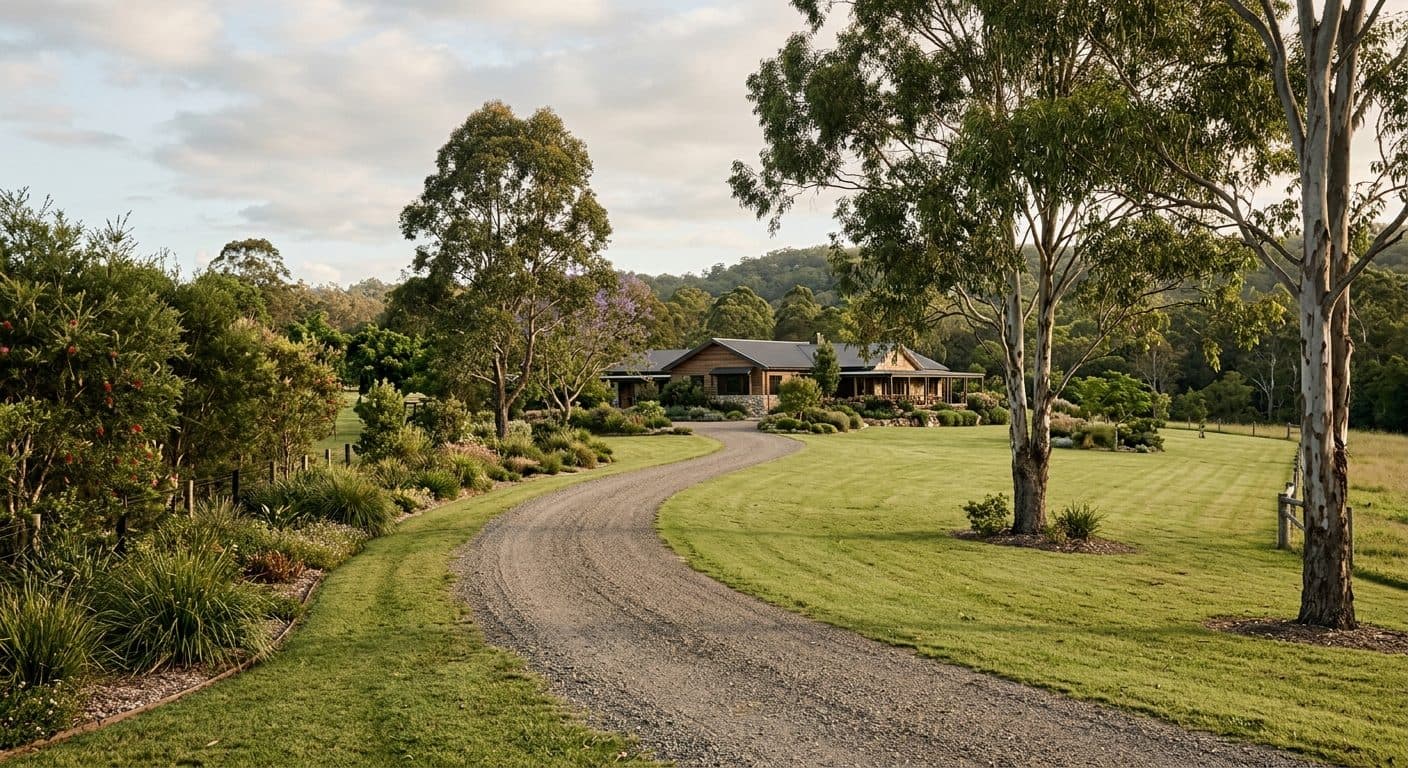
Acreage has one design moment nothing suburban offers: the edge where garden ends and paddock begins. Handled badly, it's a fence line with mower stripes on one side and neglect on the other. Handled well, it's the best thing on the property: mown paths swinging through long grass, a post-and-rail line that lets the eye run from the verandah to the ridge.
We design acreage gardens to borrow their landscape rather than compete with it. The garden proper frames the long view, the middle distance is managed lightly, and the horizon does work no planting budget could.
Natives at scale
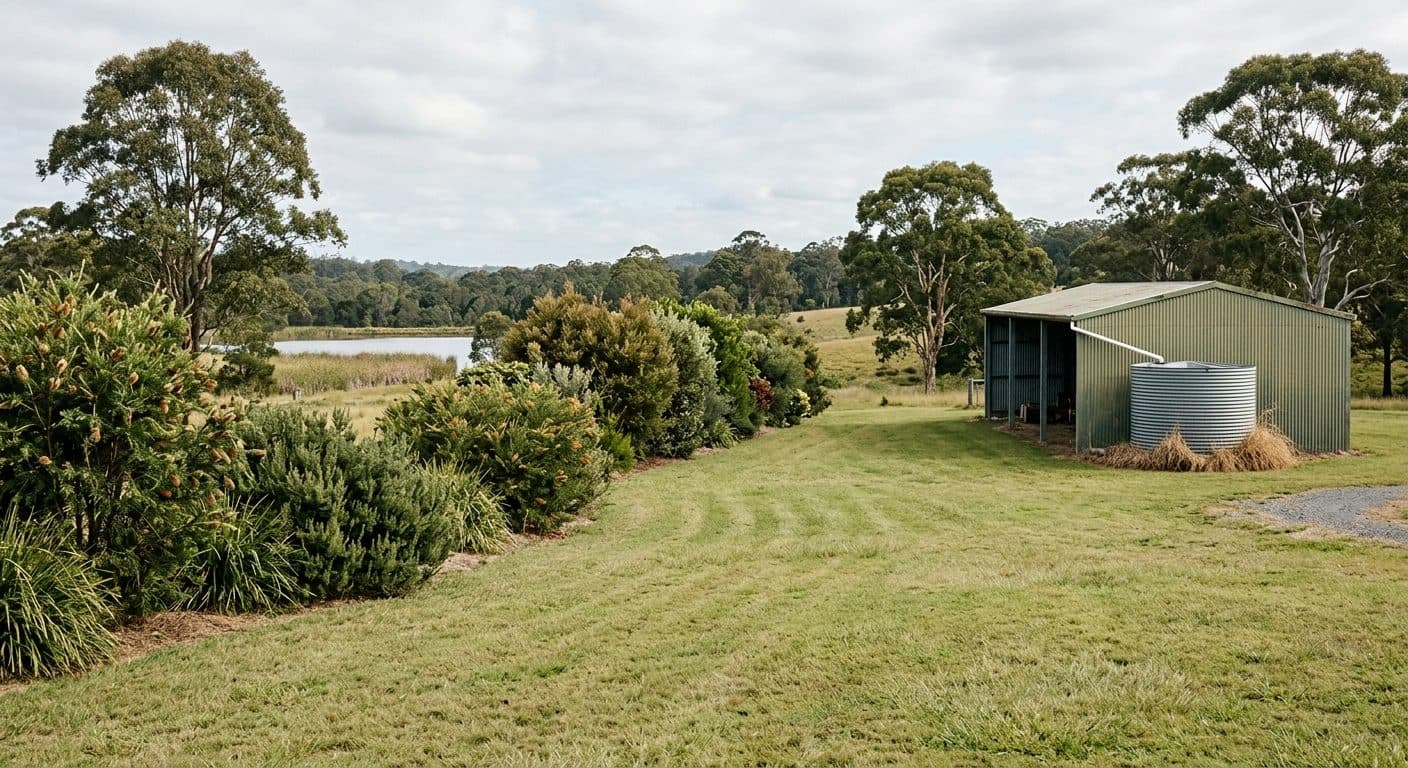
Acreage planting happens in hundreds, not tens, and that changes the method: shelterbelts to blunt the winter westerlies, screening banks along road frontages, habitat corridors stitching a gully back together. At this scale we specify tubestock natives, which cost a fraction of advanced stock and overtake it within a few seasons because young roots establish better.
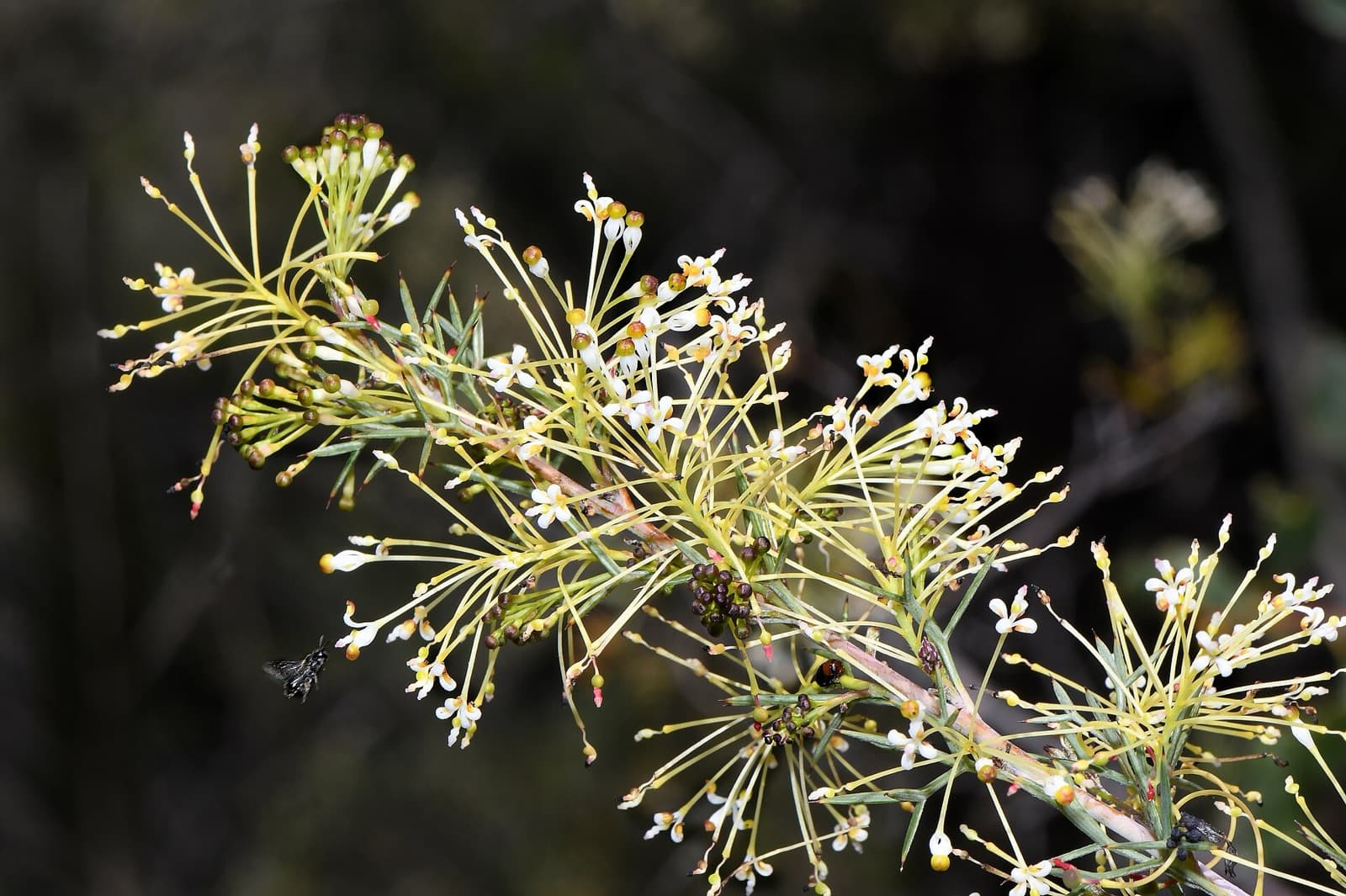
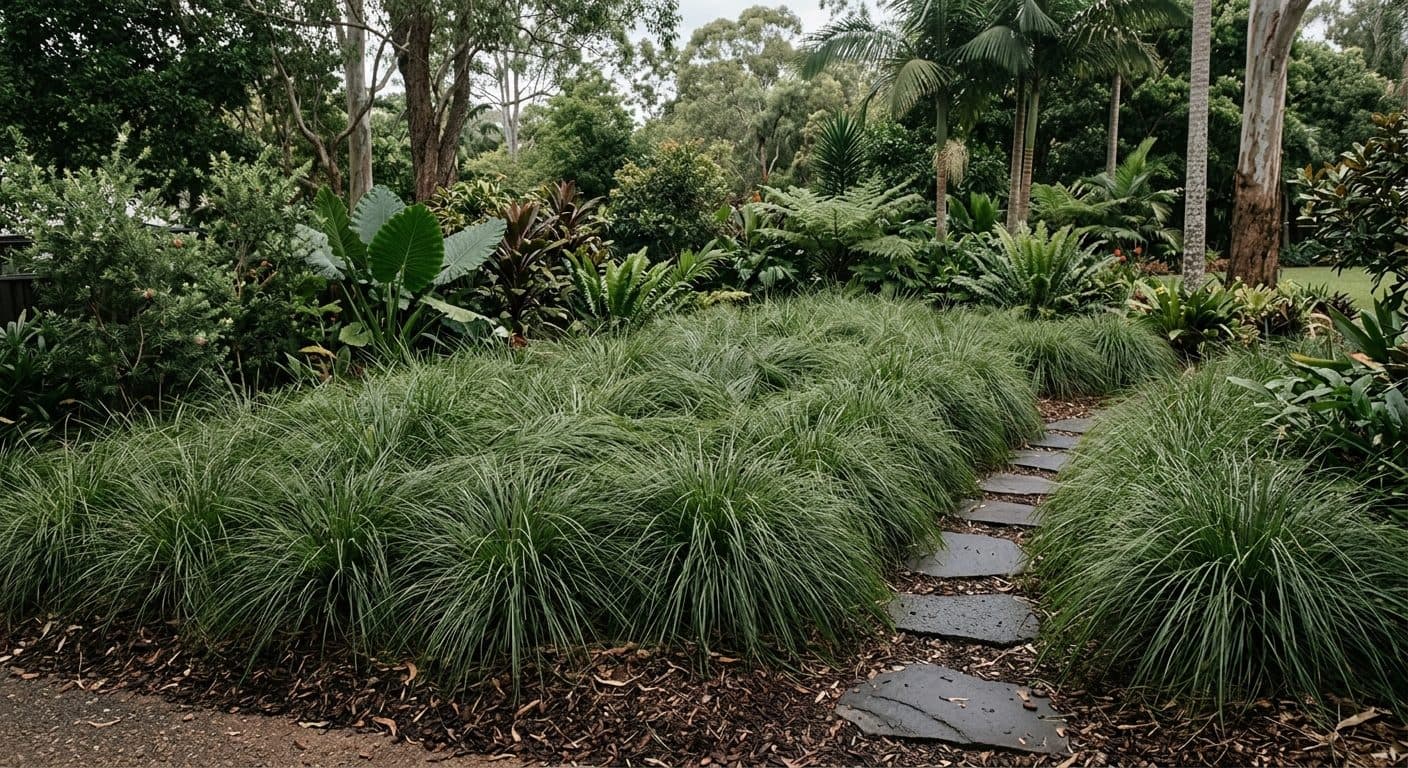
Water shapes everything out here. Many properties run on tanks and dams, so the palette beyond the house zone has to live on rainfall: hardy eucalypts, wattles, lomandras and grevilleas that treat a dry spring as normal. Closer in, a smaller irrigated circle can afford to be lush.
Driveways and arrival
The driveway is the garden's opening line, sometimes a few hundred metres of it. We design the alignment for the reveal, letting the house appear late around a stand of trees; choose avenue species that won't drop limbs on the ute; and stay honest about surfaces, because gravel is charming and needs regrading, while asphalt is forever and costs like it.
Arrival here has logistics no urban block asks for: guest parking that doesn't block the shed, turning room for a trailer or float, gates that work in the rain, lighting for genuinely dark nights. When the build rolls out over years, project oversight keeps every stage (and every contractor) working to the same picture.
Common questions
Ready to give the whole property a plan?
We're currently taking on new landscape design clients across Brisbane. Reach out for a personalised quote, whether you're a homeowner or a design professional.
Book a Free Discovery Call