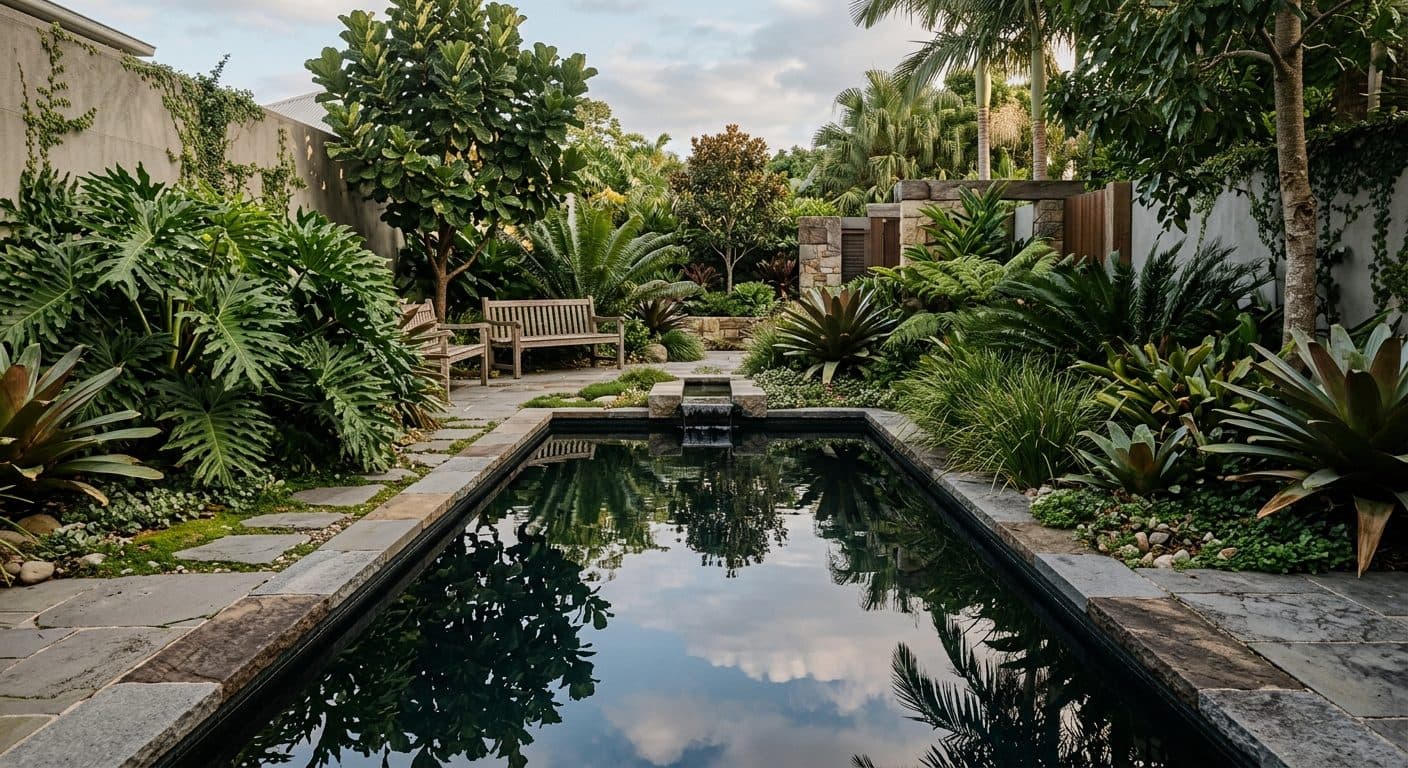
Water is one of the most powerful things you can add to a garden, and one of the fussiest in a subtropical climate. Here's how I use it well: the sound, the reflection, and how to avoid the algae and the mosquitoes.

By Shannon Trevisiol, Landscape Designer, Brisbane · 5 min read
- Water earns its place through sound and reflection: a spill you can hear masks traffic, and a still surface doubles the sky and the planting above it.
- In the subtropics, moving water is your friend. It stops the mosquitoes breeding and keeps a feature healthier than a stagnant pool.
- Design against Brisbane's heat and humidity: shade and the right size reduce evaporation and algae, so the feature isn't a maintenance battle.
- A wildlife pond brings frogs and birds; a formal spillway suits a modern courtyard. Decide which job the water is doing before you build.
- Mind depth and cane toads: water 300mm deep or more can bring Queensland pool-safety rules into play (confirm with a certifier), and a smooth raised edge plus removing the egg strings keeps toads from breeding.
Water does something to a garden that nothing else can. A still pool doubles the sky and the planting hanging over it, a gentle spill fills the space with a sound that quietly erases the traffic and the neighbours, and even a small, well-placed feature draws the eye and cools the whole mood of a courtyard. It's one of the oldest tricks in garden design and one of the most effective. It's also, in a Brisbane climate, one of the fussiest, because heat, humidity, algae and mosquitoes are all waiting to turn a lovely idea into a chore. Used with a bit of judgement, though, water is worth the trouble.
I treat a water feature as a design decision with a job to do, not an ornament to buy, and the first question is always what you want it for: the sound, the reflection, the wildlife, or a cool formal focal point. That answer shapes everything else. Here's how I think it through.
Decide what the water is actually for
Start by naming the job, because a reflection pool, a spillway and a wildlife pond are three different features that happen to share a material. If you want sound, you want moving water, a spill, a wall spout or a fountain, sited close enough to where you sit that you can actually hear it over the ambient noise. If you want stillness and drama, a shallow reflection pool with a dark base mirrors the sky and the planting and needs almost no visible hardware. And if you want life, a naturalistic pond with shelves and planting brings in frogs and birds in a way nothing else does, which ties neatly into designing a bird-attracting garden, since water is the one thing that draws species no amount of planting will. Trying to make one feature do all three jobs is usually how you end up with none of them working.
Design for the subtropical realities
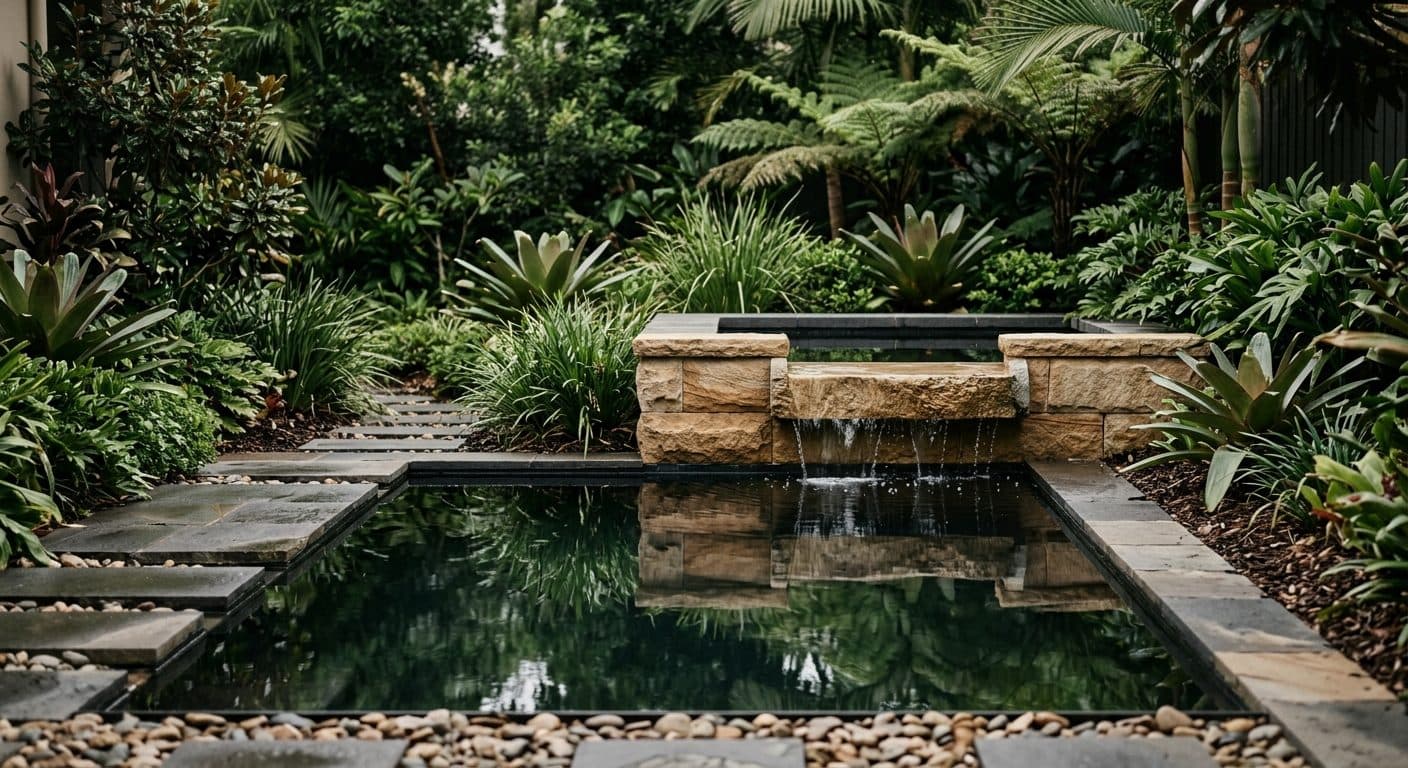
The reason so many water features end badly here is that they were designed for a gentler climate, so build in the subtropical realities from the start. Moving water is the big one: a pump that keeps the water circulating stops mosquitoes breeding and keeps the feature far healthier than a still pool, so unless you're committing to a properly planted, balanced wildlife pond, keep the water moving. Evaporation and algae are the other two, both driven by heat and sun, so I size the feature sensibly, give it some shade through the worst of the afternoon, and set it up so topping up and cleaning are easy rather than a wrestle. A feature you can maintain in ten minutes gets maintained; one that fights you gets switched off and turns green.
Wildlife ponds: worth it, with eyes open
A naturalistic pond is the most rewarding water feature and the most honest about its demands. Done properly, with marginal planting, varied depths and a balanced little ecosystem, it can largely look after itself and it will fill your garden with frogs and dragonflies and visiting birds. But it asks for space, patience while it balances, and a tolerance for it looking like nature rather than a swimming pool, and it pairs beautifully with the loose, layered planting of a Japanese garden or a naturalistic scheme rather than a crisp formal one. If that's the garden you want, a pond is the heart of it. If you want sparkle and control, it isn't.
Mind the depth and the pool-safety rules
One caution is worth building in from the start, because it's far easier to design for than to retrofit: depth. Under Queensland's rules a structure capable of being filled to a water depth of 300mm or more can fall within the definition of a regulated pool and bring pool-safety obligations with it, including fencing, though features and ponds that are genuinely ornamental are commonly treated differently. The rules turn on the detail and they change over time, so it's worth checking the current Queensland Building and Construction Commission and Building Act requirements and confirming with your local council or a pool-safety certifier before you build, rather than assuming a pond is exempt. Keeping an ornamental feature comfortably under that depth, or designing it as a shallow reflection pool, is one clean way to sidestep the question.
Keep the cane toads out
The other thing to plan for is cane toads, which will find any still water in a Brisbane garden and breed in it with enthusiasm. A smooth-sided edge or a raised wall standing somewhere around 500 to 600mm above the surrounding finished level helps keep them out, because cane toads are poor climbers and can't scale a smooth vertical face, and fine mesh with small openings dug in at the base stops the toadlets getting through. Failing that, check the water regularly through the warmer months and remove cane toad eggs when you find them: they're laid in long gelatinous strings, quite distinct from the clumped eggs of native frogs, so they're easy to tell apart once you know what you're looking at. It's worth confirming the current advice with a local source, as the recommendations get refined over time.
Make it belong to the garden
However you use water, it has to look like it belongs. A feature that matches the materials and geometry of the space, a clean formal trough in a modern garden, a rock-edged pool in a lush one, reads as part of the design, while a random ornament dropped in reads as exactly that. I site water where it'll be seen and heard from where people actually spend time, tie its materials to the surrounding hardscape, and use planting to soften and settle it in. On cost, water features run an enormous range from a simple self-contained bowl to a fully built and plumbed pool, so the price comes from the contractor who builds it, and the value of designing it first is that the plumbing, power and overflow are planned before anything is dug.
If the sound or the stillness of water is what your garden is missing, it's a lovely thing to design in properly. Our Design Discovery Consultation is where we start, working out what the space can carry and where the water should sit.
Ready to start designing?
We're currently taking on new landscape design clients across Brisbane. Reach out for a personalised quote, whether you're a homeowner or a design professional.
Book a Free Discovery Call