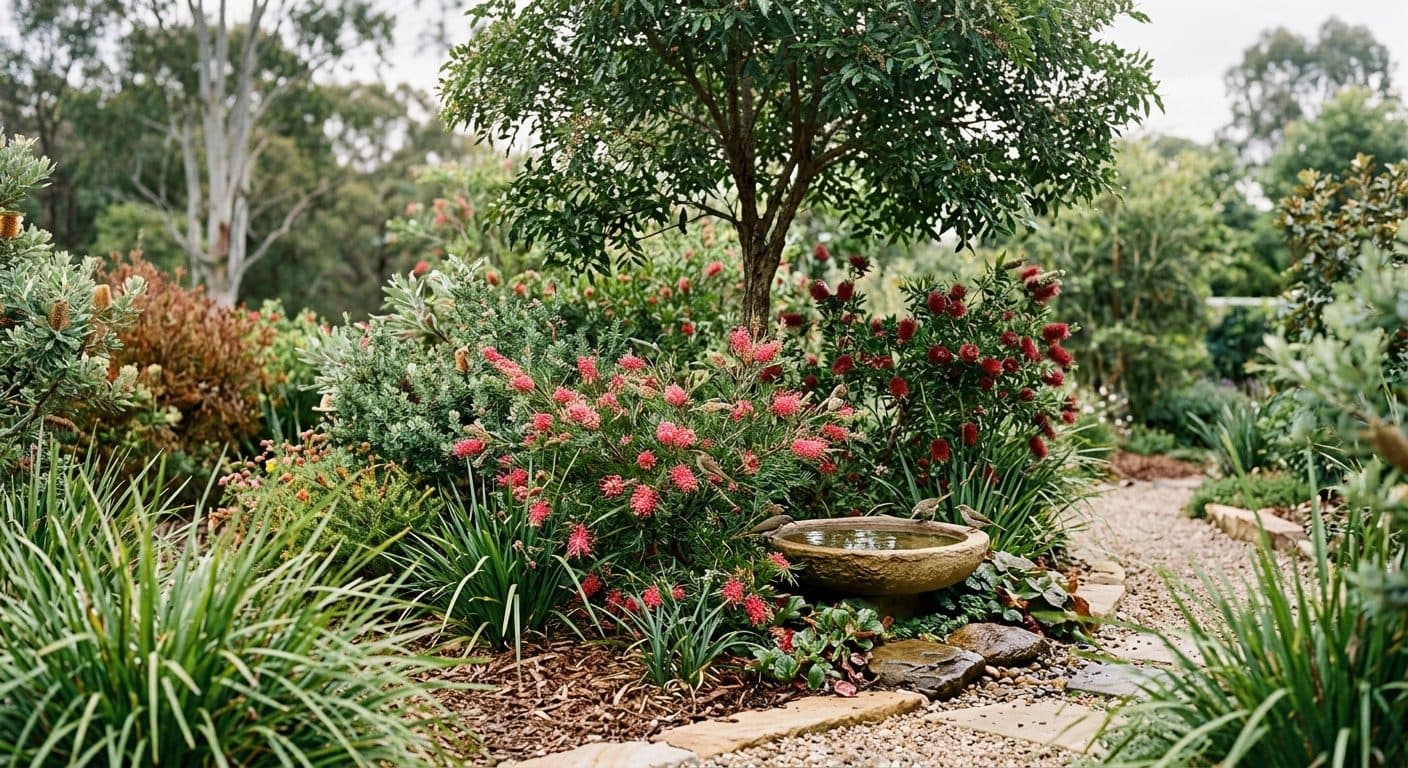
A garden full of birds isn't luck, it's layers. Here's how I design Brisbane gardens that bring in more than just the noisy lorikeets, with food, water and cover across the year.

By Shannon Trevisiol, Landscape Designer, Brisbane · 4 min read
- Birds come for structure, not just flowers: a garden with canopy, mid-storey and ground layers holds far more species than a flat bed of grevilleas.
- Feed across the seasons with a mix of nectar, seed, fruit and the insects that dense planting shelters, rather than one big flush that empties by autumn.
- Give birds water they actually trust: shallow, at different heights, with cover close by but not so close a cat can lurk in it.
- A nectar-only garden breeds a lorikeet monoculture. Layered, varied planting is what brings in the smaller, quieter birds too.
Most Brisbane gardens have birds in them already, but usually the same three: a squadron of rainbow lorikeets that arrives like a pub at closing time, a couple of butcherbirds, and the noisy miners that chase everything else off. If you want the smaller, quieter, more interesting birds, the wrens and finches and honeyeaters that make a garden feel alive rather than just loud, you have to design for them. A bird-attracting garden isn't a bird feeder and a token grevillea. It's a habitat, and habitat is a design problem.
The good news is that the same layered, naturalistic planting that reads beautifully to us is exactly what reads as safe and full of food to a bird. Design for the birds and you tend to get a better garden anyway. Here's how I approach it.
Think in layers, not beds
Birds live in vertical space, so the single biggest lever is structure: a garden with a canopy layer, a dense mid-storey and a planted ground layer will hold far more species than the same area planted flat. The canopy gives larger birds somewhere to perch and nest, the shrubby mid-storey is where the small birds actually shelter and feed, and the ground layer of grasses and groundcovers hides the insects and seed that a surprising number of birds are really after. When people tell me their garden only gets lorikeets, it's almost always because it's all lawn and a few isolated shrubs, with nowhere for a smaller, shyer bird to feel safe.
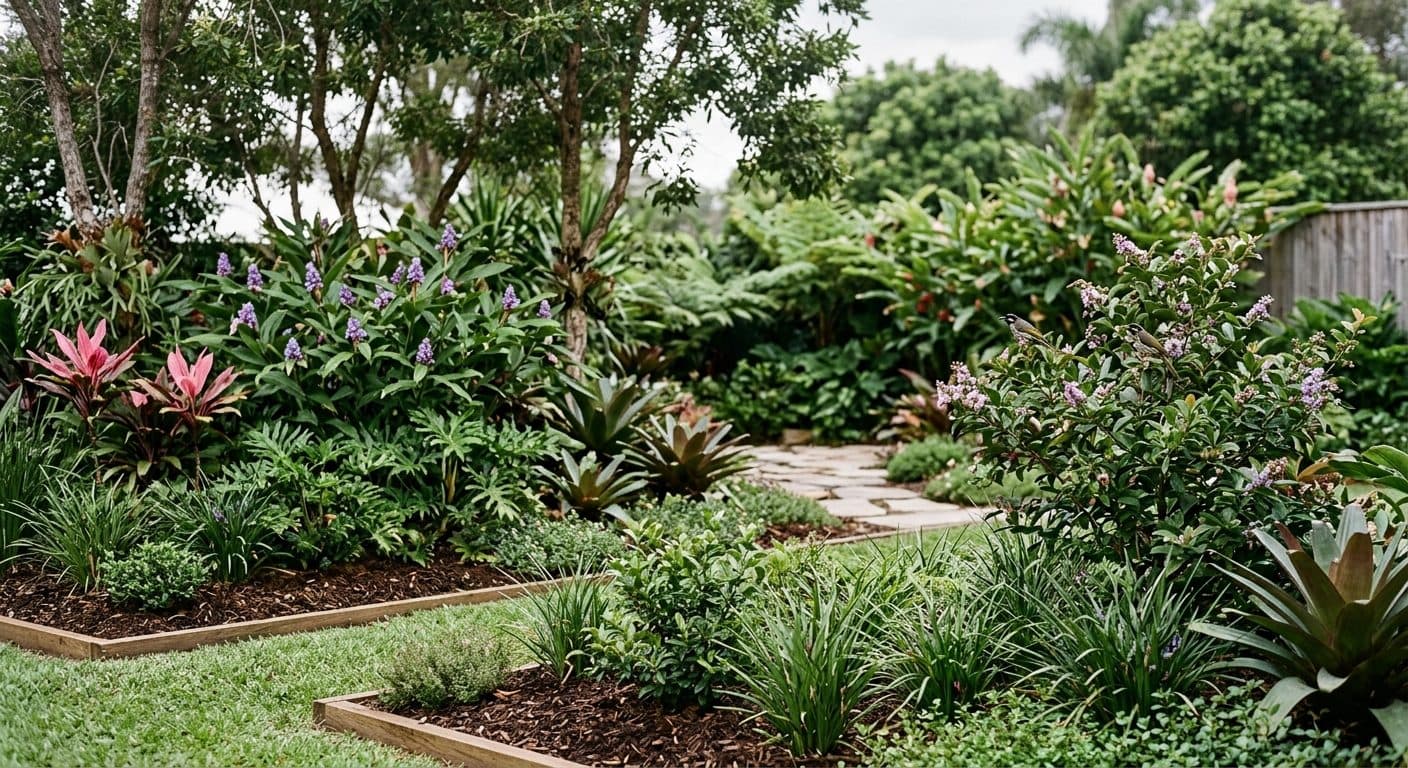
This is the heart of the naturalistic garden trend, and it pairs naturally with native garden design, because a layered native planting does double duty: it looks like the loose, textural gardens everyone wants right now, and it functions like the bushland the birds evolved in.
Feed them across the whole year
Plant for a long, staggered food supply rather than one big flush. A garden that erupts into flower in spring and then goes quiet by autumn will pull birds in and then send them elsewhere, so I choose a spread of plants that flower and fruit at different times, and I lean on more than nectar. Bottlebrush (Callistemon) and grevillea carry the nectar-feeders, small-fruited natives like lilly pilly feed the fruit-eaters, seeding grasses and lomandras feed the finches, and honestly the most valuable food source of all is the insect life that dense, layered planting shelters, which is what the majority of small birds are hunting when you see them working through a shrub.
A quick warning worth heeding: an all-nectar garden, wall-to-wall big showy grevilleas, tends to breed exactly the aggressive lorikeet and noisy-miner crowd you were trying to dilute. Variety is what brings the balance back. My guide to the best plants for Brisbane gardens is a good starting shortlist to build that mix from.
Water they'll actually use
Give birds water and you'll draw in species that no amount of planting will, but the water has to feel safe. Shallow is the rule, no more than a few centimetres with a gentle slope or a rock to stand on, because most small birds won't use a deep, steep-sided bowl. I like water at more than one height, a low dish for ground-feeders and something raised for the wary, and I site it near cover so a startled bird can dart to safety, but never so tucked into a dense shrub that a cat can wait in ambush. Moving water helps enormously too, a slow dribble or a small spill, which is one of the quieter arguments for a garden water feature that does a job beyond looking good.
Design out the things that scare them off
The last piece is subtraction. Large open expanses of lawn read as exposed and dangerous to small birds, hard boundaries with nowhere to hop between leave them stranded, and a garden of tightly clipped, isolated specimens offers nothing to hide in. So I break up the open ground, connect the planting into continuous runs of cover birds can move through without breaking into the open, and let some of the garden stay a little loose and layered rather than manicured to within an inch of its life. A bird-attracting garden asks you to relax about tidiness in the right places, and it repays you every morning.
If you'd like a garden that brings the birds back rather than just the loudest of them, that's a design conversation worth having on site. Our Design Discovery Consultation is where we start, walking your block and working out what it could hold.
Ready to start designing?
We're currently taking on new landscape design clients across Brisbane. Reach out for a personalised quote, whether you're a homeowner or a design professional.
Book a Free Discovery Call