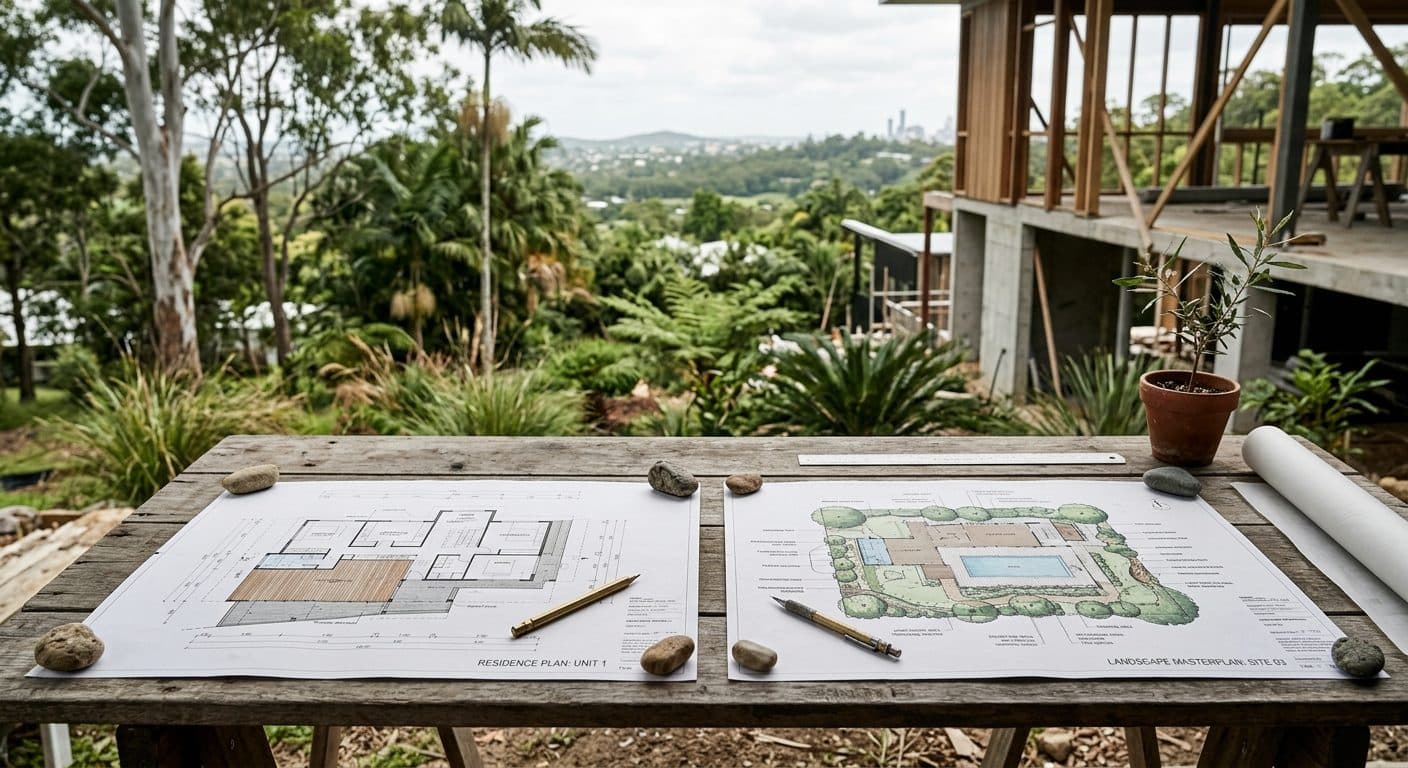
The best time to bring in a landscape designer is while the architectural plans can still change: levels, drainage and trees are decided early and expensive to undo.

By Shannon Trevisiol, Landscape Designer, Brisbane · 5 min read
- The best time to bring me in is while the architectural plans are still liquid, because a house and its garden share one set of levels, drainage and trees.
- Finished floor level, stormwater discharge, service runs and tree retention are all close to irreversible once the drawings are finalised.
- Leaving the garden until last hands it leftover budget, leftover space, and a price that climbs the moment the machines and open access leave the site.
- If your build is already underway, design the whole garden and build it in stages, so stage one doesn't quietly wreck stage three.
Of all the timing questions I get asked, this one has the clearest answer, and it is the answer almost nobody follows: the best time to engage a landscape designer on a new build or major renovation is while the architectural plans are still liquid: before lodgement, before the slab, ideally before the floor plan is locked. The second-best time is now. The gap between those two is measured in real money, so it is worth understanding why.
The ideal moment: while the plans are still liquid
A house and its garden share one set of levels, one drainage strategy, one run of services and one population of trees. Once the architectural drawings are finalised, all of those are decided, usually by people thinking hard about the building and only glancingly about the ground around it.
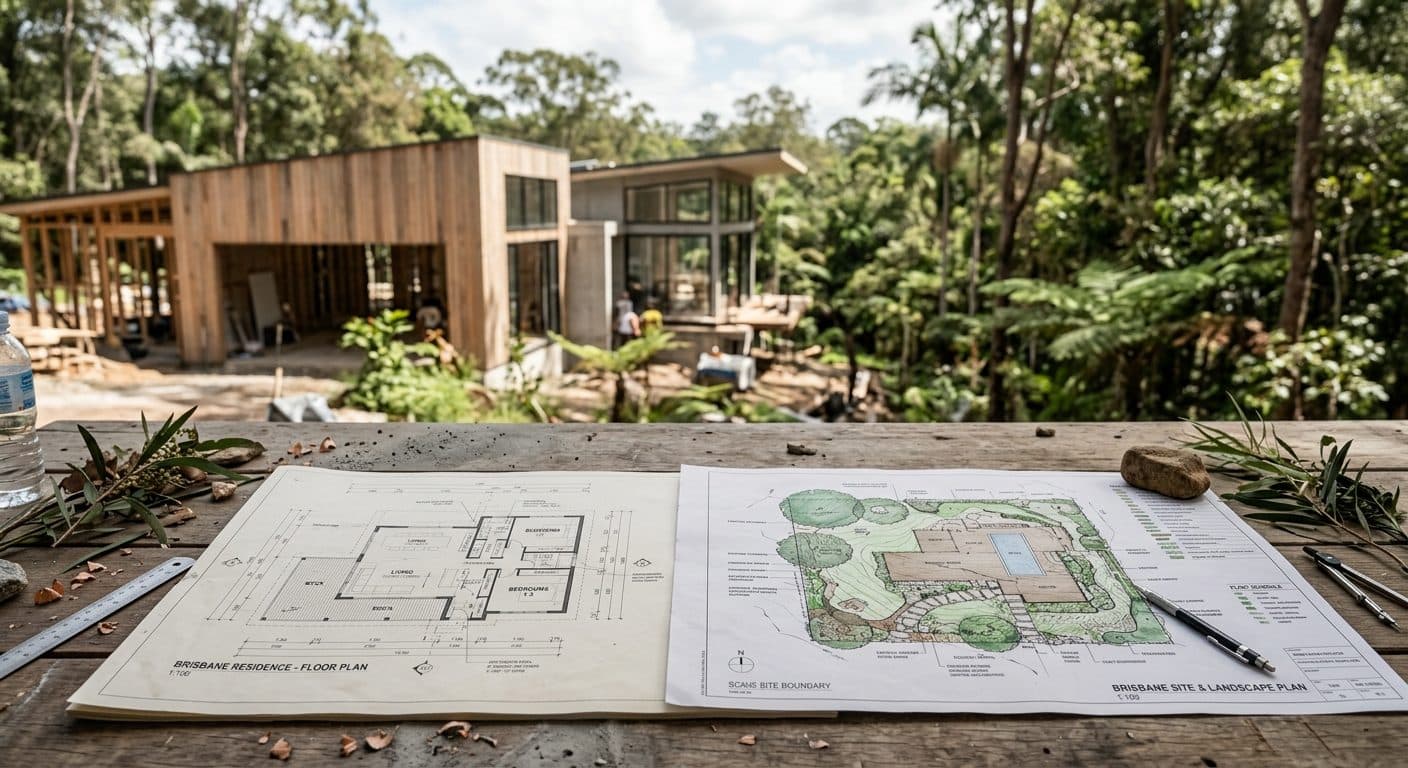
Finished floor level is the big one. A house set a few hundred millimetres higher or lower than it needed to be is the difference between stepping gently into the garden and needing stairs, ramps and retaining walls to get there. Where stormwater discharges determines whether the backyard is usable after summer rain or permanently soggy. Service runs (sewer, stormwater, electrical) have an uncanny habit of being trenched exactly where the only decent shade tree could have gone. And tree retention is close to irreversible: a mature tree protected through construction gives you shade and character that no budget can buy back once it is gone.
None of this demands a full landscape design before the house is drawn. Even a concept-level pass (zones, levels, trees worth keeping, the relationship between inside and out) gives your architect something concrete to coordinate against. In my experience the cost of that early input is small against the retaining, drainage and access compromises it prevents, and if your project needs approvals, early coordination makes council requirements far easier to manage.
What happens when landscape is left until last
When the garden is the last thing considered, the same three problems tend to arrive together.
Leftover budget. The landscape gets funded by whatever survives the build, and builds have a talent for consuming their own contingency. The result is a garden designed to a remnant, and it is the thing you will see from every window, every day.
Leftover space. The garden becomes whatever shape remains after the house, driveway, tanks and shed have taken their positions, rather than a space anyone actually chose. Awkward side setbacks and a thin apron of lawn are usually the signature of a landscape nobody planned.
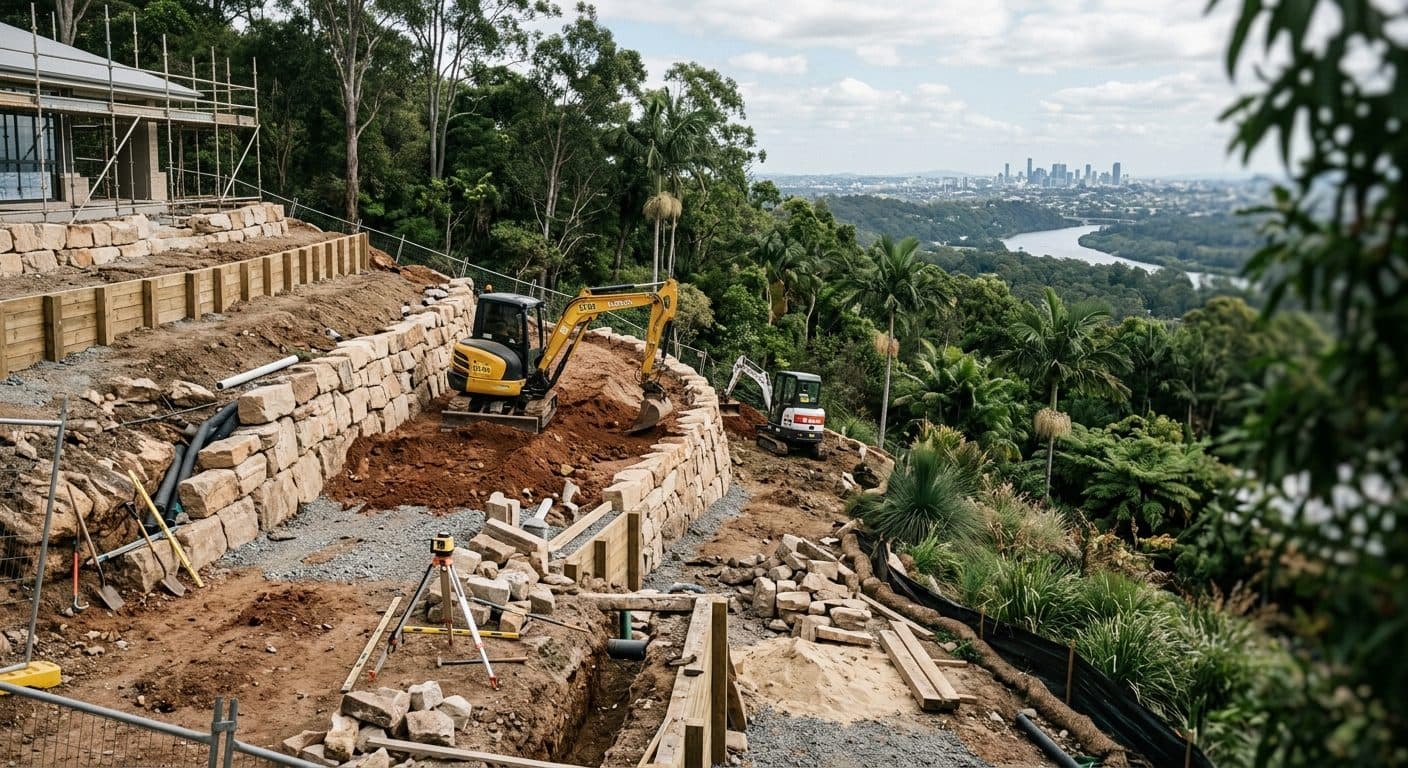
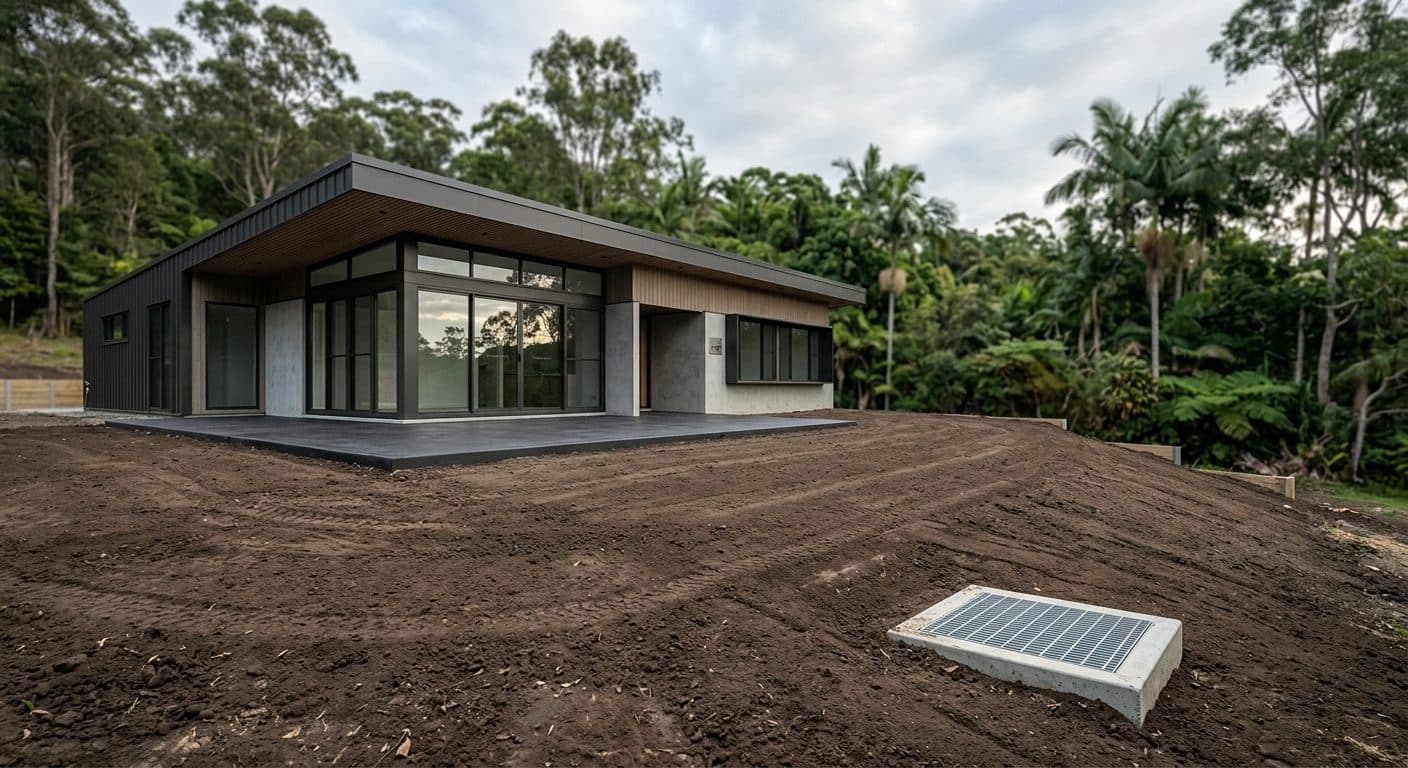
And what I think of as the cranes-gone problem. While a builder is on site there is machinery, open access and trades already mobilised, so excavation, soil movement and craning in mature trees or large rocks are all comparatively cheap. Once the fences come down and the machines leave, the same work might mean removing a new fence, protecting finished floors, or barrowing material through a completed house. The work did not change; the access did, and the price follows access.
Working alongside your architect and builder
Bringing a landscape designer in early is not about adding another voice arguing for territory. Done properly, it is quiet coordination. The architect leads the building; the landscape designer feeds in ground levels, drainage implications, planting zones and outdoor structures at the moments those things are being fixed. Most architects I have worked with welcome it, because the garden is usually the part of the project they have the least time to resolve.
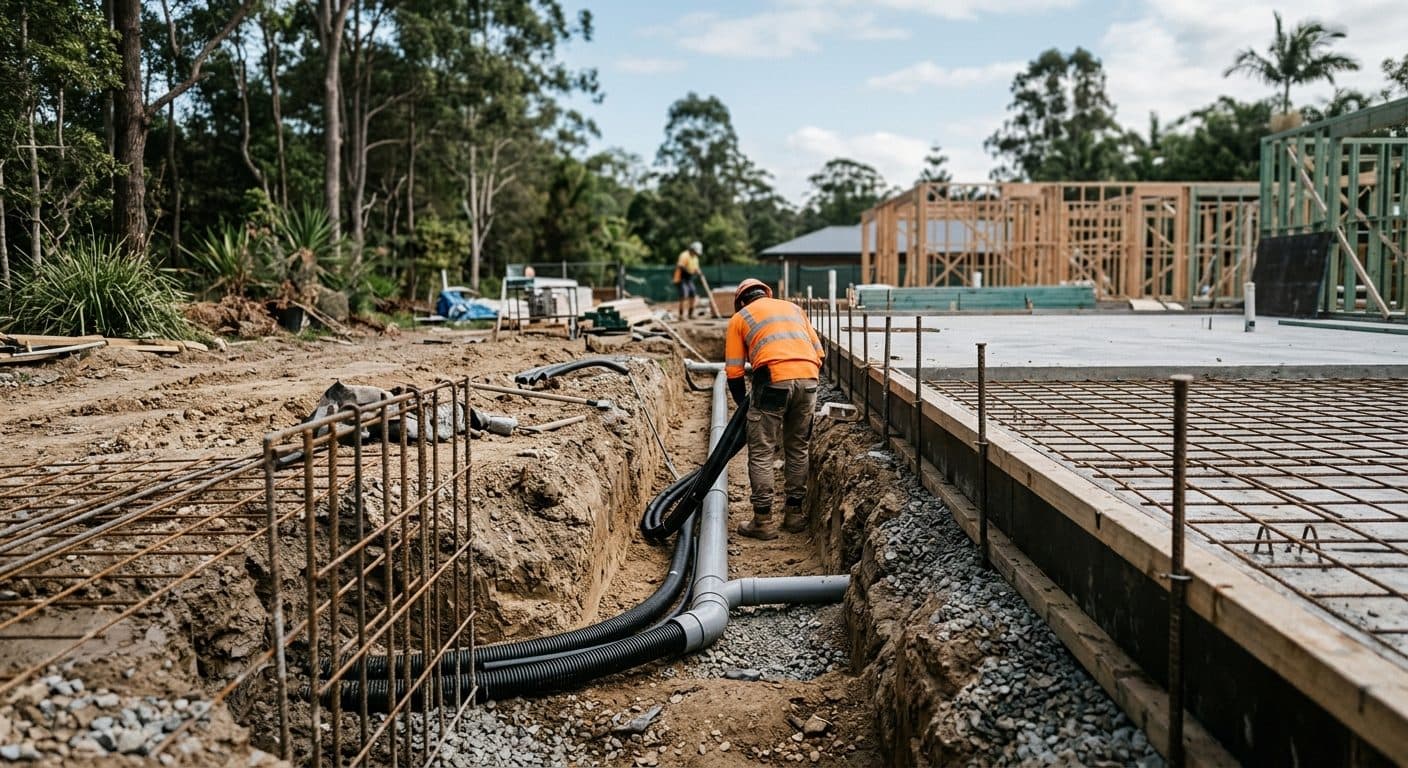
Builders benefit just as much. Landscape documentation that exists before contract pricing lets a builder sequence sensibly: conduits laid under slabs before they are poured, taps and power points where the garden will actually need them, topsoil stockpiled instead of carted off site and bought back later. These are small line items when planned and expensive retrofits when not. That documentation typically runs to scaled plans, planting schedules, materials palettes and construction details.
Staging the design during construction
If your build is already underway, the sensible path is to design whole and build in stages. A complete design does not oblige you to build everything at once. Its real job is to stop stage one wrecking stage three. Structure comes first while access still exists: earthworks, drainage, retaining, and the major trees that need the longest to establish. Surfaces, planting and finishes can follow as the budget recovers.
During construction itself, this is where project oversight earns its keep: set-outs checked against the drawings, substitutions managed when materials or plants are unavailable, and details resolved with the builder rather than improvised around them. The design intent survives contact with the site.
It is rarely too late, but earlier is cheaper
If your house was finished five years ago, none of this should discourage you; most of the gardens I design are for established homes, and they turn out beautifully. The point is not that late is bad. It is that every month earlier buys options, and options are the cheapest thing in any project. My rule of thumb: engage a designer before decisions become concrete, in both senses of the word.
If you are at drawings stage, or staring at a freshly finished slab and a sea of builder's rubble, a Design Discovery Consultation will establish what needs deciding now and what can comfortably wait.
Ready to start designing?
We're currently taking on new landscape design clients across Brisbane. Reach out for a personalised quote, whether you're a homeowner or a design professional.
Book a Free Discovery Call