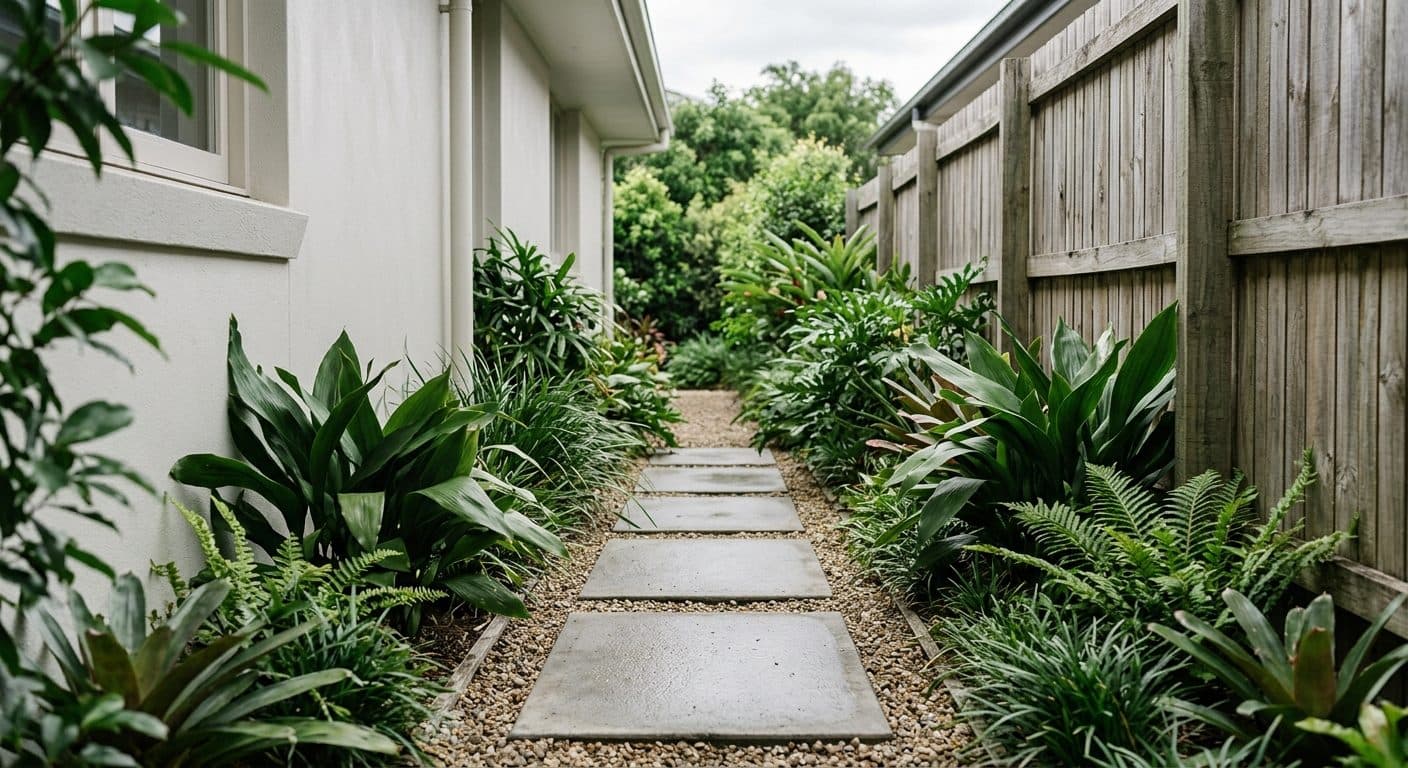
The side of a Brisbane house is usually a dark, damp one-metre strip that holds the bins and not much else. Here's how I handle drainage, access, shade and the neighbour's wall so it feels intentional.

By Shannon Trevisiol, Landscape Designer, Brisbane · 6 min read
- Fix the water and the access first: a side passage has to drain away from the house and stay walkable for bins, meters and maintenance before it can be pretty.
- Plant for the light it really gets. Most Brisbane side passages are deep shade with a hot patch at one end, so choose slim, tough, shade-tolerant plants rather than fighting the conditions.
- Keep the palette and the materials simple. One path surface, one or two repeated plants and a clear end point make a strip feel designed rather than leftover.
- Check boundary, fence and stormwater details before you build, because a side passage often involves your neighbour and services you can't see.
Almost every Brisbane block has one: the strip between the house and the boundary that holds the bins, the air-conditioner, the hot water unit and a lot of leftover builder's gravel. If you've been searching for narrow side garden ideas or side of house landscaping, the honest starting point is that this is the hardest piece of garden on the block. It's narrow, it's usually shaded, it often sits on a drainage line, and it's the one part of the property everybody walks past without looking.
That's also why it's worth doing well. A side passage is frequently the first thing you see from the street gate or the last thing you see from a kitchen window, and a well-handled one makes the whole property feel considered. I treat it like a small, linear room with a job to do rather than a gap to fill.
Sort the water and the access first
Before a single plant goes in, I look at where the water goes. The side of a house collects roof runoff from the gutters and downpipes, and in a February storm that water has to get somewhere that isn't your slab, your neighbour's yard or the back of your pantry. The ground should fall away from the house, downpipes need a proper route to the stormwater system, and any additional drainage is best designed with the levels in mind. How this ties into stormwater varies from block to block and between councils, so it's worth confirming connections with a licensed plumber or drainer rather than guessing. My piece on drainage and levels on a new build covers the thinking in more detail, and most of it applies to any side passage.
Then comes access. Bins have to go out, meters have to be read, and someone has to be able to get a ladder or a wheelbarrow through. I commonly design for a clear path of around 600–900 millimetres where the width allows, which usually means the planting gets the remaining sliver rather than the other way round. In a one-metre strip, a path takes most of the width, and that's fine: a good path with a thin band of planting beside it reads as generous, whereas a lumpy garden bed with a worn track through it reads as neglect.
Choose the path surface to suit the job
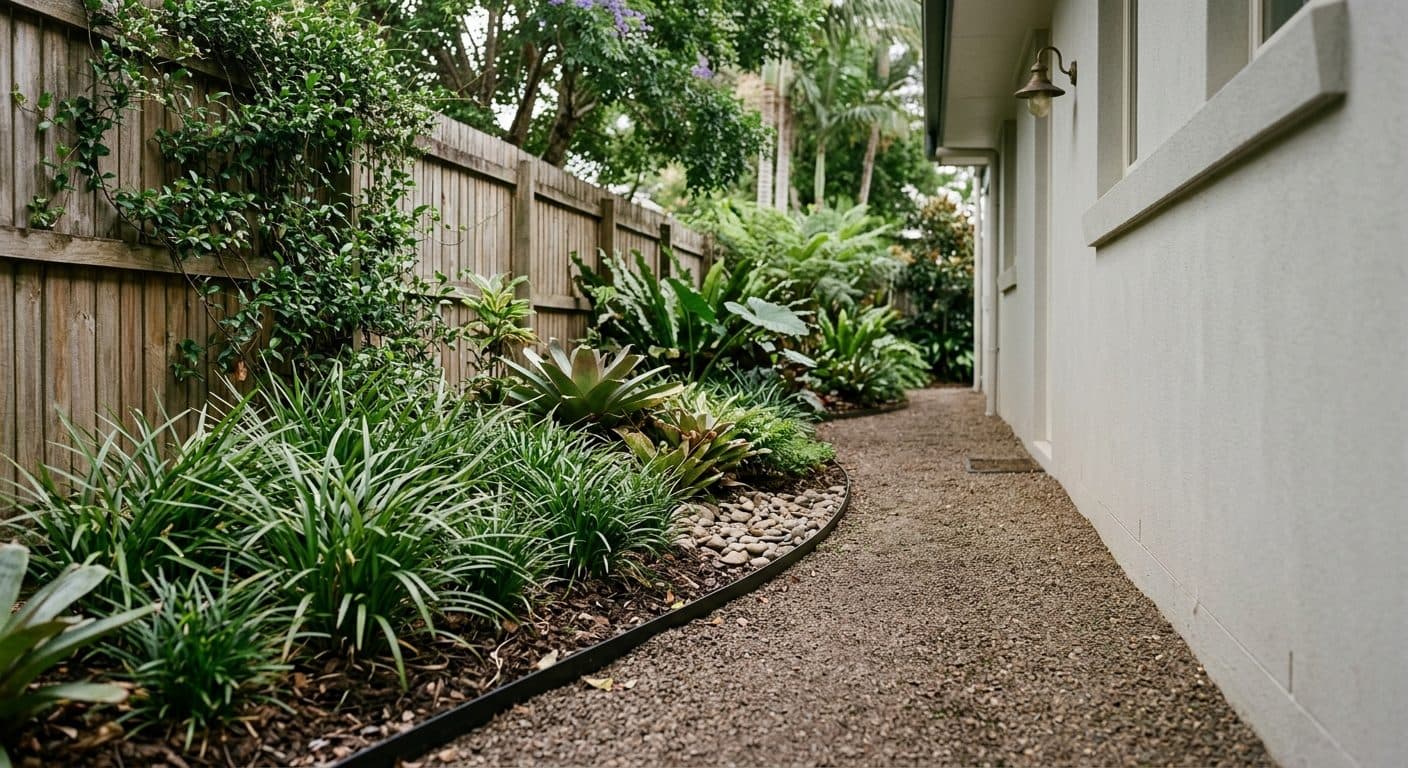
For the surface, I weigh up how wet it gets, how much it's used and how it looks from a distance. Compacted fine gravel or decomposed granite is soft underfoot and lets some water soak in, but it migrates into the garden beds and onto the lawn if it's not edged properly. Pavers or honed concrete stepping stones set into gravel give you a defined route that stays clean for the bin wheels. A continuous concrete or paved strip is the most durable, though it sheds water faster, so the drainage has to be right. Whatever you choose, edge it, because loose gravel without an edge is how a side passage ends up looking like a building site again within a year.
I also keep the surface to one material. Two or three different surfaces in a one-metre strip is visual noise, and the narrower the space, the more calm it needs.
Deal with the shade and the wall
Most Brisbane side passages sit in deep shade for most of the day, with sun squeezed in only at the ends or for a short stretch in summer, and the south and east sides of a house are the darkest. That is a gift if you design for it, because shade-loving subtropical plants are some of the lushest and lowest-fuss in the palette. My guide to shade gardens in Brisbane goes deeper on reading the light, and the principle is the same here: work with what the passage gets, not what you wish it got.
The other feature is the wall, either your own or your neighbour's fence, which is often a flat, blank, boundary-facing surface. You can soften it with planting, though it's worth remembering that a fence is commonly shared or belongs to a neighbour, so check ownership, and fixings, climbers and vertical planters should be agreed with them first. For more on dressing a wall without much depth, have a look at green walls and vertical gardens, and if the real problem is a window or deck looking into your passage, my notes on creating privacy in a Brisbane garden and screening plants are where I'd go next.
Plant slim, tough and repeated
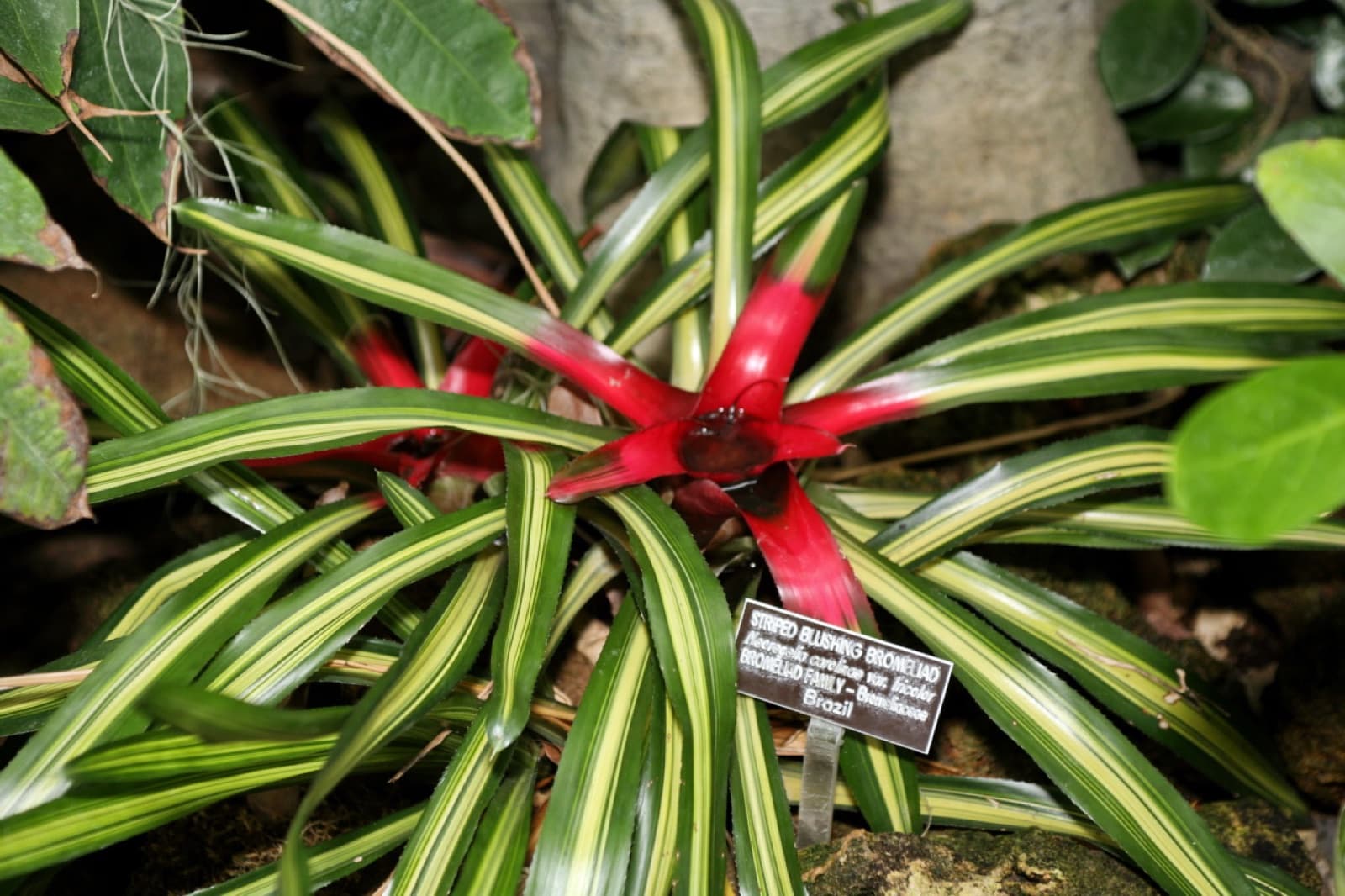
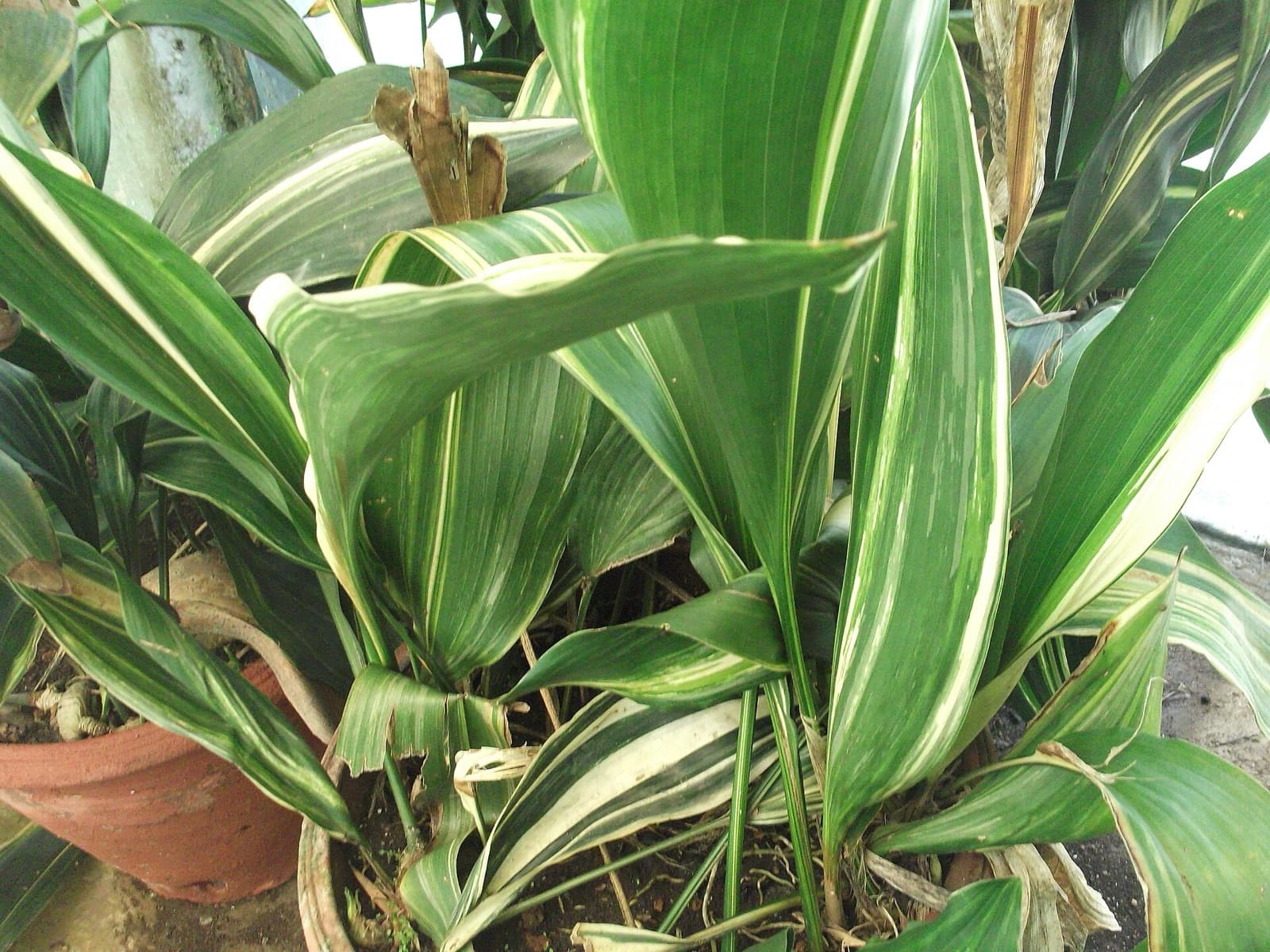
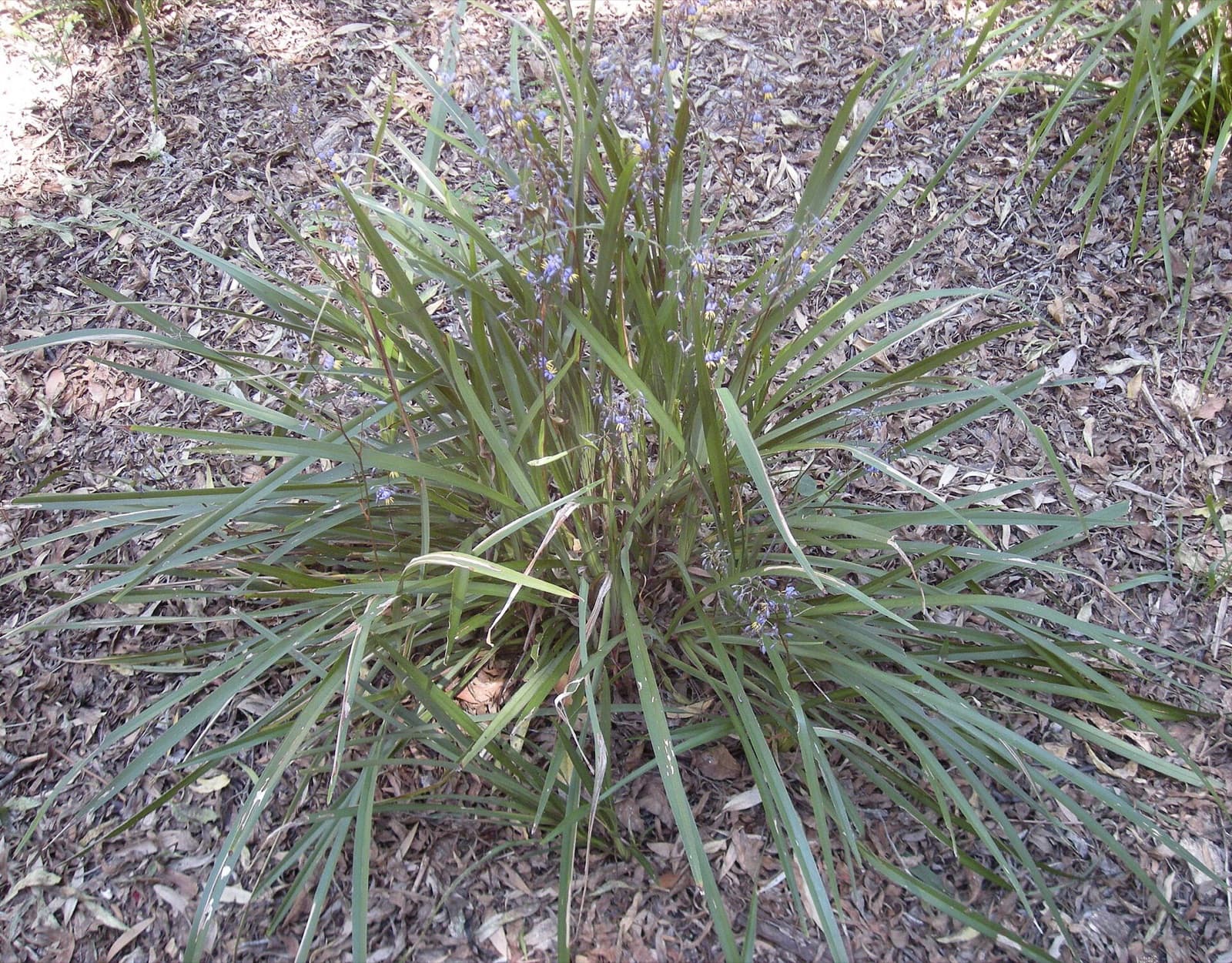
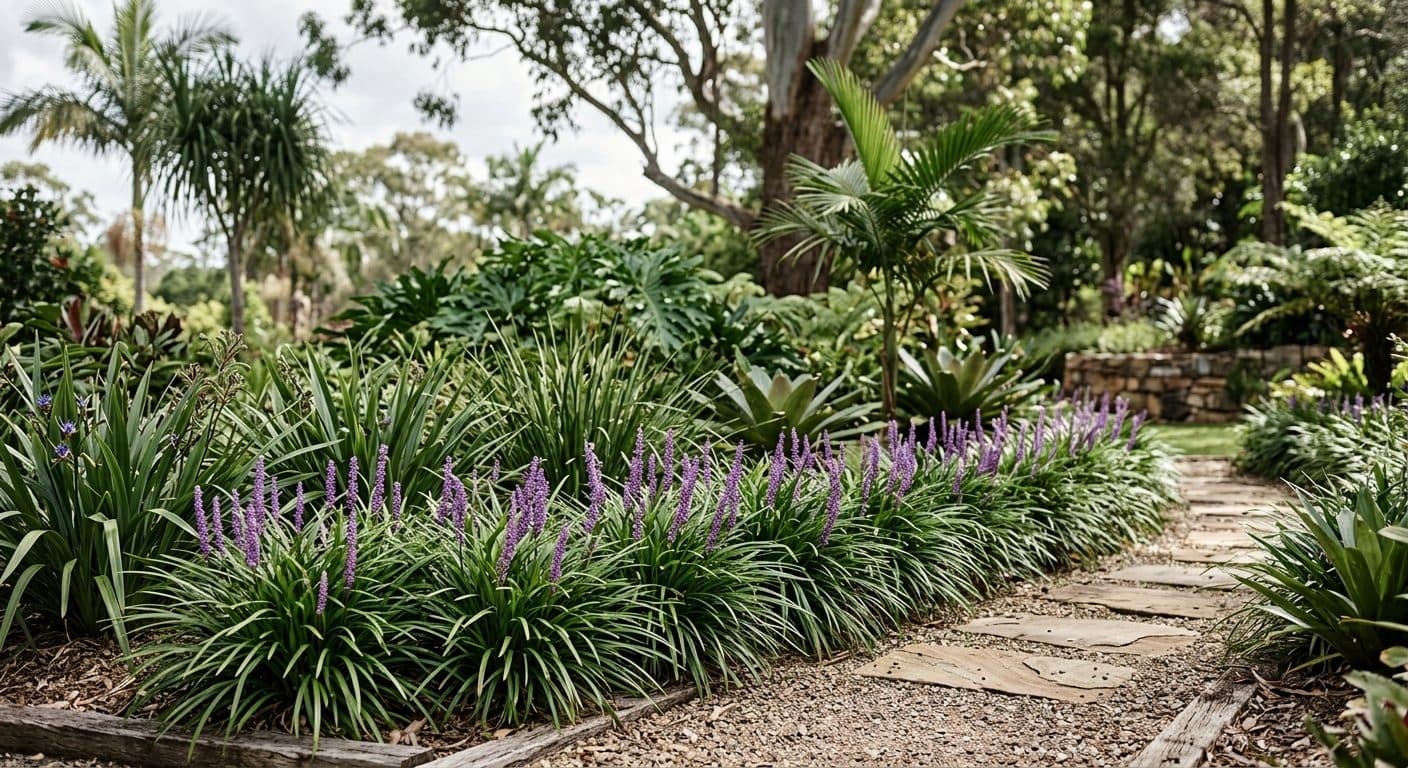
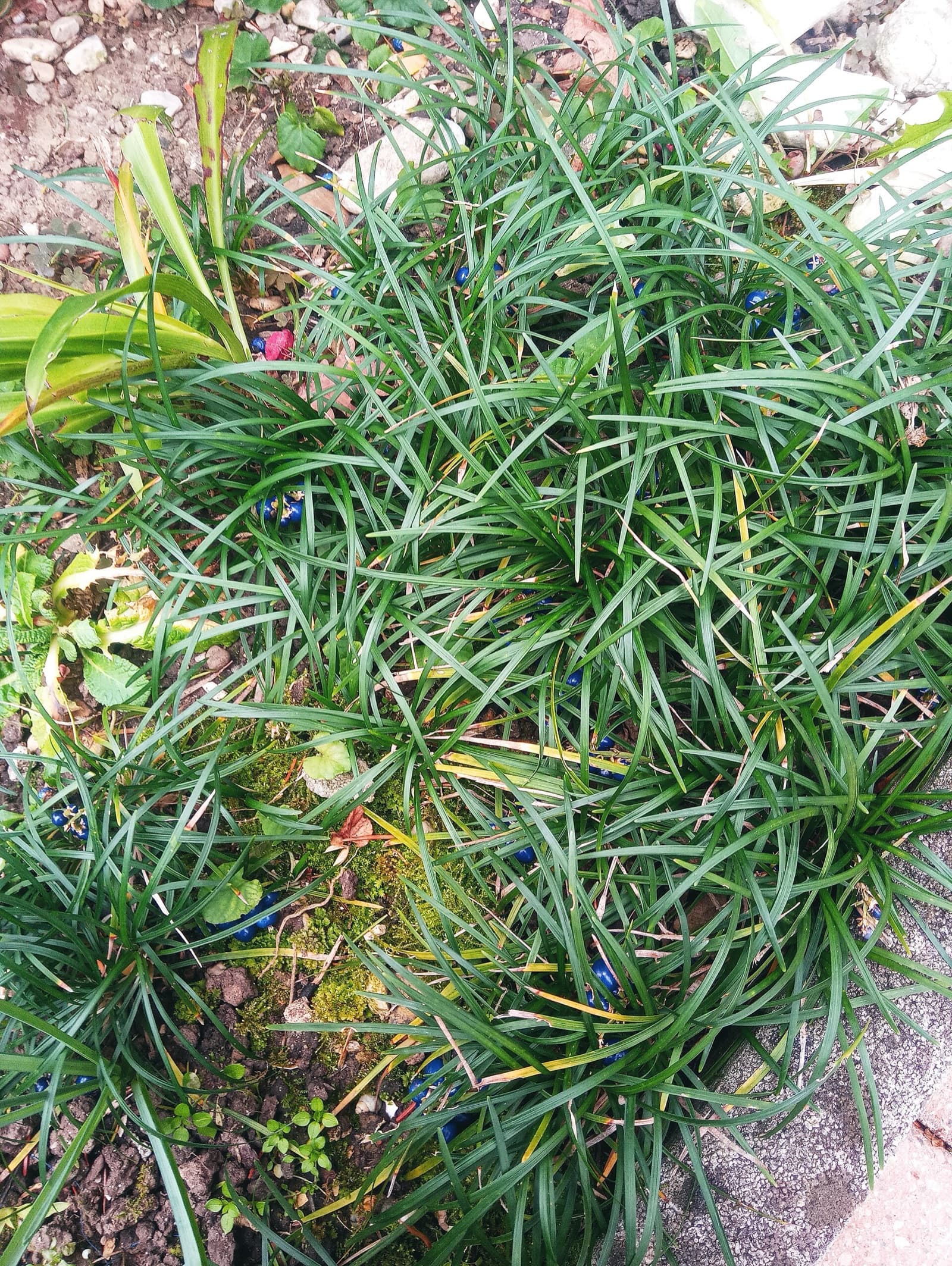
In a narrow strip, plant width matters more than height. A plant that matures at two metres wide will take the whole passage, so I choose upright, slim or clumping plants and repeat them for rhythm. Cast iron plant (Aspidistra) is the great performer in deep shade, mondo grass (Ophiopogon) and liriope (Liriope) make a neat, low edging that reads as deliberate, and dianella (Dianella) copes with a mix of shade and the odd patch of sun. For something with more presence, xanadu (Philodendron) brings big glossy leaves, though it needs room, and bromeliads give texture and colour in the dim corners. A pair of slim golden cane palms (Dypsis) planted with space around them can give height without spreading across the path.
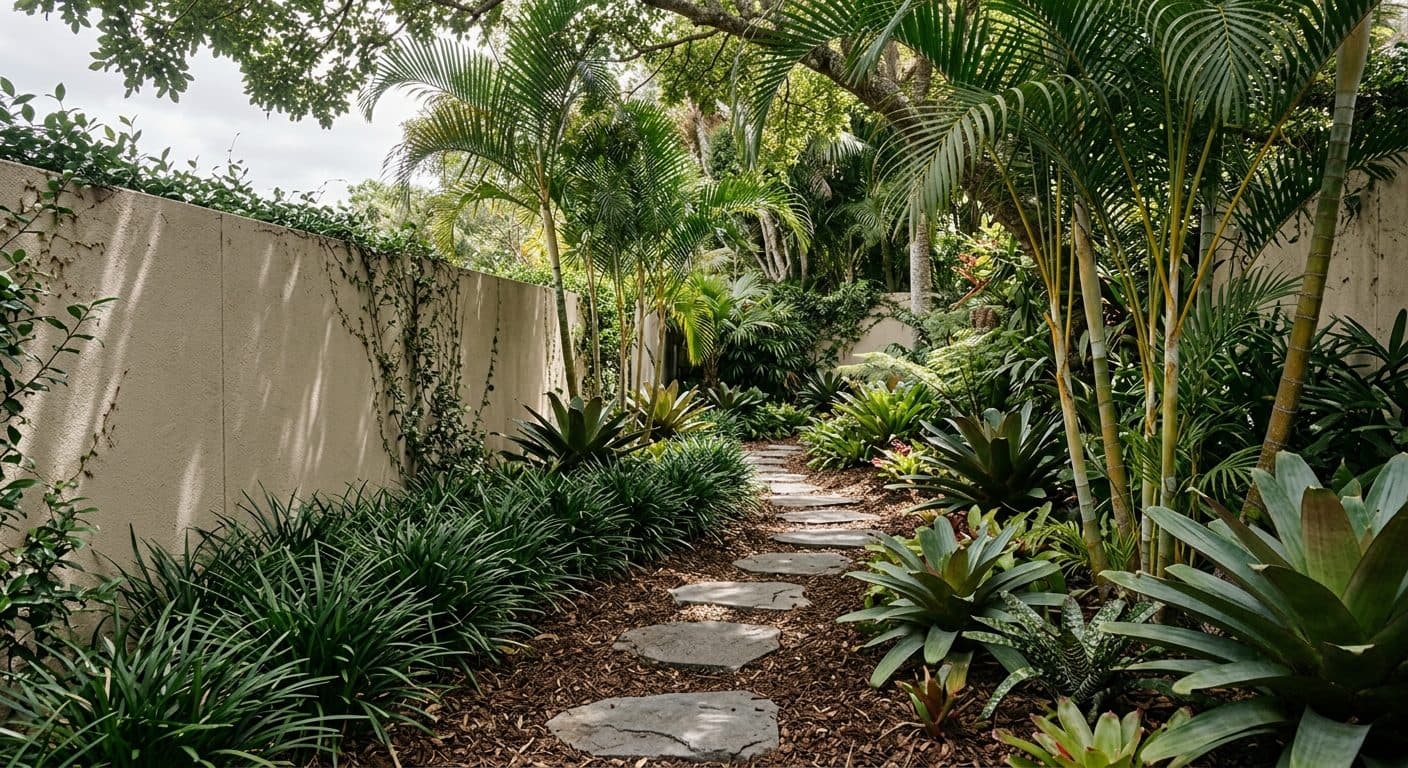
Two warnings from experience. First, avoid anything that spreads aggressively or has vigorous roots near a house wall, slab or drain, because a narrow strip has nowhere for them to go but into trouble. Second, remember that watering is hard here, so choose plants that will cope on rainfall and the occasional soak, and put down a good layer of mulch (my mulch guide explains why it matters so much in a shady spot).
Make it feel intentional
The trick that changes a side passage most is giving it a destination. Even a small one will do: a pot, a bench-height stone, a single sculptural plant, a gate, or a patch of lighter planting at the far end so the eye moves down the strip instead of stopping at the bins. Light helps too, and a couple of low, warm path lights make a passage you'd otherwise avoid after dark into a small, atmospheric corridor. I'd rather see one clear idea carried the whole way along than a series of little features competing for attention.
If you'd like help working out a side passage, or the rest of the garden around it, a Design Discovery Consultation is where I walk the block with you and sort the drainage, access and planting in the right order. For the wider planting palette, my guide to the best plants for Brisbane gardens is a good next read.


Ready to start designing?
We're currently taking on new landscape design clients across Brisbane. Reach out for a personalised quote, whether you're a homeowner or a design professional.
Book a Free Discovery Call