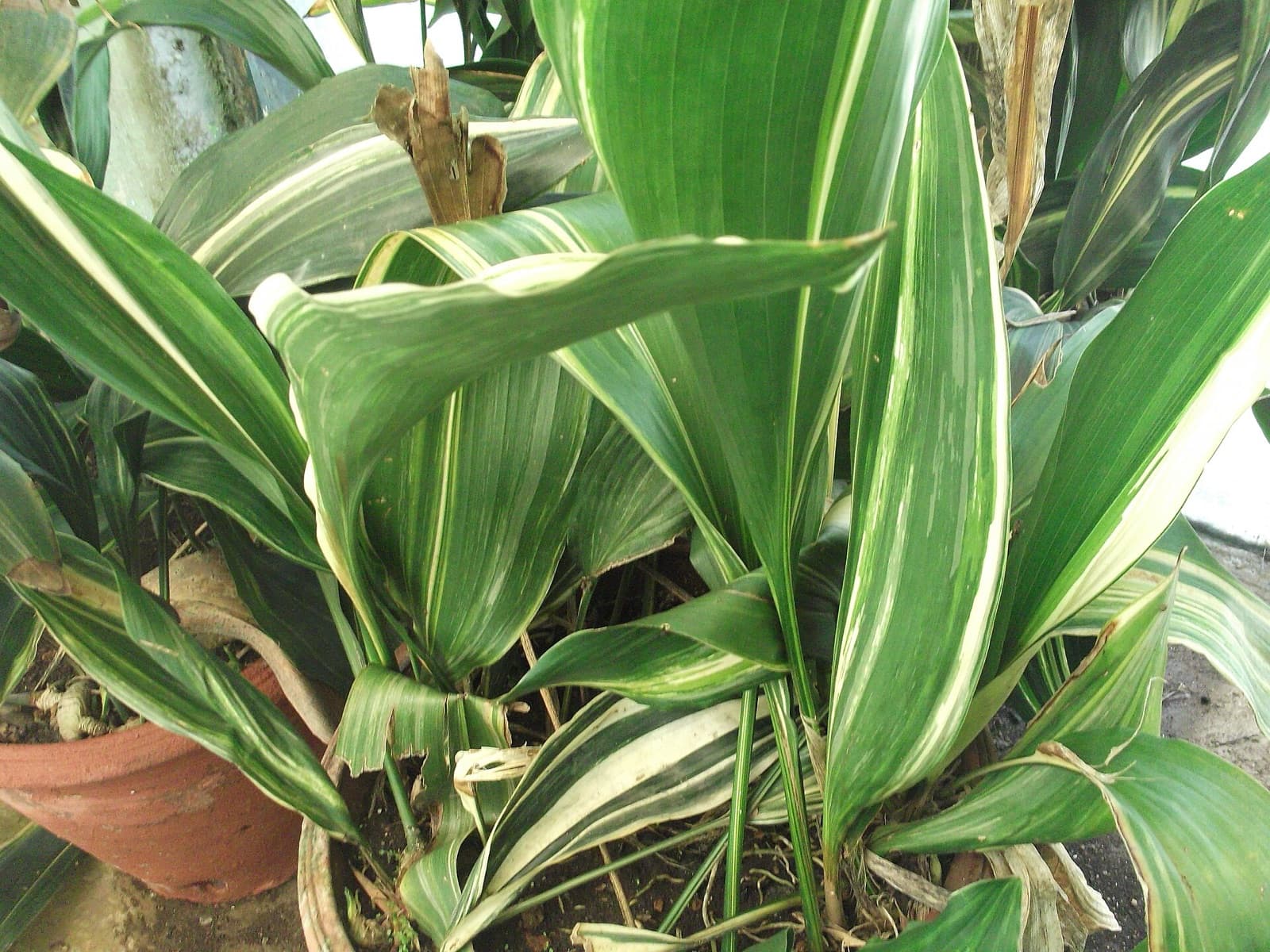
Aspidistra elatior, the broad-leaved survivor that earns its name by growing in the dark, dry corners that defeat almost everything else.
Aspidistra elatior · Also known as Aspidistra, Bar Room Plant
The cast iron plant is named for exactly the quality that makes it so useful: it is very nearly impossible to kill, standing up to deep shade, dry soil, neglect and low light with the same unbothered good looks. Most people call it the cast iron plant, though the botanical name Aspidistra sticks around from its Victorian parlour days, when its tolerance of dim, gas-lit rooms earned it the affectionate nickname the bar room plant.
In the garden it is the answer to the hardest question a shaded block can ask, the dark dry corner under a deck, beside a fence, or beneath a dense tree where nothing will grow. Its broad, deep-green, upright leaves bring a lush, almost tropical presence to those forgotten spots, and they do it while asking for practically nothing in return.
In a Brisbane garden
The cast iron plant is one of our most valuable Brisbane problem-solvers precisely because it thrives in the conditions every other plant flinches from, and it will hold a lush green presence in a dark, root-filled, rain-shadowed corner where even ferns sulk. It handles our humidity happily and, once established, shrugs off the dry shade beneath eaves, decks and greedy tree roots, which is exactly the situation that has homeowners convinced nothing at all will grow there.
The single rule that matters is to keep it out of direct sun, because hot Queensland sun will scorch and bleach those broad leaves badly, turning its greatest asset an unhappy yellow-brown. Give it shade, a little compost when you plant it, and enough water to settle it in, and after that it is as close to set-and-forget as garden planting gets, spreading slowly and patiently into a handsome clump that looks after itself for years.
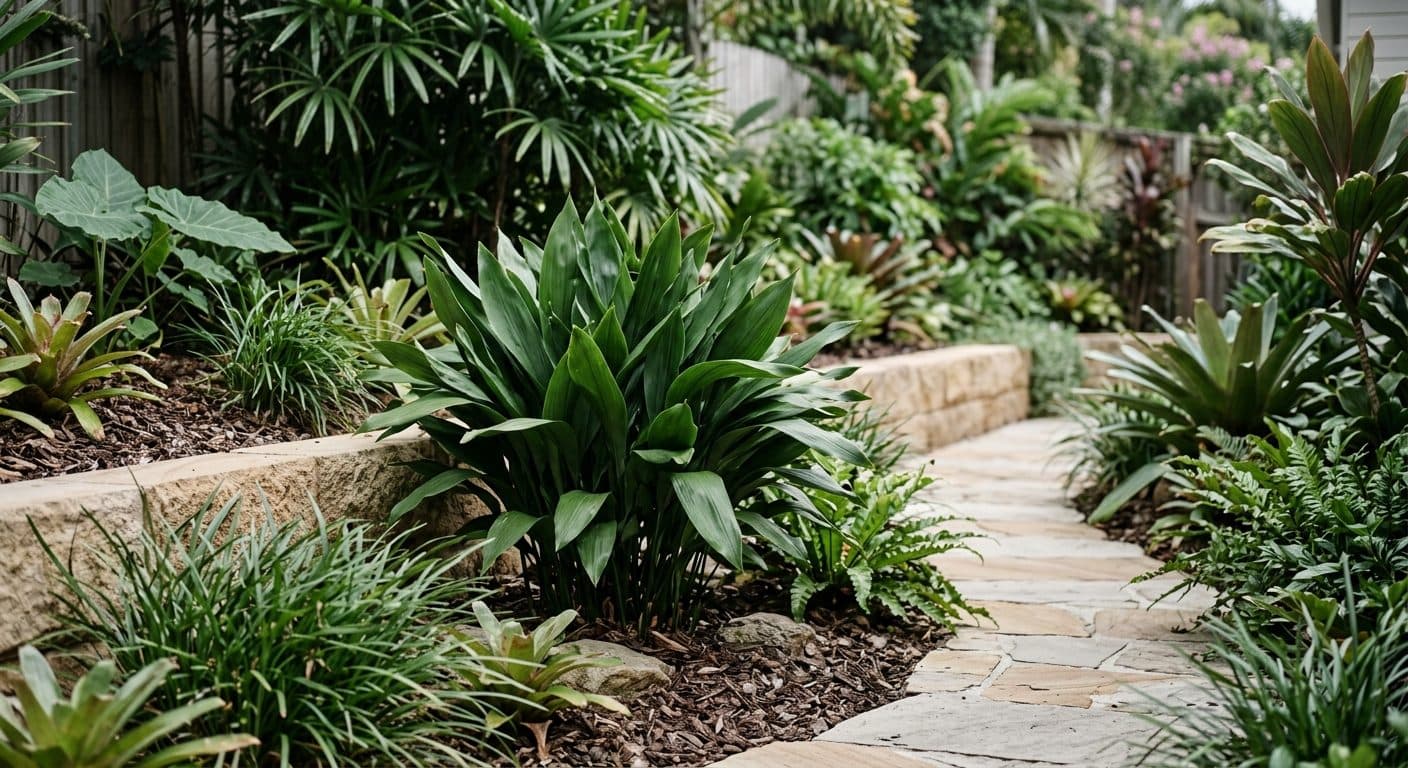
Photo: Yercaud-elango, CC BY-SA 4.0, via Wikimedia Commons
How we design with it
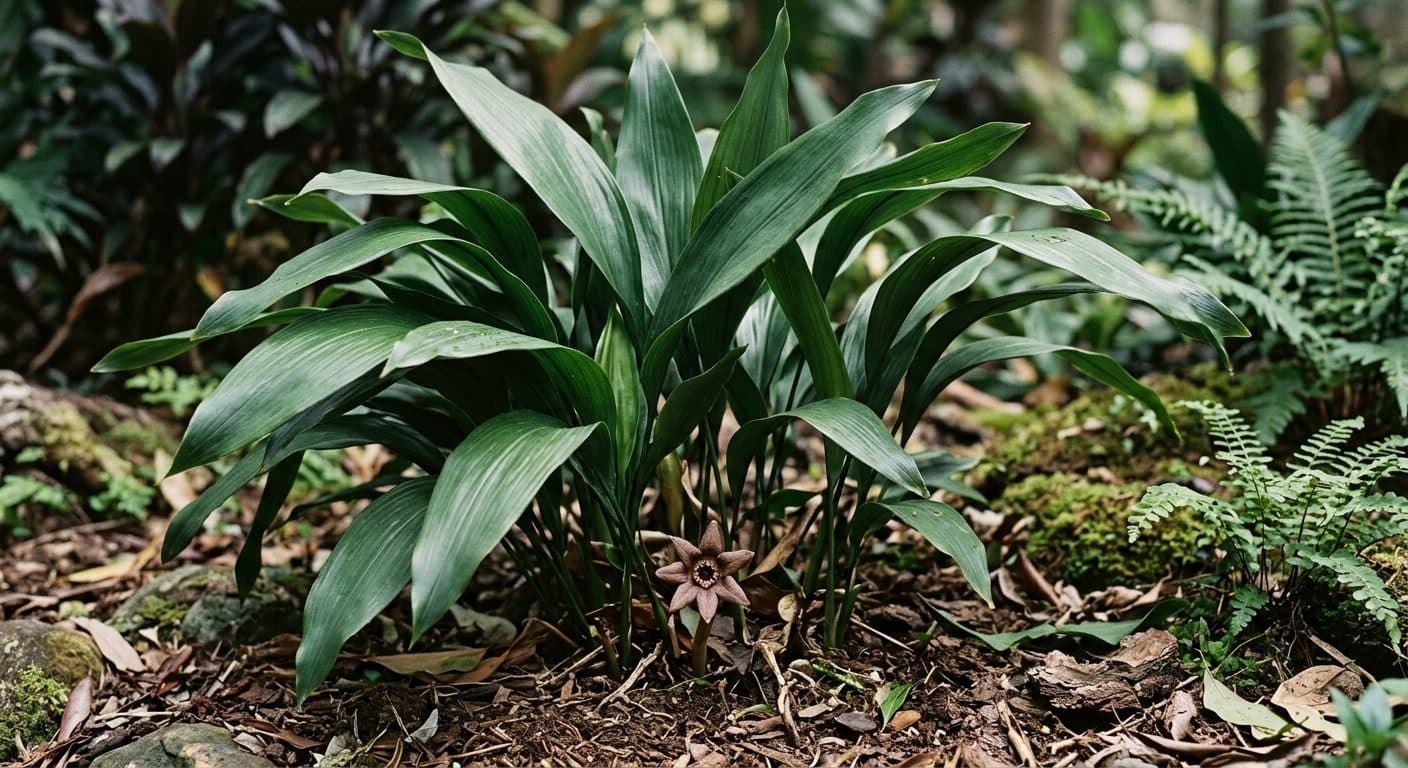
We use the cast iron plant as reliable structure in the shade, its bold upright leaves giving weight and a lush, tropical read to the parts of a garden that receive the least light. It is a cornerstone of the layered planting we describe in our guide to shade gardens in Brisbane, where its broad foliage plays off the finer texture of ferns and mondo grass to build depth on the cool side of a block.
In tight, overshadowed courtyards and narrow side returns it is often the plant that finally makes a hopeless corner work, which is why it recurs through our small garden design projects. We group it in threes or fives for a fuller effect, set it against a pale wall so the deep green leaves read strongly, and lean on it wherever a client has all but given up on a dark spot.
Where we write about cast iron plant
Common questions
Want the darkest corner of your garden to finally work?
We're currently taking on new landscape design clients across Brisbane. Reach out for a personalised quote, whether you're a homeowner or a design professional.
Book a Free Discovery Call