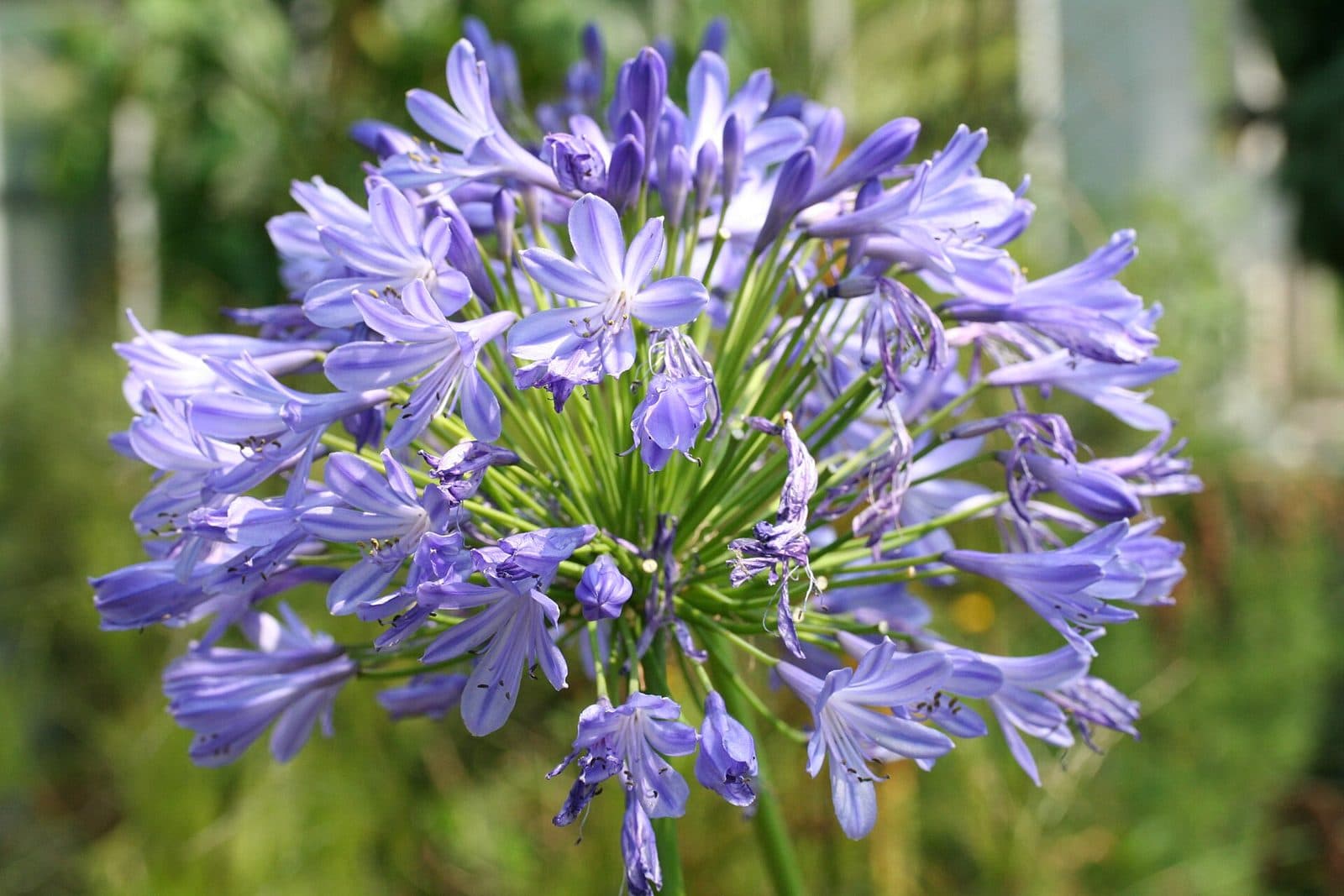
Agapanthus praecox, the strappy stalwart whose blue and white flower globes carry a hot Brisbane summer with almost no fuss.
Agapanthus praecox · Also known as Lily of the Nile, African Lily, Aggies
Almost everyone in South East Queensland has met agapanthus, even if they know it only as "aggies": the clump of arching strappy leaves that lines a thousand driveways and throws up round heads of blue or white flower right through the heat of summer. It is one of the toughest flowering plants we can put in a Brisbane garden, shrugging off heat, drought, salt spray and long stretches of neglect that would finish softer perennials.
That toughness is exactly why it has become a design cliche, and also why it needs a careful hand. The old vigorous forms self-seed hard, so the plant that reads as low-effort landscaping can quietly become a problem well beyond the fence line. We still use agapanthus often, but we choose the cultivar with intent rather than reaching for whatever the nursery has stacked highest.
In a Brisbane garden
In Brisbane's climate agapanthus is close to bulletproof. It handles our humid summers, our dry winter-spring stretches and the reflected heat off paving and driveways, which is why it turns up in so many hot, hard-to-plant strips where little else looks good with no attention. On the coast it takes salt-laden wind without scorching, so it is a natural choice for the exposed front beds we work through on projects like coastal garden design.
The honest catch is seeding. The tall species forms of Agapanthus praecox are listed as an environmental weed in parts of Australia because they set seed prolifically and colonise creek lines and bushland margins. Around Brisbane that risk is real anywhere a garden backs onto reserve or a watercourse. Our answer is twofold: we specify sterile or dwarf cultivars, and we deadhead the flower stems before they run to seed, which also keeps a mass planting looking sharp rather than tatty by late summer.
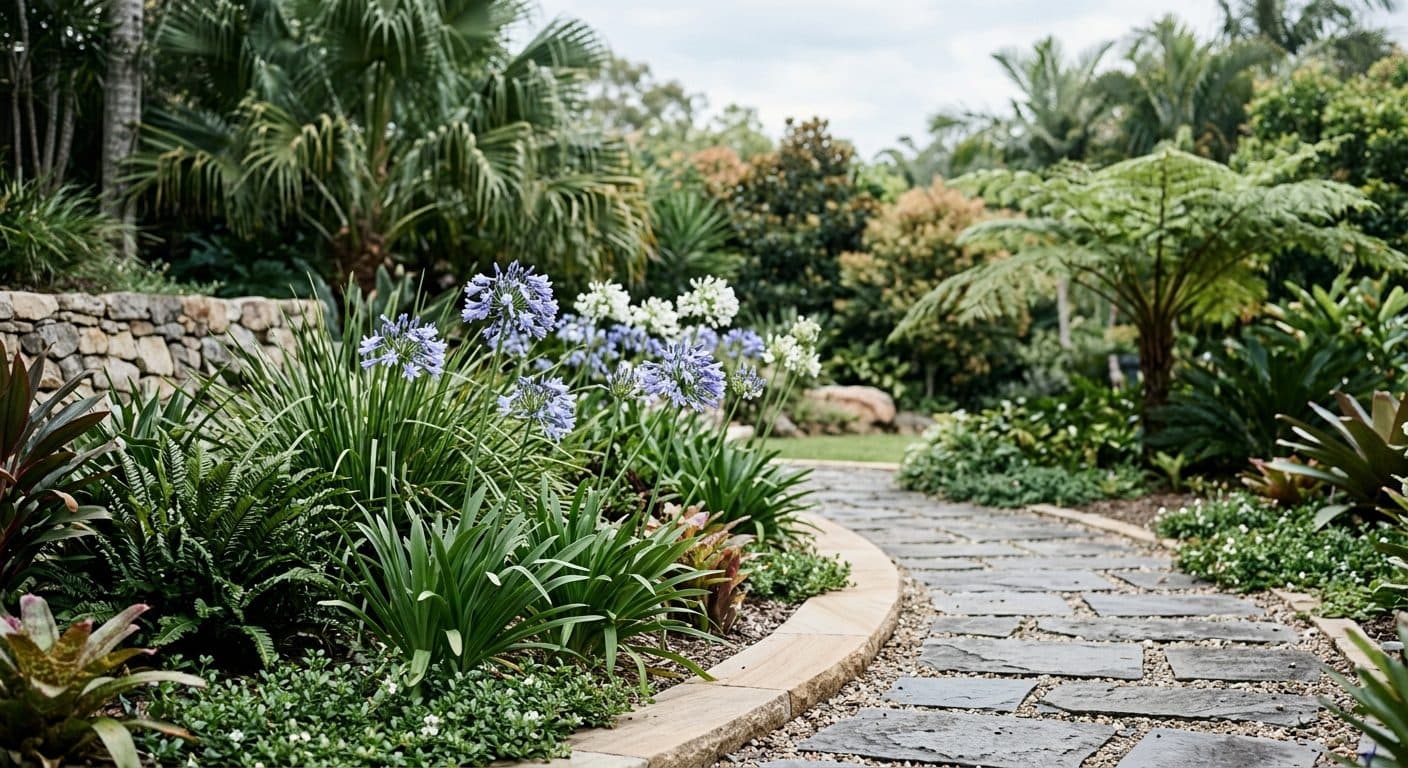
Photo: Jean-Pol GRANDMONT, CC BY 3.0, via Wikimedia Commons
Which agapanthus we actually specify
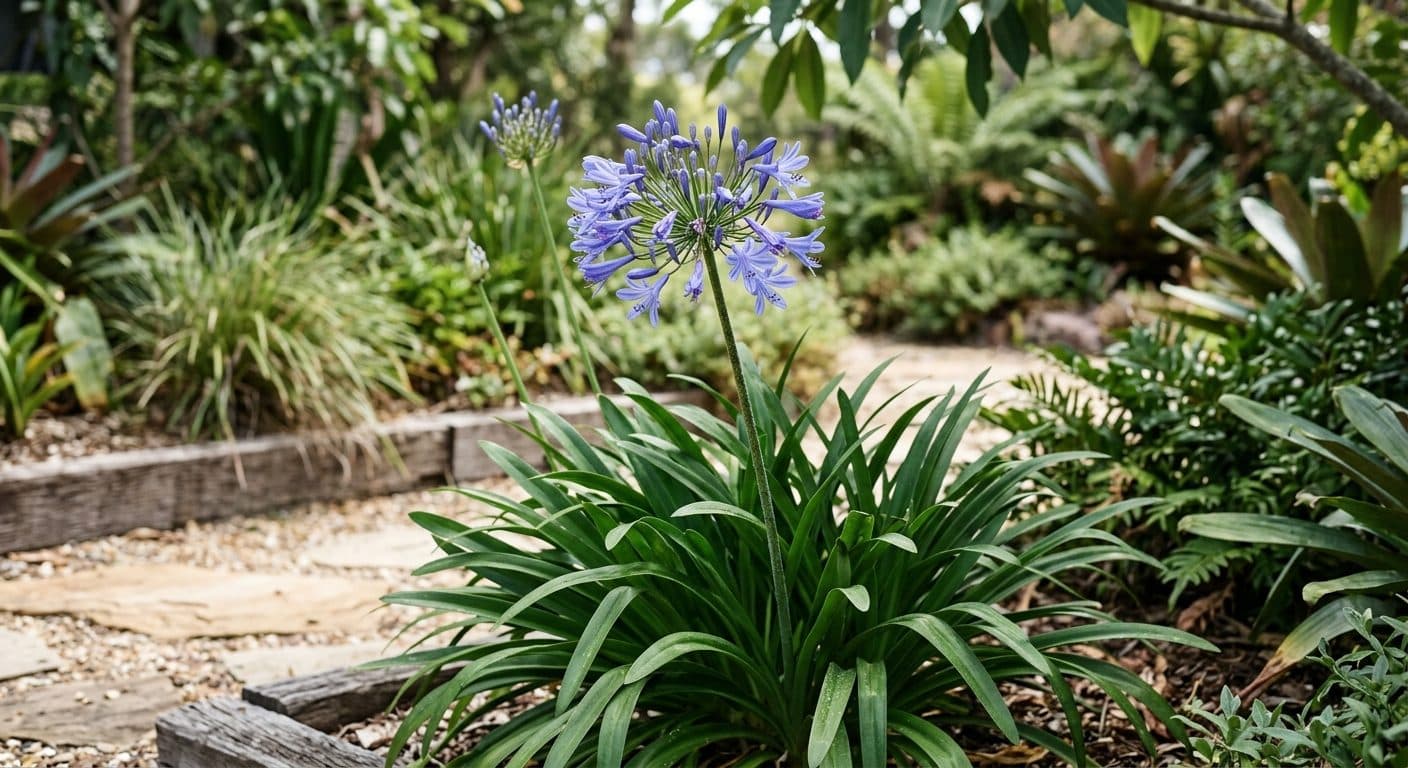
Rather than the old vigorous giants, we lean on the modern low-seeding cultivars: compact, sterile or near-sterile forms such as 'Baby Pete', 'Snowstorm', 'Cloudy Days' and 'Agapetite'. They flower generously, sit tidily at 0.3 to 0.5 metres, and do not fling seed into the neighbourhood. That makes them an easy, guilt-free workhorse for the kind of tough, tidy planting we cover under low-maintenance garden design.
The dwarf blue forms read as soft, restful colour against dark foliage and paving, while the white forms ('Snowstorm' and similar) do the crisp, cool-toned work a formal or coastal palette wants. If a brief needs upright grassy texture without any flower at all, we will often reach for a companion strappy plant such as Lomandra 'Tanika' instead, and let the agapanthus carry the seasonal colour where it earns its keep.
How we design with it
Agapanthus is a mass-planting plant first and a specimen second. It looks its best in long, generous drifts: edging a driveway, running a hot street-side bed, or sweeping under established trees where its evergreen clumps hold the ground and its summer flush lifts the whole scene. Because it takes exposure and reflected heat so well, it is one of our reliable answers for the sun-baked strip beside a path or fence in front yard landscaping.
We plant it in bold blocks of a single cultivar rather than scattering odd plants about, so the flowering reads as one clean gesture rather than visual noise. Spacing is set to let the clumps knit into a continuous band within a season or two, which suppresses weeds and keeps maintenance to the occasional deadhead and a division every few years to keep the clumps vigorous. Choosing the right form for a given aspect and soil is exactly the sort of call we work through with clients in a design consultation.
Common questions

Want tough, tidy planting that flowers all summer?
We're currently taking on new landscape design clients across Brisbane. Reach out for a personalised quote, whether you're a homeowner or a design professional.
Book a Free Discovery Call