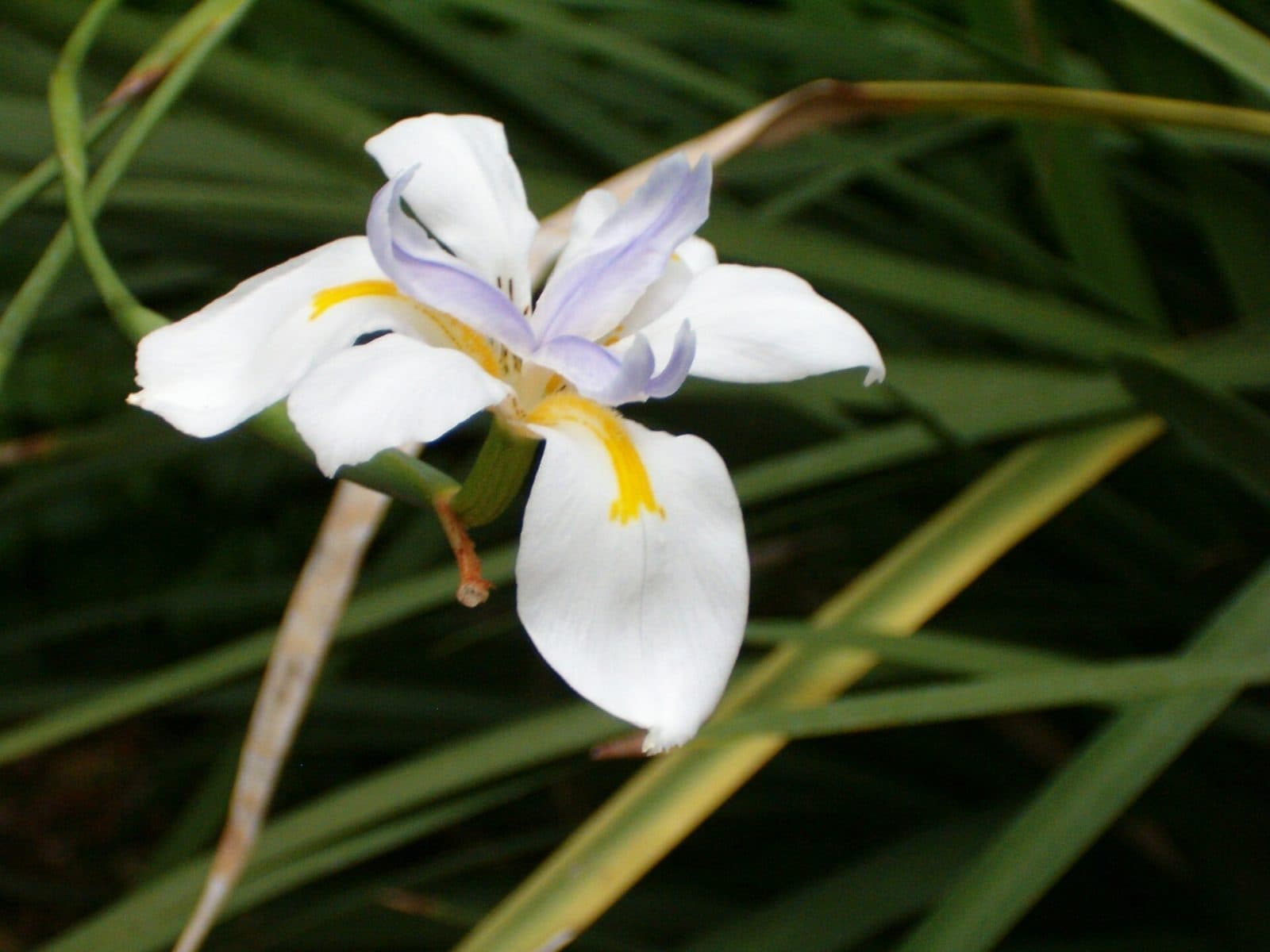
Dietes grandiflora, the near-indestructible wild iris whose white flowers open in flushes roughly every fortnight after rain.
Dietes grandiflora · Also known as Dietes, Wild Iris, African Iris, Fairy Iris, Butterfly Iris
Almost everyone in Brisbane has walked past dietes without knowing its name. It is the strappy, iris-leaved clump with the crisp white flowers, marked with a splash of yellow and a violet fleck, that turns up outside offices, along driveways and in the median strips nobody waters. The common name "fortnight lily" comes from its habit of opening a fresh flush of blooms roughly every couple of weeks, usually a few days after rain, then resting before the next round.
It is one of the toughest ornamental plants we can put in the ground here, and that toughness is both its gift and its curse. Used well it solves problems no other plant will touch. Used carelessly it can make a garden look like the forecourt of a service station, which is exactly the trap we work to avoid.
In a Brisbane garden
There is very little in a Brisbane garden that will kill dietes. It shrugs off full sun and hot reflected heat off a wall or paving, tolerates deep dry shade under trees where lawn gives up, copes with coastal salt wind, and handles both a waterlogged storm hollow and months of neglect without water. That is why it became the default plant of car parks and commercial landscaping, and it is worth being clear-eyed about that association before you plant a row of it out the front.
Because it is so cheap and so hard to fail with, dietes gets used lazily, and a thin ribbon of it along a fence reads instantly as "contractor filled a gap here". We would rather use it on purpose. That usually means generous drifts as a deliberate mass, or reserving it for the spots where genuinely nothing else survives, and pairing it with plants that carry more character so the garden never tips into looking municipal.
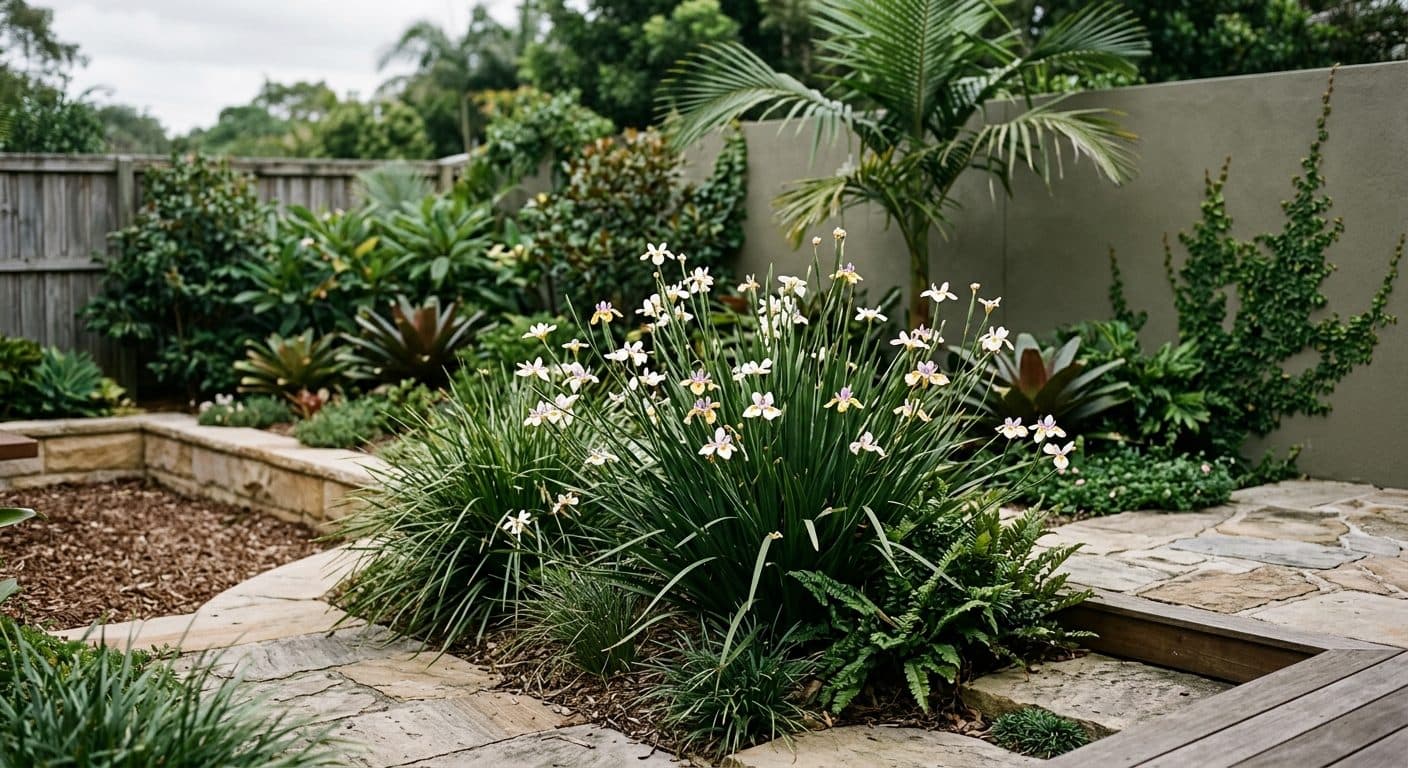
Photo: BotBln, CC BY-SA 3.0, via Wikimedia Commons
How we design with it
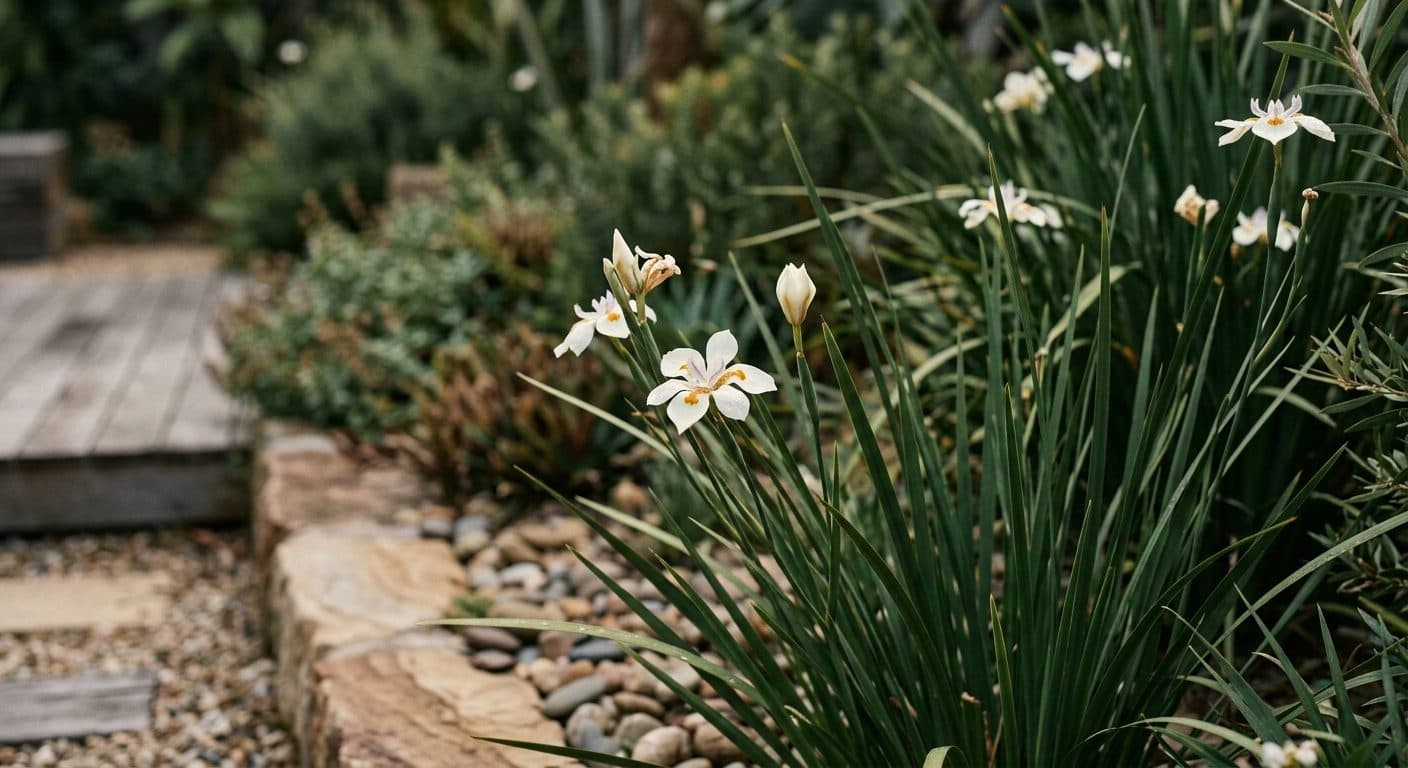
We reach for dietes as a problem-solver rather than a feature. The classic brief is a hot, dry, reflected-heat strip, a neglected side passage, or dry shade under an established tree, the places on a plan we cover in our approach to low-maintenance garden design. In those conditions it stays green and upright year-round while looking after itself, and it earns its keep. Cut the old flower stems back to the base once they finish and otherwise leave the clump alone; it does not need dividing or fussing.
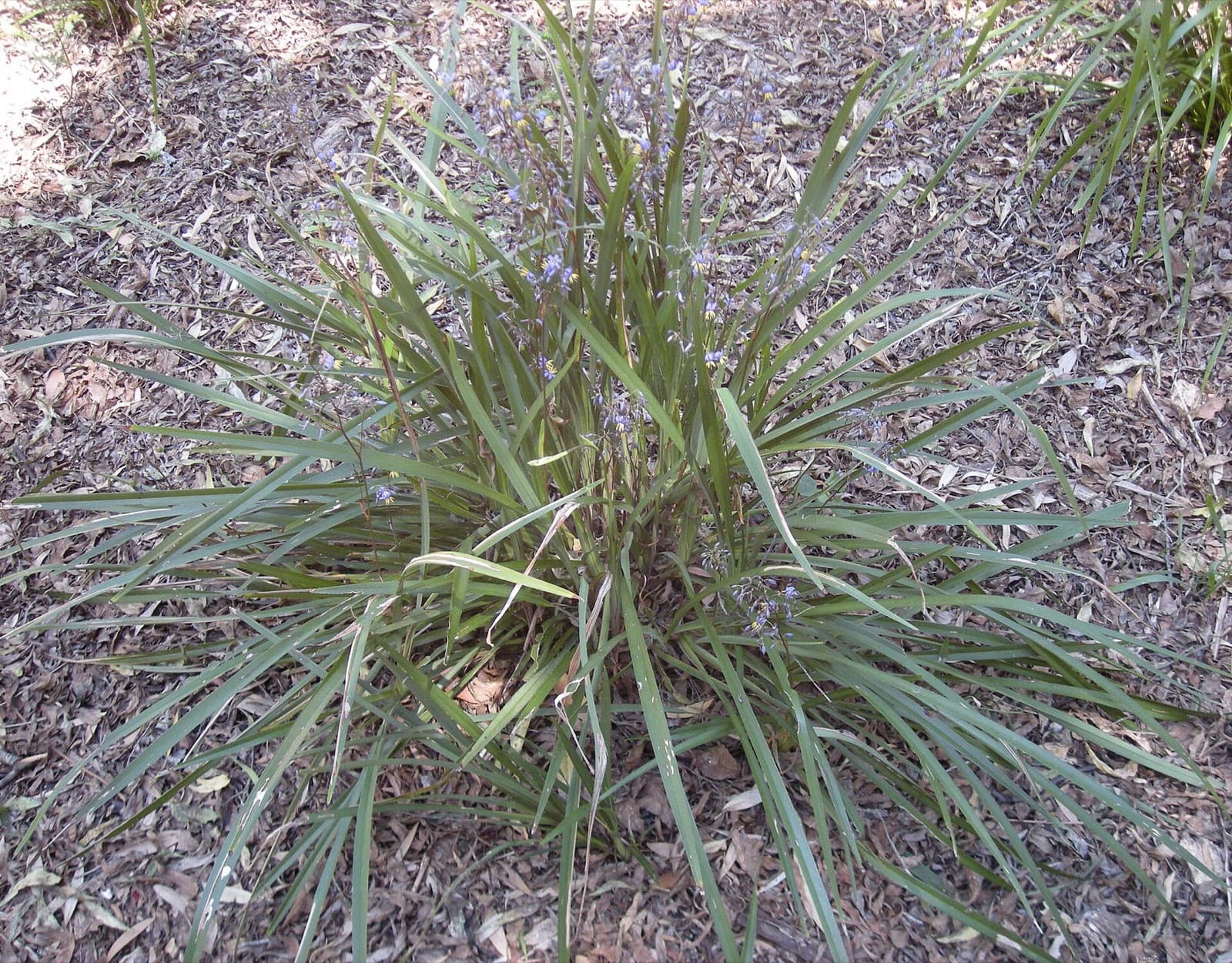
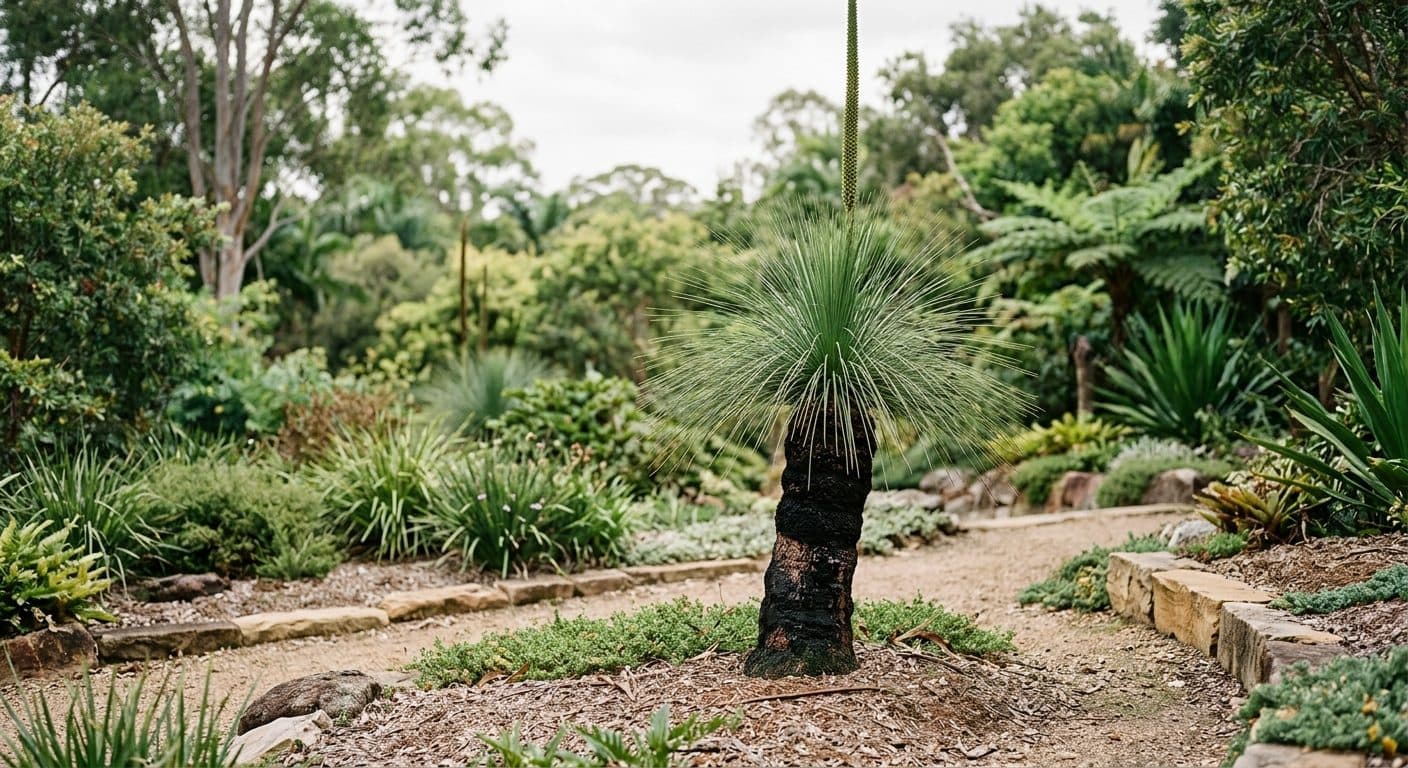
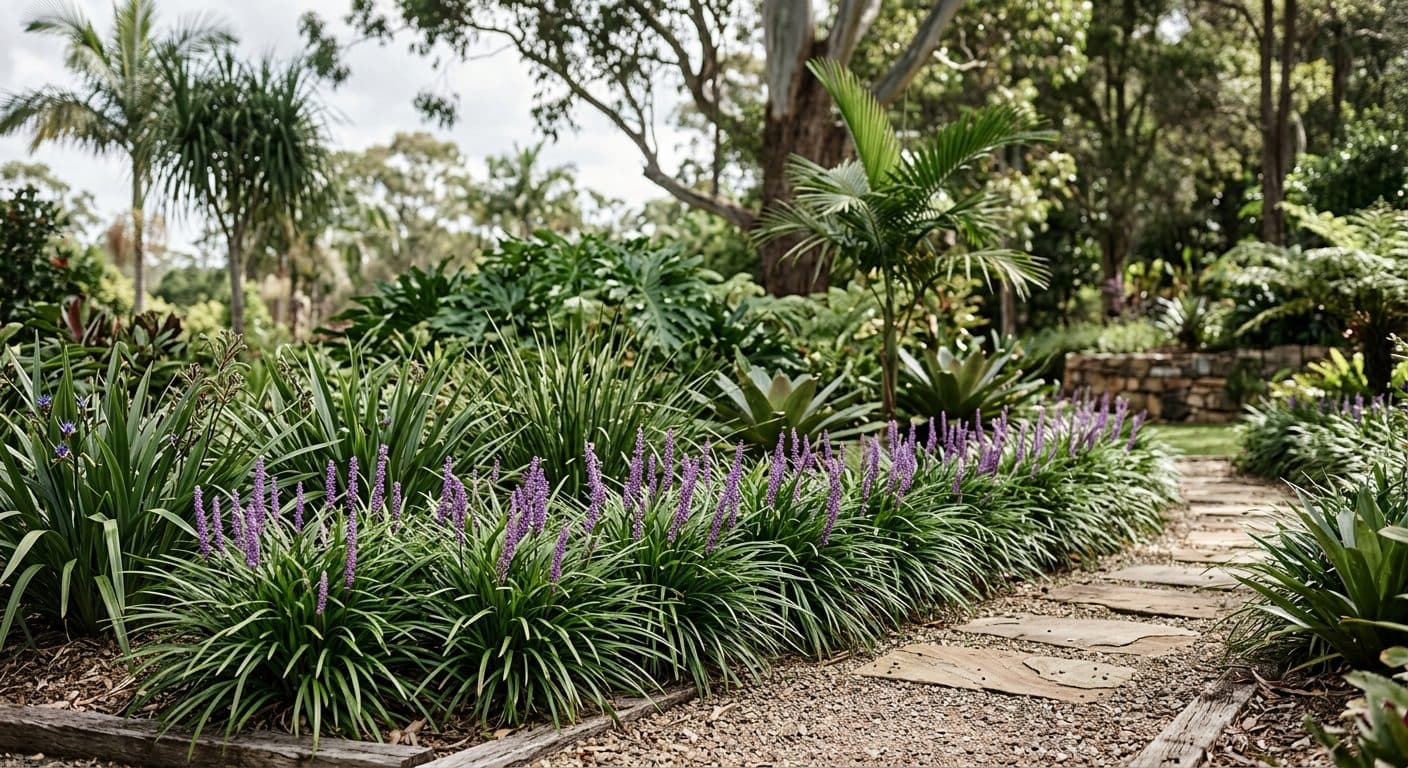
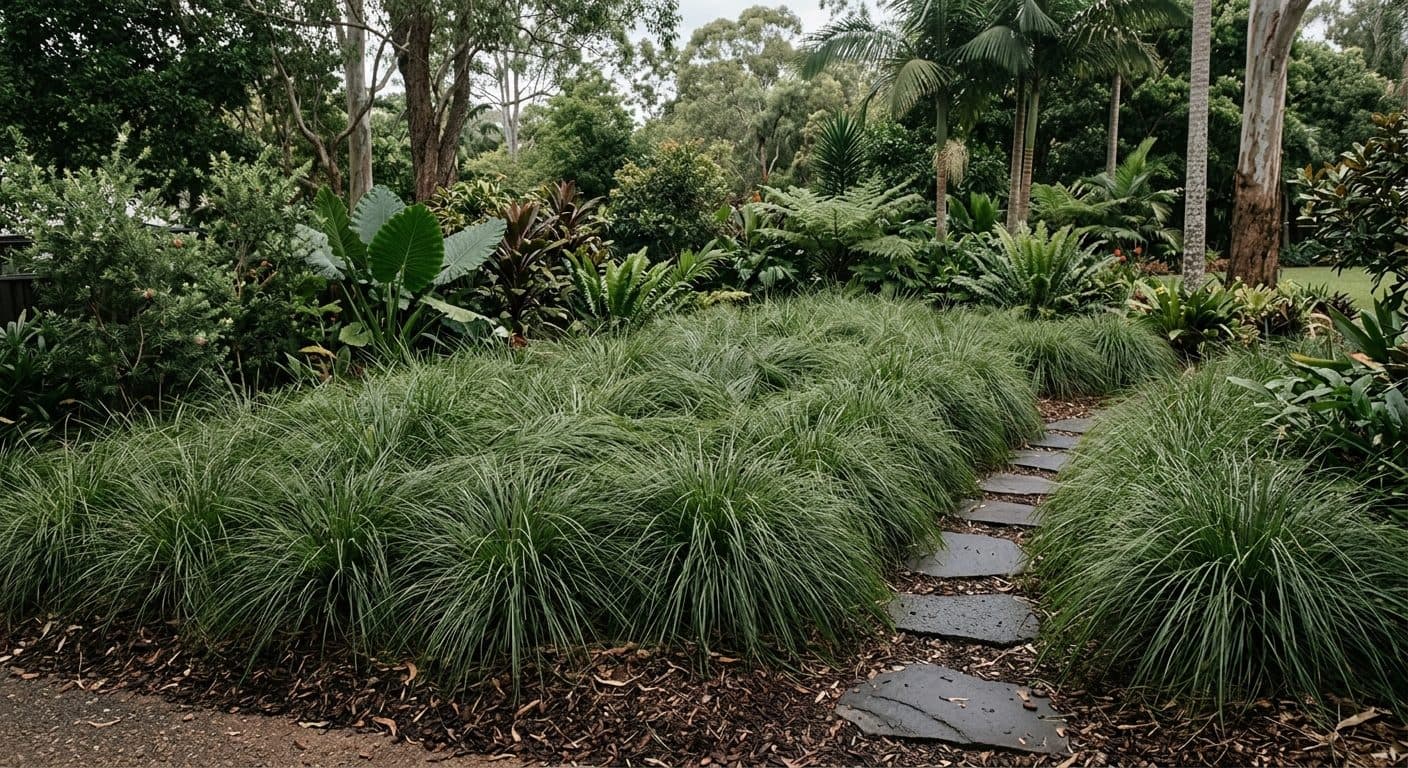
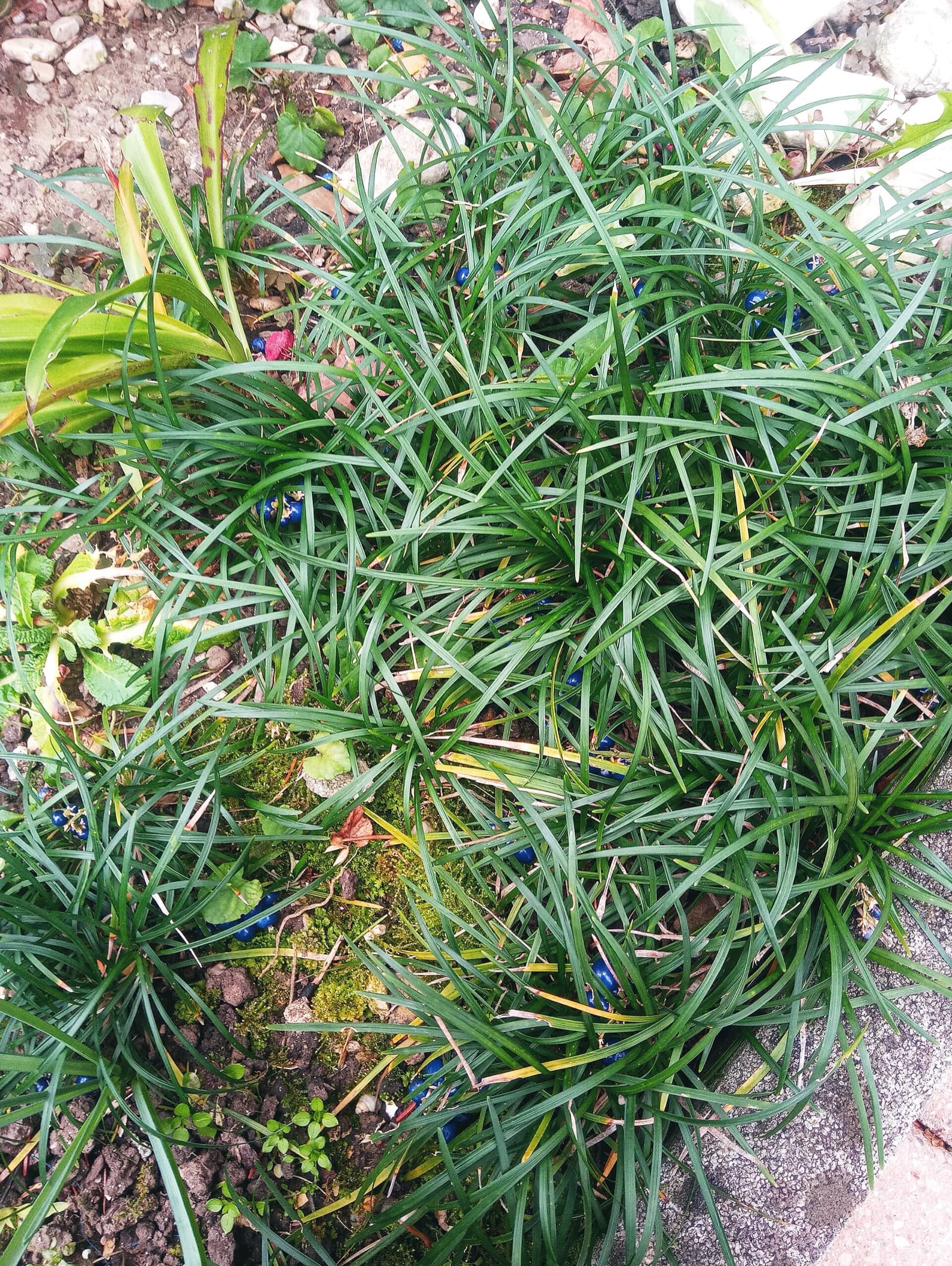
For a softer, more local feel we very often prefer a native strappy plant instead, either lomandra for its fine weeping texture or dianella for its blue-green blades and berries. These read as belonging to a Brisbane garden in a way imported dietes does not, and they sit naturally in the kind of native garden design we love. Where a client wants yellow flowers on a smaller frame, Dietes bicolor is a neater cousin worth knowing about. Which of these we choose is exactly the sort of thing we work through on a design consultation.
Common questions
Want tough planting that still looks designed?
We're currently taking on new landscape design clients across Brisbane. Reach out for a personalised quote, whether you're a homeowner or a design professional.
Book a Free Discovery Call