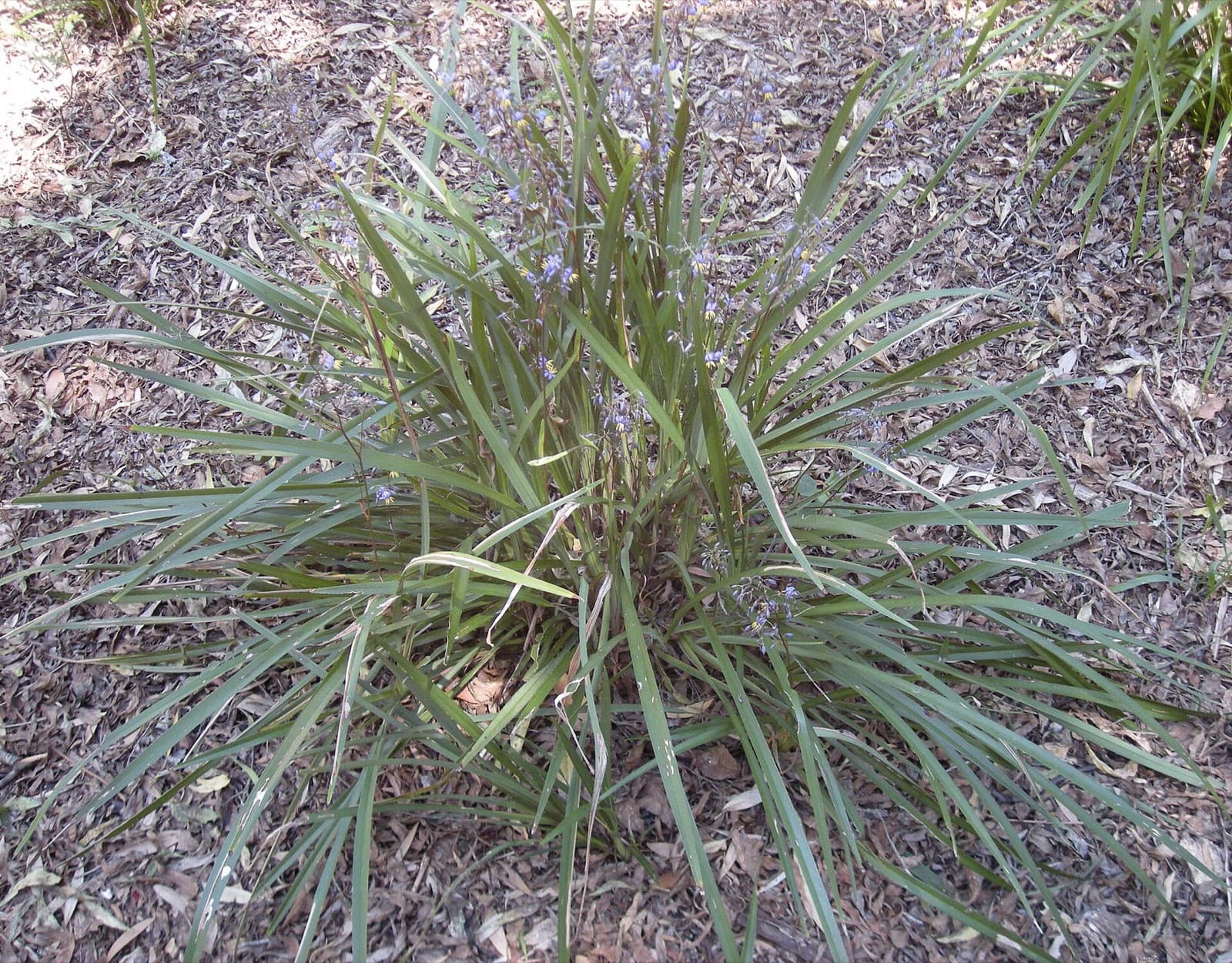
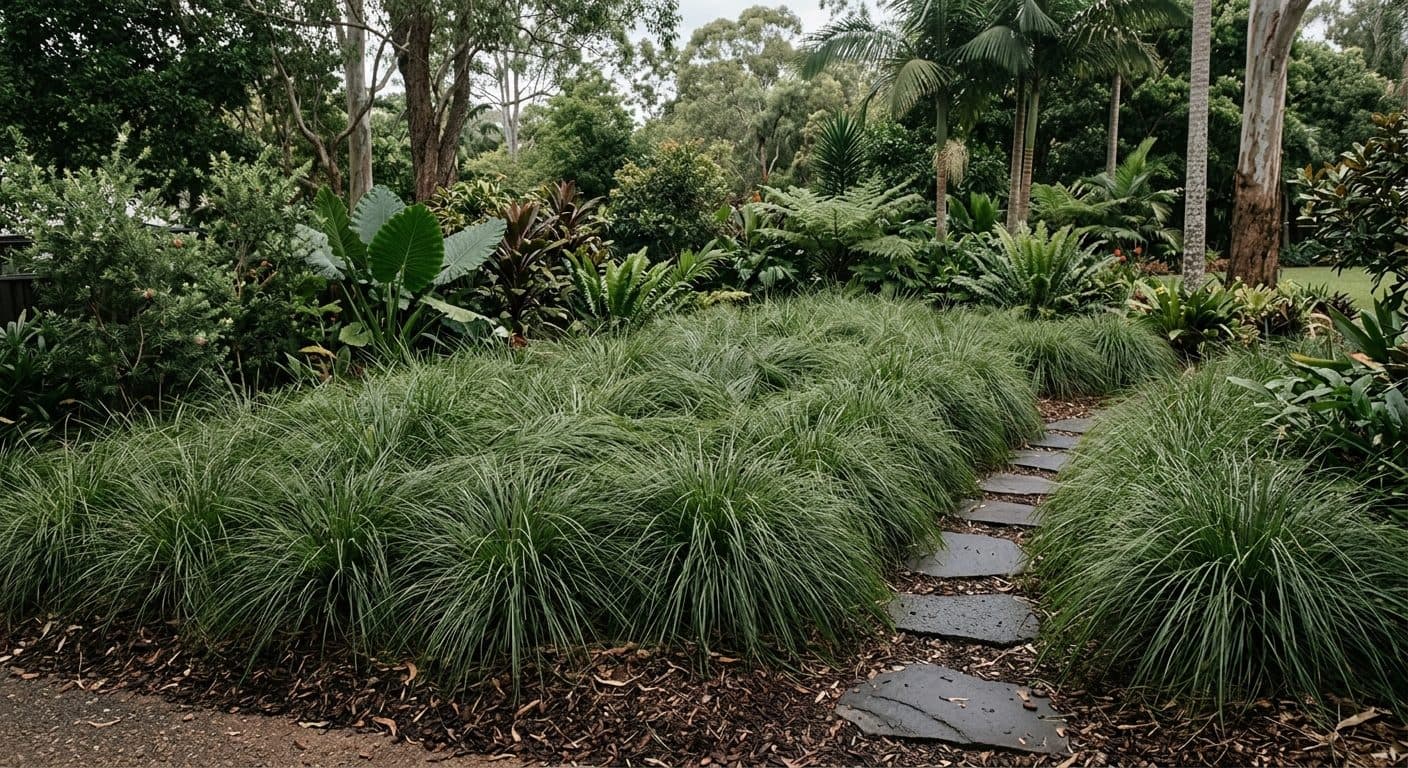
The flax lily, a strappy native clump that does the quiet structural groundwork of a bed and barely asks for a drink.
Dianella species · Also known as Flax Lily, Blue Flax Lily
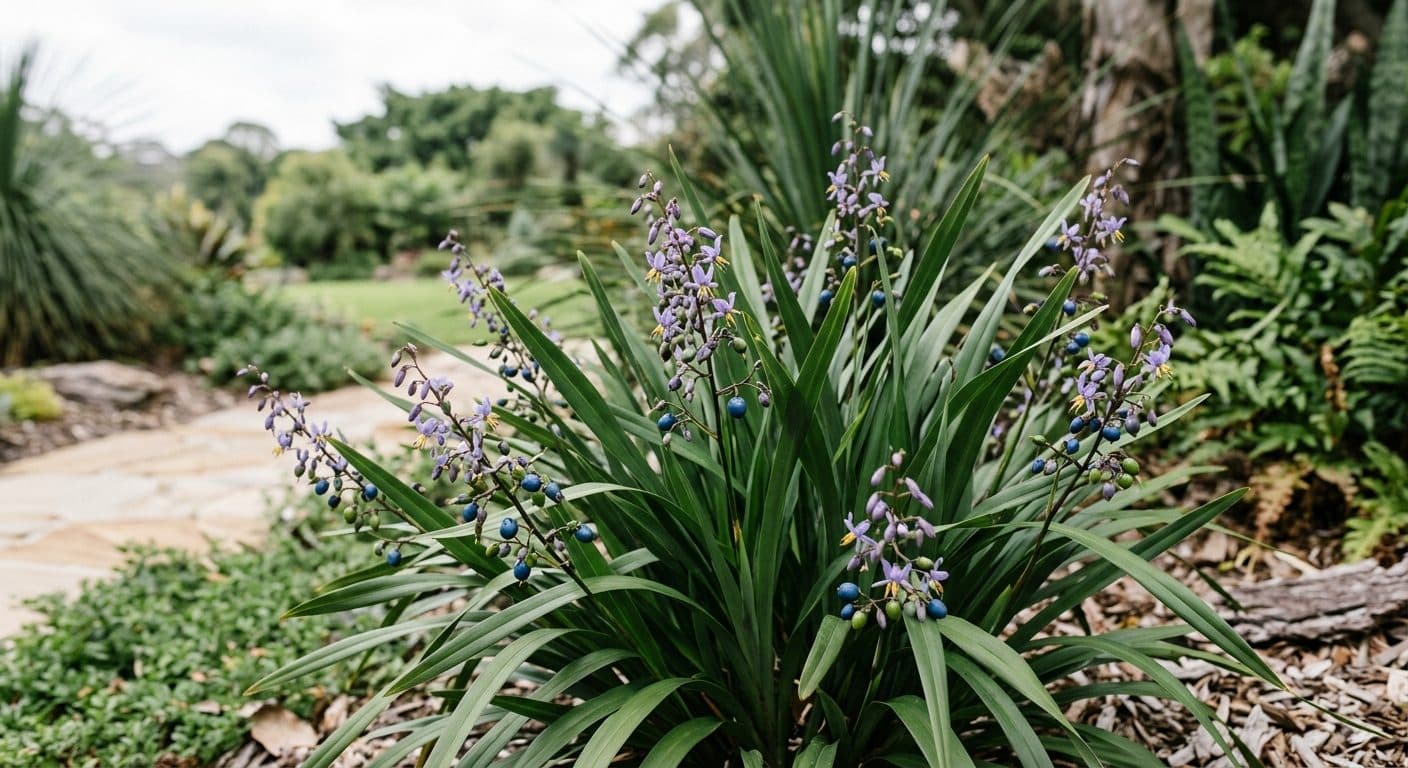
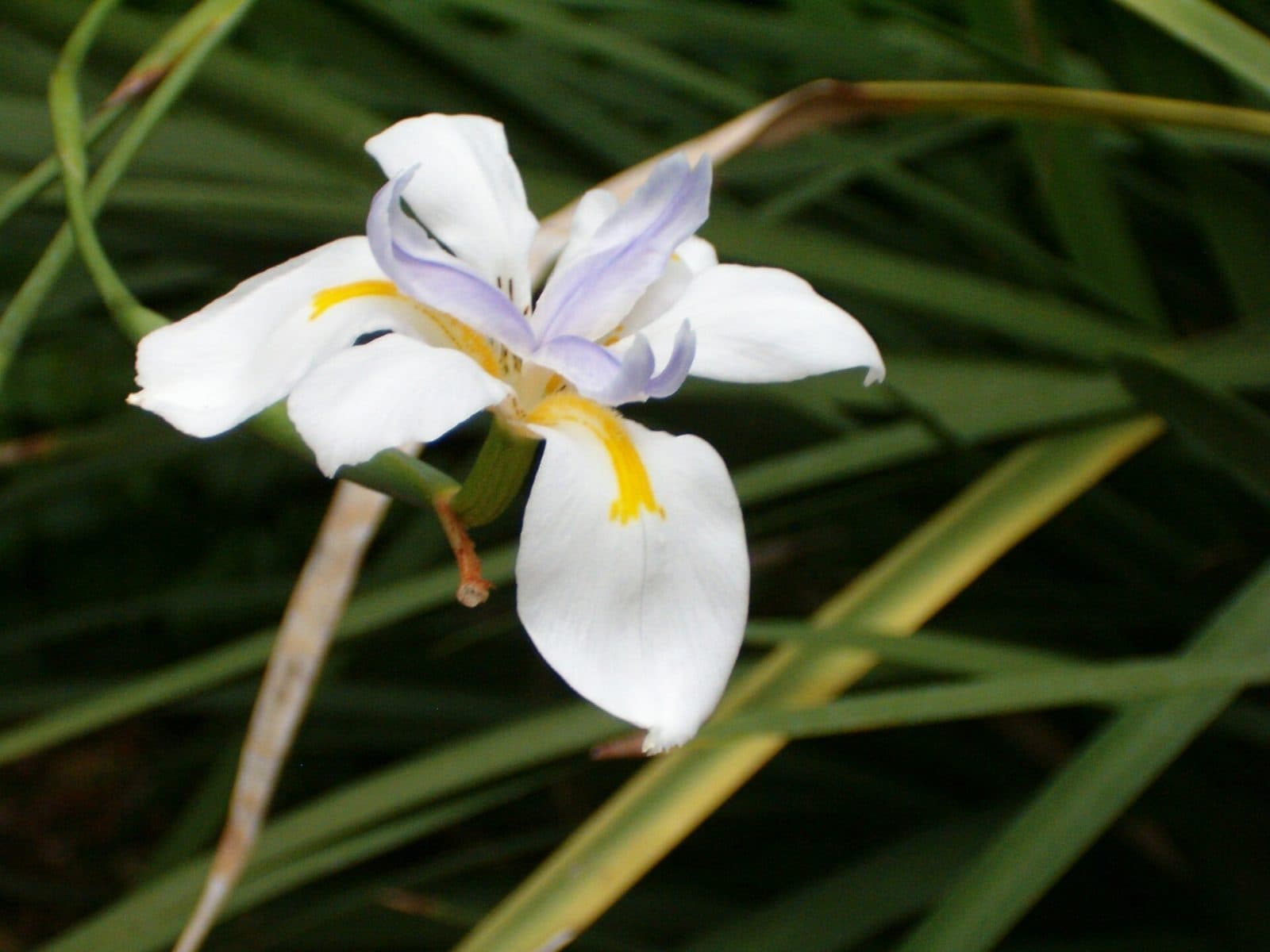
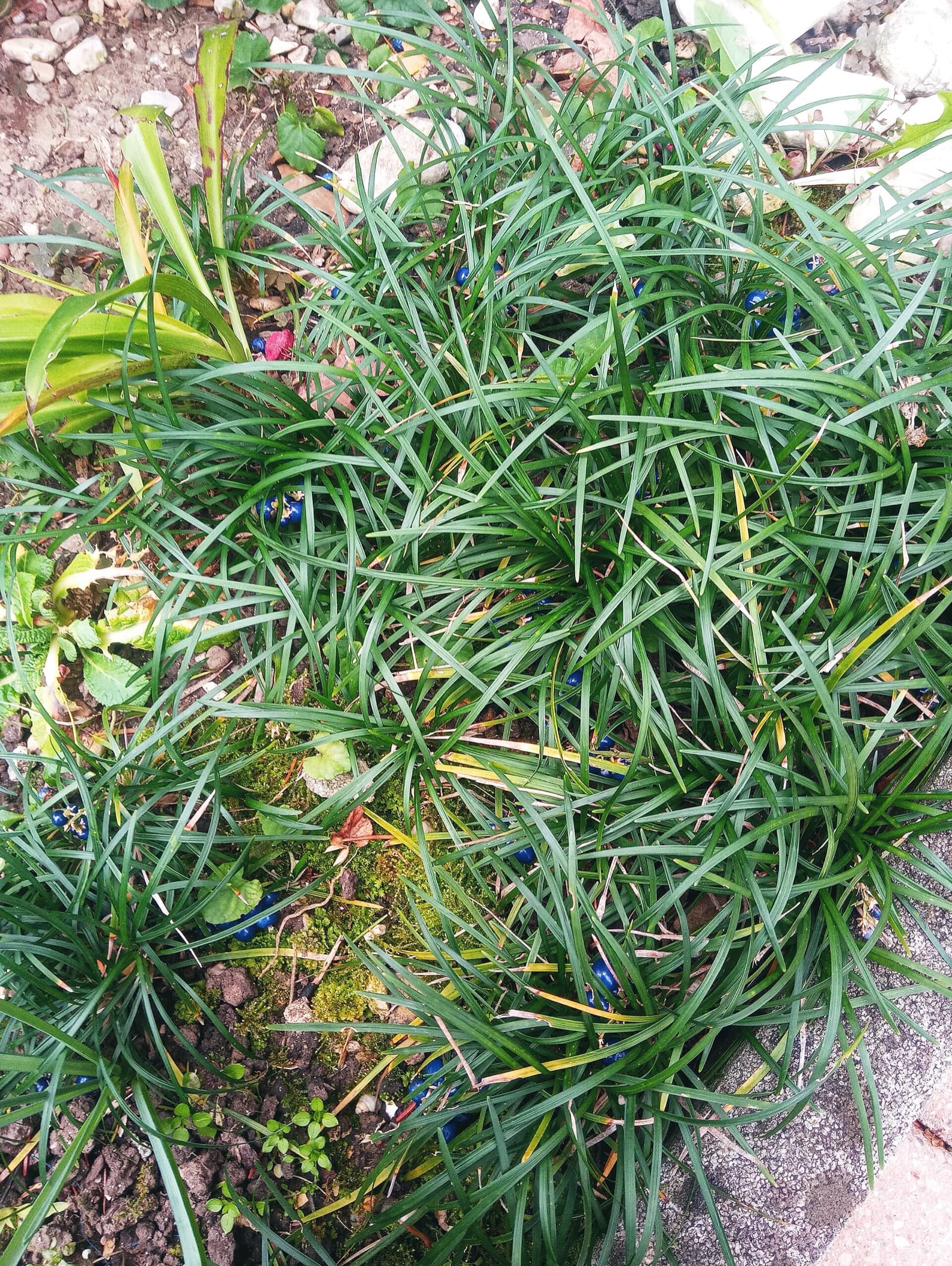
Dianella, the flax lily, is one of the workhorses of native planting in Brisbane, a tufting, strappy-leaved clump that gives a garden bed its rhythm and structure the way a row of ornamental grasses might, but with far more toughness in our heat. Several species and named cultivars are grown, some prized for steely blue-grey foliage, hence the common name blue flax lily, and most carry small starry blue flowers followed by berries that glow an unlikely violet.
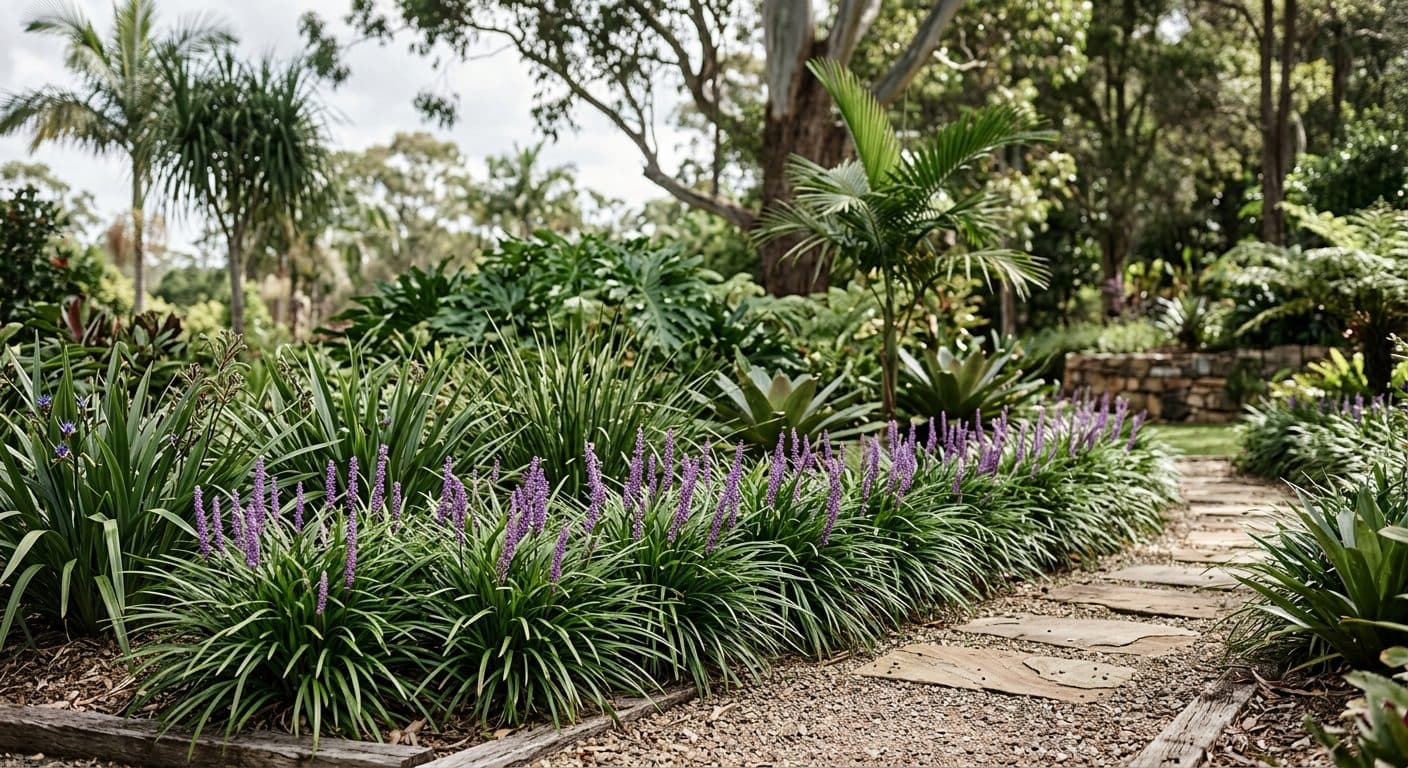
We use it in numbers as the reliable, repeating groundwork that holds a planting scheme together, because it looks tidy year-round, spreads slowly into a dense clump and survives conditions that see softer plants off. Along with lomandra it is a backbone of nearly every low-maintenance garden design we draw, and its unfussy, locally-adapted nature makes it a natural component of a native garden design that still needs to look designed.
In a Brisbane garden
Dianella earns its place in Brisbane gardens by being genuinely adaptable, with cultivars that will take full western sun and others that hold their colour in the part shade under a tree, so there is almost always a form for the spot you have. It handles our clay better than many strappy plants provided the bed is not waterlogged, copes with the wet season and the dry with equal calm, and keeps its shape without the seasonal collapse that some grasses suffer in humidity.
The blue-foliaged cultivars are the ones designers reach for, because that cool grey-blue is a genuinely useful colour in a scheme and holds up in strong light where a plain green can look tired. Every few years the clumps benefit from a hard cut back near the base to clear old foliage and refresh the growth, and beyond that occasional haircut and a mulch, an established dianella is about as close to a fit-and-forget plant as our climate offers.
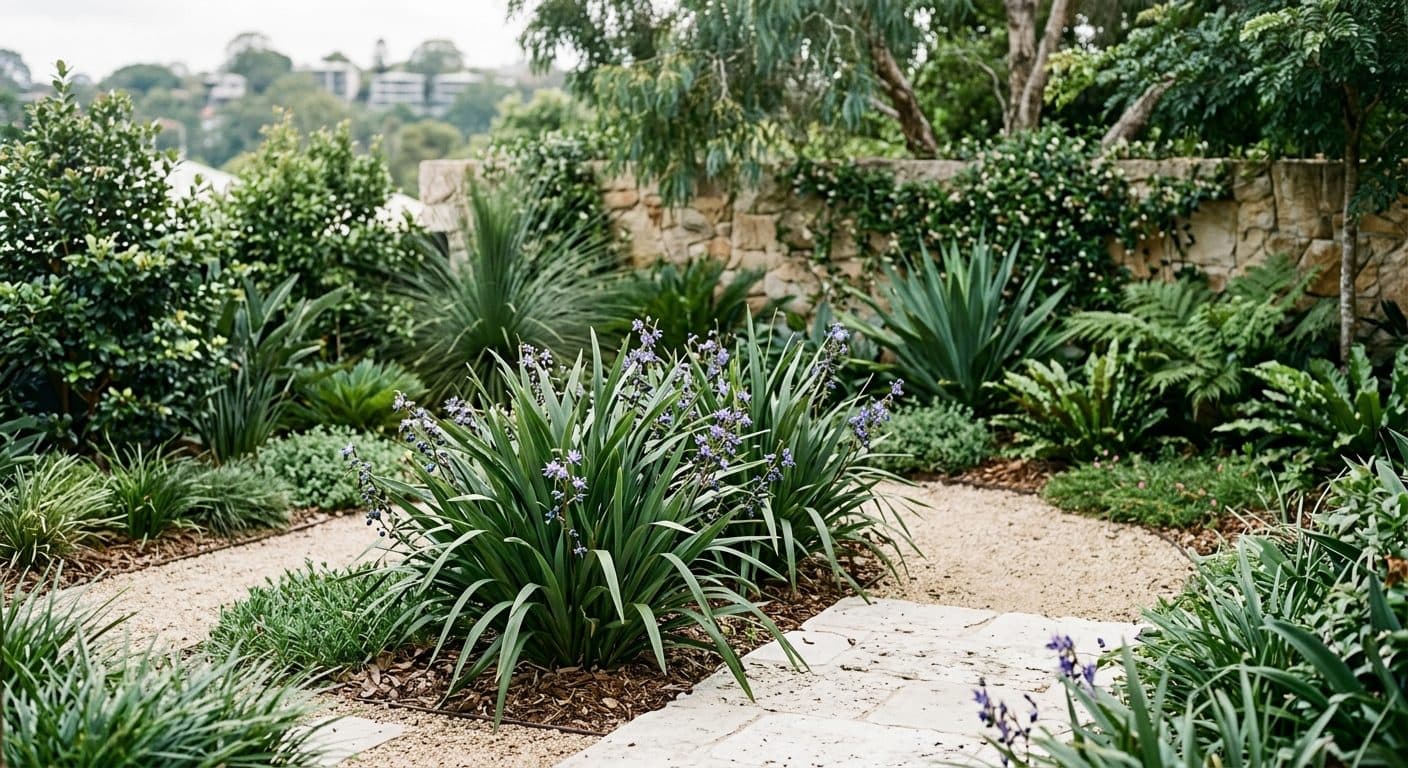
Photo: Ethel Aardvark, CC BY-SA 3.0, via Wikimedia Commons
How we design with it
We use dianella as connective tissue, mass-planting it to run structure and a consistent line through a bed so the showier feature plants have a calm, repeating base to sit against. Its fine strappy texture contrasts beautifully with broad tropical leaves and with the flat planes of paving and render, which is why it turns up in modern and native schemes alike as the plant that quietly makes everything else look composed.
Because it holds a slope, tolerates dry shade and needs so little, it is a plant we lean on for the hard-working parts of a garden, and it features in the palette we sort by job in our guide to the best plants for Brisbane gardens. Grouped in generous drifts rather than dotted about, dianella reads as deliberate ground-layer structure, which is exactly the role a good bed needs it to play.
Where we write about dianella (flax lily)
Common questions
Want structure that survives on next to nothing?
We're currently taking on new landscape design clients across Brisbane. Reach out for a personalised quote, whether you're a homeowner or a design professional.
Book a Free Discovery Call