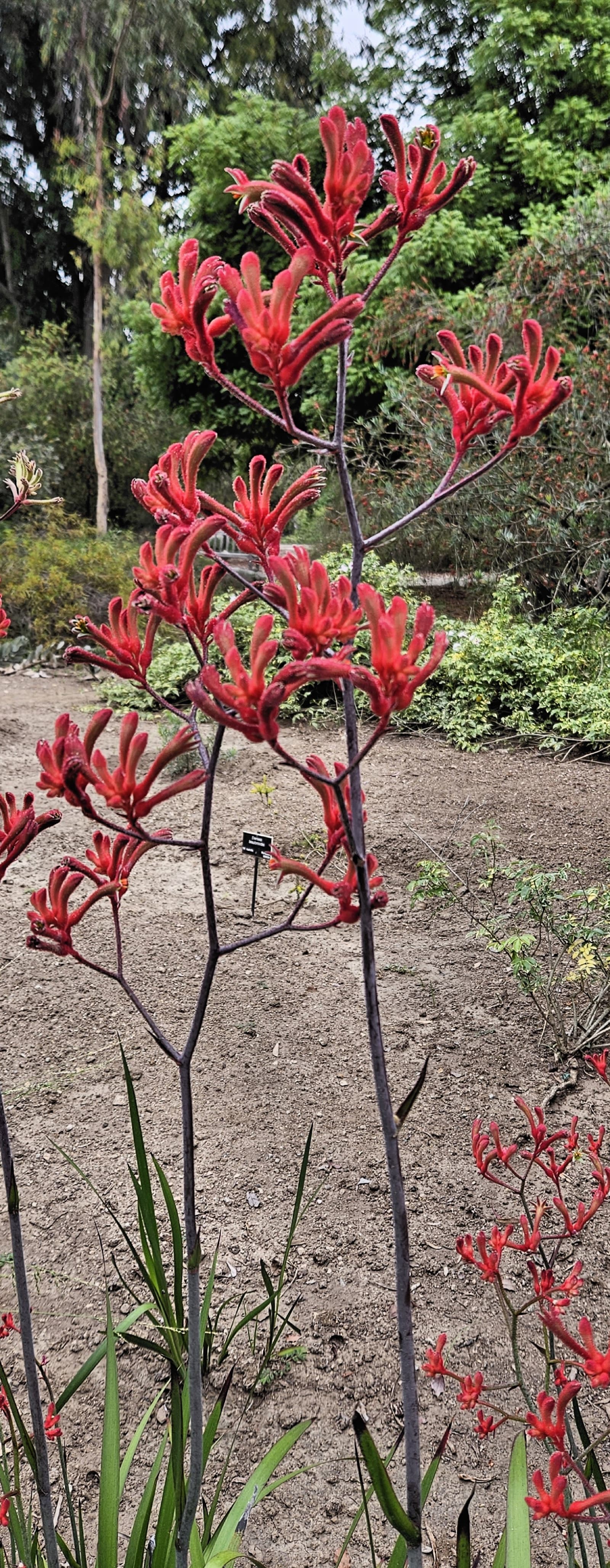
Anigozanthos, the Western Australian native whose furred, claw-shaped flowers bring vertical colour and a steady traffic of honeyeaters.
Anigozanthos species · Also known as Anigozanthos
Kangaroo paw is one of the most recognisable of all Australian natives, named for the furry, articulated flower that really does look like a small paw, held up on tall stems in reds, yellows, greens and burnt oranges. Everyone calls it kangaroo paw and files it under the genus Anigozanthos, and it earns its keep as much for the birds it draws as for the colour it throws.
It comes from the sandy, sharply drained country of south-west Western Australia, which tells you almost everything about how to grow it, and why Brisbane gardeners who plant it into rich, damp beds are so often disappointed. Get the conditions right and it is a spectacular, bird-friendly vertical accent that flowers for months.
In a Brisbane garden
Here is the honest catch with kangaroo paw in Brisbane, and it is worth knowing before you fall for the flower: our humidity and summer rain are the opposite of the dry Perth conditions it evolved for, and it will show its displeasure with ink spot and rust, the black and orange fungal marks that disfigure the strappy leaves through a muggy wet season. The tall traditional cultivars suffer most, so we lean instead on the tougher modern hybrids in the Bush Gem and similar ranges, which were bred for exactly this problem and hold up far better in a Queensland garden.
The single biggest thing you can do for it is drainage, then more drainage. It wants full sun, a gritty raised bed or a sunny slope, and air moving freely around the foliage so the leaves dry quickly after rain, and it genuinely resents being crowded or over-watered. Treat it as a relatively short-lived perennial to be refreshed every few years rather than a permanent shrub, cut the whole clump back after flowering to force clean new growth, and it will reward you with colour and birds without ever pretending to be low-fuss in our climate.
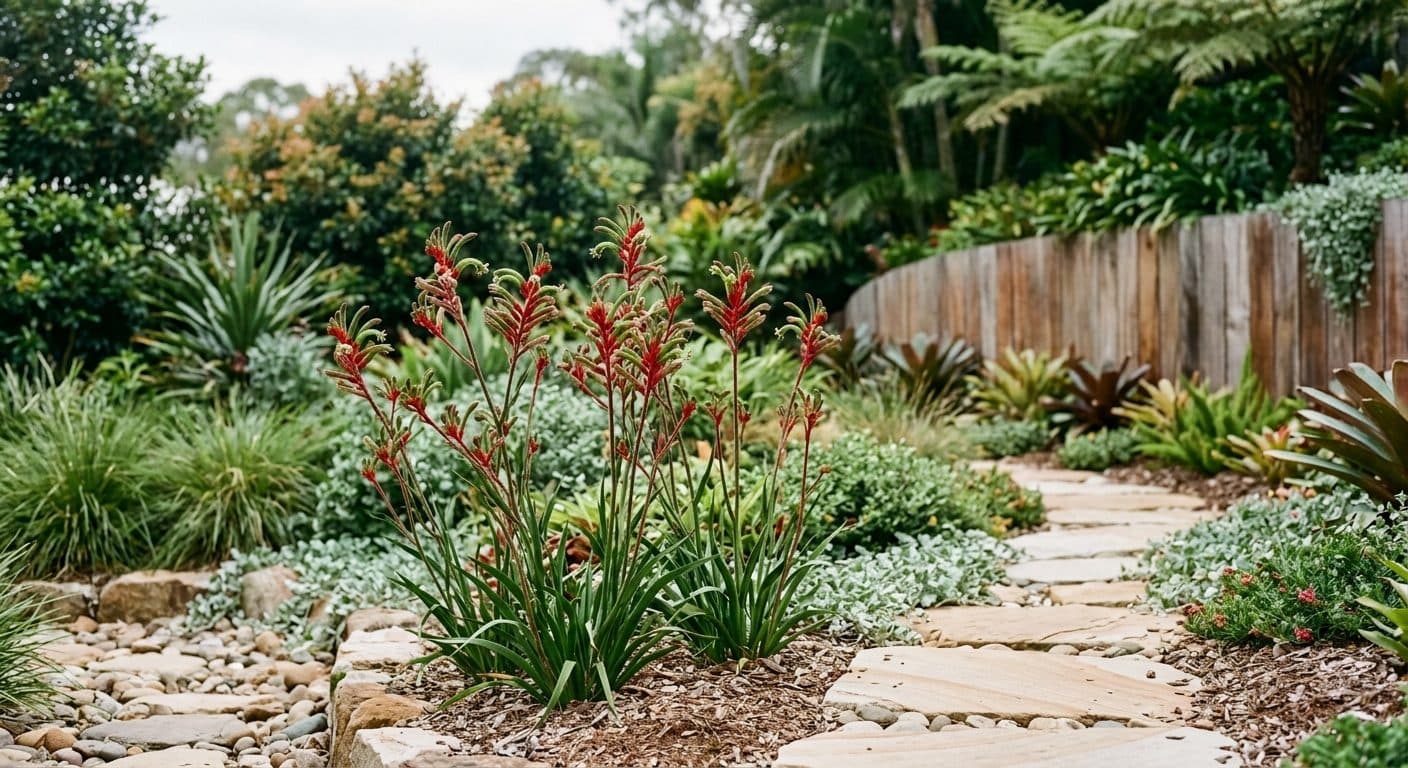
Photo: Eric Polk, CC BY-SA 4.0, via Wikimedia Commons
How we design with it
We use kangaroo paw for punctuation, threading its tall flower stems through a lower planting so the colour reads as a series of vertical strokes rather than a solid mass. It belongs in the sunniest, best-drained parts of a scheme, which makes it a natural fit for our native garden design work and for the tough, sun-baked planting we favour in a hard-wearing low-maintenance garden.
Because it draws honeyeaters and lorikeets so reliably, we place it where those visits will be seen and enjoyed, near a window or a seating area rather than tucked down the side. It is one of the plants we point people towards in our rundown of the best plants for Brisbane gardens, with the drainage caveat firmly attached, and we pair it with grittier companions like lomandra and dwarf westringia that share its love of a dry, open aspect.
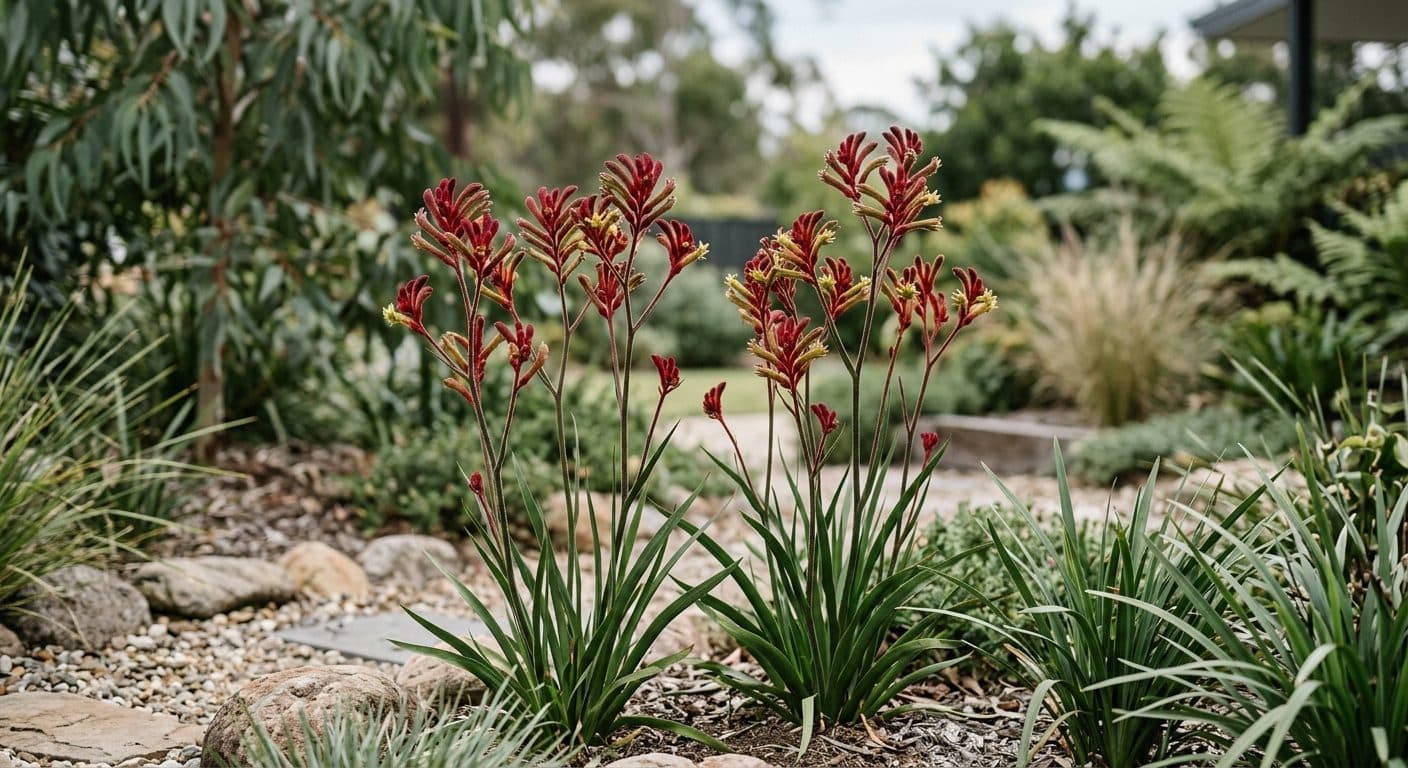
Where we write about kangaroo paw
Common questions
Want native colour that actually suits your block?
We're currently taking on new landscape design clients across Brisbane. Reach out for a personalised quote, whether you're a homeowner or a design professional.
Book a Free Discovery Call