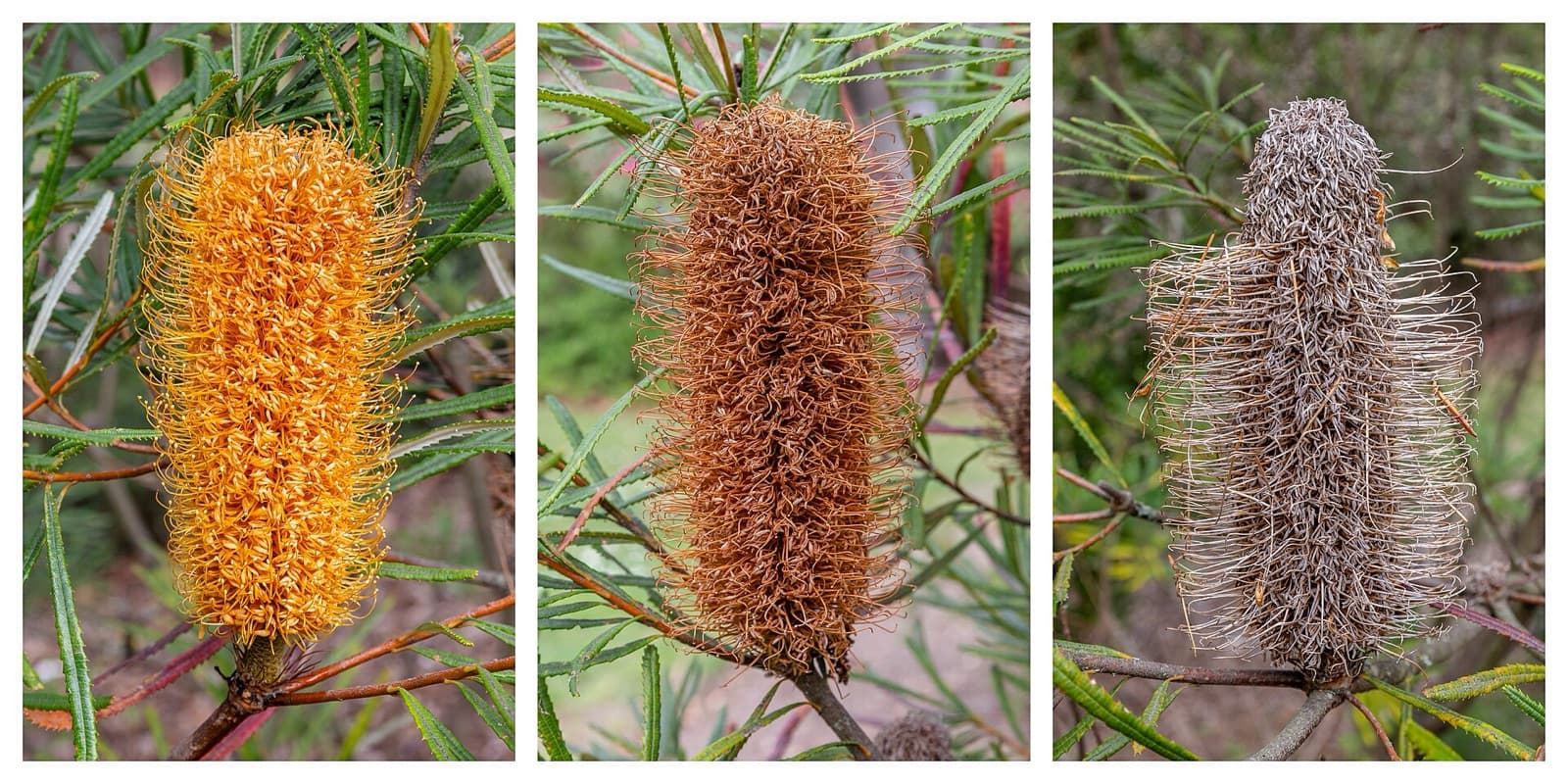
The Australian honeysuckle, all sculptural flower spikes and honeyeaters, a plant that looks designed before you have touched it.
Banksia species · Also known as Australian Honeysuckle
Banksia is one of those plants that does the design work for you, because the flower spikes are so architectural, upright candles packed with hundreds of tiny blooms, that a single well-grown plant reads as a sculpture in the bed. The old name Australian honeysuckle comes from the nectar those spikes carry, and it is that nectar which turns a banksia into a daily canteen for honeyeaters, wattlebirds and the occasional rainbow lorikeet.
The genus runs from low, spreading forms to serious small trees, so we choose the species to the site rather than treating banksia as one plant. They are a signature of a considered native garden design, and because so many species come from lean coastal country, they earn a place in almost any exposed coastal garden where wind and sandy soil would defeat softer plants.
In a Brisbane garden
Banksia success in Brisbane is mostly a matter of matching the species to your soil and drainage, because the famous Western Australian banksias resent our humidity and heavy ground, while many of the eastern species take it in their stride. On a well-drained block the coastal and eastern types settle in readily, and even on clay you can grow them by mounding the bed hard, keeping them in full sun and never letting water pool at the crown after summer rain.
Like their grevillea cousins, banksias are phosphorus-sensitive, so the standard bag of garden fertiliser is a slow way to kill one, and the correct feed is almost none, or a native-specific low-phosphorus product used sparingly. Get the drainage and the feeding right and the reward is a long flowering season through the cooler months when the garden most needs interest, plus the constant traffic of honeyeaters those spikes bring in.
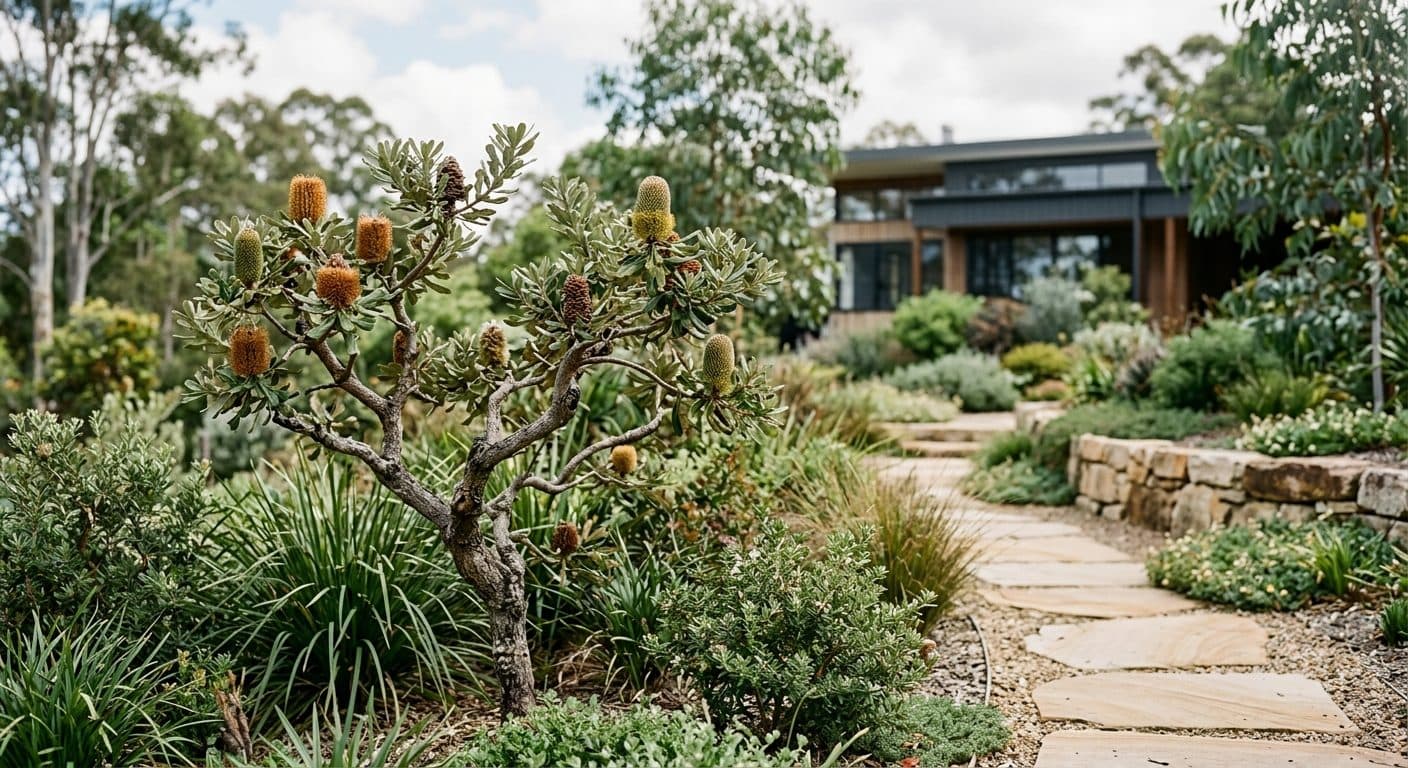
Photo: Michal Klajban, CC BY-SA 4.0, via Wikimedia Commons
How we design with it
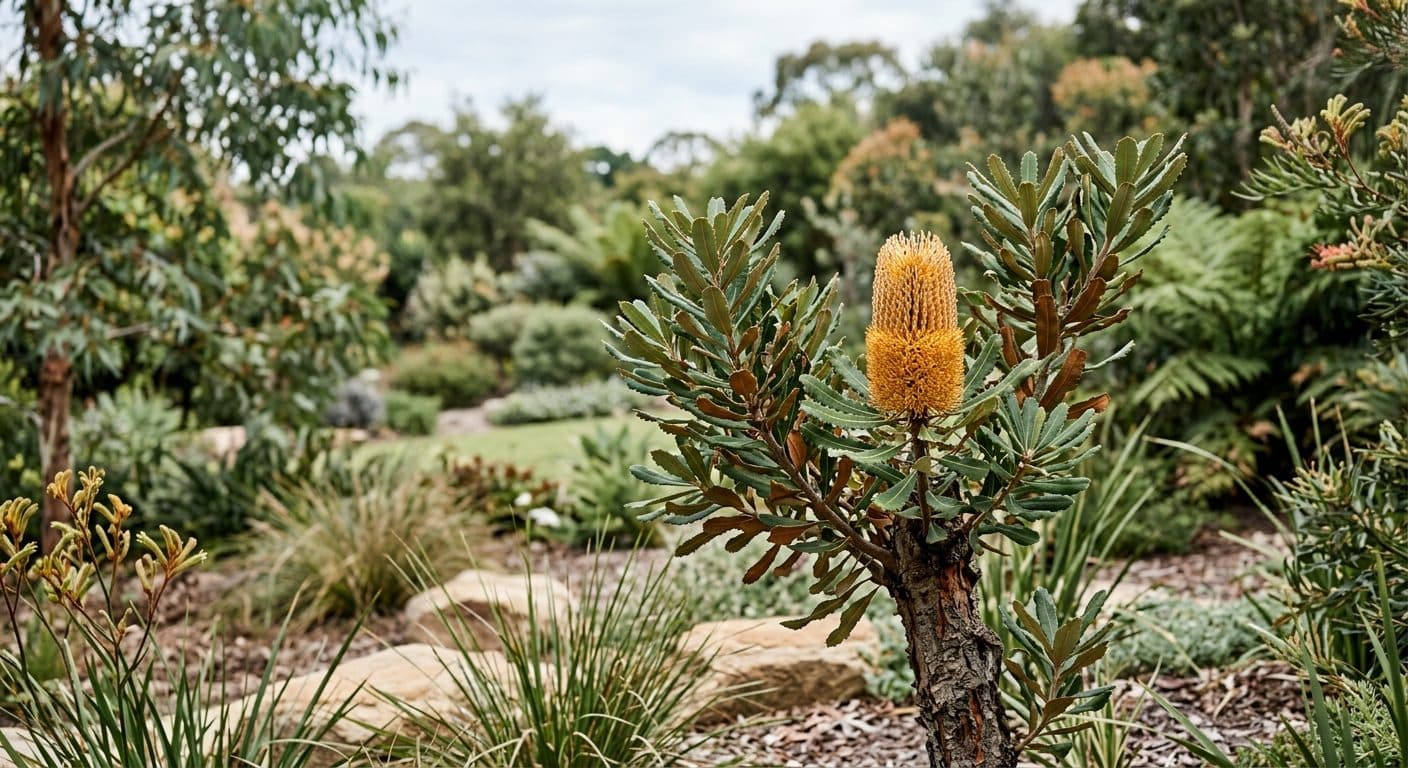
We place banksia where its silhouette can be read, as a specimen against a wall or sky rather than lost in a busy mixed bed, because the flower spikes and the coarse, handsome foliage deserve breathing room. The tree forms make a genuine feature or a light canopy, while the low, spreading species work as tough, textural groundcover on a hot bank that we would not ask a lawn to hold.
In coastal and sandy gardens around the bay, banksia is often the plant that makes a native scheme feel truly of this place, and it sits comfortably alongside the wider habitat palette we describe in our guide to the best plants for Brisbane gardens. We use it for structure and for birds in equal measure, and a mature specimen tends to become the plant visitors ask about first.
Where we write about banksia
Common questions
Want sculptural natives that feed the birds?
We're currently taking on new landscape design clients across Brisbane. Reach out for a personalised quote, whether you're a homeowner or a design professional.
Book a Free Discovery Call