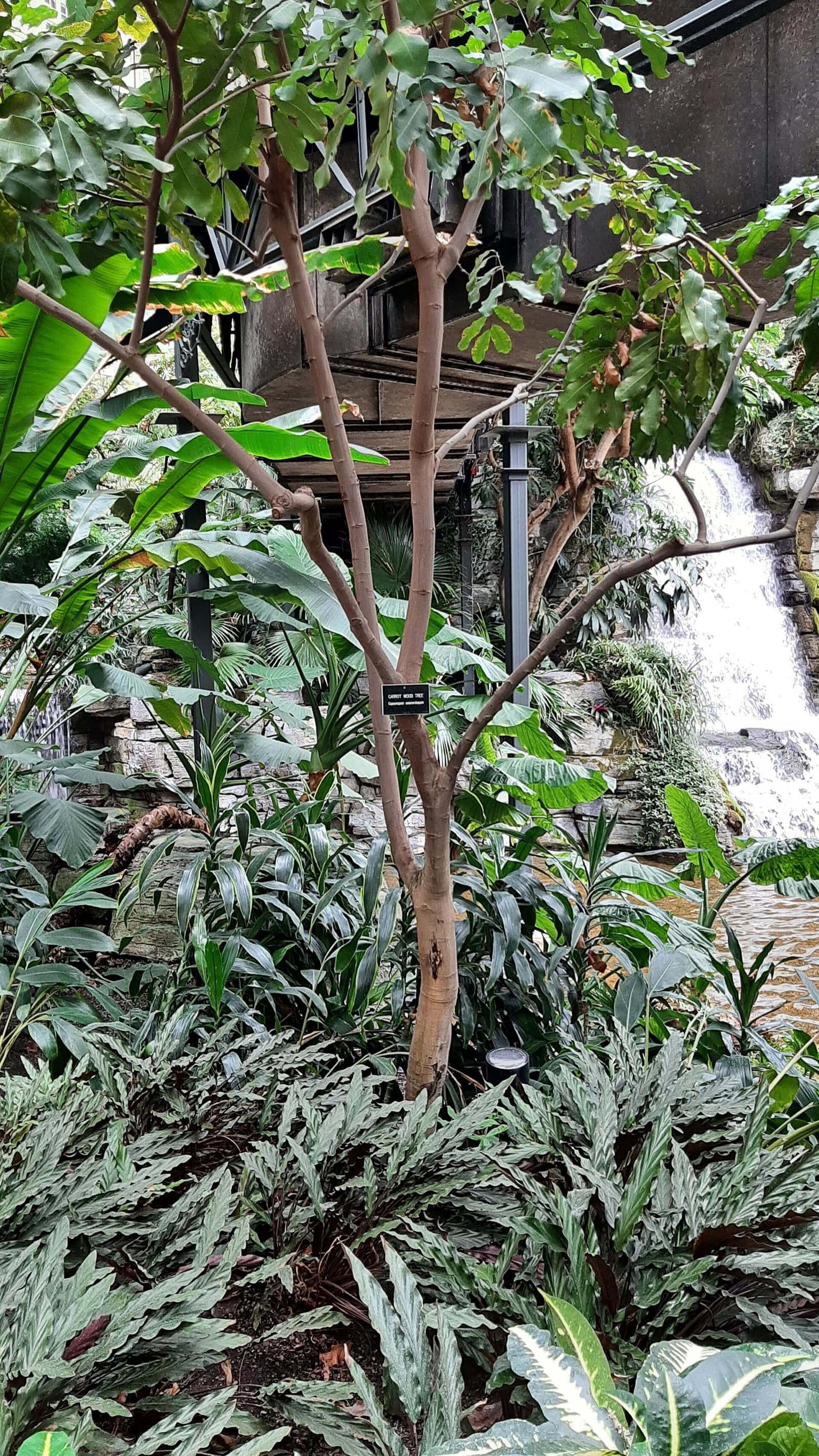
Cupaniopsis anacardioides, the unfussy native shade tree that holds its glossy canopy through salt wind, poor soil and long dry spells.
Cupaniopsis anacardioides · Also known as Carrotwood
The tuckeroo is the tree you have walked past a thousand times without learning its name, a rounded, densely leafed native that our councils plant along coastal footpaths precisely because it copes with everything a street throws at it. Nurseries and street-tree lists often label it carrotwood, after the orange tint in freshly cut timber, but tuckeroo is the name most Brisbane gardeners use for this glossy, dependable shade-maker.
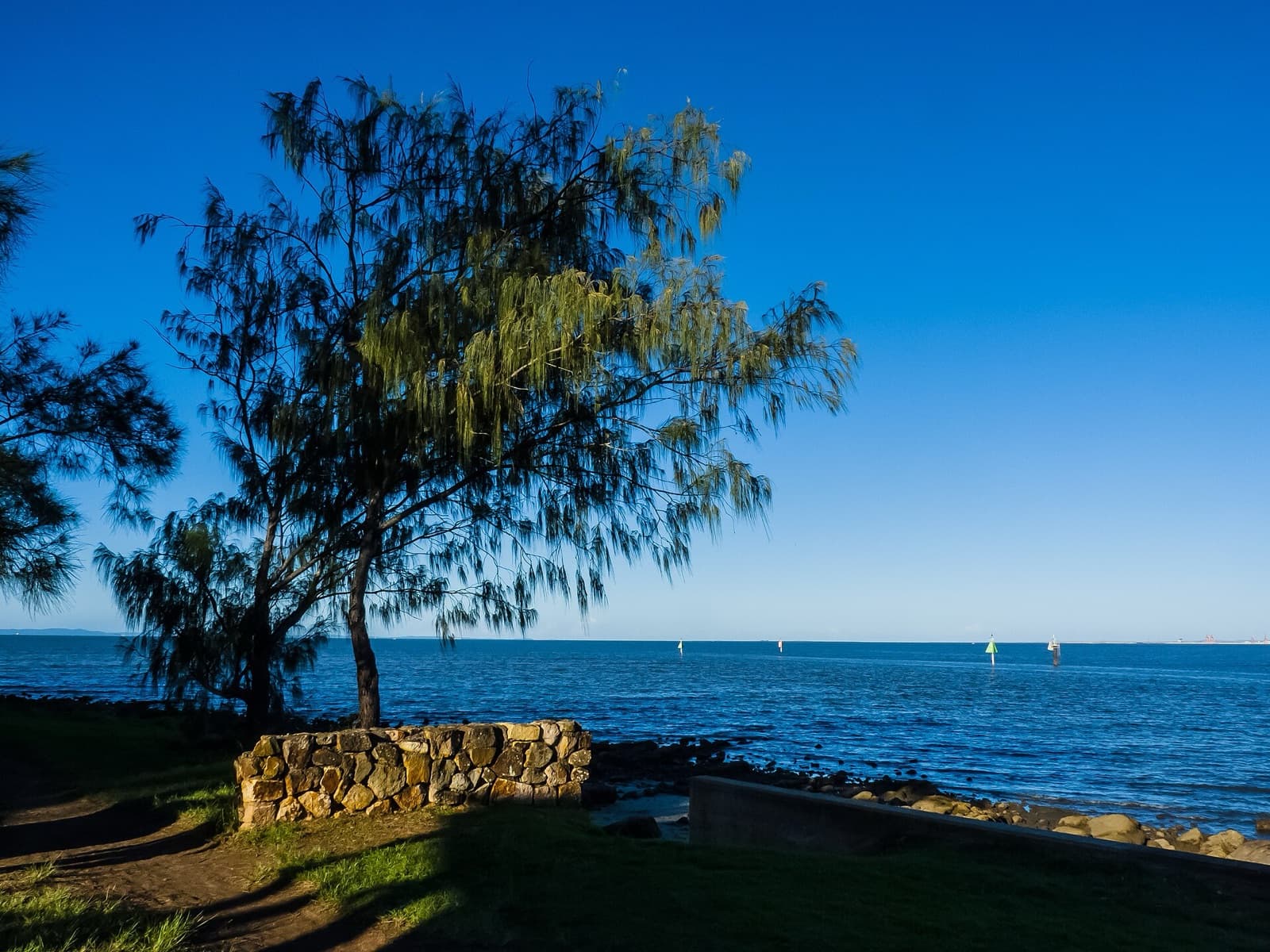
We reach for it when a garden needs real, usable shade from a tree that will not lift paths, drop half itself in a storm or demand watering once it is away, which is a taller order in our climate than it sounds. Its toughness and tidy, spreading crown make it a favourite for front yard landscaping, and its origins on exposed foreshores mean it belongs in almost any coastal garden where wind and salt spray would burn a softer canopy.
In a Brisbane garden
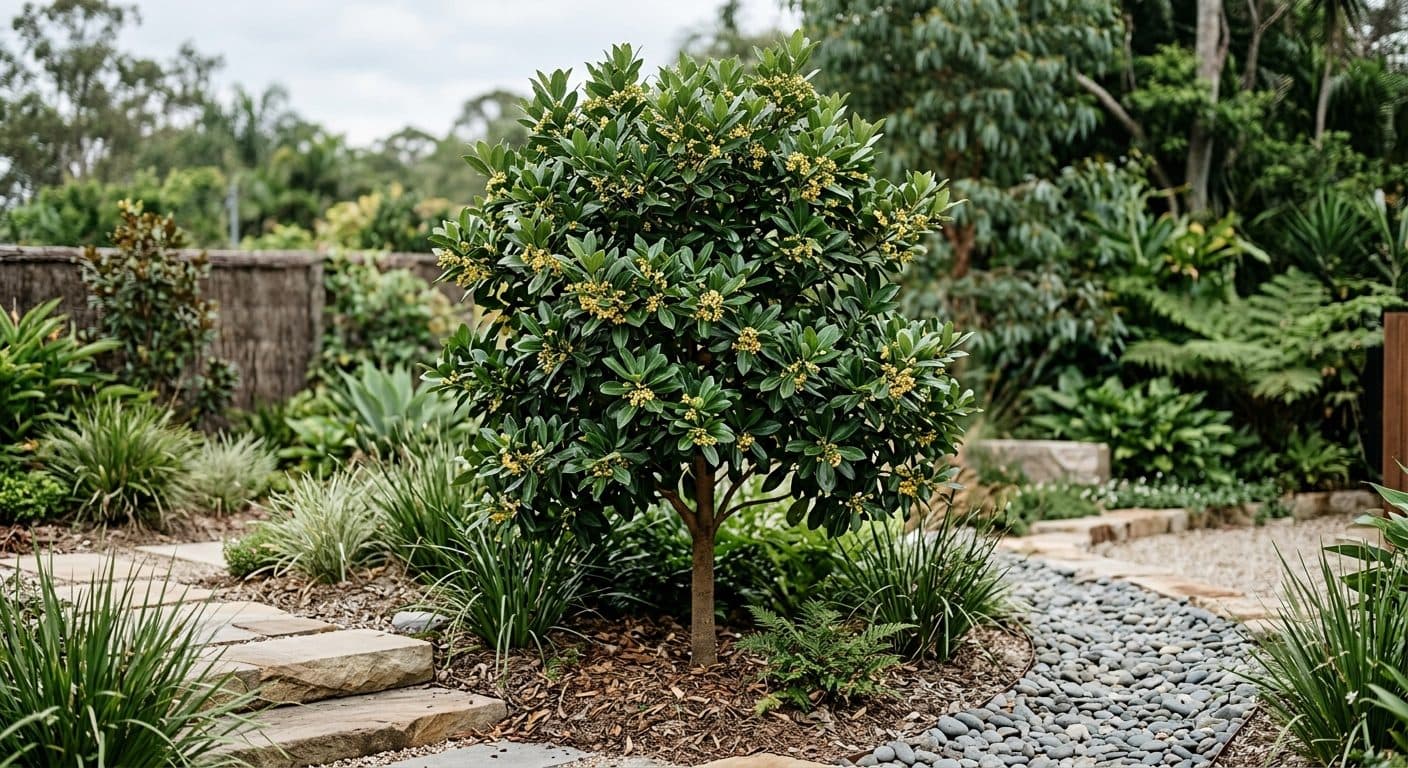
What makes the tuckeroo so useful here is that it delivers dense, evenly rounded shade at a sensible size, roughly six to ten metres, so it cools a courtyard or a west-facing room without the scale and root problems of the big figs people plant and later regret. The canopy holds together in wind rather than shredding, the leaf litter is modest and manageable, and once the tree is established it runs on rainfall through all but the harshest dry, which is exactly the low-drama performance a homeowner wants overhead.
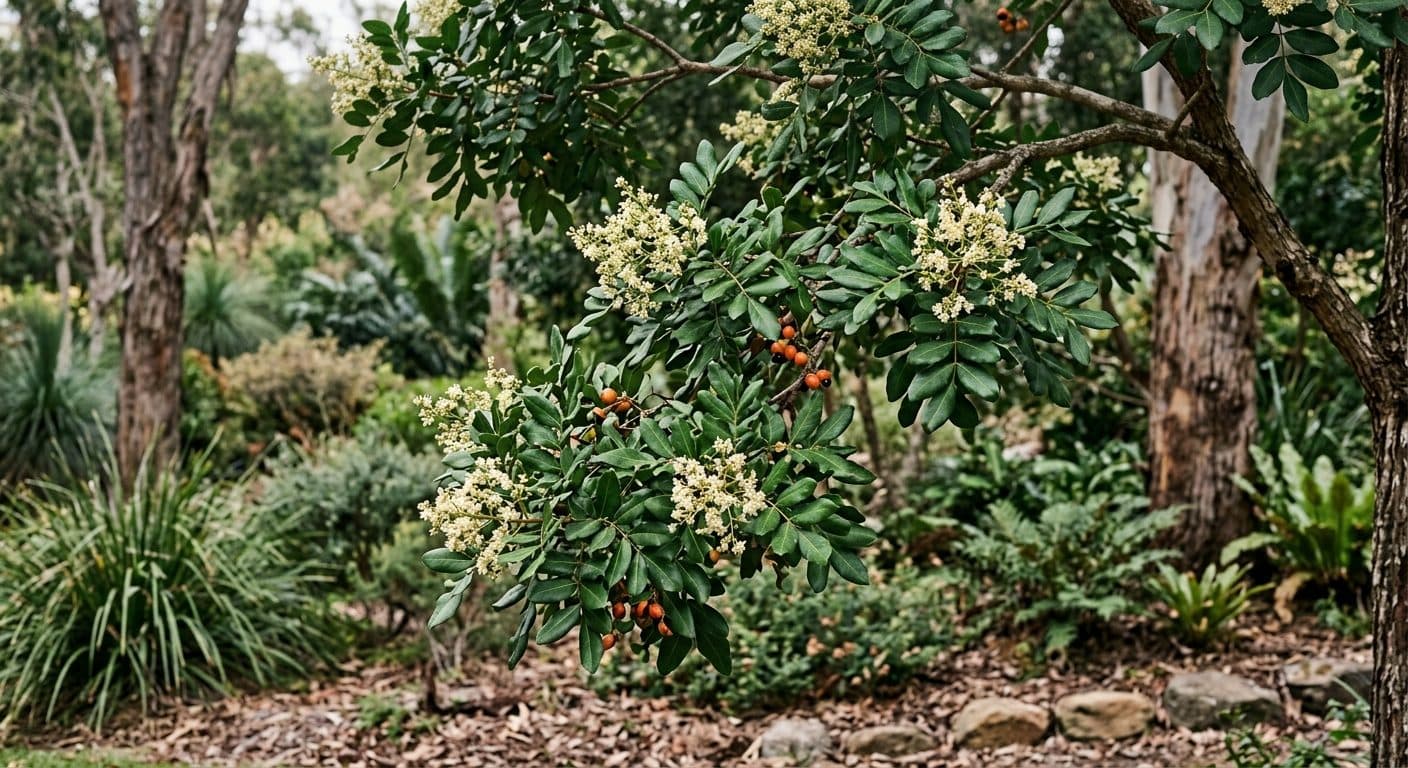
The one honest caveat is the fruit, because the orange seed capsules do drop and can germinate readily, and in some warmer parts of the country the tuckeroo has naturalised beyond gardens, so it is worth a quick check of your local council's current planting guidance before you commit. In a maintained Brisbane garden it behaves well, and placing it over paving or garden bed rather than lawn keeps the seedlings easy to manage while you enjoy the shade.
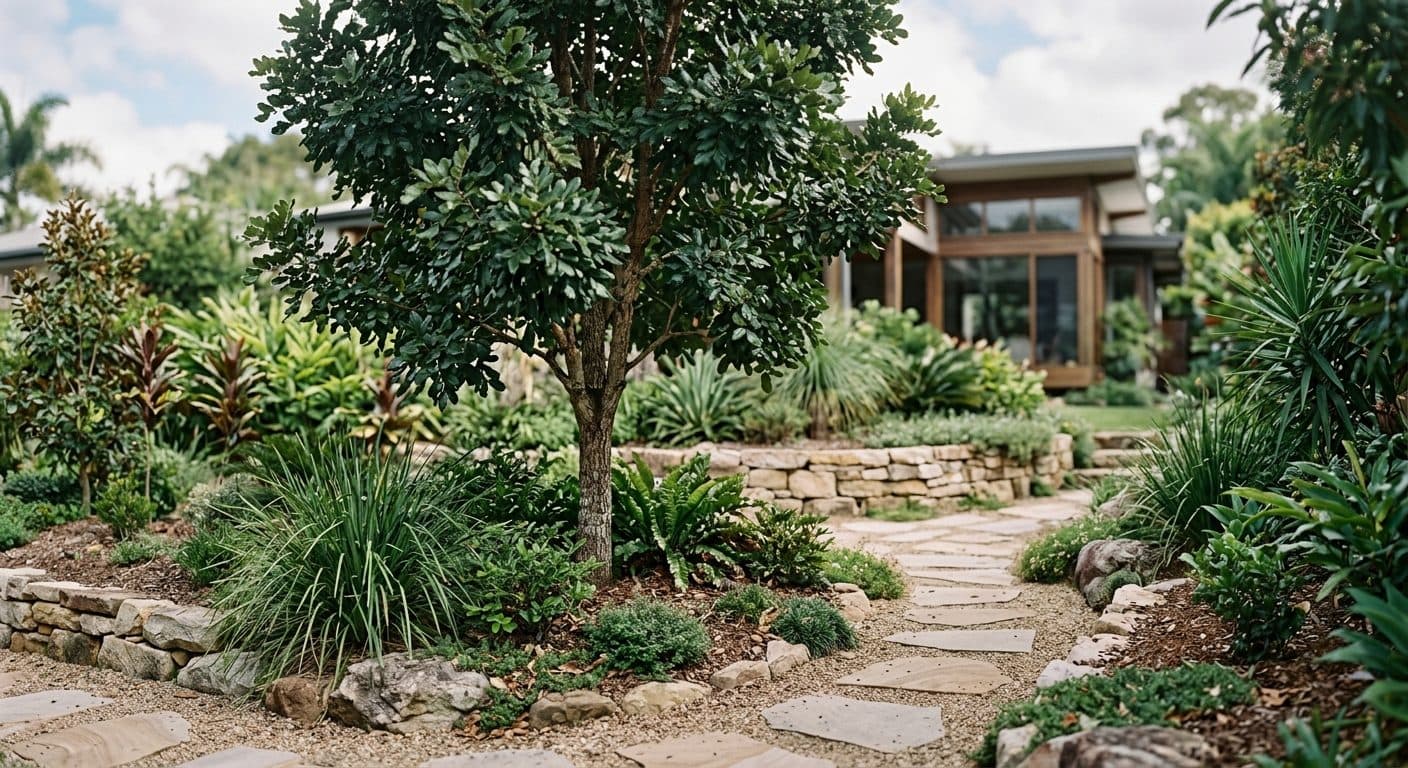
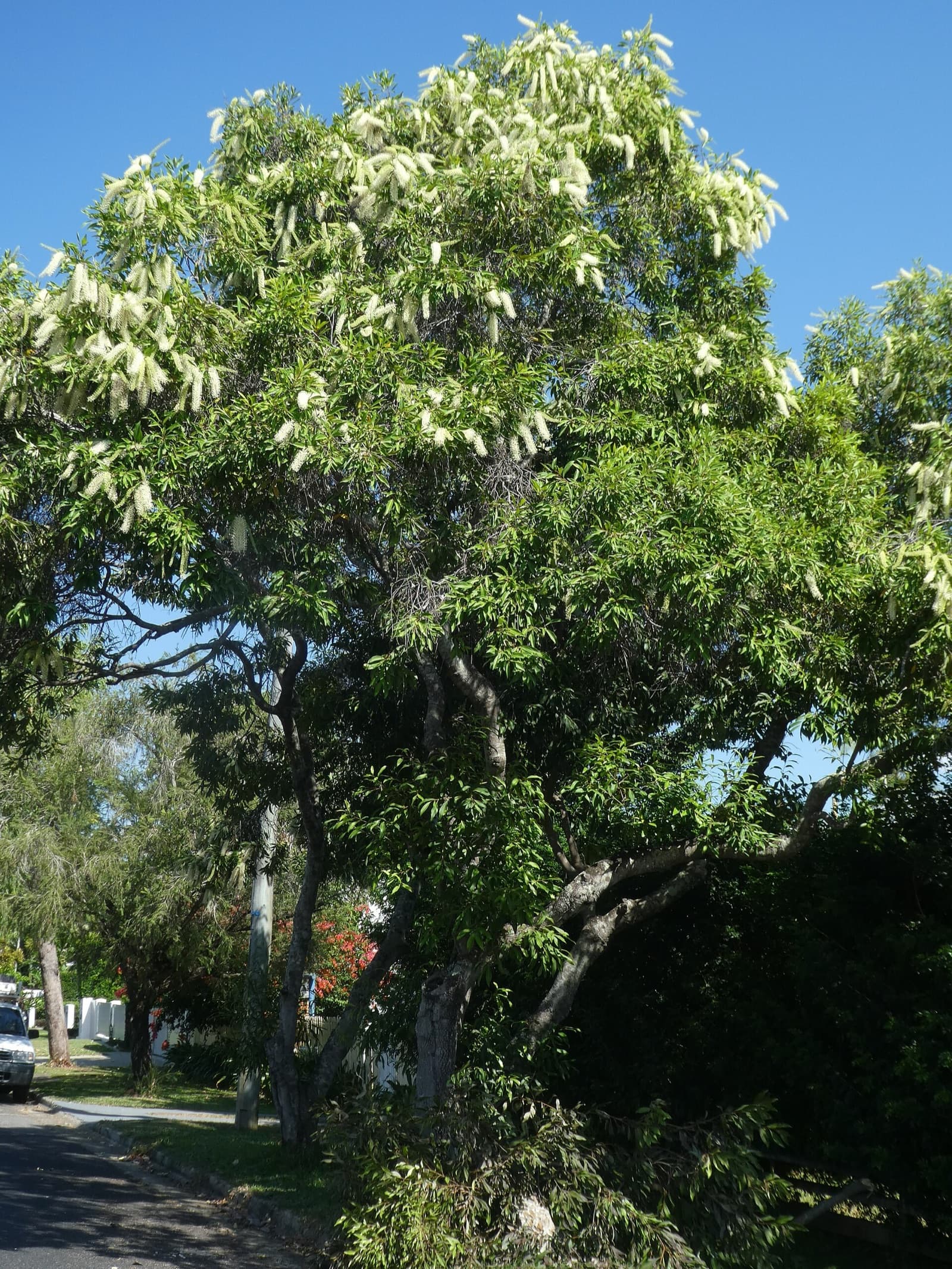
Photo: John Robert McPherson, CC BY-SA 4.0, via Wikimedia Commons
How we design with it
We use tuckeroo as a workhorse shade tree, the sort you plant to make an outdoor room liveable, positioning it to throw its crown over a deck, a hot western wall or the patch of front garden that bakes from lunchtime on. Its neat, rounded habit means it reads as a deliberate, formal canopy rather than a sprawl, which suits it to the framed, welcoming look most people want at the front of the house.
Because it asks so little and gives usable shade fast, the tuckeroo is one of the trees we return to again and again, and it sits naturally within the broader working palette we set out in our guide to the best plants for Brisbane gardens. Underplant it with hardy natives that cope with dry shade and you have a cool, low-input corner that looks after itself for most of the year.
Where we write about tuckeroo
Common questions
Want real shade from a tree that behaves?
We're currently taking on new landscape design clients across Brisbane. Reach out for a personalised quote, whether you're a homeowner or a design professional.
Book a Free Discovery Call