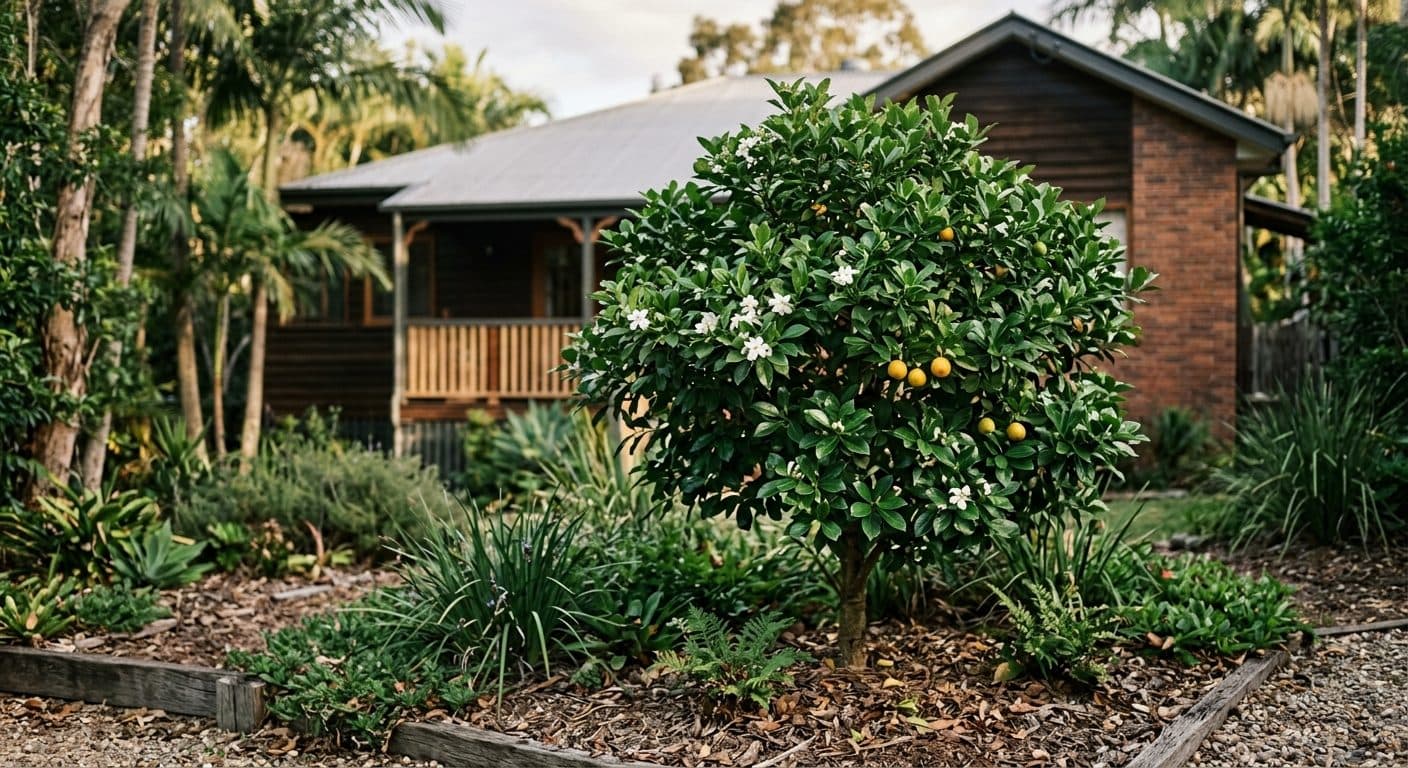
The best small trees for Brisbane gardens stay clear of powerlines, keep their roots out of your slab and shade a west wall without swallowing the yard. Here's how I choose them.
By Shannon Trevisiol, Landscape Designer, Brisbane · 5 min read
- Plant for year ten, not for the nursery pot: the number that matters is the size at maturity, not the tidy thing on the trolley.
- Keep clear of the powerlines above and the services below, and give roots room so they don't lift a slab, driveway or pool or go hunting for pipes.
- Match the tree to the job: a feature for the front lawn, real afternoon shade for a west wall, or something productive like a dwarf Meyer lemon, an olive or the native macadamia.
- For a courtyard, a naturally small tree beats a big one you plan to prune forever, and a deciduous choice lets the winter sun back in.
Choosing a small tree for a Brisbane garden is one of the more consequential decisions you'll make on your block, because a tree is the one thing you plant that outgrows every other decision around it. Get it right and you buy afternoon shade, a bit of privacy up high and a garden that finally has a ceiling. Get it wrong and you're either paying an arborist to remove something lovely or living with roots in the driveway, and neither is the afternoon you had planned. The best small trees for Brisbane gardens aren't the fastest or the flashiest, they're the ones that suit a real suburban block, and here's how I pick them.
Plant for year ten, not for the nursery
The single most useful habit you can build is to ignore the plant in front of you and picture the one it becomes. Nurseries sell trees at their most charming, waist-high and well-behaved, and the label's mature height is the number that actually decides whether this was a good idea. A "small" tree in the trade can still mean eight metres, which is a genuinely large thing over a single-storey house, so read the tag and then find a photograph of a mature specimen before you commit. Plant for year ten, because year one takes care of itself.
Look up, then look down
Before you fall for anything, stand where the tree will go and look straight up. If there are powerlines overhead, the mature canopy can't share that space, and the network provider prunes on their schedule and to their shape, not yours, which is how a beautiful tree ends up with a channel cut through its middle. Setbacks from the boundary and the footpath matter too, and those rules change, so it's worth checking the current Brisbane City Council requirements or letting your certifier or arborist confirm what applies to your street before you dig.
Then look down. The classic offenders, figs, poincianas and the big old camphor laurels, earn their reputation because their roots go looking for water and lift whatever's in the way, and once a root is under a slab or a pool shell or into an old earthenware pipe, the tree is winning and you are not. On a normal block I'd rather plant a naturally small tree a sensible distance from the house than a large one I'm forever managing. It's also worth steering clear of anything with a weedy streak that seeds into local bushland, because a garden that quietly colonises the creek reserve is nobody's idea of a good result.
Feature, shade, or productive
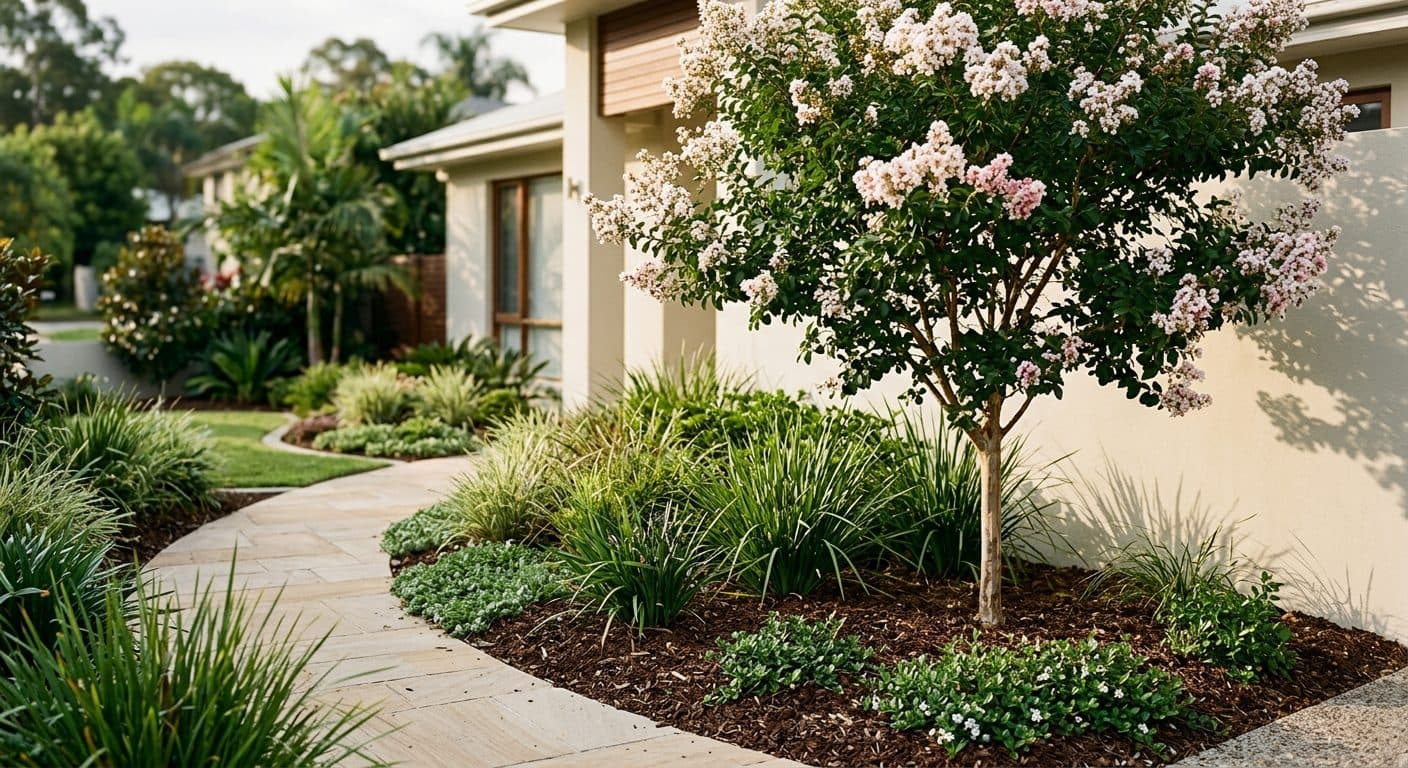
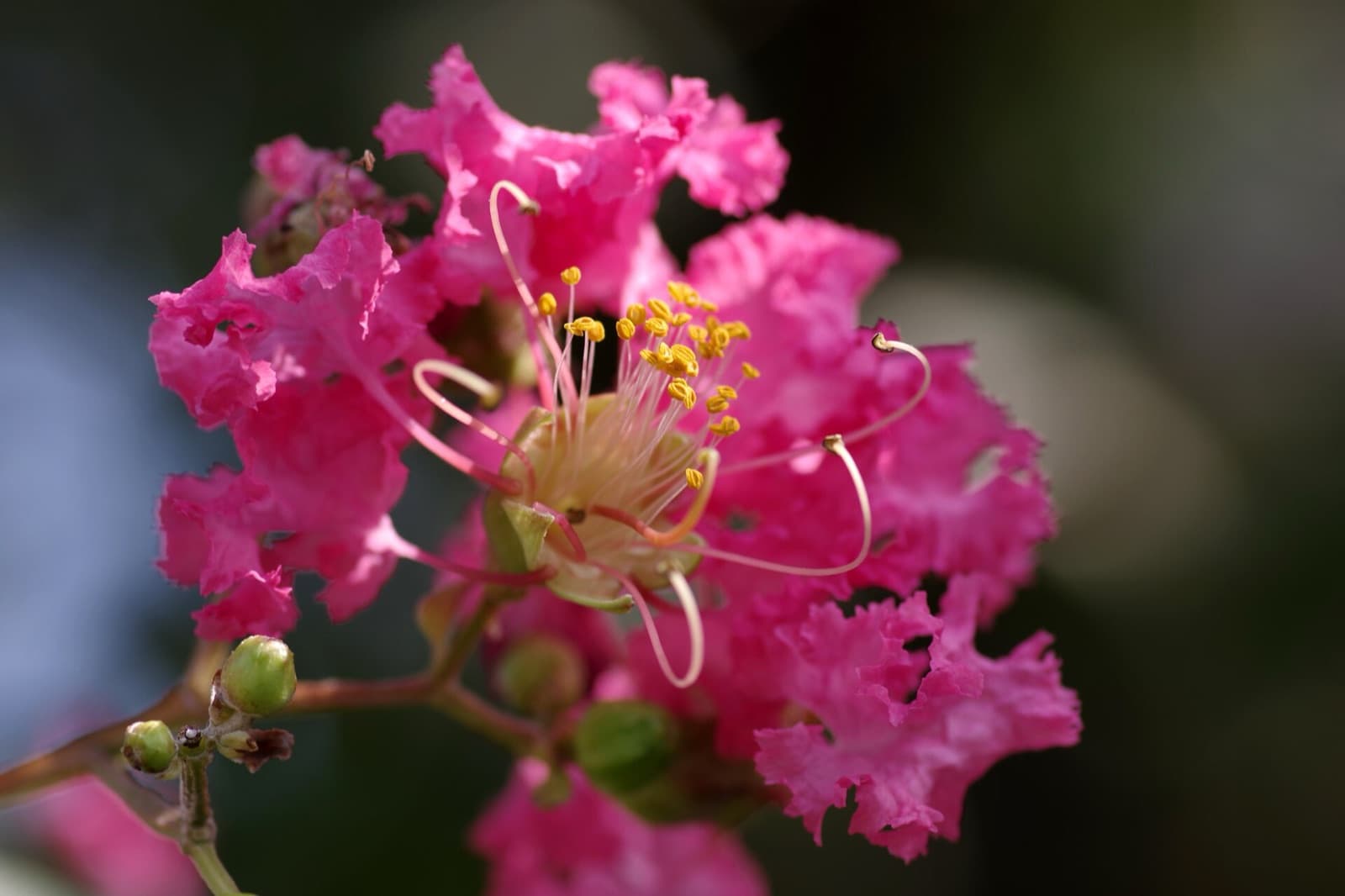
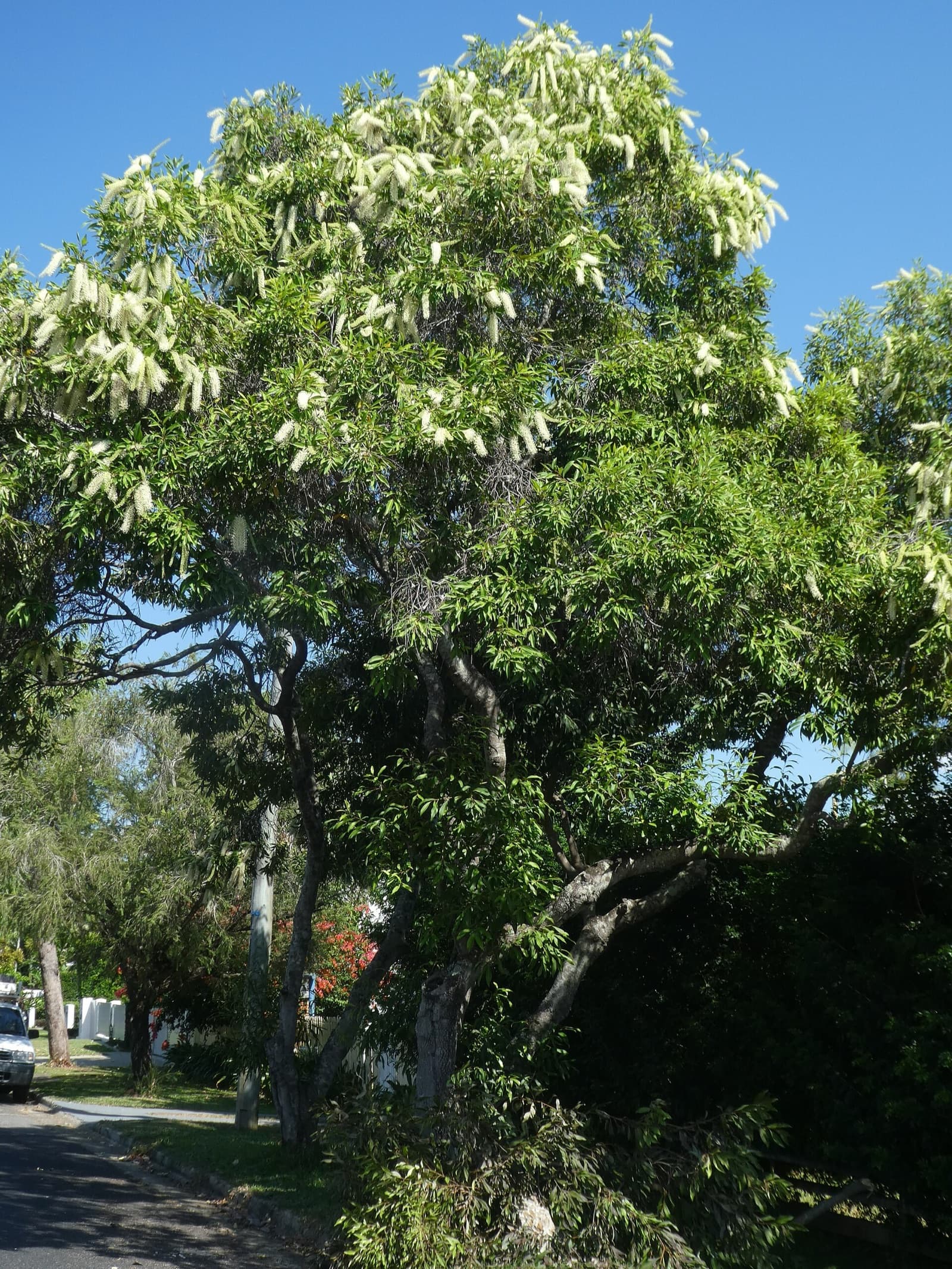
Most briefs come down to one of three jobs, and the trick is being honest about which one you actually want. A feature tree earns its place on looks: the ivory curl tree (Buckinghamia celsissima) is a rainforest native that stays modest, throws cream flower spikes through summer and behaves itself near a front path, while crepe myrtle (Lagerstroemia) is the reliable front-lawn showpiece, long-flowering through the hot months and, being deciduous, generous enough to drop its leaves and let the low winter sun from the north back onto the house when you want it most.
For shade, the job is a canopy that lands where you need it, usually on a west-facing wall that's cooking by three o'clock in summer, without eating the whole yard. The tuckeroo (Cupaniopsis anacardioides) is a tough Brisbane native with a dense rounded head that takes wind and poor soil in its stride, which makes it a sensible shade tree for a front lawn or a nature strip where a fussy tree would sulk.
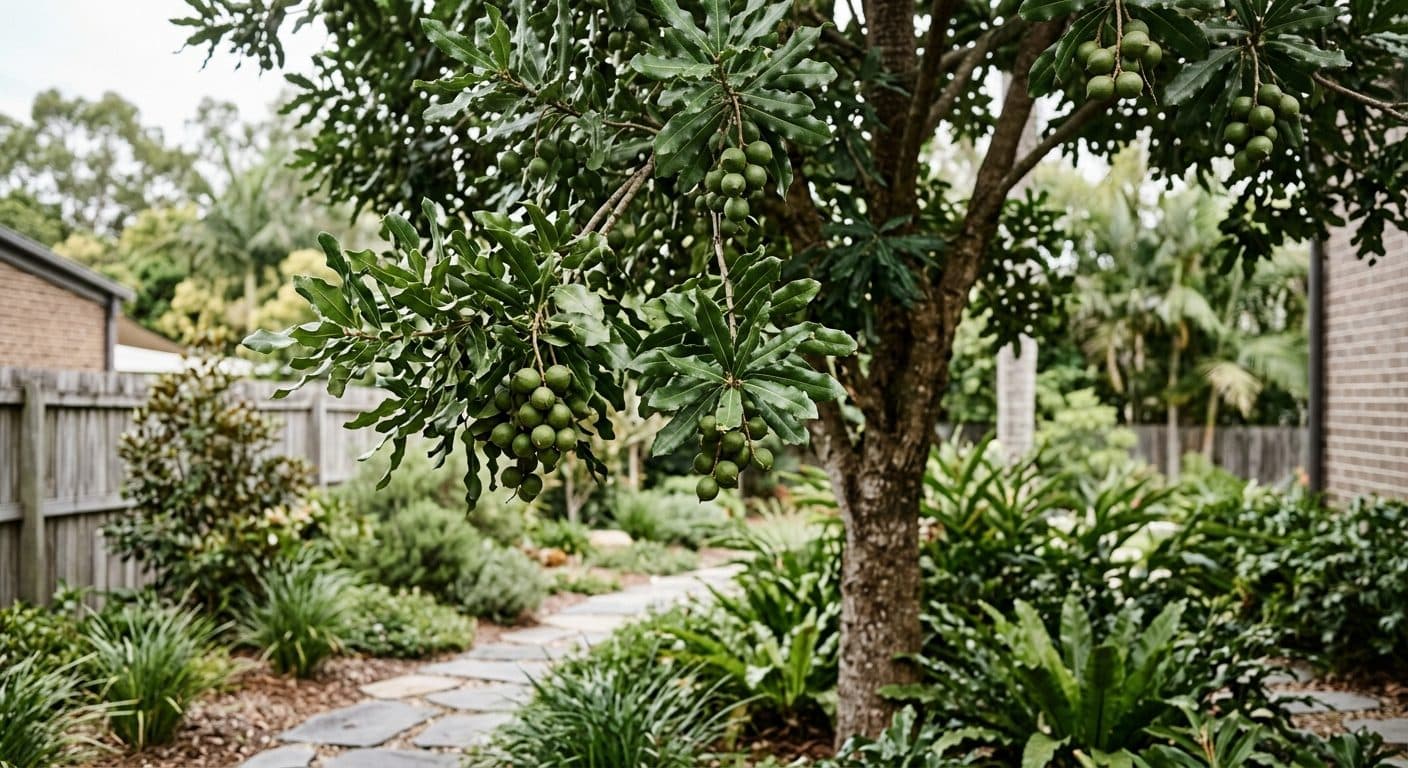
If you'd like the tree to feed you as well, a couple of dwarf productive trees do it beautifully at a garden scale. A dwarf Meyer lemon is small enough for a courtyard or a big pot and hands you fruit for the price of a sunny, sheltered corner, an olive brings a soft grey-green, Mediterranean note and takes the heat and wind without complaint, and if you've got a bit more room the native macadamia (Macadamia integrifolia) is a handsome evergreen that grows into a proper shade tree over time and drops nuts you'll be racing the cockatoos for.
Courtyards and the mess question
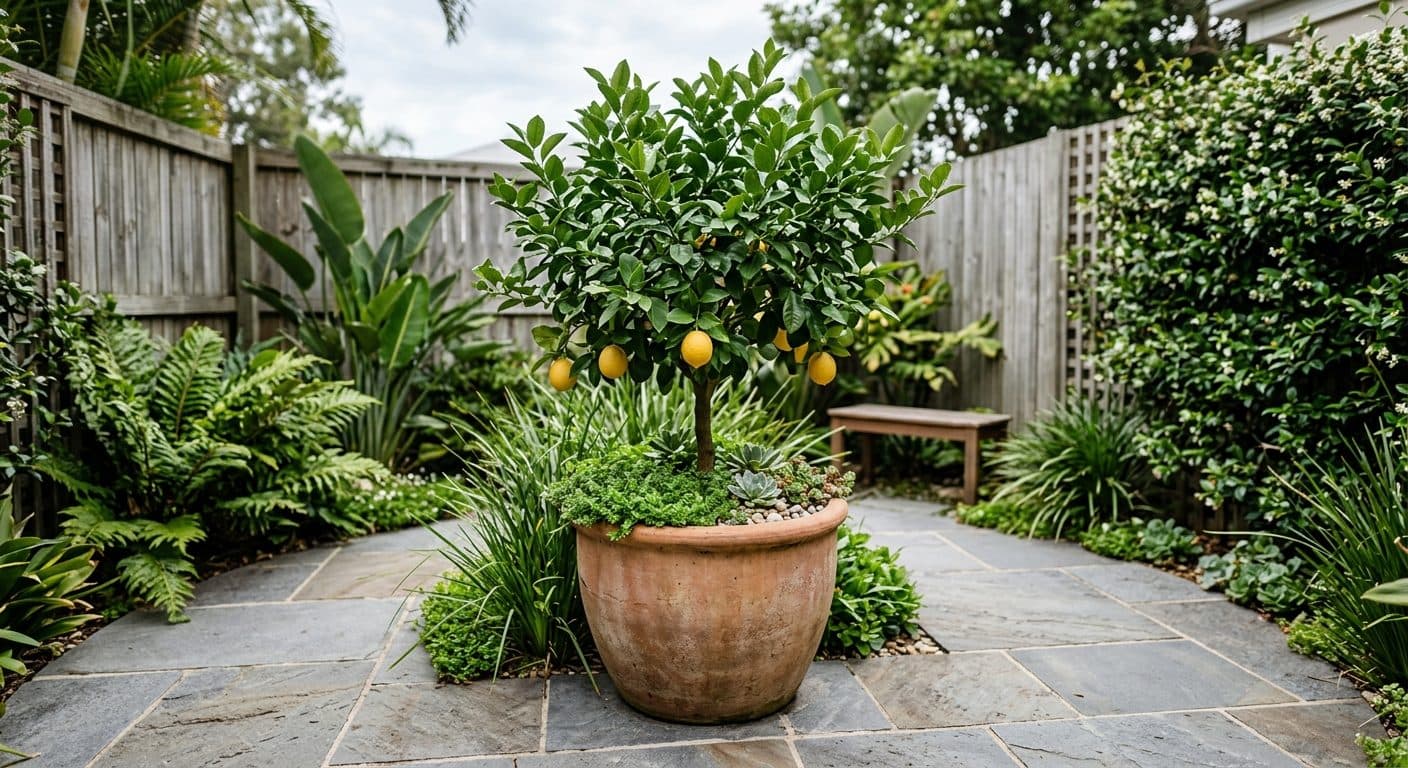
In a tight courtyard the maths is unforgiving, so a naturally small tree beats a big one you intend to prune into submission forever, and this is where a dwarf Meyer lemon, ivory curl tree or a single crepe myrtle earn their keep. Small-space planting has its own logic, and my guide to small garden design in Brisbane works through the rest of it. The other thing worth thinking about before you plant is litter: fruit and heavy flower drop over paving stains it and over a pool clogs the skimmer, so keep the messier trees back from hard surfaces and the water, and keep the paved edge for the tidier ones.
Out the front, a well-placed small tree does more for a facade than almost anything else you can plant, and my page on front yard landscaping in Brisbane covers how it sits with the rest of the picture. If you'd like a wider palette to build around it, the best plants for Brisbane gardens sorts the rest by the work each one does.
Working out exactly where a tree belongs, and which one suits the soil and the sightlines you've actually got, is a large part of what a Design Discovery Consultation is for. It's $350 on-site within the Brisbane metro area, with any travel beyond that quoted up front when you book, and you'll leave knowing what to plant and, just as usefully, where not to.
Ready to start designing?
We're currently taking on new landscape design clients across Brisbane. Reach out for a personalised quote, whether you're a homeowner or a design professional.
Book a Free Discovery Call