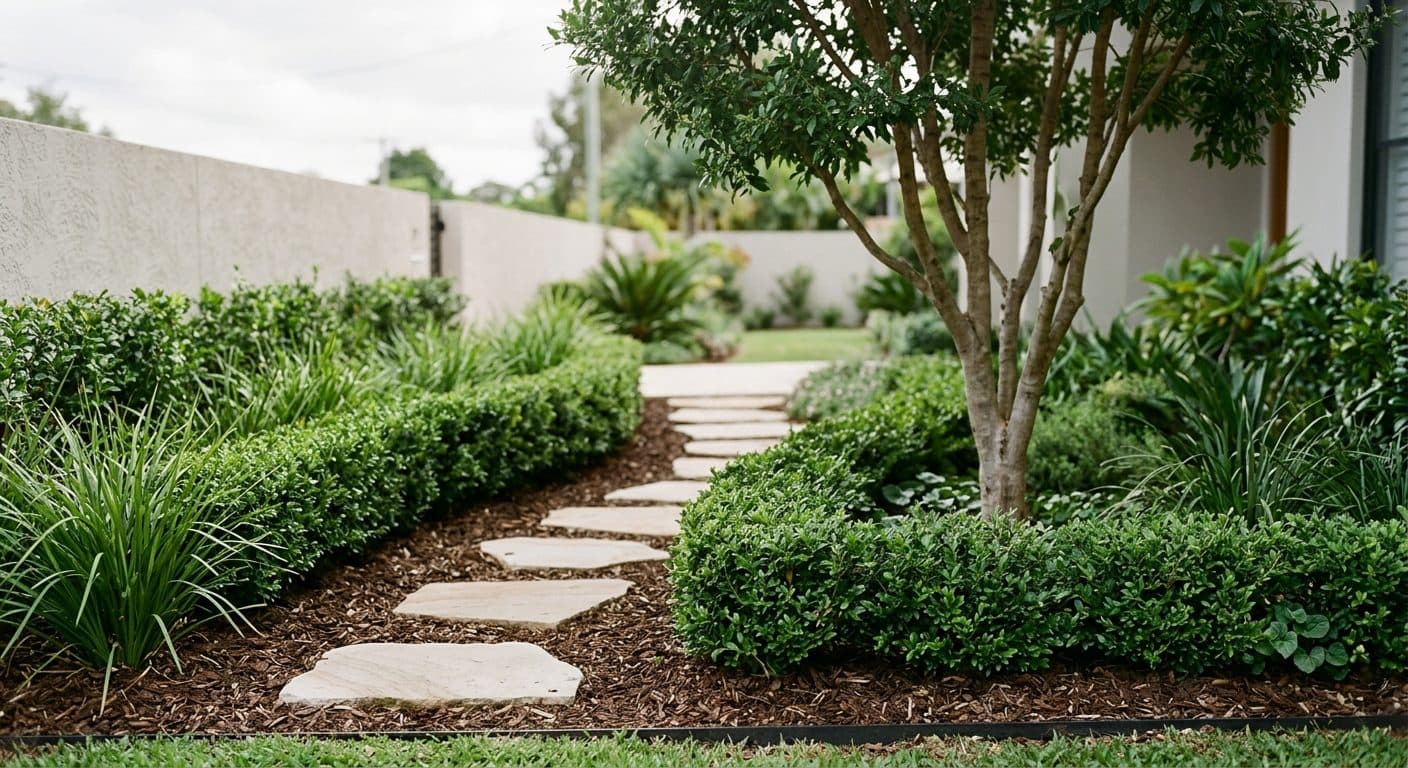
Good garden bones are the trees, hedges, paths and walls that hold a garden together when nothing is flowering. Here's how I plan structure first in a Brisbane garden.

By Shannon Trevisiol, Landscape Designer, Brisbane · 6 min read
- Garden bones are the permanent structure: trees, hedges, paths, walls, levels and edges. They are what you still see when nothing is in flower.
- Plan structure in a set order: levels and hardscape first, then trees, then evergreen framework planting, and only then the colour and softness.
- Brisbane's winter is dry and flower-thin, so evergreen form, texture and repeated foliage do more of the work than blooms.
- If the garden looks good in a flat grey July photo, it is well built. Seasonal flowers are a bonus on top, not the plan.
Most people start a garden with plants: what looks good at the nursery, what's flowering, what a neighbour has. It's a natural way in, and it's usually the reason a garden looks lovely for one season and tired the rest of the year. The gardens that hold up best are built the other way round, with the structure settled first and the plants chosen to sit inside it. That structure is what designers mean by good garden bones, and it's the single most useful idea I can give you before you spend a dollar on planting.
Garden bones are the permanent, load-bearing parts of the design: the levels and retaining, the paths and paving, the boundary and screening, the trees, and the clipped or mass evergreen planting that gives each space an edge. Flowers come and go. Bones are what's left on a flat grey July afternoon, and if they're good the garden still looks intentional with hardly a bloom in sight.
Why Brisbane gardens need structure more than they think
Brisbane is generous with growth, which is exactly the problem. In a warm, wet summer almost anything will fill a bed, so a garden can look lush with no underlying plan at all, and then the dry months arrive. Winter here is sunny and dry rather than bare, but it is thin on flowers and a lot of the showy summer planting sulks, so the shape of the garden is suddenly exposed. A garden with good bones reads well in that window. One without them reads as a collection of plants.
Structure also earns its keep in the wet. Paths, edges, levels and a proper framework of evergreen planting are what stop a February downpour turning a garden into a mess, which is why I treat the bones as practical before they're pretty. My piece on storm-resilient garden design covers that side of it.
Step one: levels, edges and hardscape
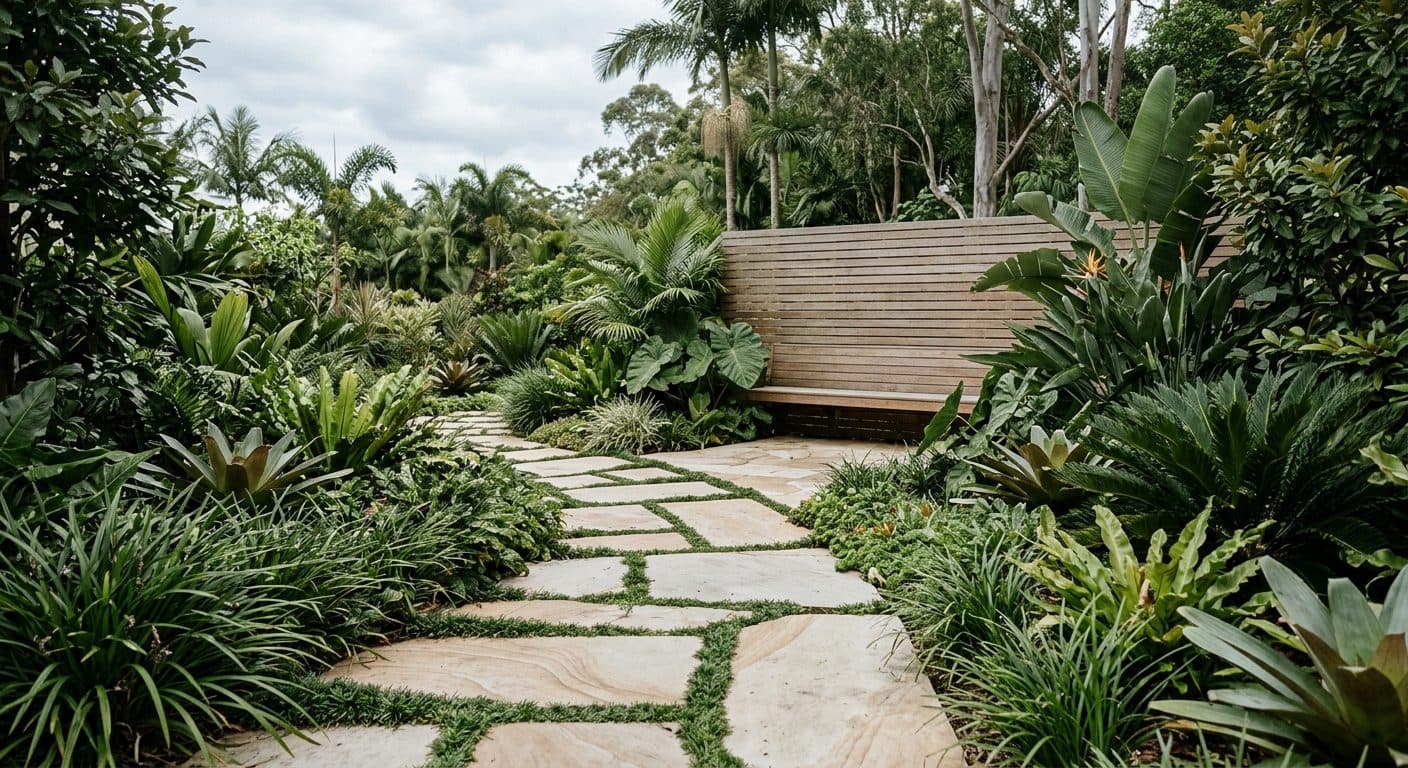
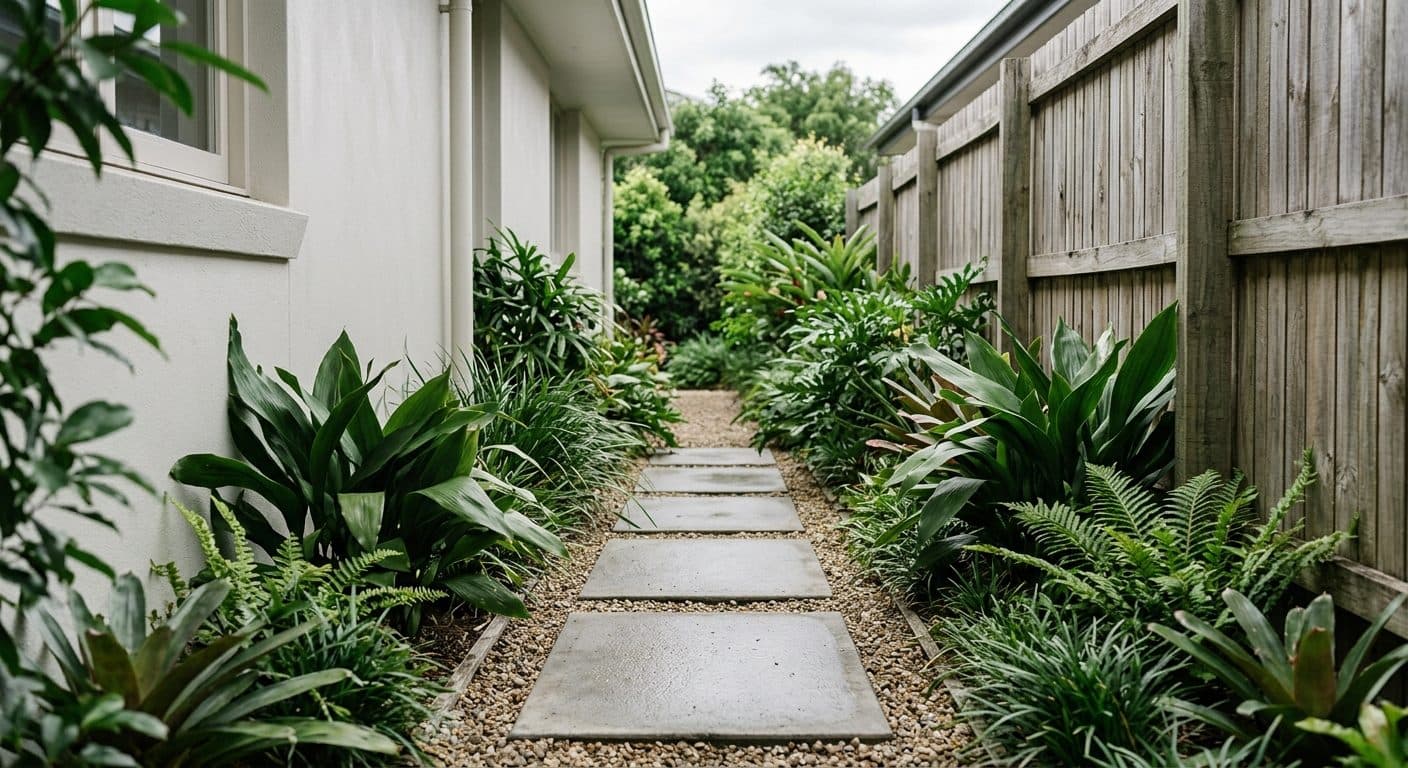
Everything else hangs off the ground plane, so it comes first. Where does water go, which parts are flat enough to use, and where do you need a wall or a step to make a slope behave? On a sloping block this is most of the design, and it is worth reading up on retaining wall design for Brisbane blocks before you commit to anything. Then come the paths and the places you stand and sit. A path is the quiet backbone of a garden because it decides how you move through it and what you see on the way, so it should go where people actually walk, not where it looks neat on a plan.
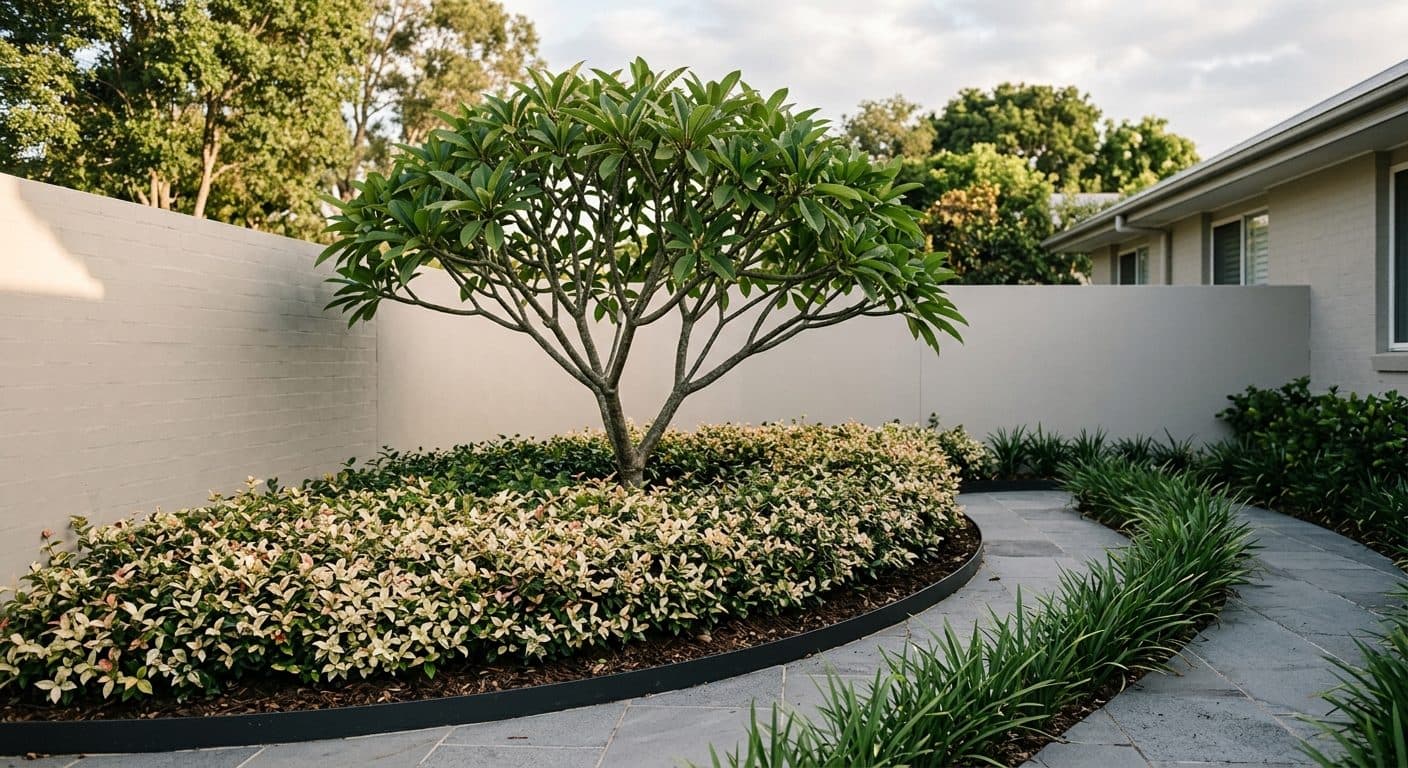
Bed edges belong here too. A crisp, deliberate edge between lawn, path and planting does an enormous amount of the work of looking designed, and it costs nothing in plants.
Step two: trees, the tallest bones
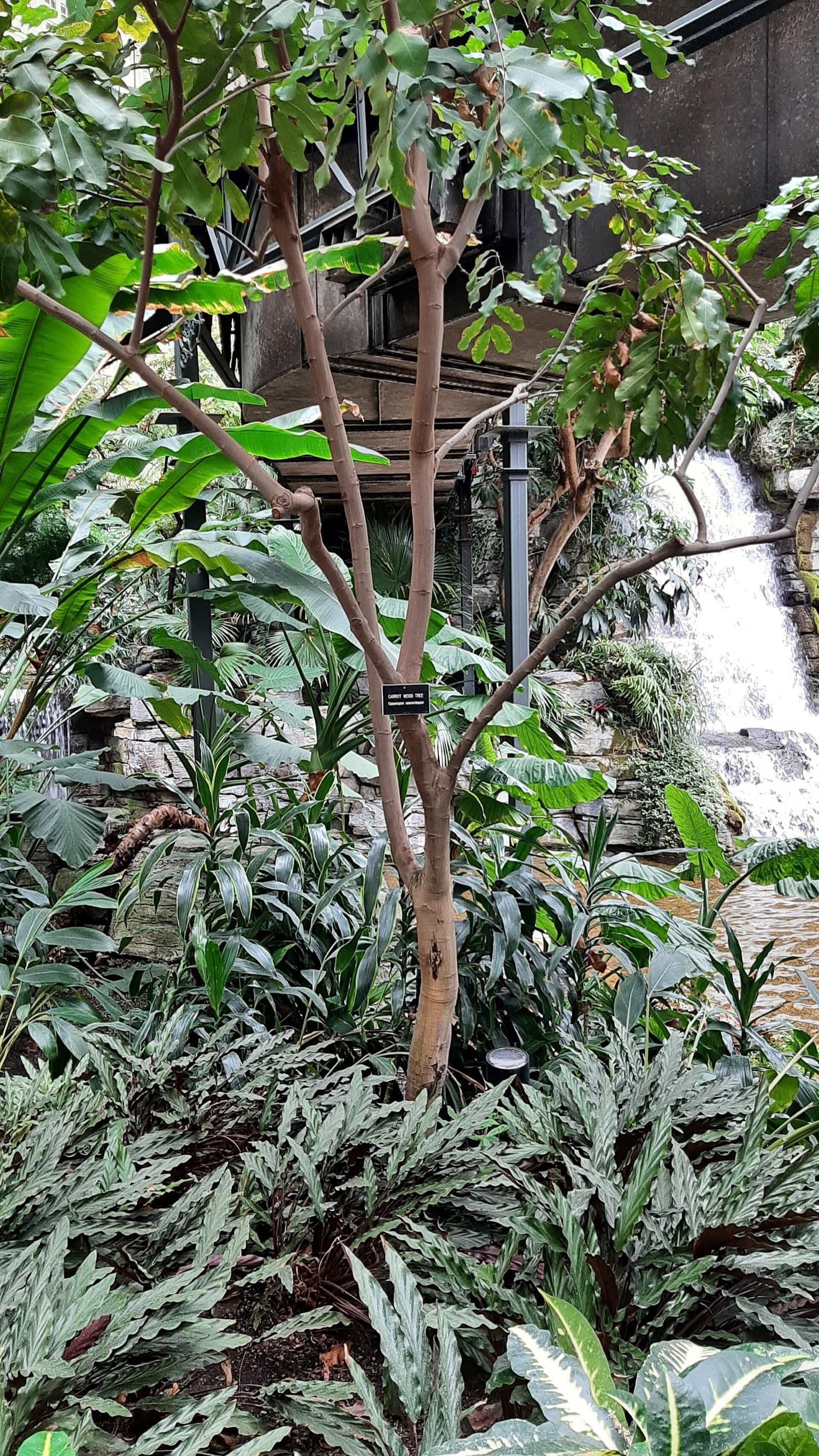
Trees are the biggest structural decision in the garden and the hardest to undo, so they get placed early and carefully. A single well-sited tree can anchor a whole space, shade the west wall, soften a neighbour's roofline and give the garden a vertical it would otherwise lack. Give the roots, canopy and powerlines proper thought before anything goes in. My guides to small trees for Brisbane gardens and where to plant a tree so its roots don't wreck your slab are the two I'd read first. A tuckeroo (Cupaniopsis anacardioides) is a good example of an evergreen that holds its shape all year and suits a larger block or a street-facing boundary.
Step three: the evergreen framework
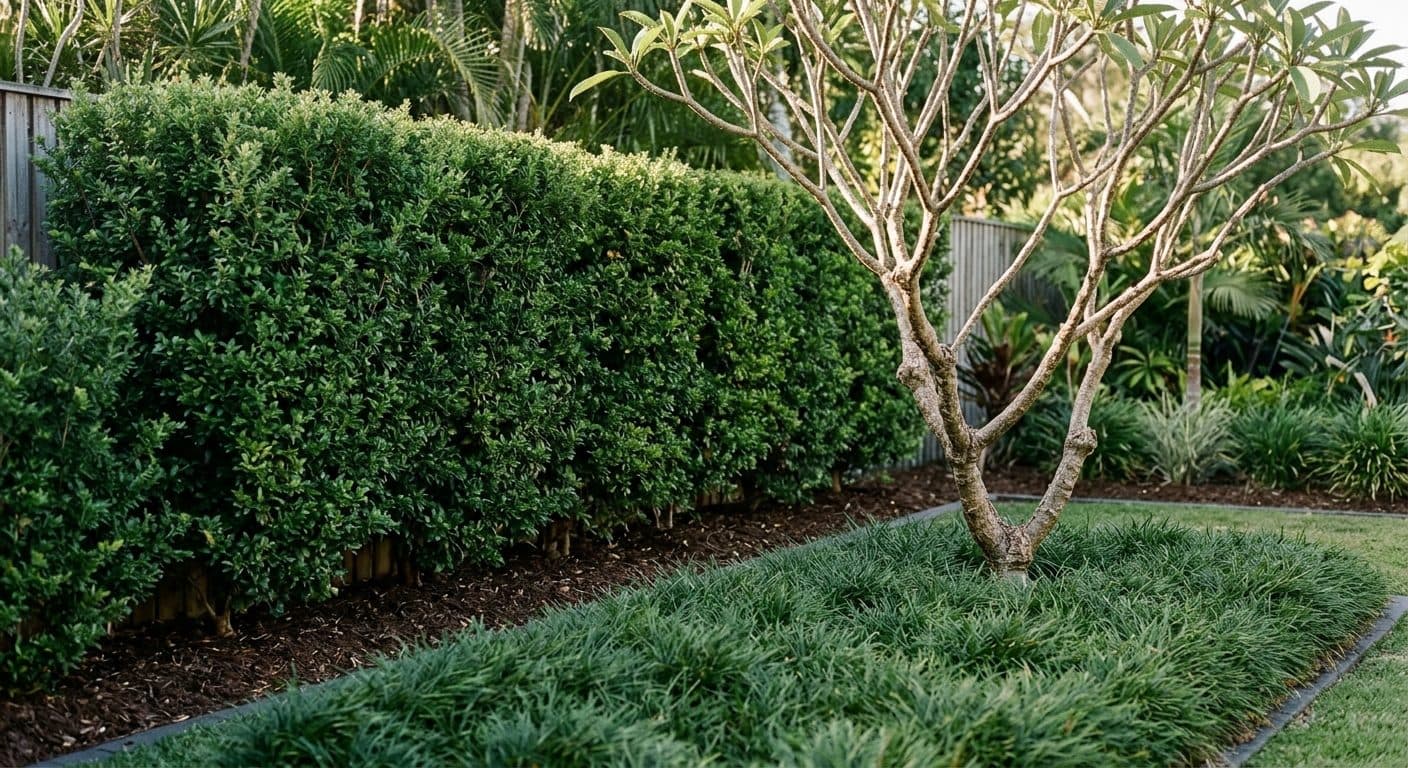
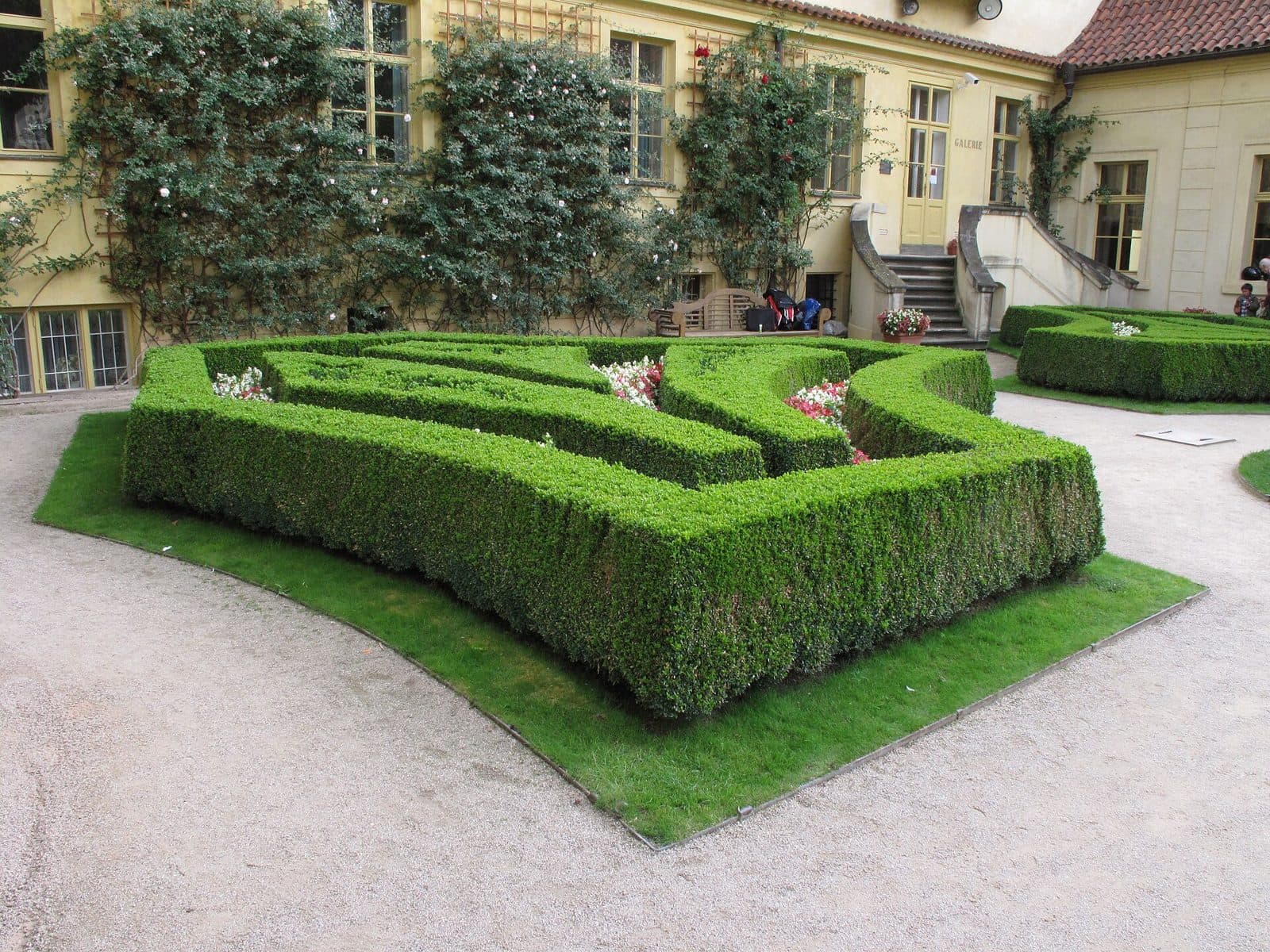
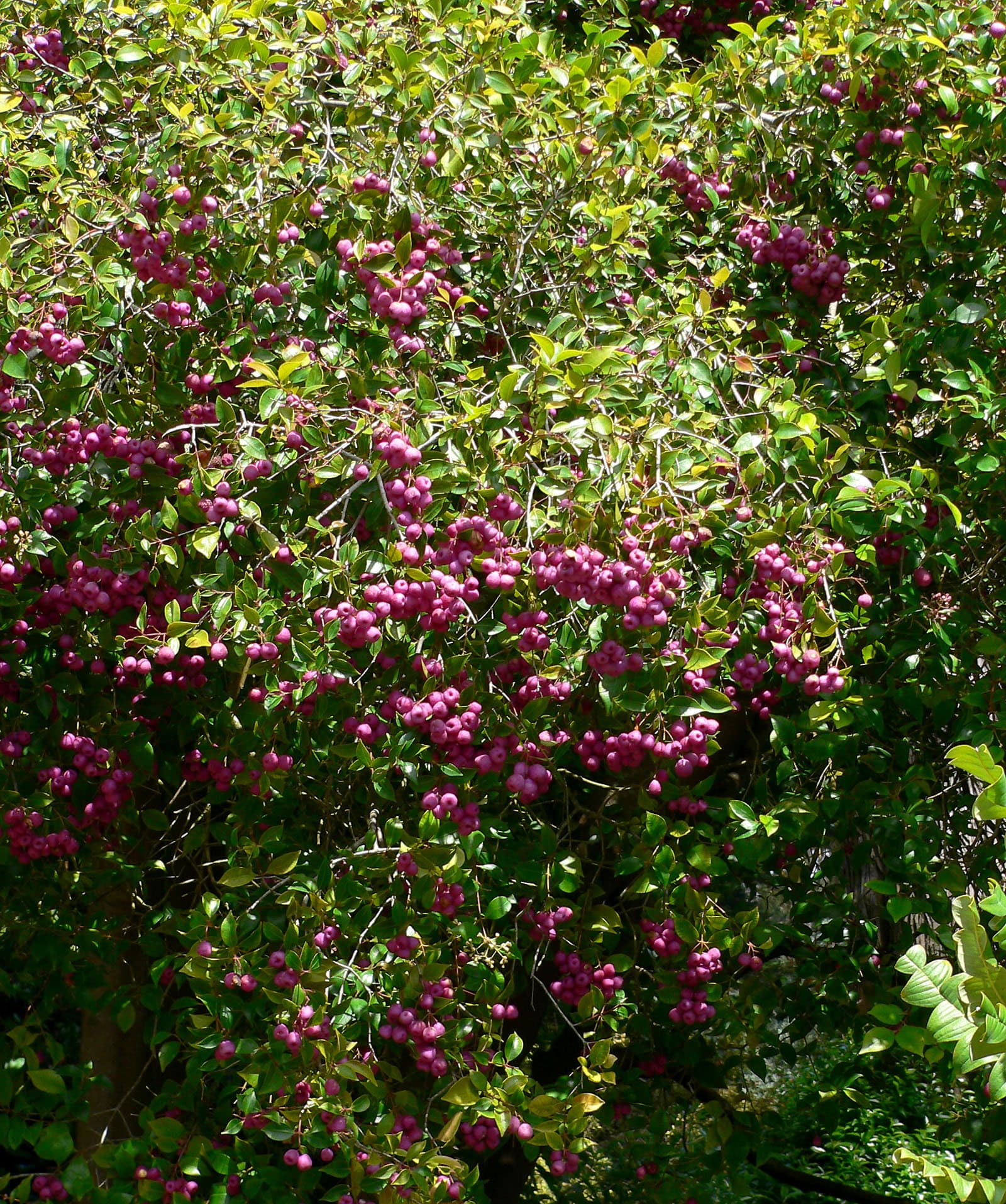
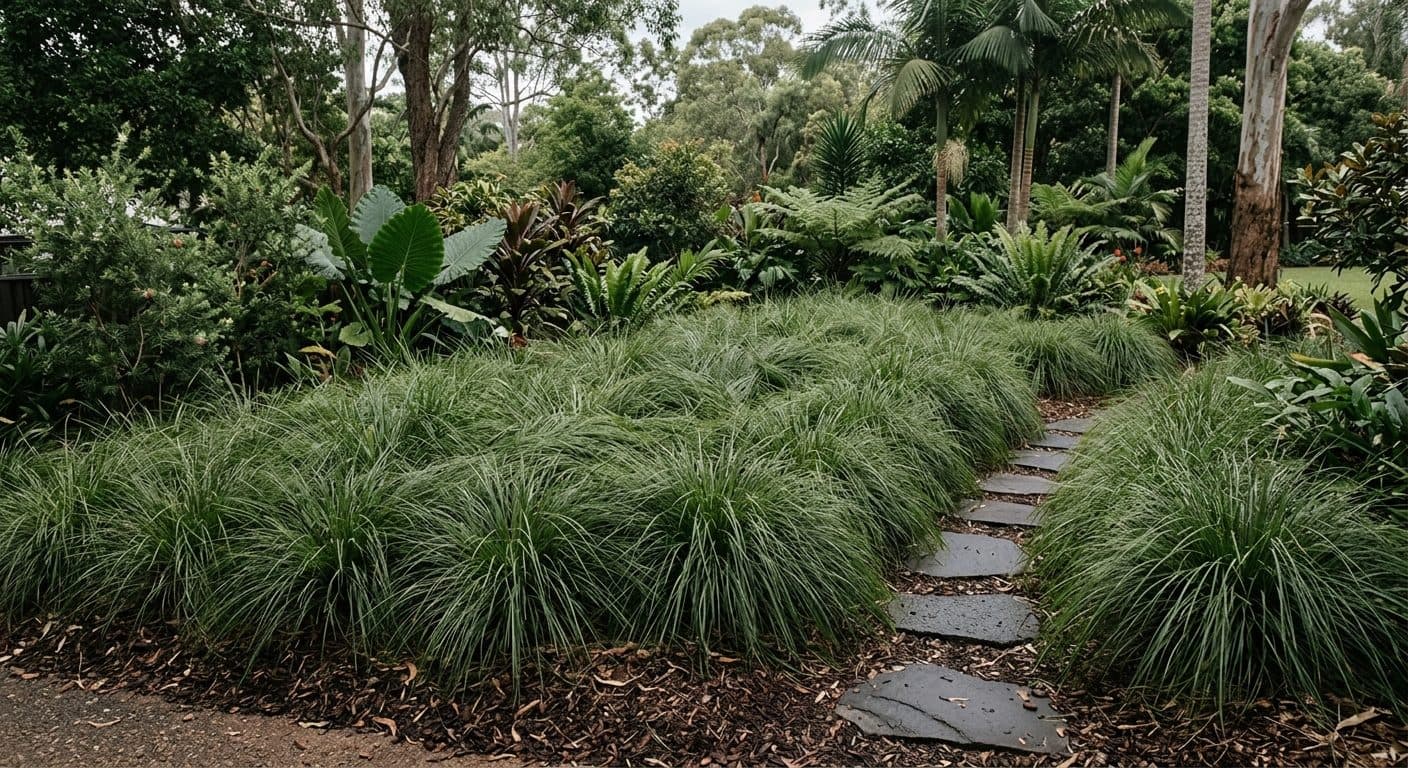
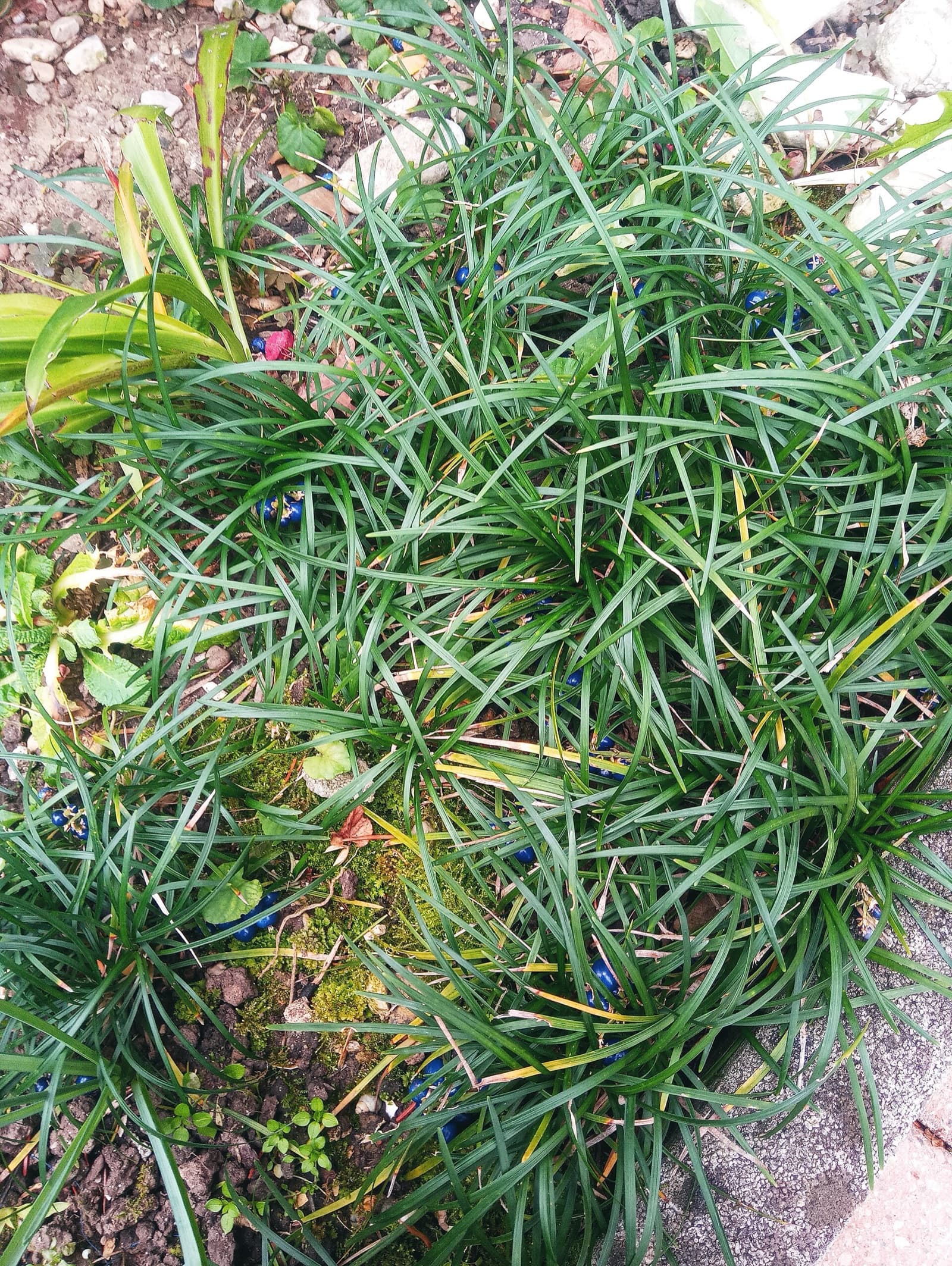
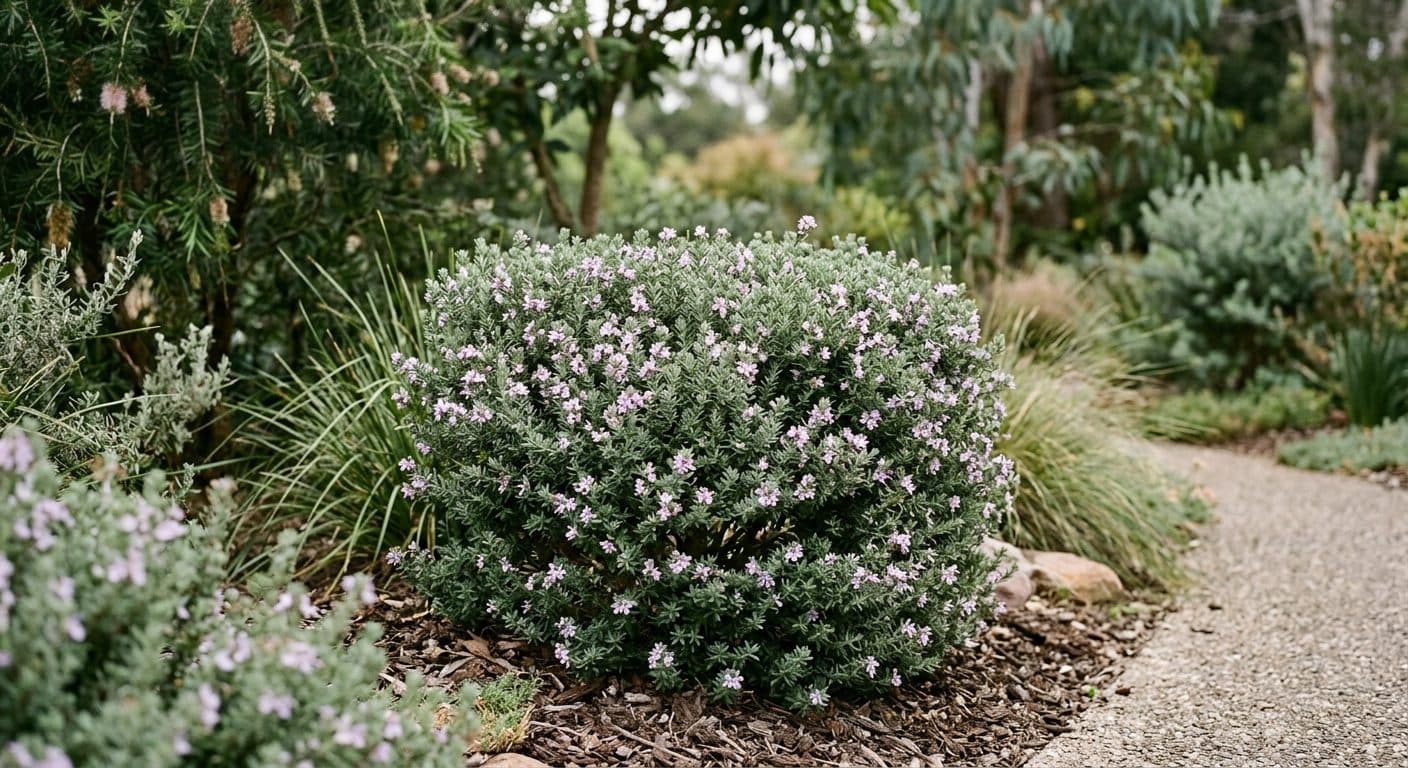
Once the ground and the trees are settled, the next layer is the evergreen planting that forms walls, edges and masses. This is where hedges, screens and repeated structural plants earn their place. A clipped hedge of lilly pilly (Syzygium) or westringia gives a space a clear boundary and a calm green backdrop, buxus suits formal edges where you want a tidy line, and a drift of lomandra or mondo grass (Ophiopogon) holds the ground at the front of a bed. If privacy is the job, my guide to screening plants for Brisbane sorts the options by height and habit.
The trick is repetition and restraint. A few structural plants repeated at a steady rhythm will read as a plan, where ten different shrubs once each will read as a shopping trip. I choose a small palette of dependable evergreens for the framework and keep the variety for later.
Step four: colour and softness last
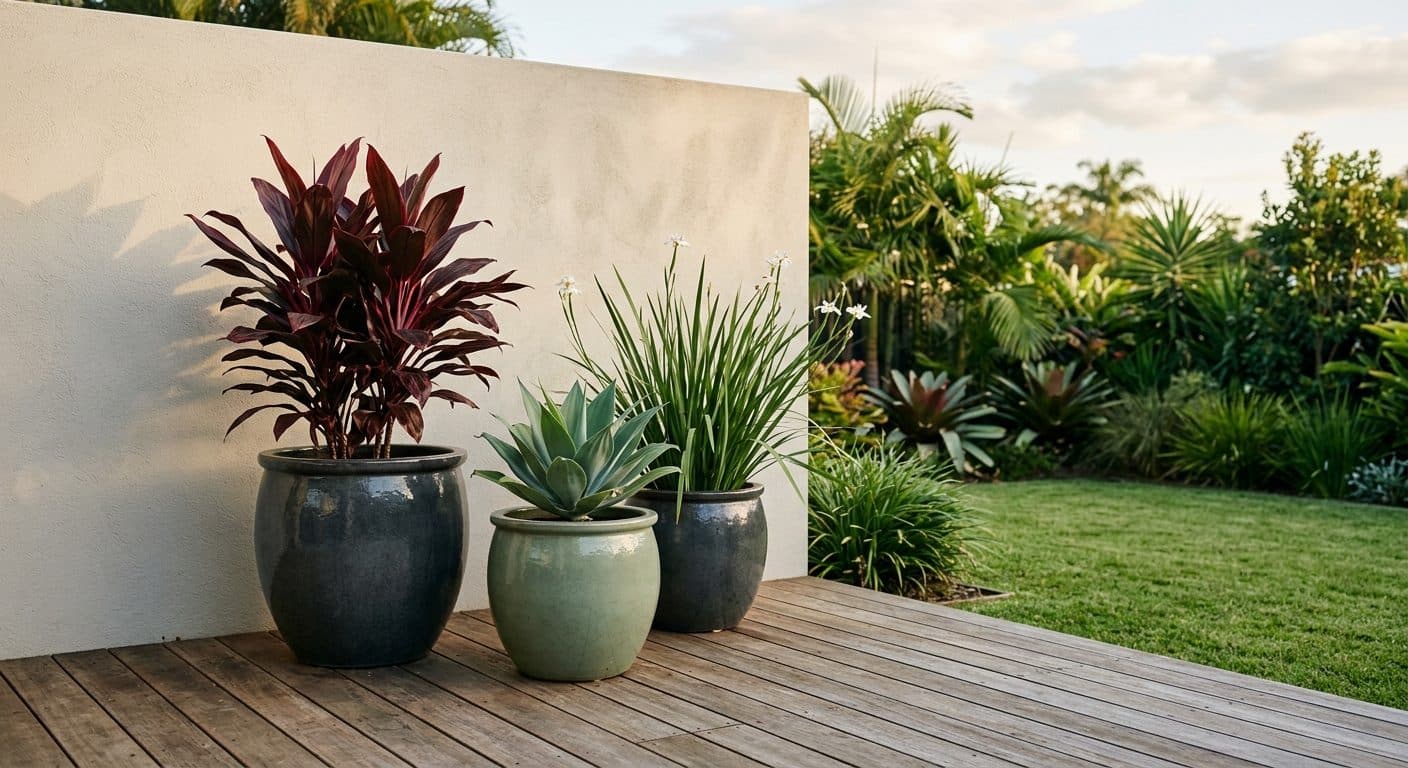
Only now do the flowers, the soft grasses and the seasonal colour come in, and they come in as the final layer rather than the foundation. Because the structure is doing the heavy lifting, you can be playful here. Swap things in and out, try a new colour, let a few perennials self-seed, and the garden still holds together underneath. If a plant dies or a trend passes, you lose a detail, not the design.
This is also where a style gets decided. A modern garden leans on strong lines, large pavers and a tight evergreen palette, while a looser planting style works with the same bones, just clothed more softly. My notes on making a native garden look designed rather than like revegetation make the same point from the other direction: structure is what tells the eye a garden was planned.
A quick test for your own garden
Take a photo of your garden on a dull day, turn it black and white if you like, and ask whether it still looks organised. If the answer is yes, the bones are doing their job and any colour is a bonus. If it falls apart without the flowers, you usually don't need more plants. You need a stronger edge, a clearer path, a repeated hedge or one decisive tree.
If you'd like help working out the bones of your own block, a Design Discovery Consultation is where I walk the site with you and shape the brief for levels, paths, trees and framework planting before any plants are chosen. For the planting layer that comes after, my guide to the best plants for Brisbane gardens sorts plants by the job each one does.
Ready to start designing?
We're currently taking on new landscape design clients across Brisbane. Reach out for a personalised quote, whether you're a homeowner or a design professional.
Book a Free Discovery Call