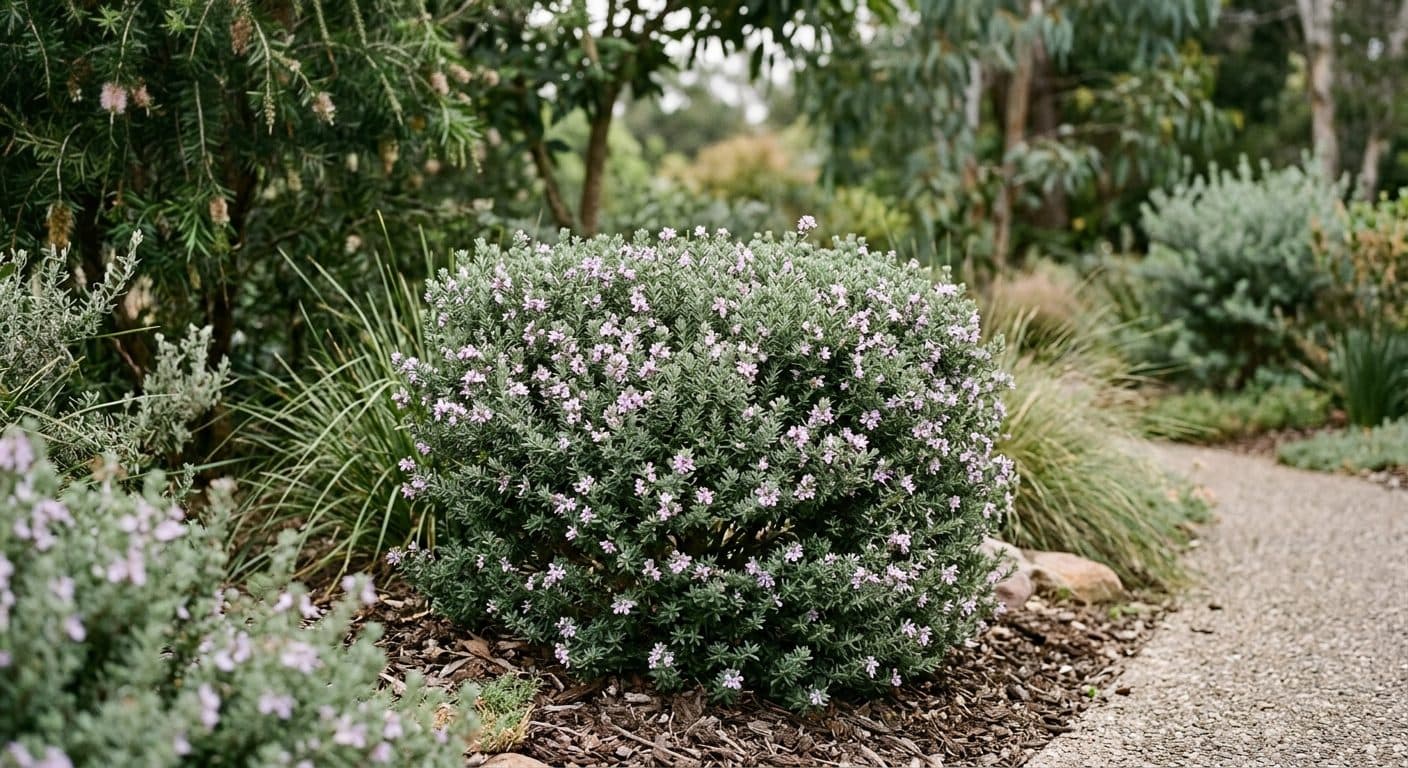
Westringia fruticosa, the hardy native that takes the shears like a formal hedge and the neglect like a weed.
Westringia fruticosa · Also known as Westringia, Australian Rosemary, Native Rosemary
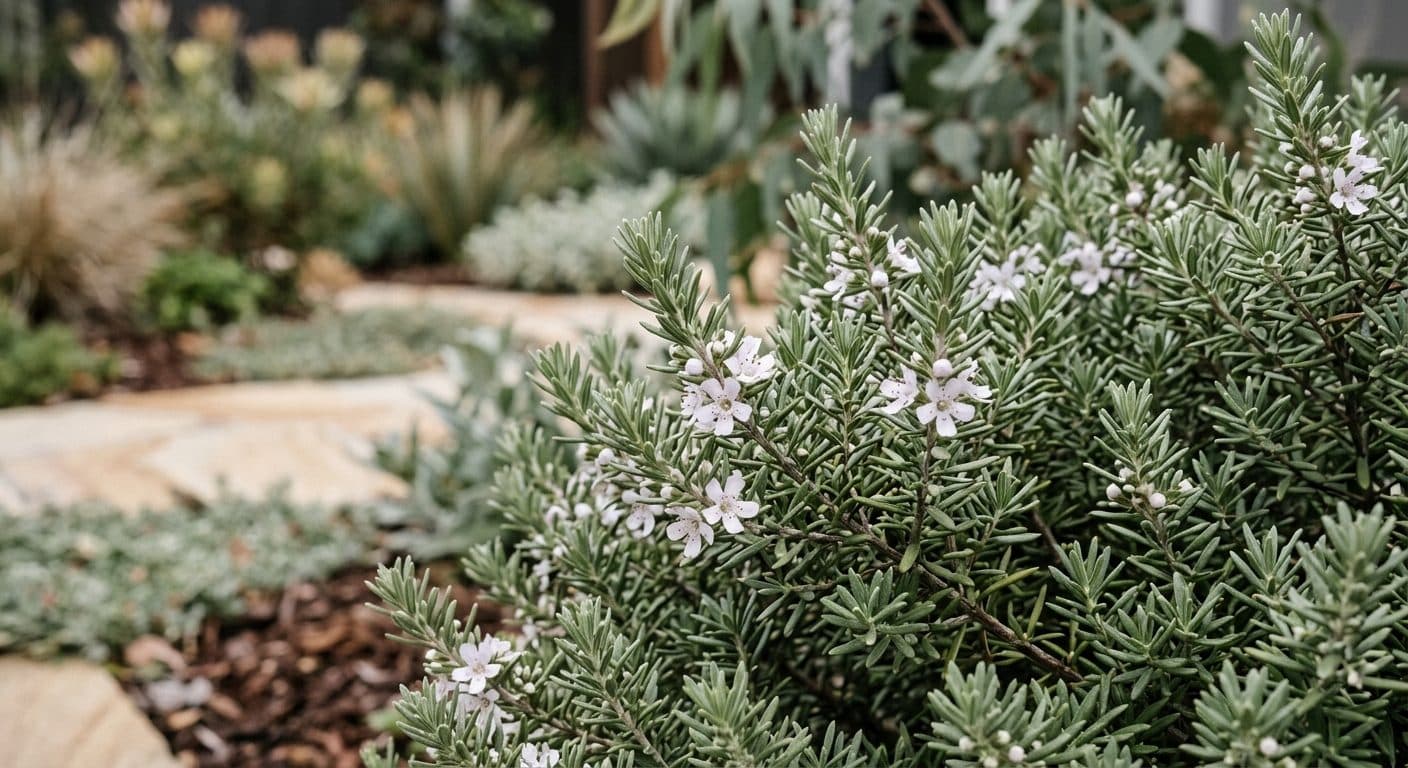
Coastal rosemary looks like rosemary and grows nothing like it: no relation to the herb, no scent to speak of, and a constitution built for salt wind and poor soil. Gardeners call it coastal rosemary or simply westringia; both point to the same reliable grey-green shrub.
We lean on it constantly because it does the one thing many gardeners want and few plants deliver in our climate: clipped, formal geometry that doesn't resent the heat.
In a Brisbane garden
Where a client wants the clipped look of English box but without the pests, the browning and the general sulking that box does in our humidity, westringia is the answer we reach for first. It takes shears happily into low hedges, spheres or soft mounds, and holds its shape through the wet season heat.
It asks for sharp drainage and full sun to look its best; in damp shade it thins and sprawls. Once established it survives on rainfall alone, which makes it a backbone plant for the low-water gardens Brisbane increasingly wants.
How we design with it
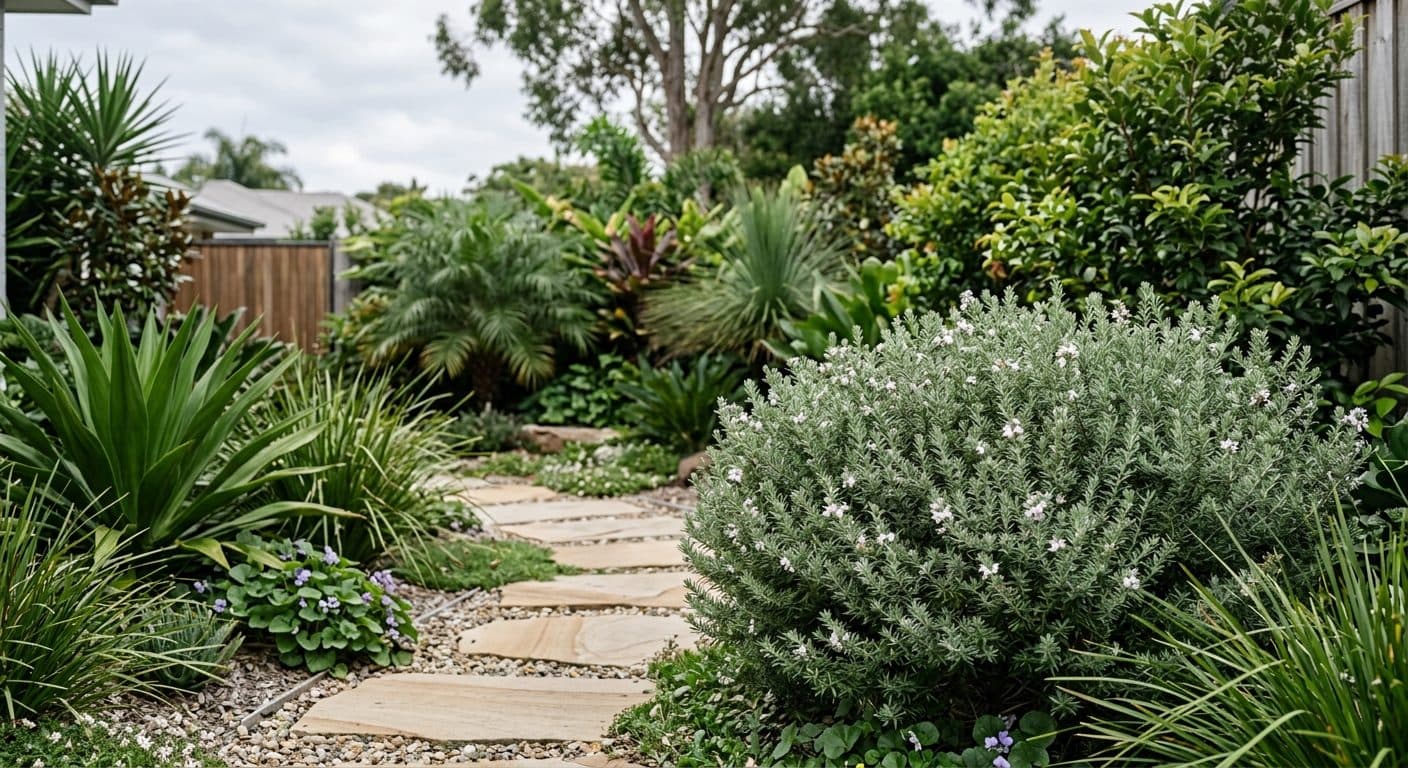
Westringia is a structure plant, one of the first things we place, in generous numbers, so the showier planting has something calm to read against. It is a mainstay of our low-maintenance garden design and a natural fit for exposed coastal gardens around the bay.
Use the taller forms as a clipped low hedge or informal screen, and the dwarf cultivars as tidy repeating mounds along a path. Its grey foliage is a quiet foil for stronger greens and for flowering plants that would otherwise clash.
Where we write about coastal rosemary
Common questions
Want low-water structure that still looks designed?
We're currently taking on new landscape design clients across Brisbane. Reach out for a personalised quote, whether you're a homeowner or a design professional.
Book a Free Discovery Call