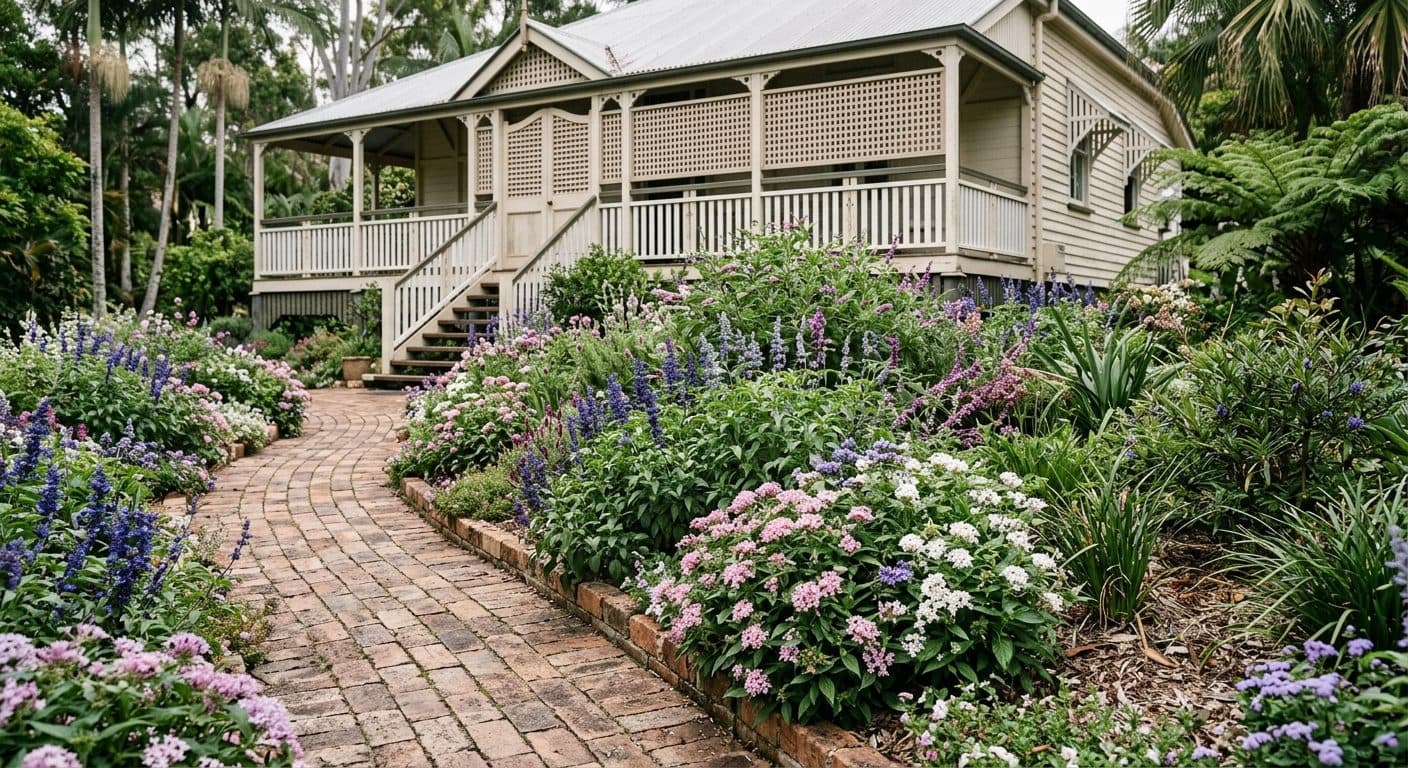
Cottage garden ideas for Brisbane: which English classics to retire, the plants that carry the look through our humidity, and how the native version works.

By Shannon Trevisiol, Landscape Designer, Brisbane · 5 min read
- The English cottage look was art-directed for cool summers and gentle rain, so I translate it for Brisbane rather than copy it.
- For almost every cool-climate classic there's a subtropical understudy that does the same visual job with better manners.
- The native cottage garden isn't a contradiction: our flora delivers the abundance, softness and structure the style needs.
- Abundance only reads as design when it has a spine, so I put the path, the edge and a few repeated forms in first.
Every second inspiration board out there has a cottage garden on it: roses over an arch, borders spilling onto a brick path, the whole soft-focus English dream. And why not, because on a timber home behind a picket fence the look is close to irresistible. The catch is that the dream was art-directed in a climate with cool summers and gentle rain, and Brisbane offers neither. You can absolutely have a cottage garden here, a generous and genuinely romantic one, but it has to be translated rather than copied, and the translation is the interesting part.
The classics that don't survive the flight
Start with the casualty list. Delphiniums, lupins and foxgloves are cool-climate perennials that treat a Brisbane summer as a personal insult, and while you can sometimes coax them through a winter-spring season as annuals, they will never be the backbone here. English lavender tends to collapse when the February humidity arrives (the hybrid forms cope a little better, and even they want sharp drainage and a hot, dry position). The rose story needs qualifying rather than abandoning: roses grow well in Brisbane, but humid summers bring real black spot pressure, so the garden wants tough, disease-resistant varieties instead of the fussy heritage ones the picture books push.
What stands in for them
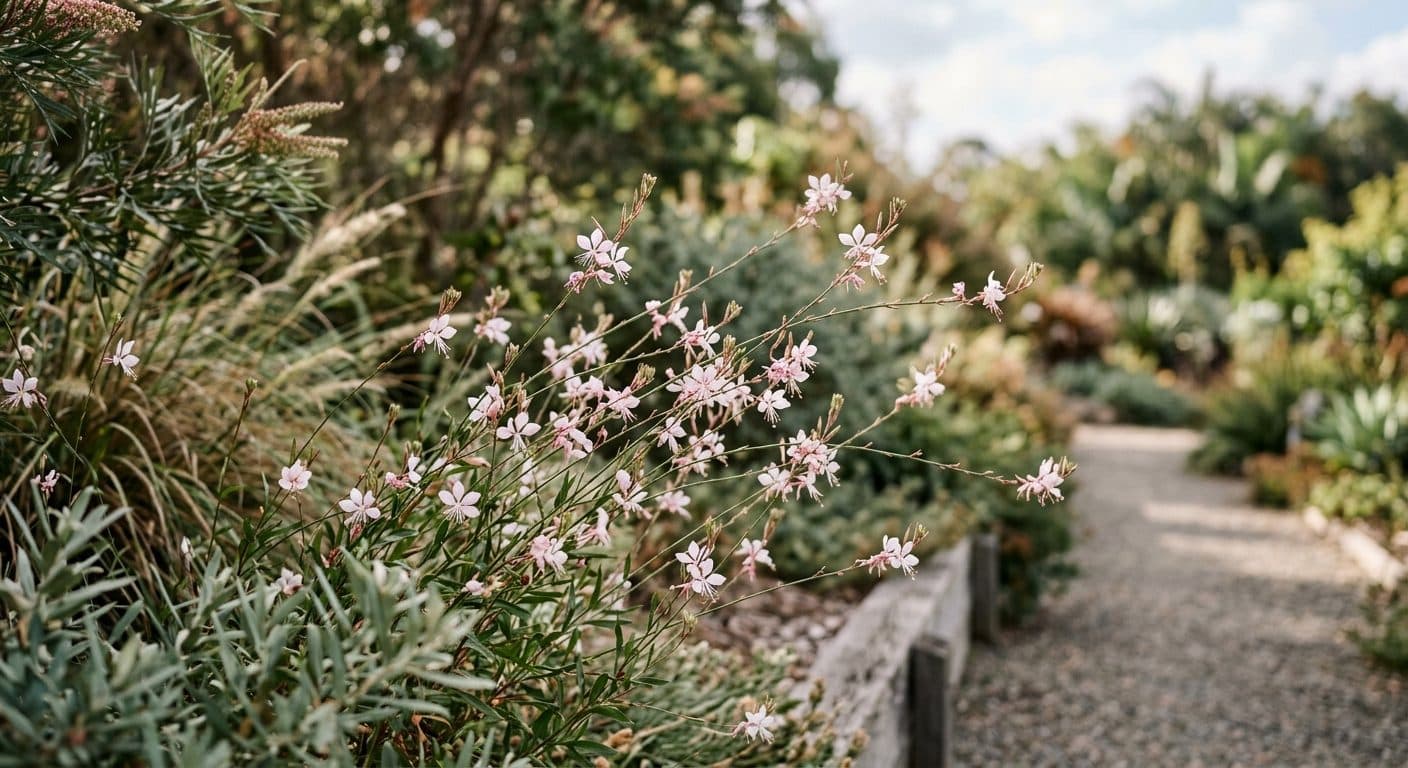
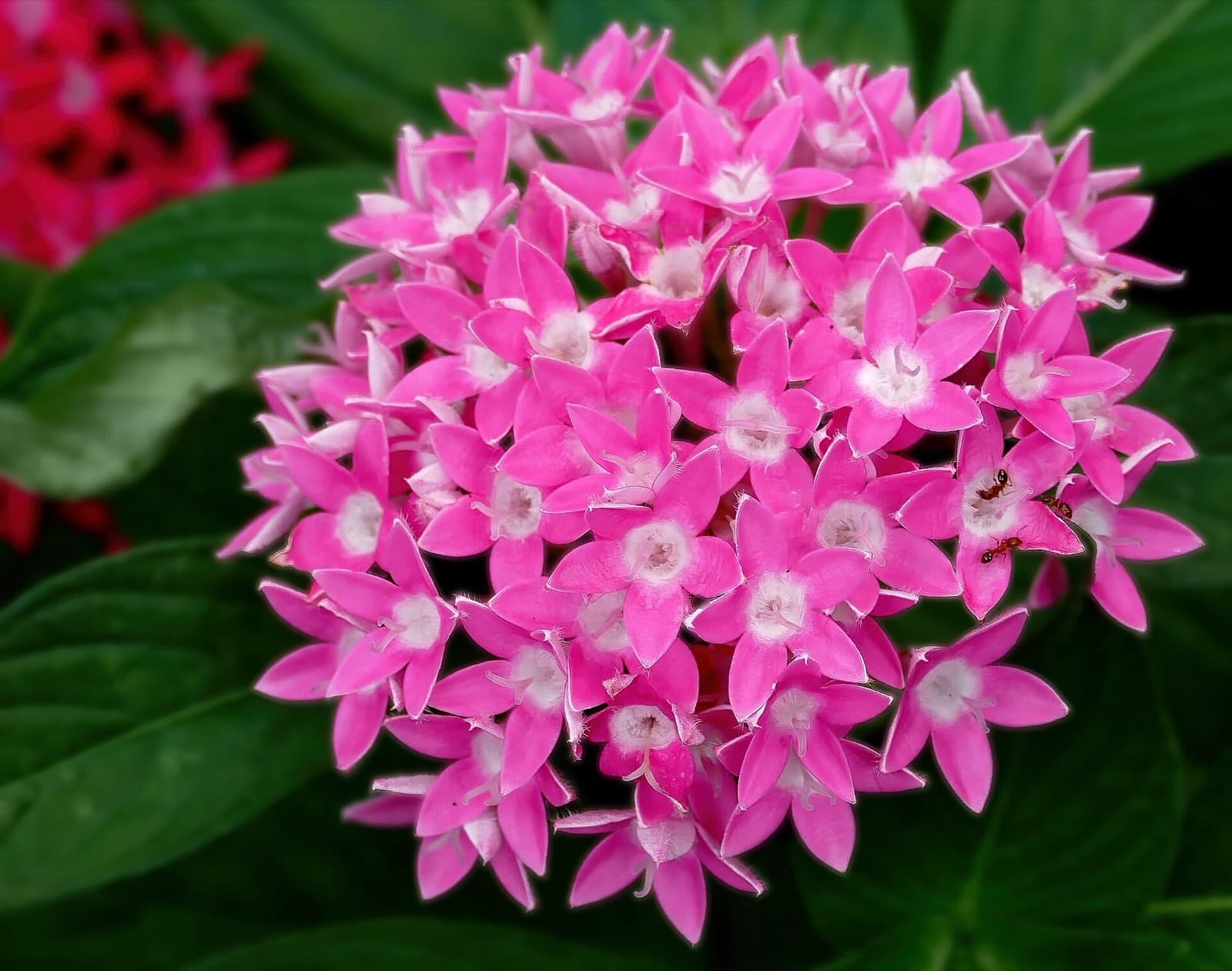
The translation works because for almost every cottage classic there's a subtropical understudy doing the same visual job with better manners. Pentas gives you the massed, months-long colour that phlox promises, and the butterflies arrive as a bonus. Salvias are the great cottage garden plants for Brisbane, running from knee-high border fillers to shoulder-height spires, flowering most of the year if you cut them back hard once or twice, and shrugging off both drought and downpour. Gaura brings the airy, moving-in-the-breeze quality people love in the photographs, angelonia stands in for the delphinium spire with none of the sulking, and federation daisies carry the froth through winter into spring. I'm deliberately not turning this into a full plant list, because we've published a guide to the plants that earn their place in Brisbane gardens for exactly that. The principle matters more here: match the role, not the species.
The native cottage garden
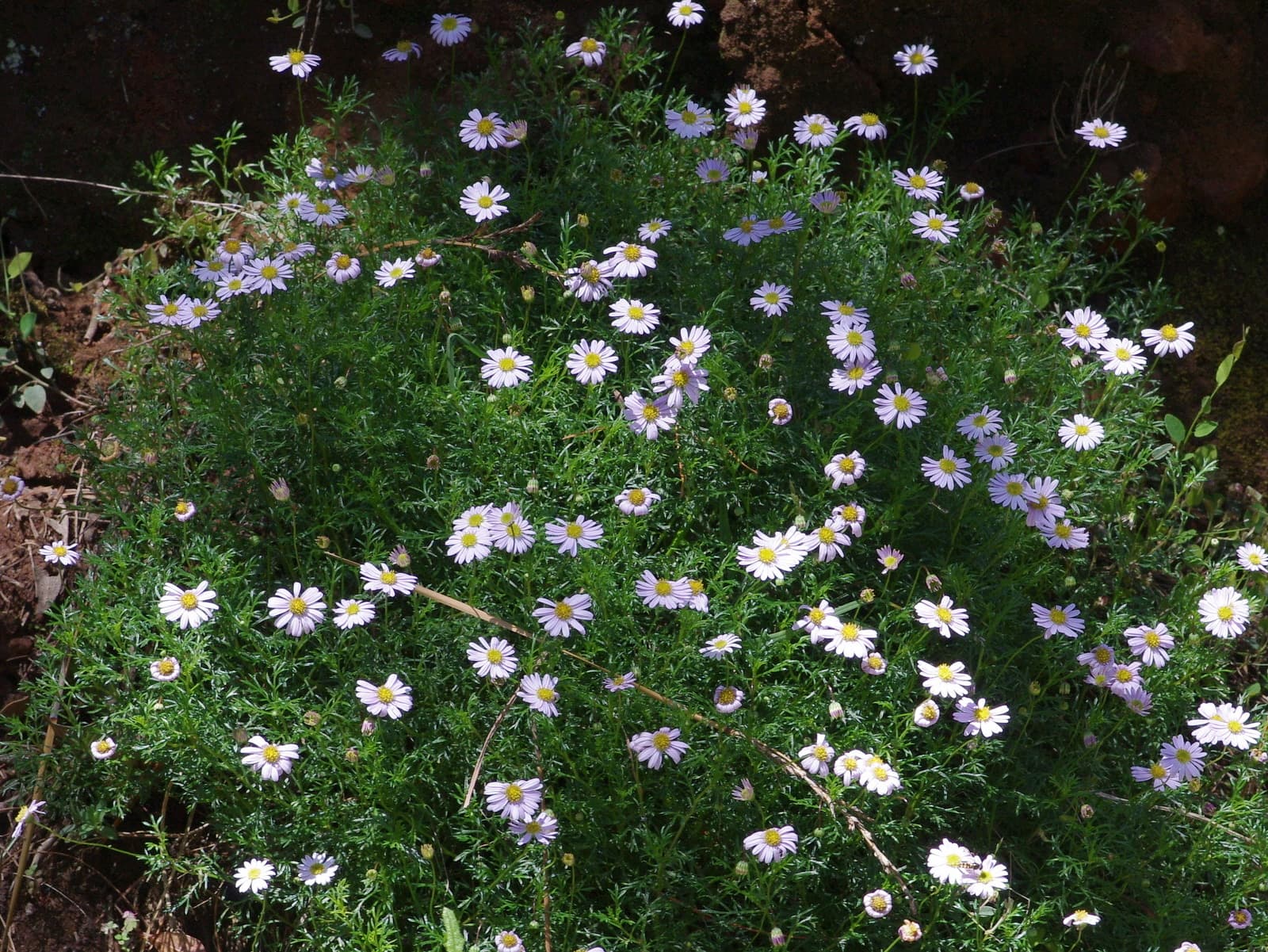
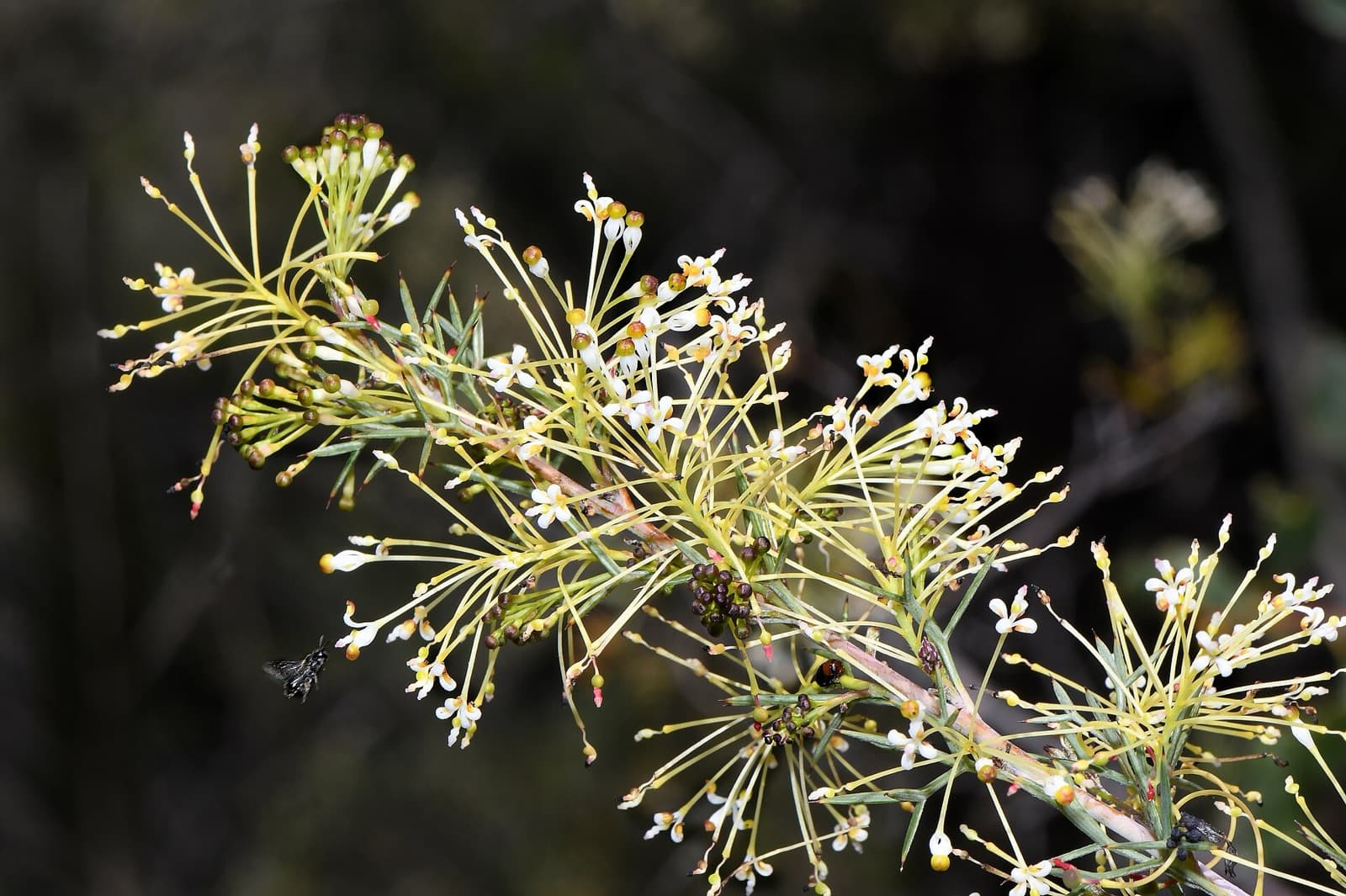
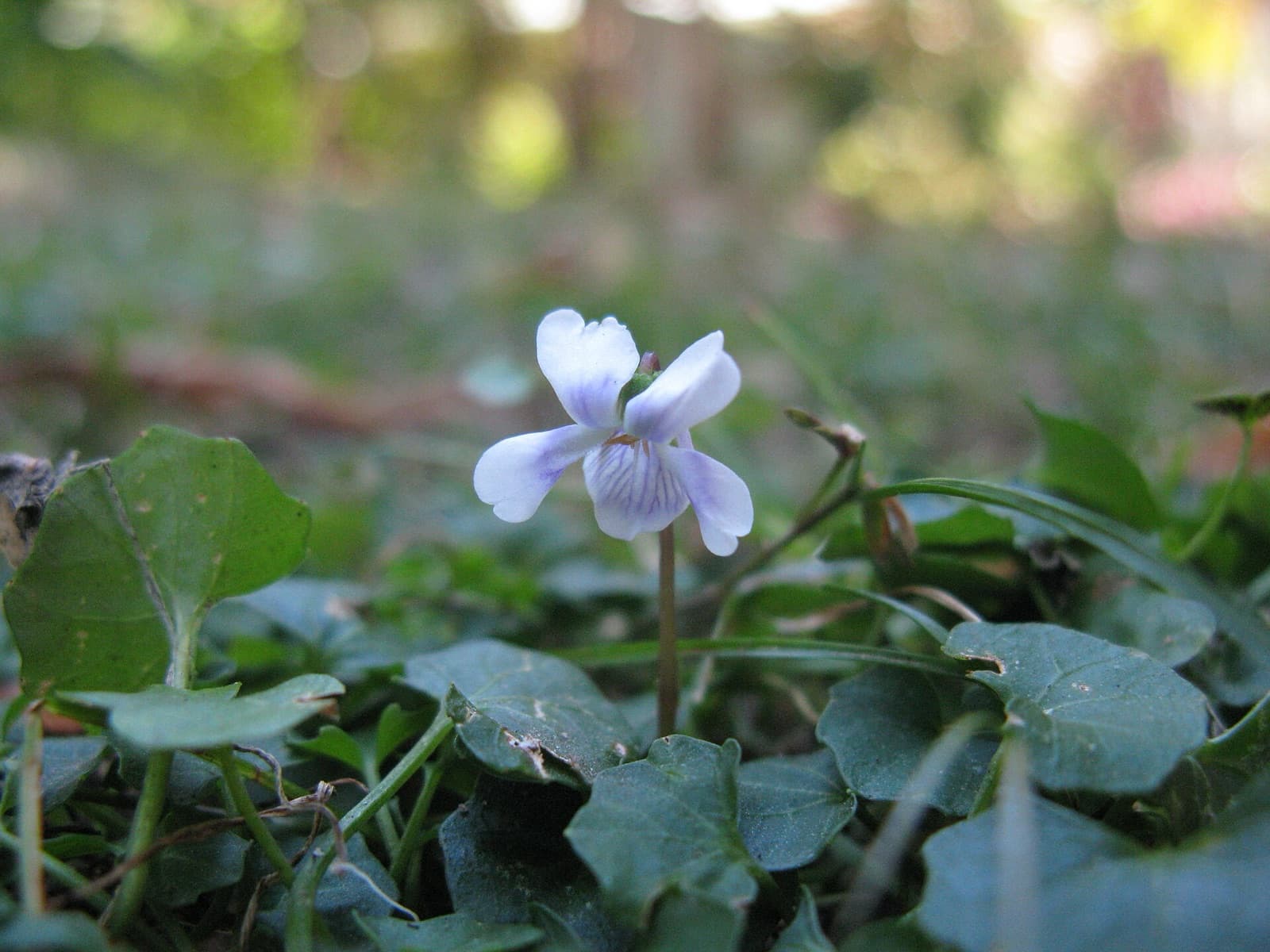
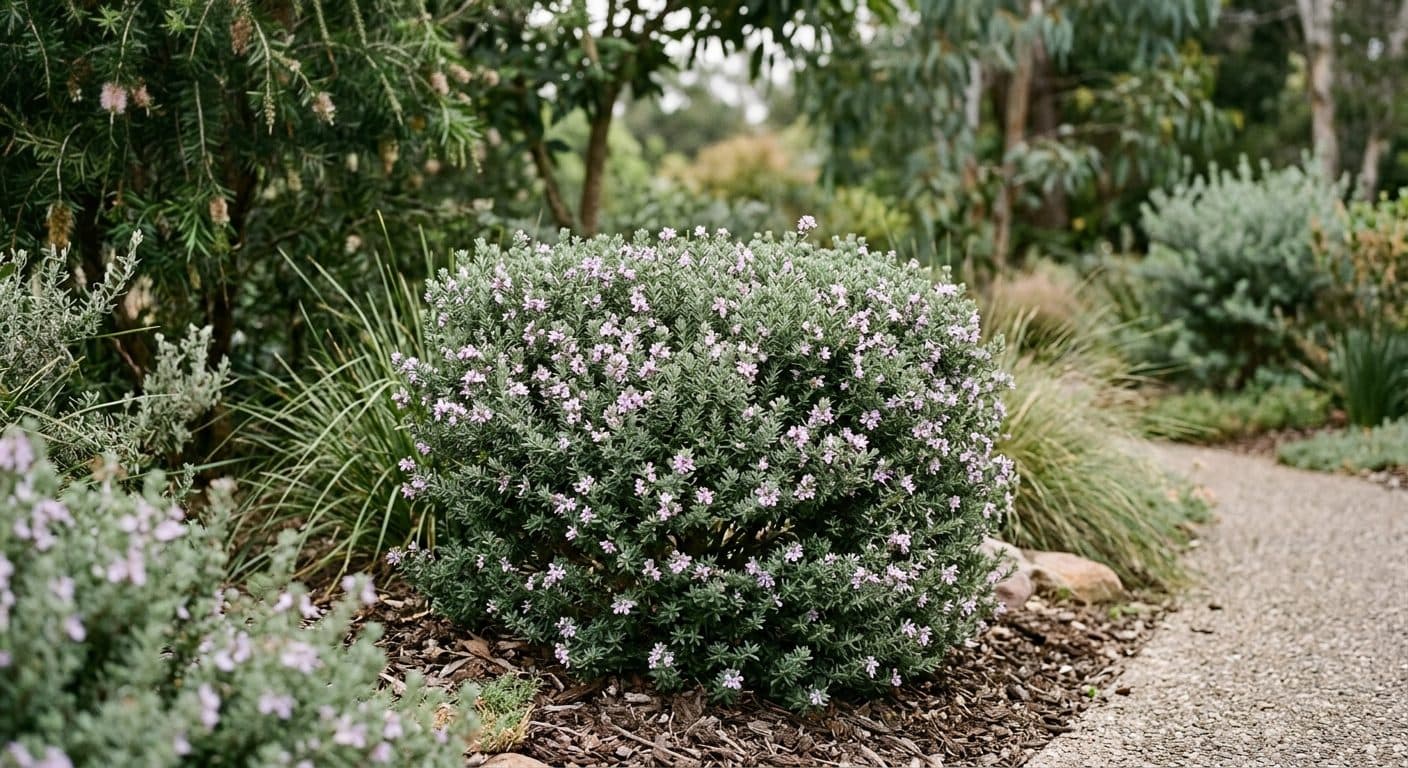
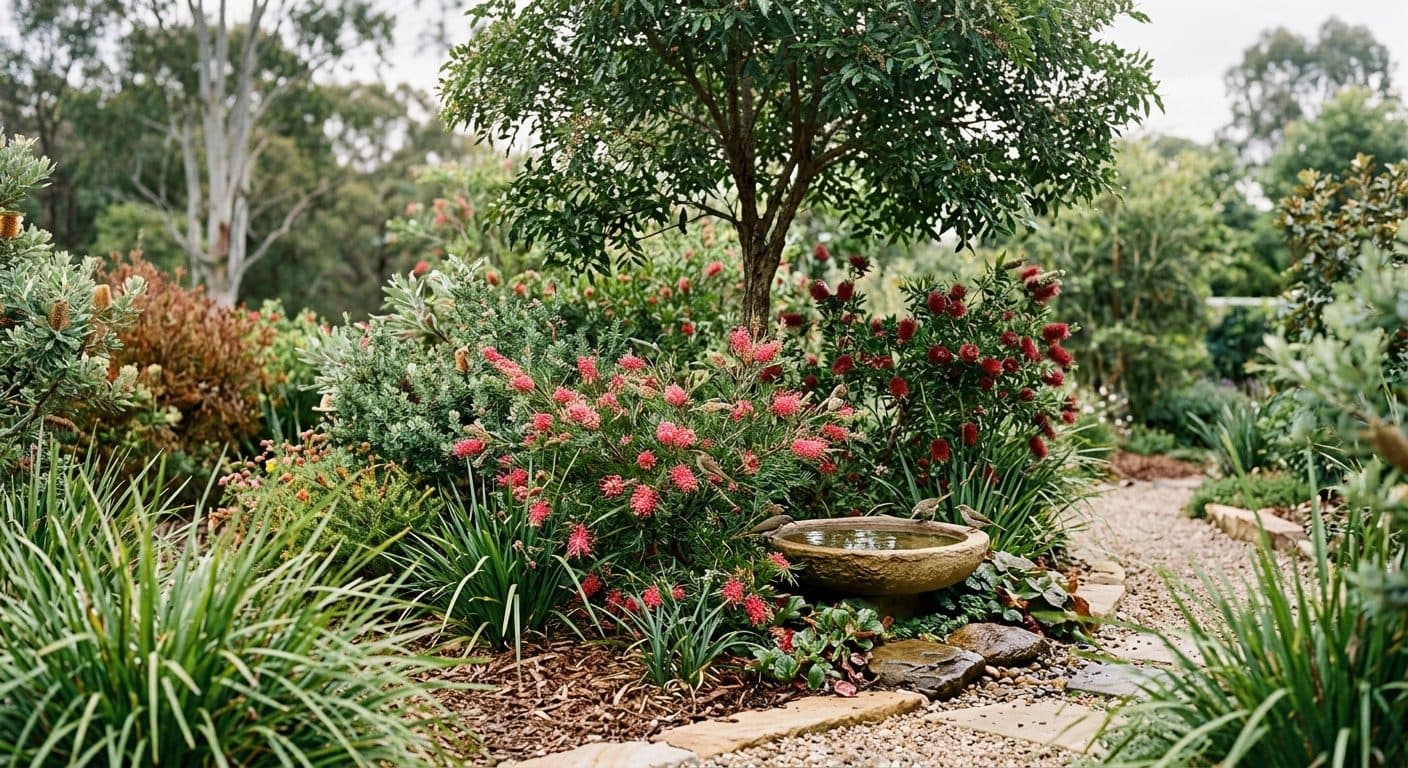
The version I'm asked about most often lately is the native cottage garden, which sounds like a contradiction and isn't. Cottage style is abundance, softness and flower held together by small formal moments, and our flora does all three. Compact grevilleas flower for months and feed the honeyeaters while they're at it, westringia clips into the neat balls and low hedges that give the froth its structure, brachyscome spills over path edges the way alyssum does in cooler places, and native violet stitches the shady gaps together. In practice most of these gardens end up as blends, with salvias and pentas mingling happily among the natives, because the birds don't check passports. A native cottage garden also earns its keep in ways the English original never did, offering winter flower while exotics rest and asking far less of the hose, and our native garden design page goes deeper on choosing the species.
Abundance still needs a spine
Here's what the romantic photographs hide: a cottage garden is a controlled riot, with the emphasis on controlled. Take away the path, the edge and the repeated forms, and the very same planting reads as neglect within a season, especially here, where summer growth can put on half a metre while you're away over Christmas.
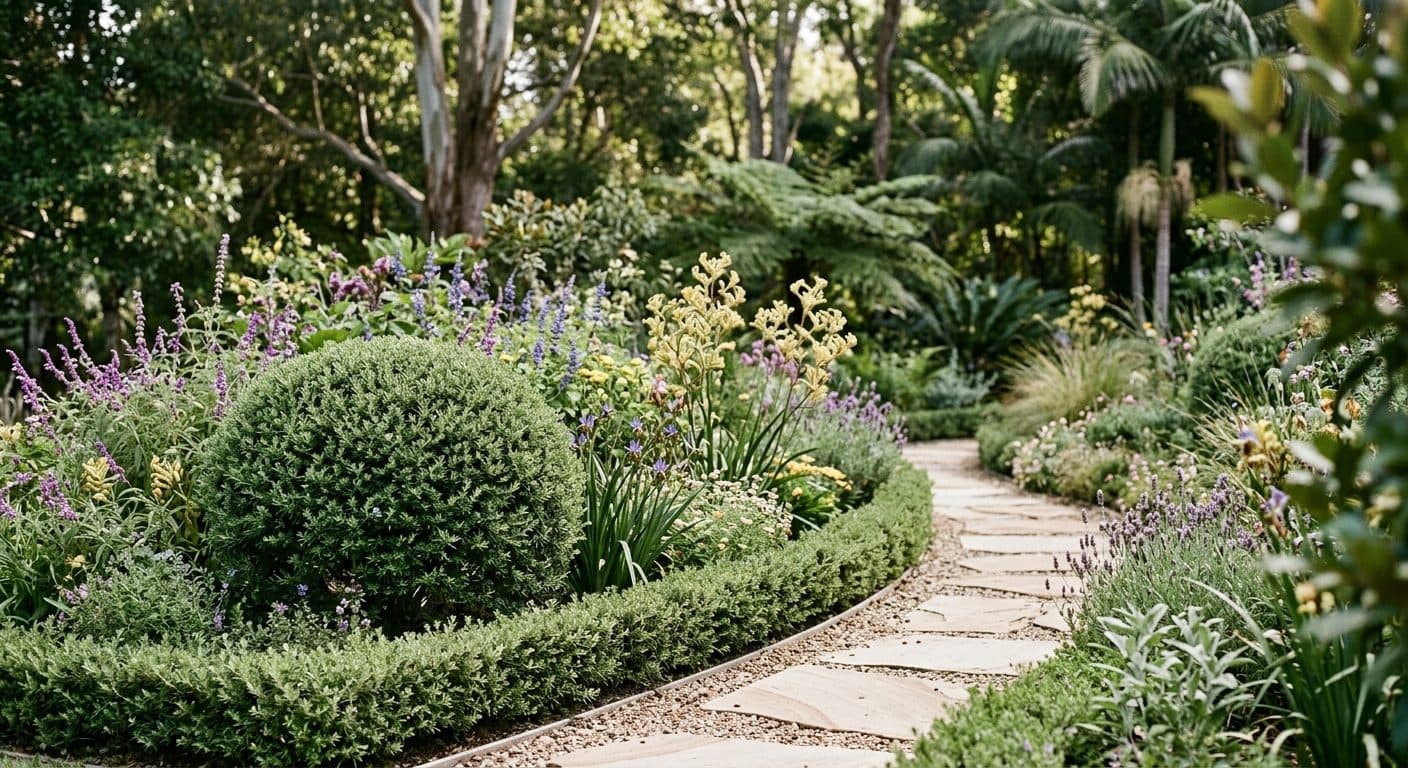
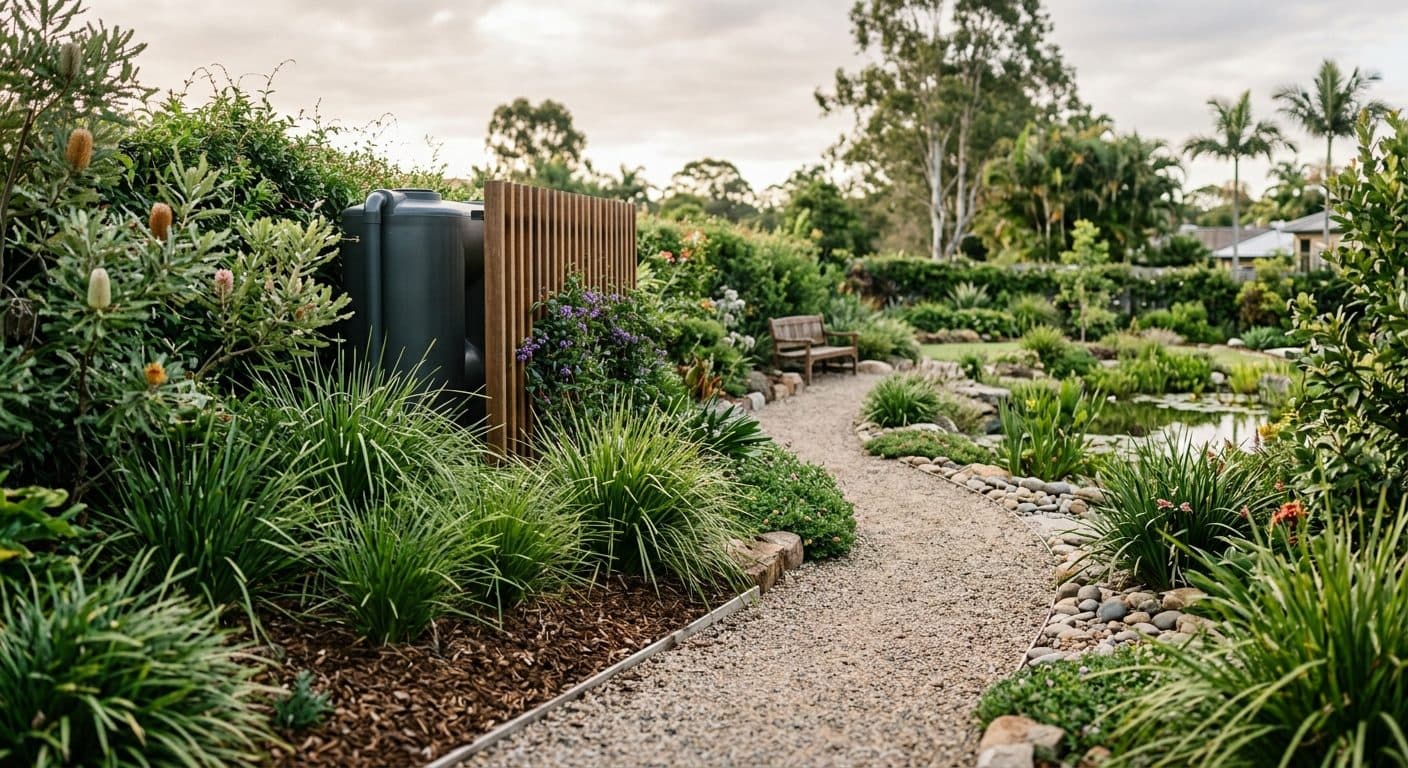
So the frame comes first. A straight or gently curving path with a proper edge, a low fence or clipped line for everything to spill against, and a few repeated structural moments (a clipped westringia ball every few metres works wonders) let the rest of the garden be as exuberant as it likes. The frame does the same job a picture frame does, and skipping it is the most common reason home-grown cottage gardens disappoint their owners.
Cottage frontages on character homes
No style suits Brisbane's timber housing stock better. A workers' cottage or Queenslander behind a picket fence is already halfway to the look, and the garden just finishes the sentence: soft planting billowing over the fence line, a generous path to the front stairs, something scented near the gate so that arriving home feels like a small occasion. If that's your house, I've written more about Queenslander garden design and how planting flatters that architecture, and our front yard landscaping page covers street-facing design more broadly.
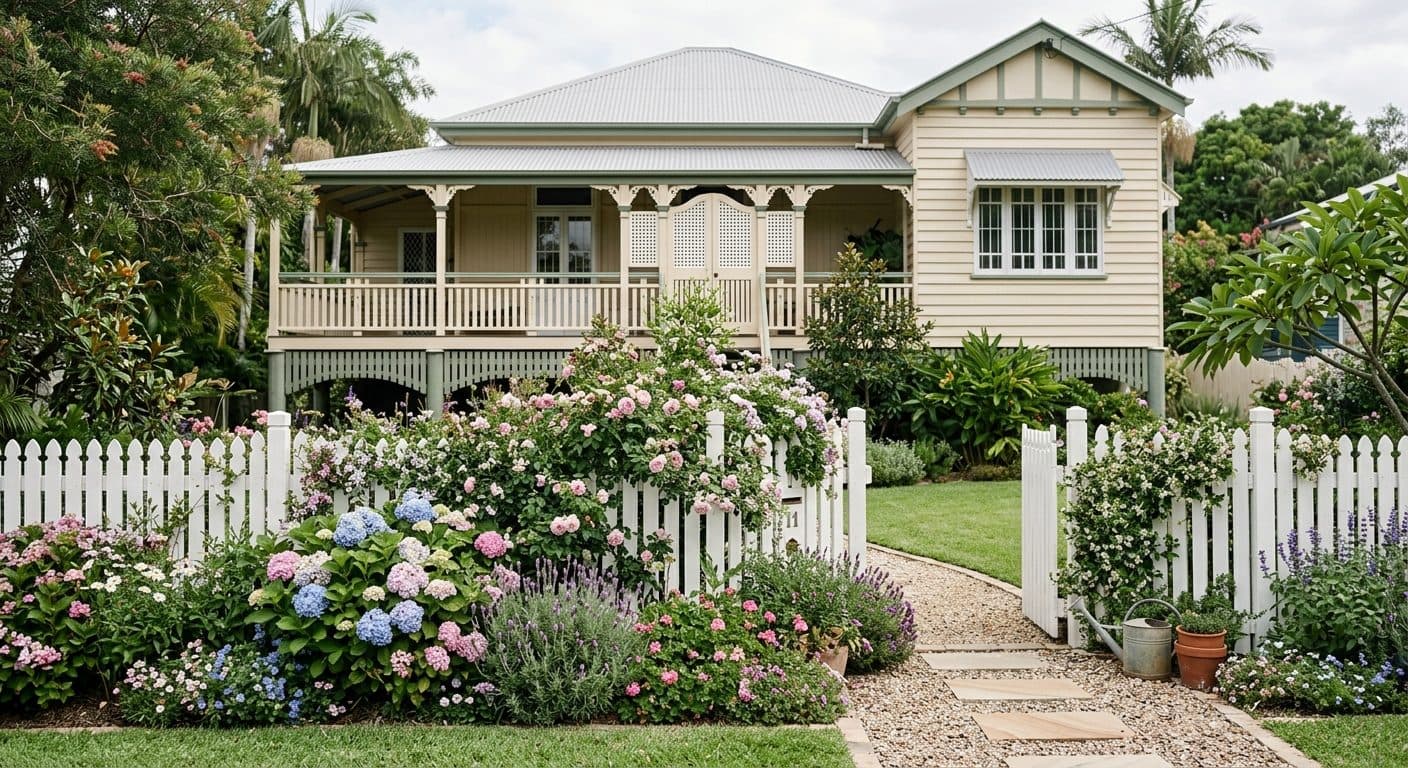
The cottage garden's whole reason for being is generosity, and Brisbane can sustain generosity twelve months of the year once the plant list respects the climate instead of the picture books. If you'd like help translating the look onto your block, a Design Discovery Consultation is where every project starts, and if roses are non-negotiable, we'll find them the position and the varieties that give them their best chance.
Ready to start designing?
We're currently taking on new landscape design clients across Brisbane. Reach out for a personalised quote, whether you're a homeowner or a design professional.
Book a Free Discovery Call