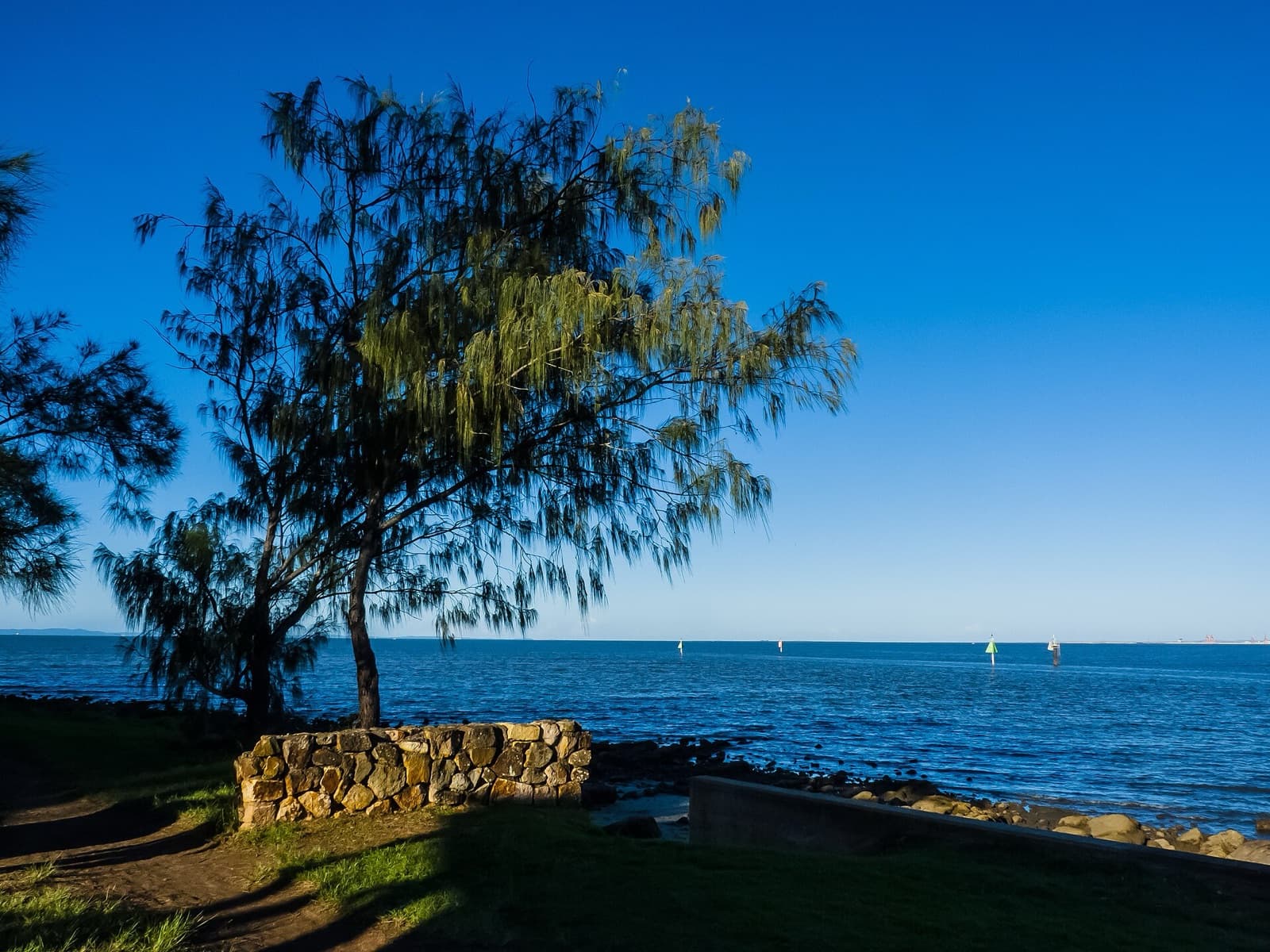
Casuarina and Allocasuarina, the weeping coastal native whose fine foliage filters the wind and sighs on the sea breeze.
Casuarina/Allocasuarina · Also known as Casuarina, She Oak
The she-oak is a tree you often hear before you place it, because the wind moving through its fine, drooping foliage makes a soft sighing sound that is one of the signature notes of the Australian coast. Botanically these are the casuarinas and their close relatives the allocasuarinas, and gardeners use the group names casuarina and she-oak more or less interchangeably for the weeping, needle-leaved trees that thrive where salt wind and poor sandy soil rule out almost everything else.
We use she-oaks where a garden needs a living filter for wind rather than a solid wall, because their soft, feathery canopies slow a breeze and soften a view without the heavy, blocky presence of a dense hedge. That toughness on exposed ground makes them a classic choice for a coastal garden around Moreton Bay, and as genuine locals they fit naturally into a broader native garden design built for our conditions.
In a Brisbane garden
In and around Brisbane the she-oak comes into its own on the exposed, sandy, salt-laden blocks near the bay, where its salt tolerance and its ability to fix nitrogen let it flourish in ground that would starve a less adapted tree. The weeping species make a beautiful, movement-filled windbreak or screen that filters rather than blocks, so you keep some borrowed view and some airflow while still taking the sting out of a strong onshore breeze, which is often exactly what a coastal garden needs.
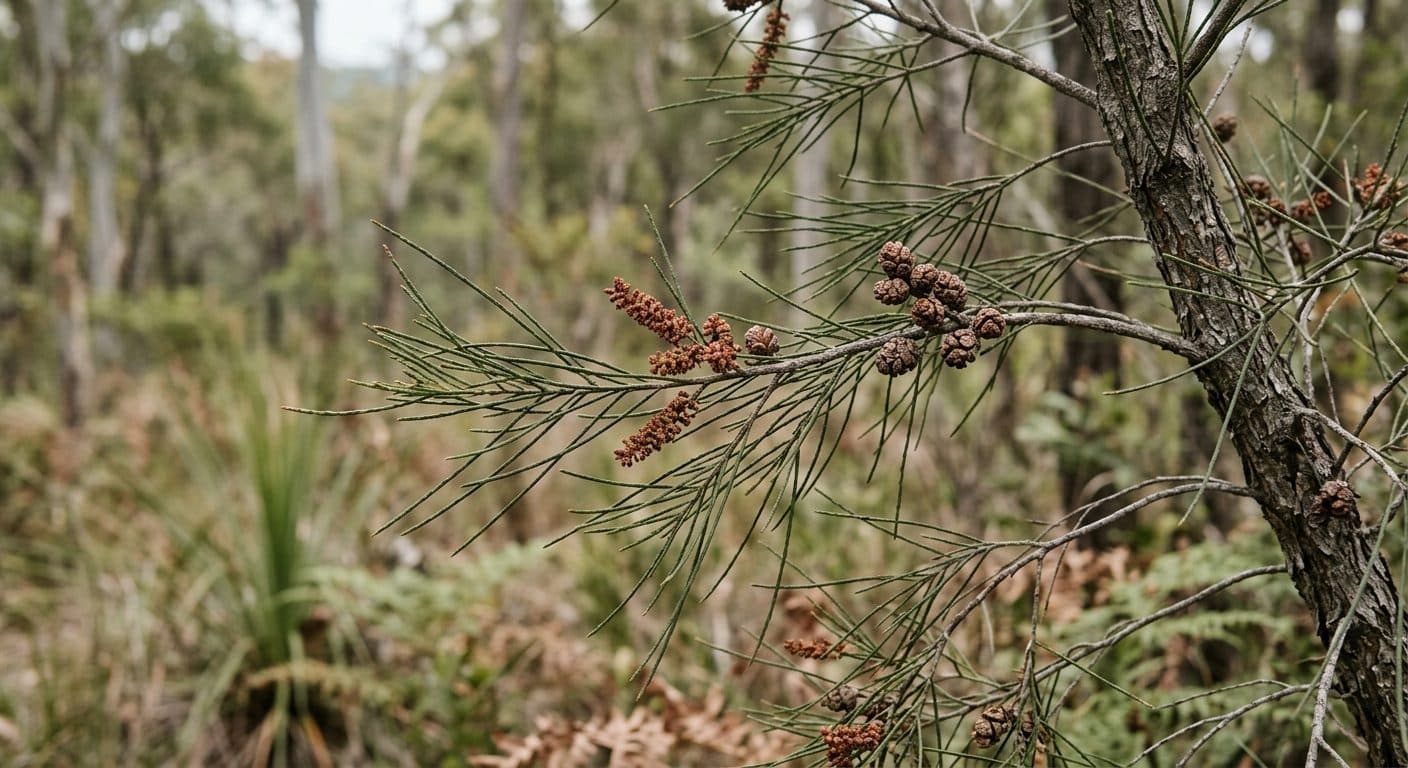
The trade-off to plan for is the litter, because she-oaks drop a steady fall of fine needle-like foliage and small woody cones that build up beneath the canopy, so they are happiest given room over mulch or garden bed rather than crowded against a pool or a fussy paved area. Choose the species carefully, since they range from modest shrubs to fifteen-metre trees, and a local native nursery can steer you to a form scaled to your block and proven in Brisbane's coastal conditions.
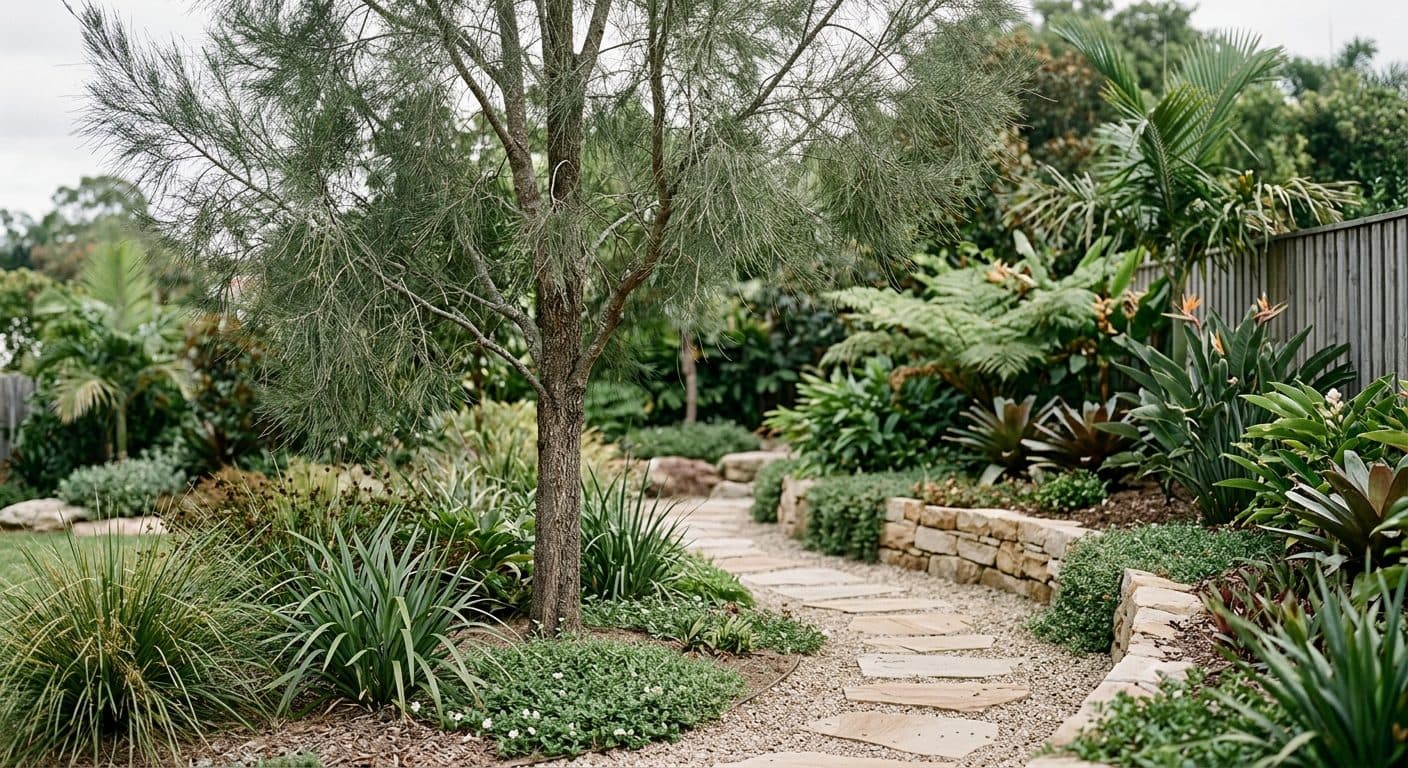
Photo: John Robert McPherson, CC BY-SA 4.0, via Wikimedia Commons
How we design with it
We use she-oaks for movement and for filtered shelter, planting them where the wind is a problem and a solid barrier would feel oppressive, so the garden gains a soft, whispering screen that sways and lets light and air through. Their fine texture and slightly grey-green cast read beautifully against the sky and against broader-leaved plants, and a row of them along an exposed boundary gives a coastal garden both protection and a real sense of place.
Because they cope with salt, wind and poor soil while asking almost nothing once established, she-oaks anchor the sort of resilient coastal planting we describe in our guide to the best plants for Brisbane gardens. We site them with their litter in mind, over mulched beds where the dropped needles simply feed the soil, and let their sound and movement do work in the garden that no static structure can.
Where we write about she-oak
Common questions
Want a windbreak that moves and whispers?
We're currently taking on new landscape design clients across Brisbane. Reach out for a personalised quote, whether you're a homeowner or a design professional.
Book a Free Discovery Call