If your block has reactive clay that drowns roots in February and sets like concrete by spring, here's how I design around it, and the plants that shrug it off.

By Shannon Trevisiol, Landscape Designer, Brisbane · 5 min read
- Clay varies block to block, even down one street, so a cheap soil test or a jar test tells you what you've actually got before you buy a single plant.
- Reactive clay swells wet and shrinks dry, so the killer isn't the clay itself but the waterlogging after a February downpour that suffocates roots.
- Raising or mounding beds lifts the crown above the wet, which does more for most plantings than any soil additive you can buy.
- Gypsum only helps sodic clay, not all clay, and it won't fix drainage on its own: organic matter and never compacting the soil do the heavy lifting.
Plants for clay soil in Brisbane come with a catch, which is that not every Brisbane block is clay, and the ones that are aren't all the same clay. Some yards drain like a colander and some hold water like a bucket, and the difference can run down a single street, so the honest first move is to find out what you've actually got rather than assume. A cheap soil test from a garden centre, or even a jar test at the kitchen bench where you shake soil and water together and watch the layers settle, will tell you far more than a suburb name ever will. Where your block does have heavy, reactive clay, the good news is that plenty of tough plants cope with it beautifully once you design the bed to suit them.
What reactive clay actually does
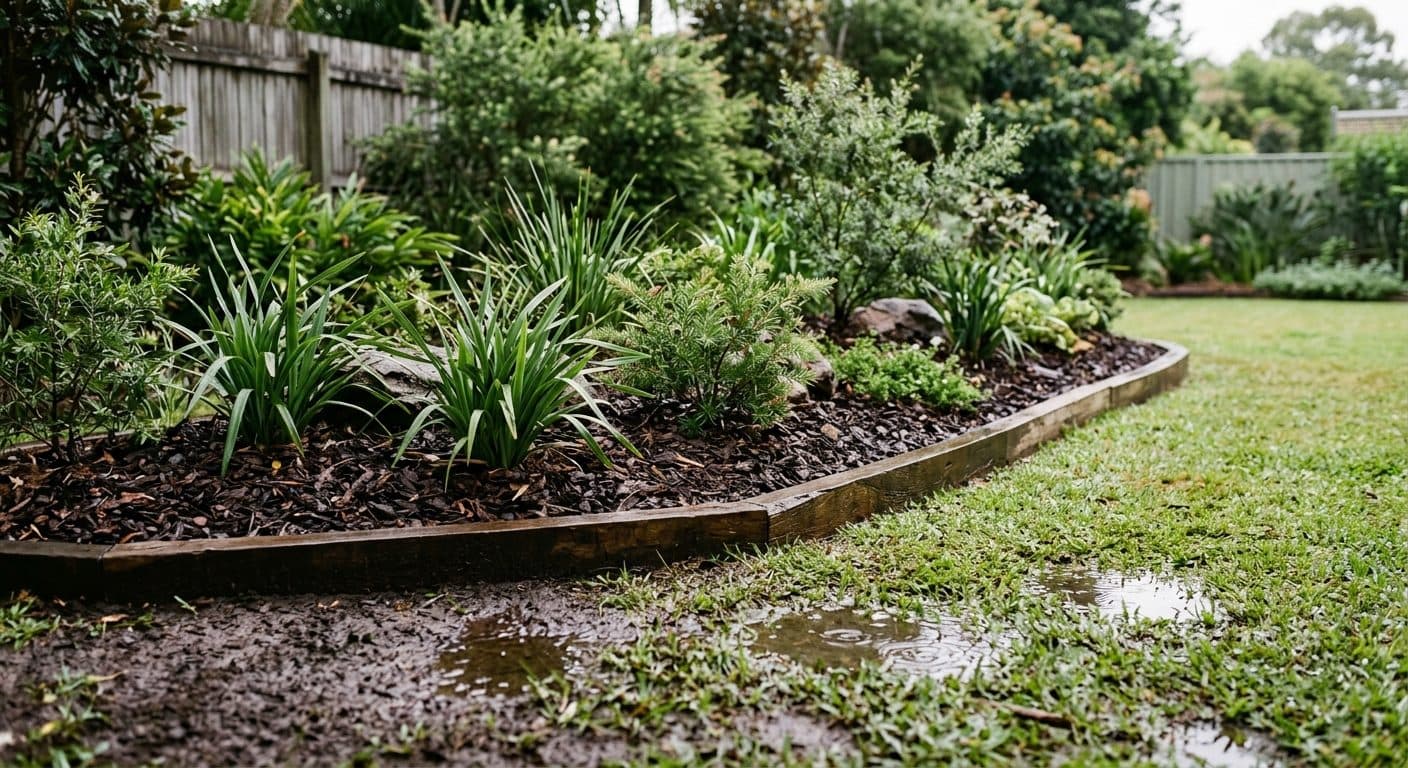
The clay itself is rarely the villain. The trouble is a particular kind of heavy soil that landscapers call reactive, meaning it swells when it's wet and shrinks when it dries, and if your block has it you'll know the signs: the ground opens into cracks you could lose a hose down by late winter, then a February storm arrives and the same soil turns to a sucking, waterlogged paste that won't drain for days. Roots don't drown in the wet because plants dislike water, they drown because saturated clay holds no air, and most roots need air as much as they need moisture. Then the dry sets in, the soil clenches down hard around the crown, and by spring you're planting into something with the give of a footpath.
The plants that cope
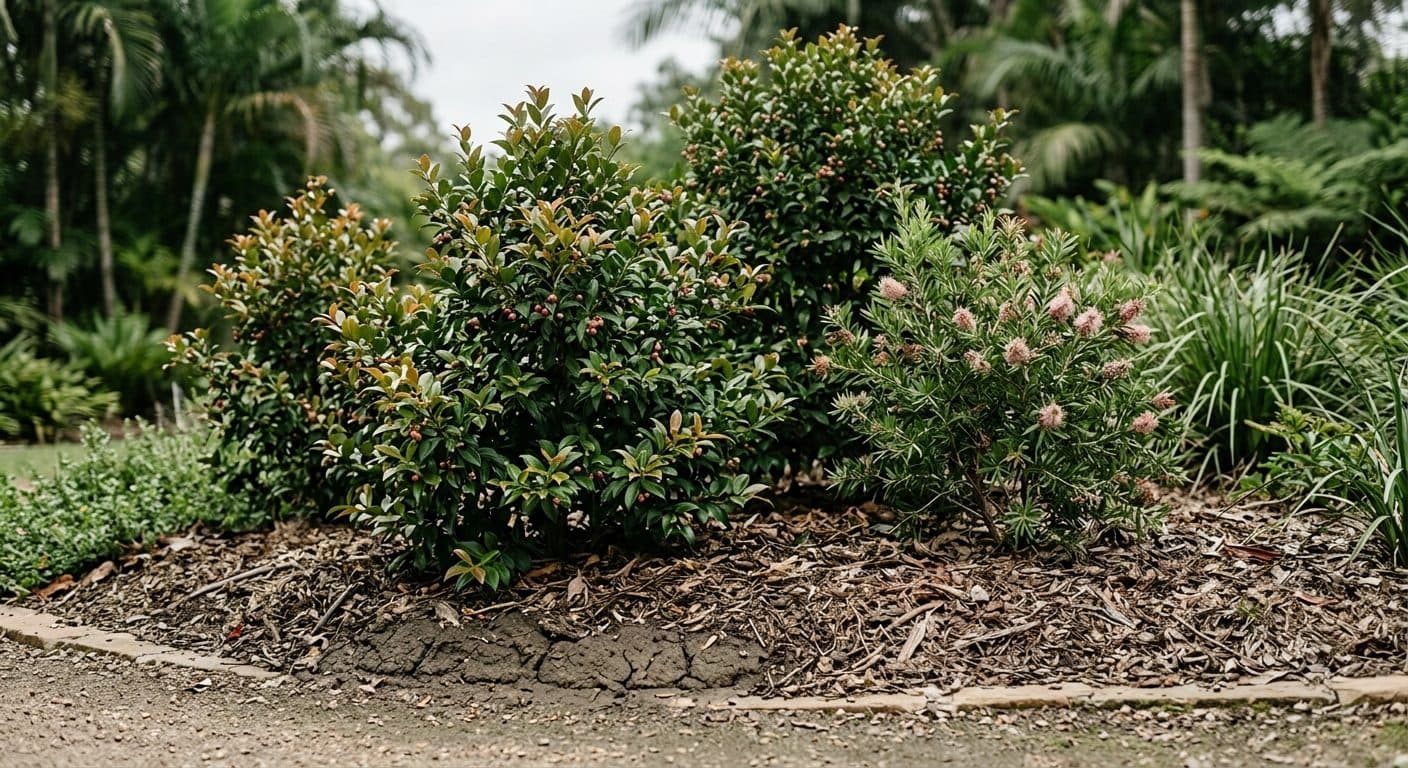
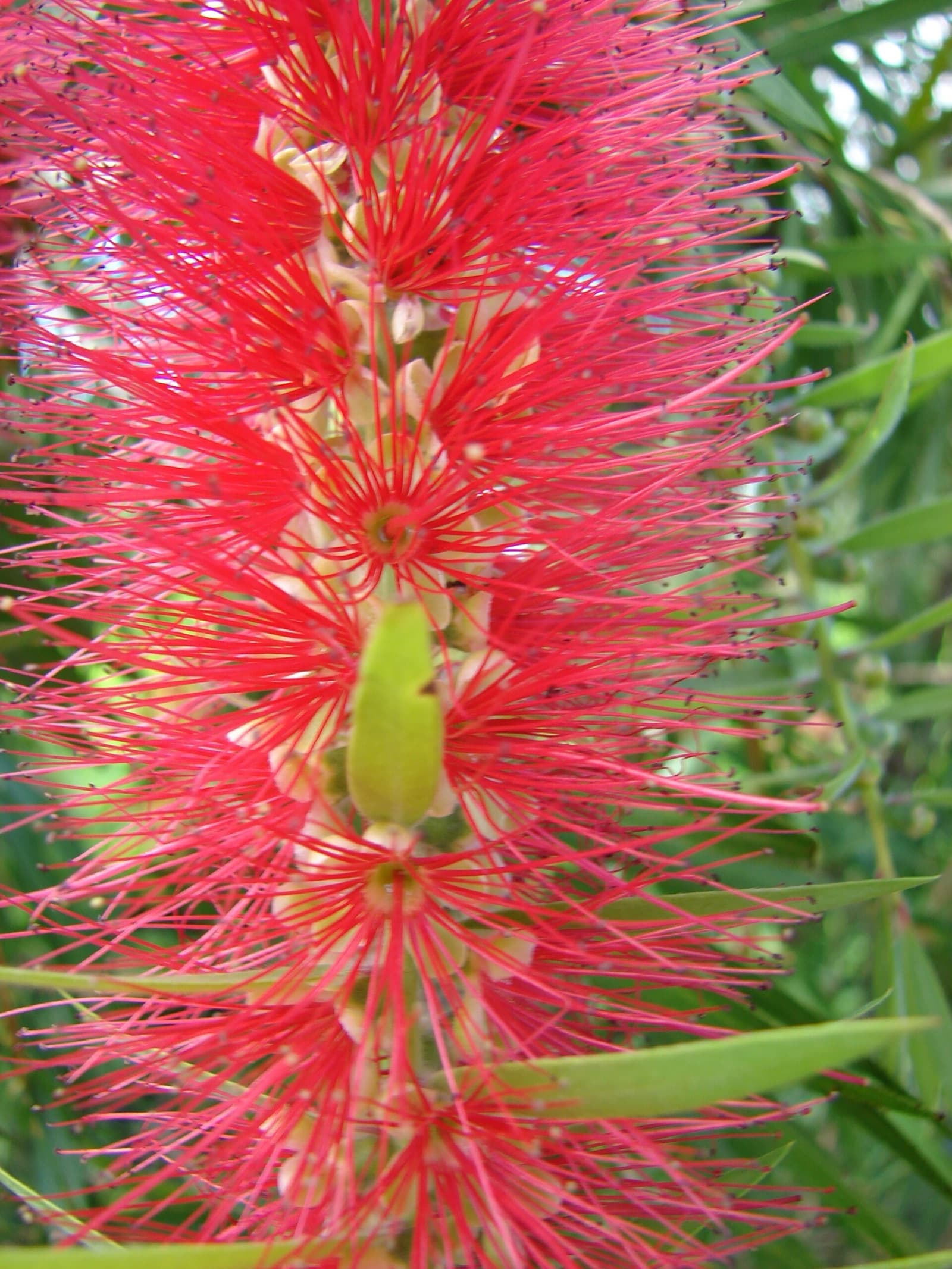
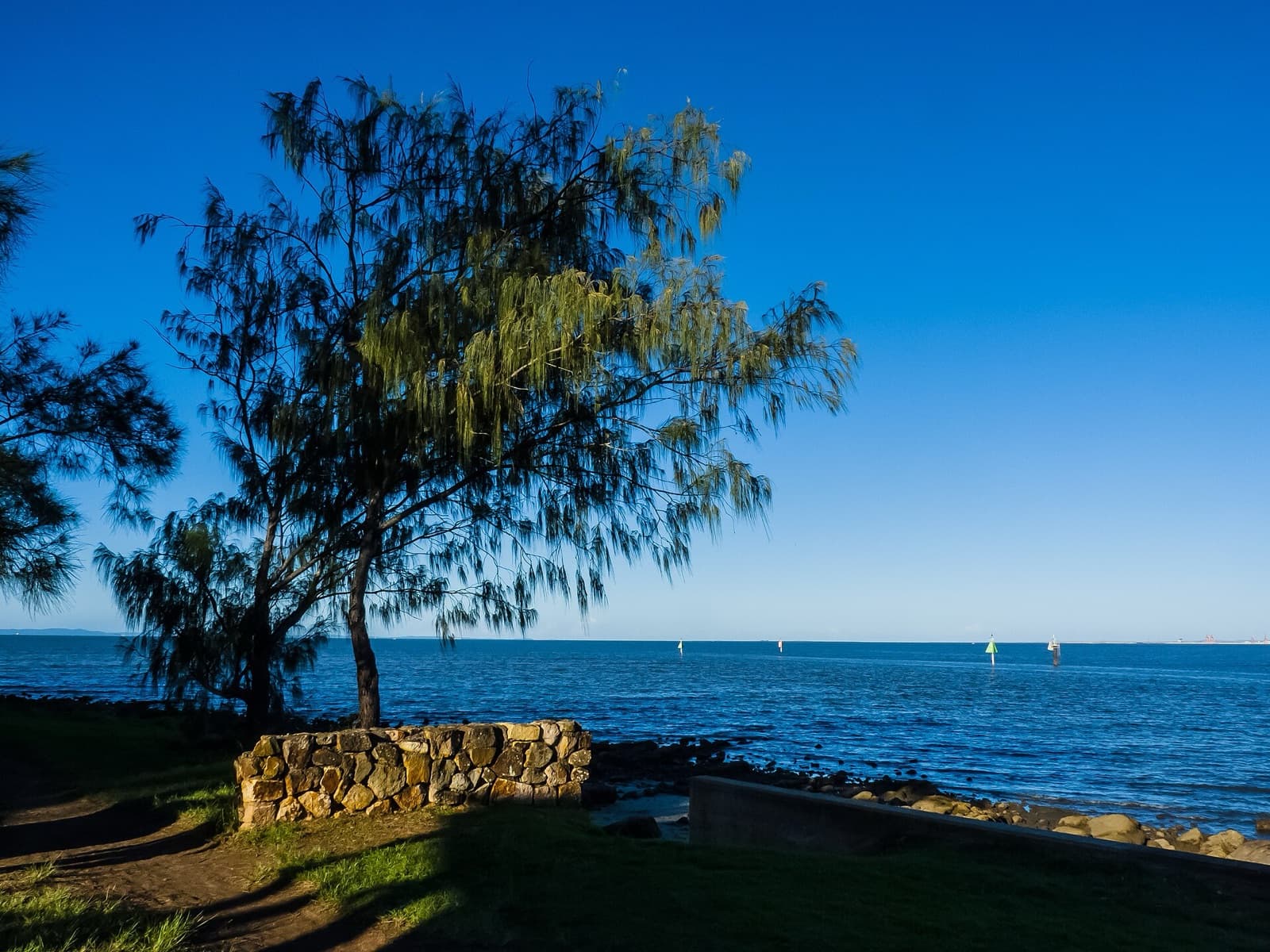
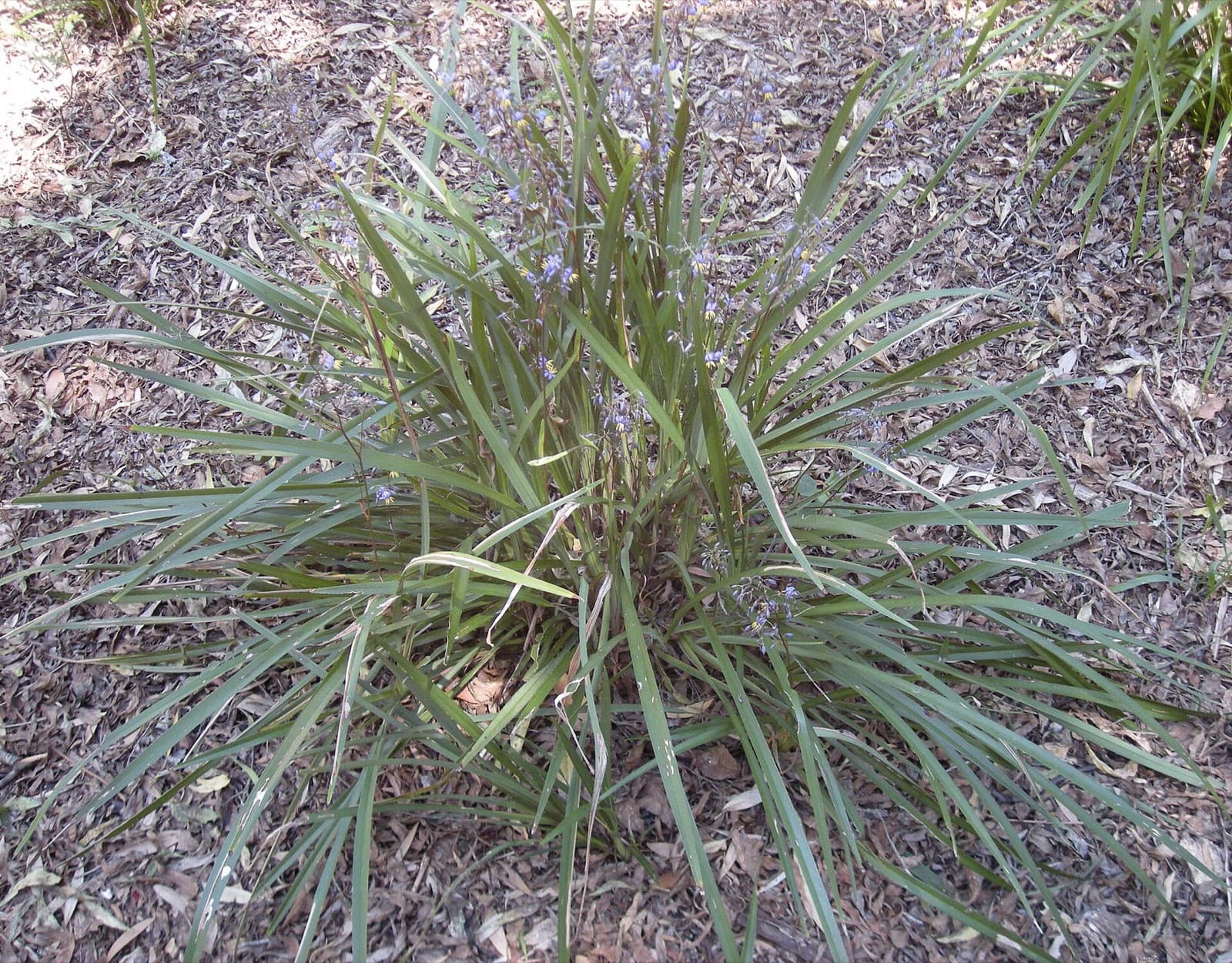
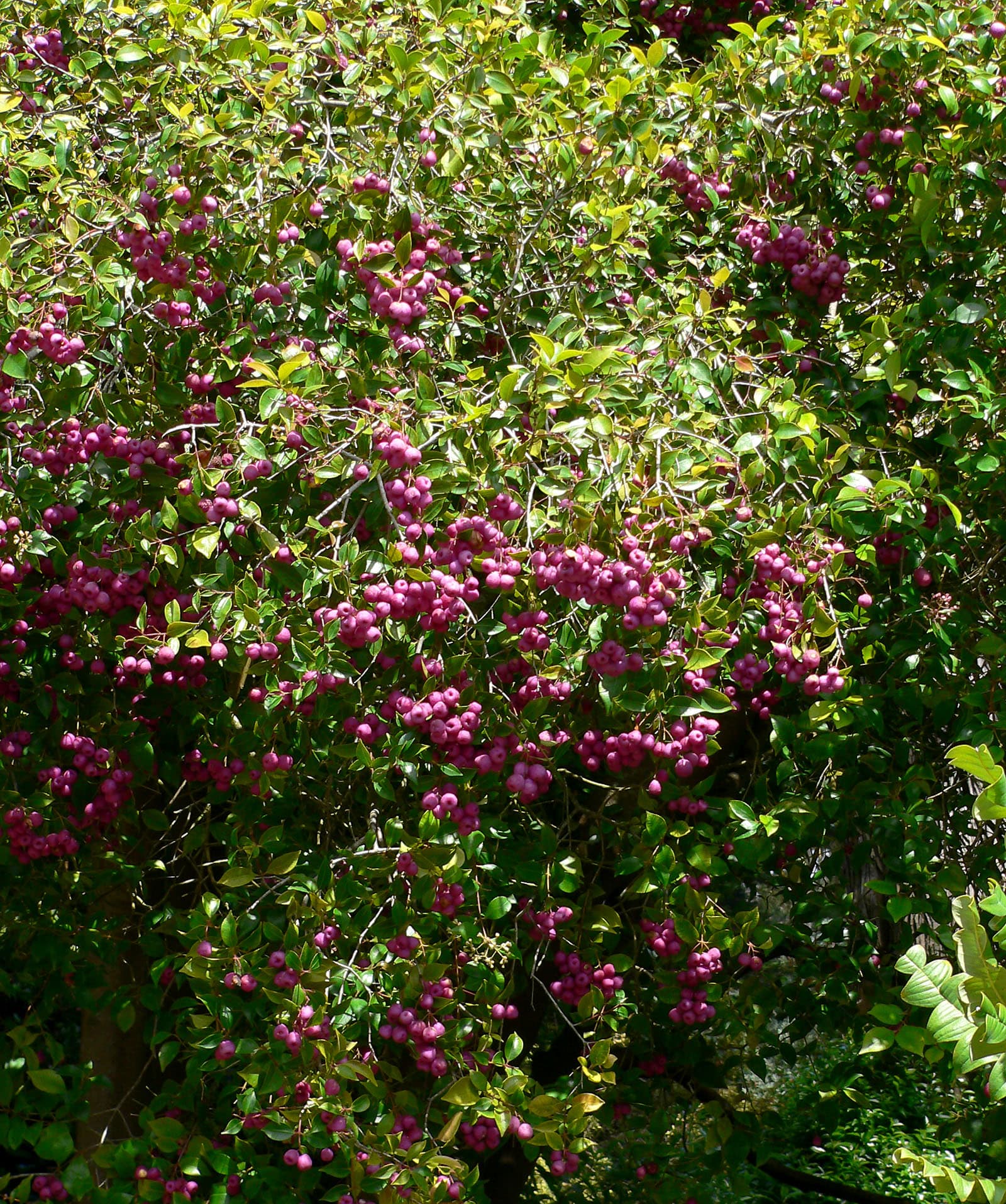
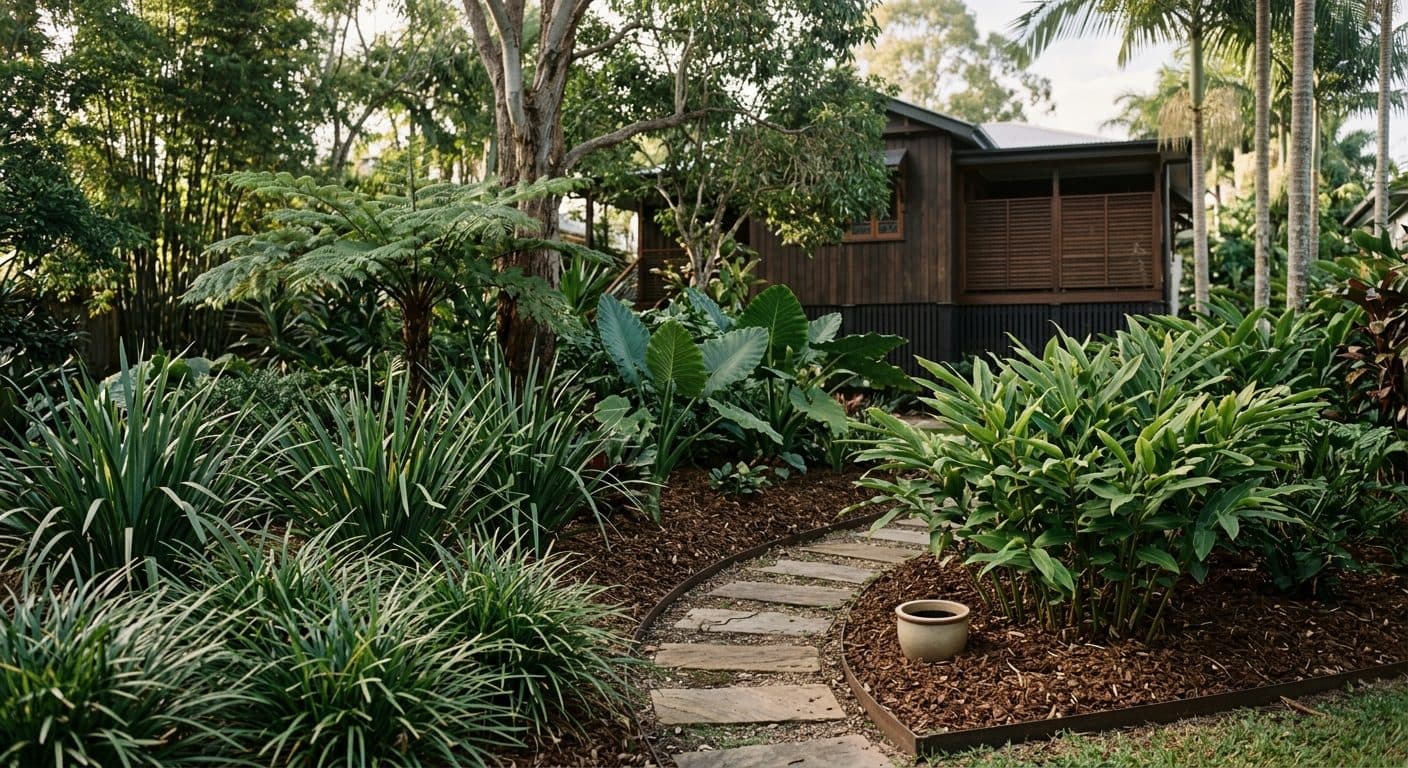
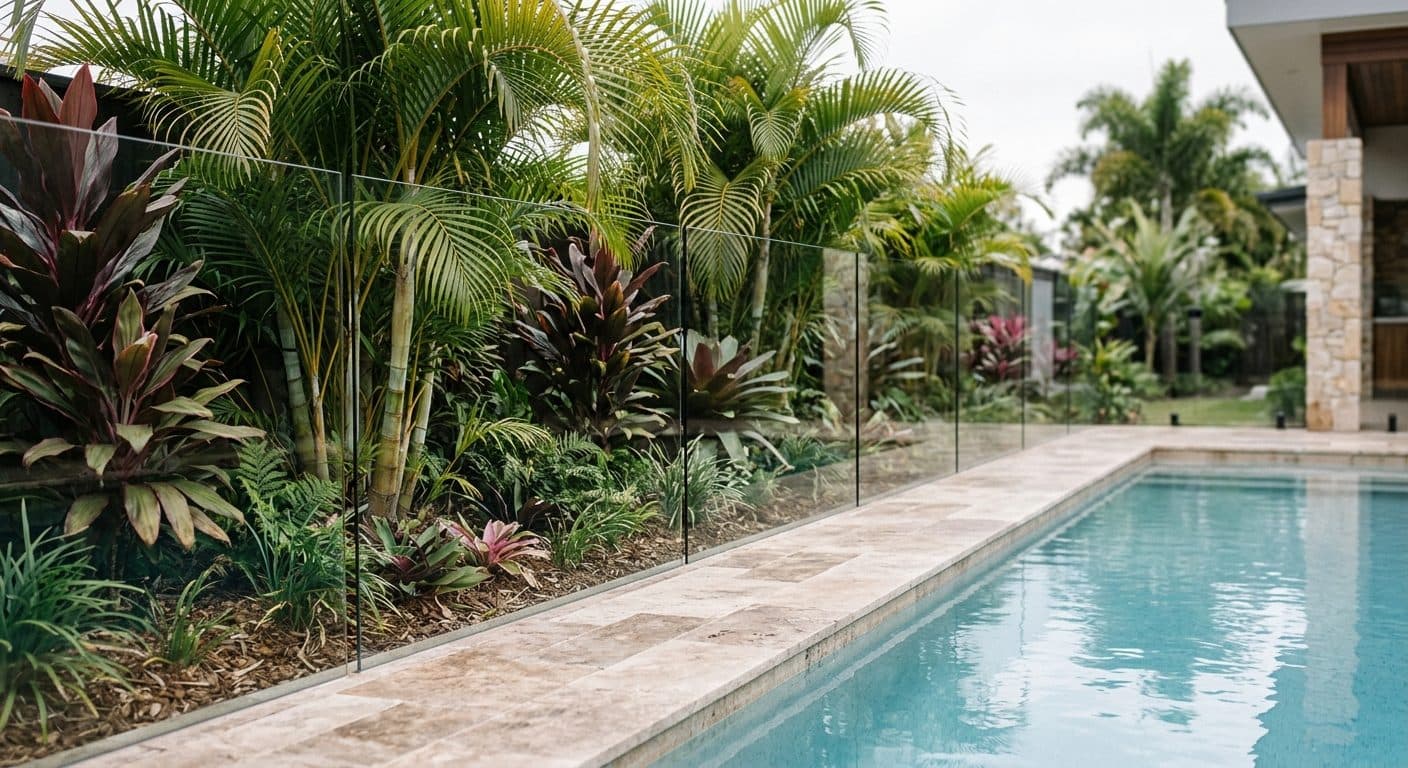
The palette that handles heavy, sometimes-wet ground leans heavily on Australian natives that evolved on exactly this stuff. Lilly pilly (Syzygium) is the reliable screening choice and it tolerates a heavier, moisture-holding soil far better than most exotics will. Bottlebrush (Callistemon) is almost purpose-built for the problem, because in the wild many callistemons grow along creek lines that flood and then bake, so a bed that's wet in February and dry by September is close to home for them. She-oak (Casuarina) copes with the same swing and holds difficult ground together with its roots, while at the lower layer flax lily (Dianella) is a genuine workhorse: strappy, unfussy, and content in clay that would sulk a fussier groundcover. These four give you a full-height structure, from canopy down to knee height, that asks little of the soil once it's established. My guide to the best plants for Brisbane gardens sorts the wider palette by the job each plant does, and a lot of the same names come up wherever the ground is hard work.
Raise the bed, don't fight the clay
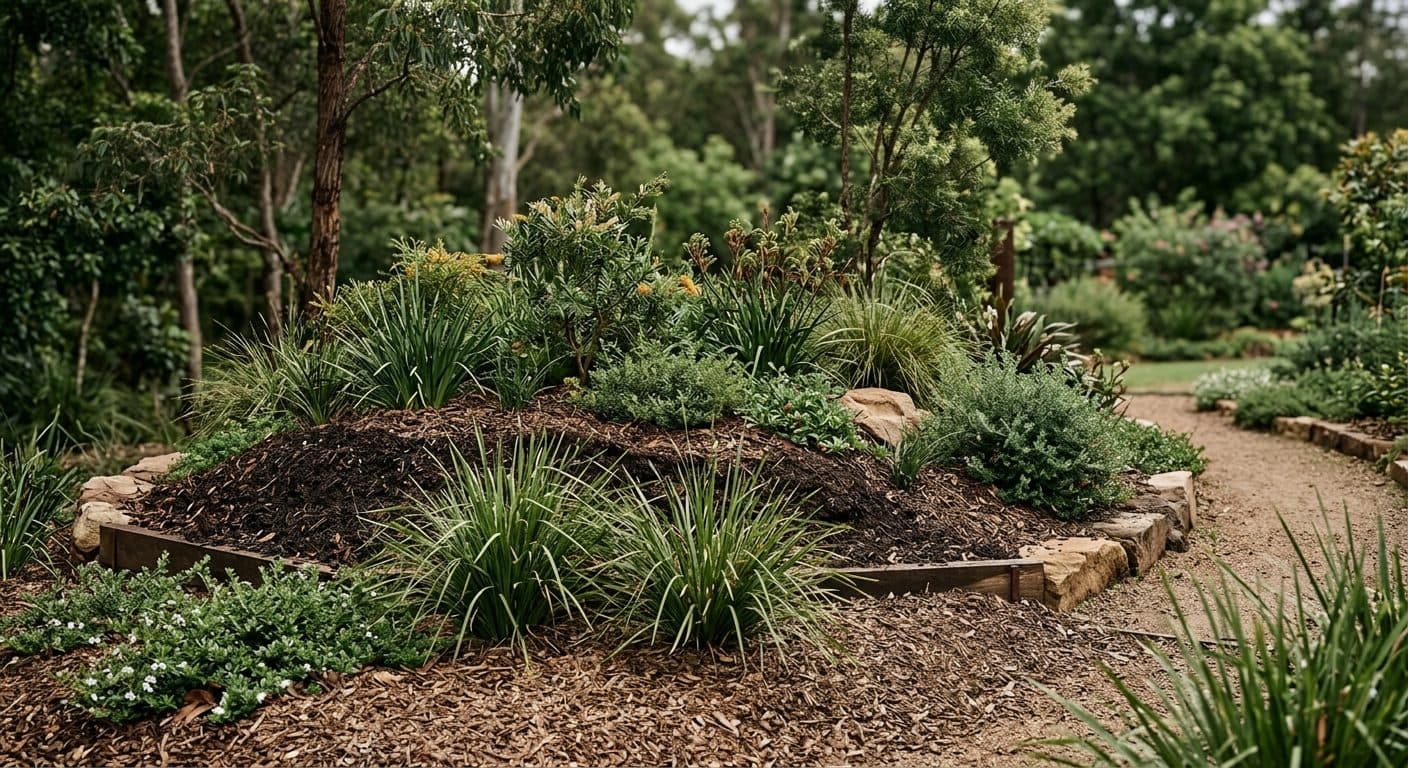
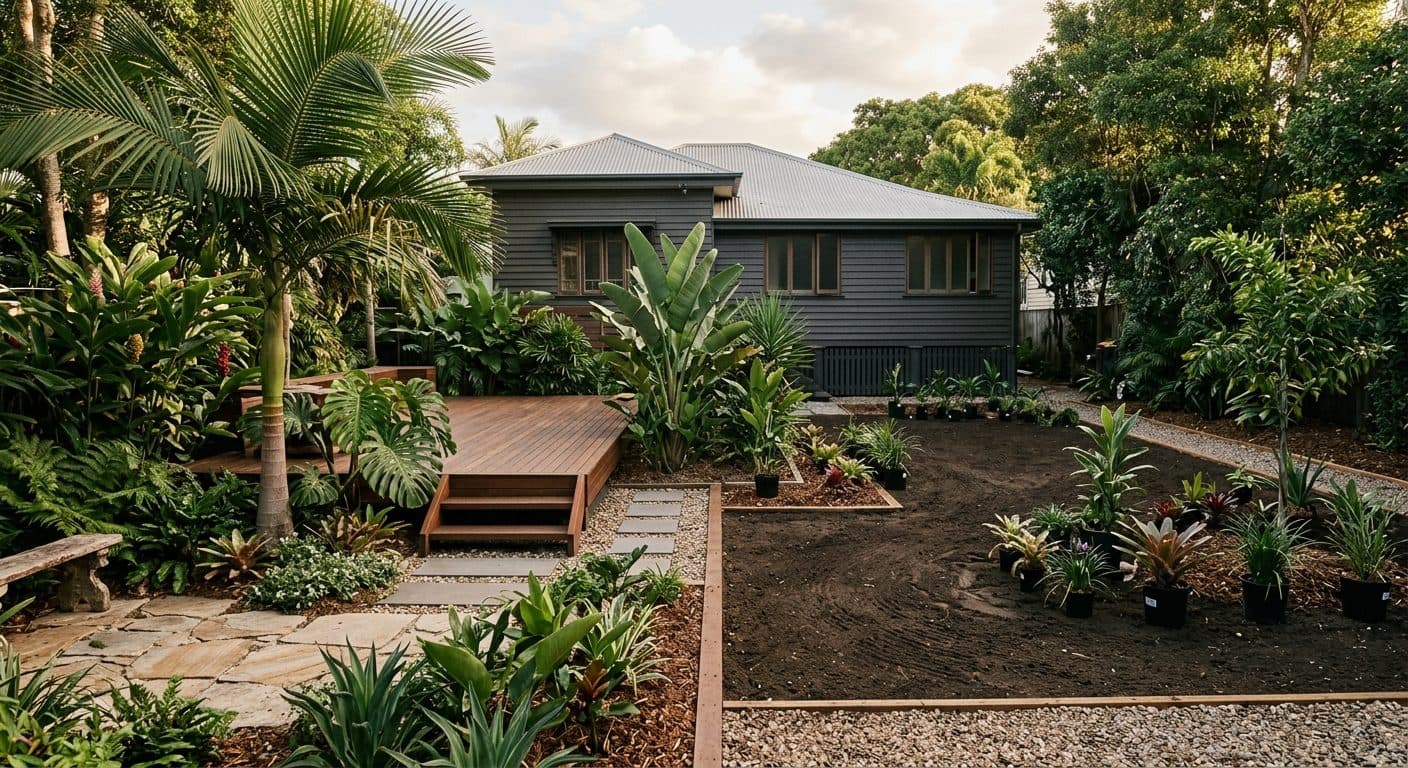
The single most useful thing you can do on heavy ground is lift the planting above the wet. Mounding a bed even 200 to 300 millimetres, or building a low raised bed, lifts the crown and the top roots clear of the zone that stays saturated after a downpour, and it does more for plant survival than anything you can pour from a bag. The mistake I see most often is the opposite instinct: digging a deep, generous hole in solid clay and backfilling it with lovely soft compost. On heavy ground that hole becomes a bathtub, water runs in off the surrounding clay and has nowhere to go, and the plant sits with its feet in a puddle until it rots. Plant slightly proud, mound around the rootball, and let the water shed away rather than pool.
The gypsum myth
Someone always suggests gypsum, and it's worth being clear about what it can and can't do. Gypsum only improves clay that's sodic, meaning clay with a particular sodium chemistry that makes it disperse into sludge, and on that soil it genuinely helps the particles clump so water can move. On the many clays that aren't sodic it does close to nothing, and it will not, on its own, turn a waterlogging bed into a free-draining one. What reliably improves heavy soil is organic matter worked in over time, generous mulch on top, and the discipline of never working or walking on the bed when it's wet, because compacting wet clay is how you squeeze the last of the air out of it.
A quiet word on the house
Reactive clay moves, and that shrink and swell is worth keeping in mind near paving and the edge of the house, where soil that heaves one season and drops the next can lift a path or stress a slab over time. I'd flag it rather than alarm you, because how much it matters depends entirely on your soil and your build, and it's a question for the relevant trade rather than a plant list. Where it does apply, the design response is sensible planting distances and thinking about where water sheds, and on a sloping block that overlaps with the drainage thinking on my sloping block landscape design page.
Working out what your soil actually is, and designing beds that suit it rather than fight it, is exactly the kind of thing we sort out on site in a Design Discovery Consultation. If you're leaning towards a hardy, low-fuss palette that takes the heavy ground in its stride, my native garden design approach is built around plants that were coping with this soil long before any of us turned up with a trowel.
Ready to start designing?
We're currently taking on new landscape design clients across Brisbane. Reach out for a personalised quote, whether you're a homeowner or a design professional.
Book a Free Discovery Call