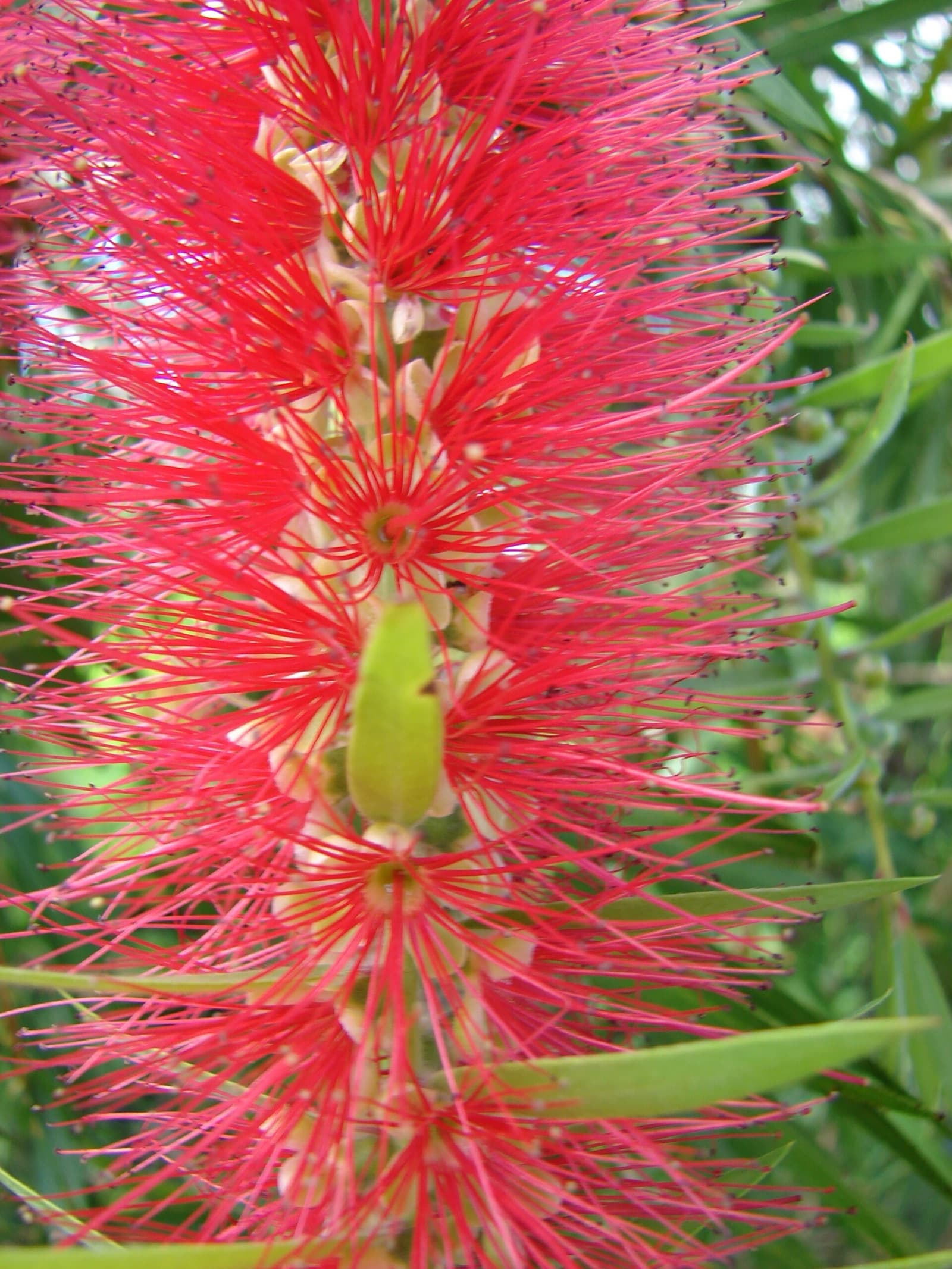
Callistemon, the hardy Australian native whose brushes of red and cream flowers bring honeyeaters and lorikeets straight into a Brisbane garden.
Callistemon/Melaleuca species · Also known as Callistemon
Bottlebrush is one of those plants that does the work of three: a tough, drought-hardy native that clips into a hedge, screens a boundary or stands alone as a small feature tree, and pays its way every spring by pulling honeyeaters and lorikeets into the garden to work the flowers. Most people call it bottlebrush or callistemon, and while botanists have folded many callistemons into the genus Melaleuca, the plants gardeners know and love are unchanged.
We plant it constantly because it belongs here, thriving in our heat, our poor soils and our downpours the way only a local plant can, and because there are forms for almost every job, from a low weeping cultivar for a bank to an upright screening variety for a fence line.
In a Brisbane garden
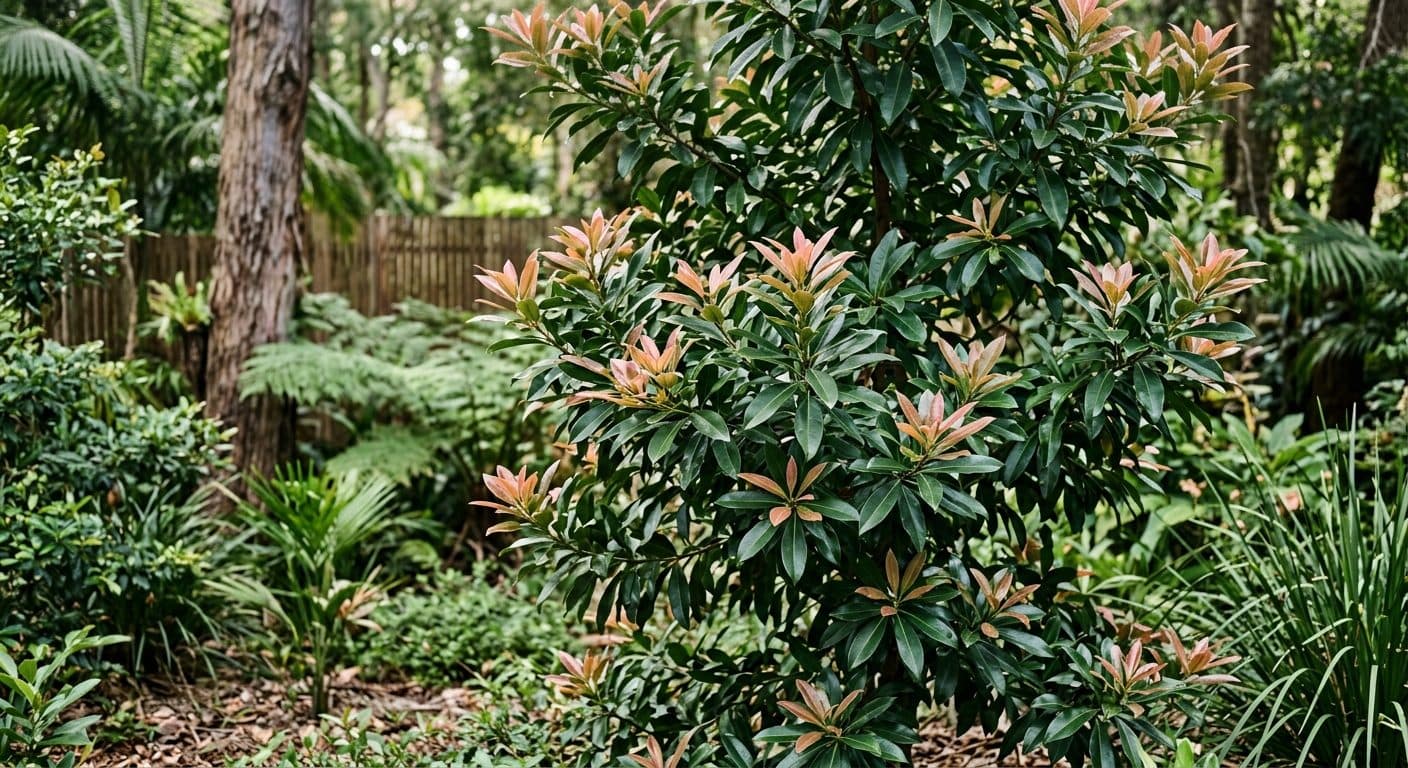
Bottlebrush is about as well-suited to a Brisbane garden as a plant can be, shrugging off summer heat and dry once established yet unbothered by the heavy soils and periodic wet feet that see off fussier shrubs, which is why several species turn up naturally along our creeks and low-lying ground. That toughness is the whole point for a low-fuss brief: give it sun and it largely looks after itself, flowering hard in spring and often again in autumn with almost nothing asked in return.
The birds are not a happy accident but a genuine design outcome, because the nectar-rich brushes bring honeyeaters and rainbow lorikeets right up to a window or deck, and it is worth choosing the form to fit the job since the range is wide. A light tip prune as each flush finishes keeps the plant dense and shapely rather than woody and open, and it is that single habit, more than anything, that separates a bottlebrush hedge that looks designed from one that looks like it happened.
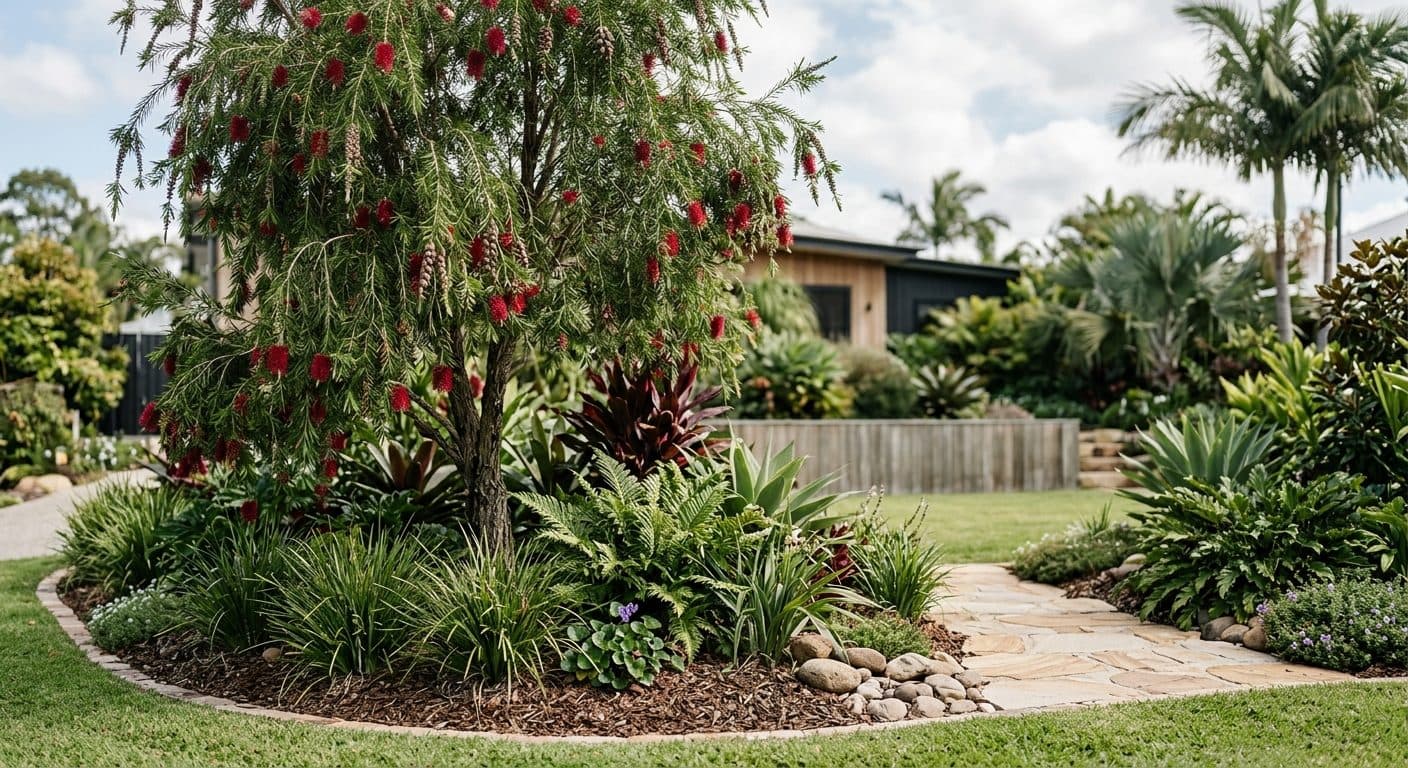
Photo: Forest and Kim Starr, CC BY 2.0, via Wikimedia Commons
How we design with it
Bottlebrush is a backbone plant for us whenever the brief leans hardy and hands-off, so it sits near the centre of our low-maintenance garden design and, as a genuine local, anchors a lot of our native garden design too. We use the upright forms as an informal screen or clipped hedge, and the weeping and dwarf cultivars to soften a bank or edge a path.
Because many species take coastal exposure and periodically wet ground in their stride, it is a reliable choice for exposed coastal gardens around the bay and for the damper corners of a block. Chosen as a small feature tree it gives structure, seasonal flower and a steady stream of birdlife all at once, which is exactly the kind of plant that earns a spot on our list of the best plants for Brisbane gardens.
Common questions
Want a tough native that feeds the birds?
We're currently taking on new landscape design clients across Brisbane. Reach out for a personalised quote, whether you're a homeowner or a design professional.
Book a Free Discovery Call