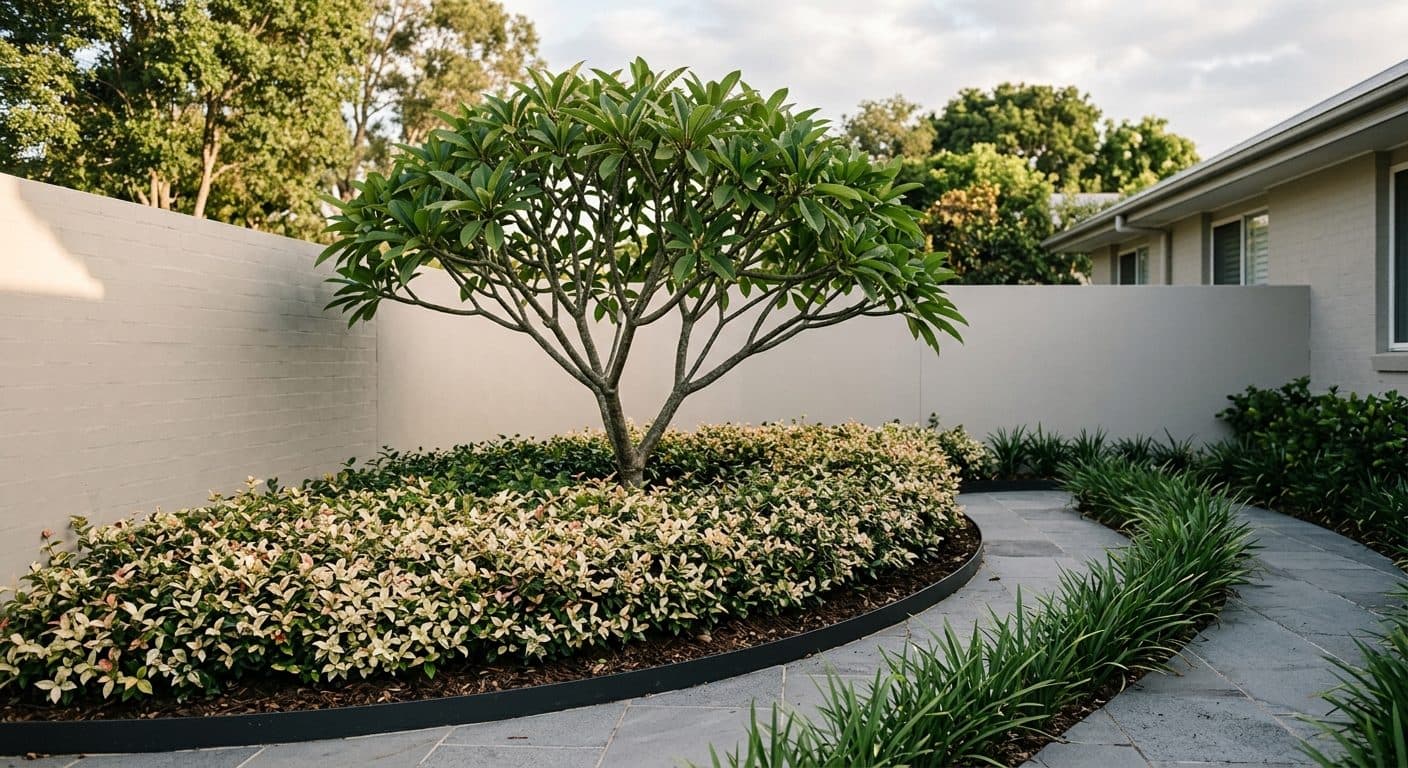
If your Brisbane garden looks messy even though the plants are healthy, the problem is usually too many different things. Here's how a short plant palette and repetition make a garden feel cohesive and designed.

By Shannon Trevisiol, Landscape Designer, Brisbane · 7 min read
- A garden usually looks busy because of variety, not mess: one of everything gives the eye nowhere to rest, even when every plant is healthy.
- Limit the palette. A handful of plants repeated generously reads as designed, and it is also easier to look after.
- Plant in masses and drifts rather than dots, and repeat the same plants at intervals so the eye can follow a pattern through the garden.
- Let one or two plants be the stars and give the rest a quiet supporting role, so there is always a clear focal point and a place to rest.
A common complaint about home gardens is that they look messy, even though nothing is dead, overgrown or neglected. The plants are healthy, the beds are mulched, and yet the whole thing feels restless. If you've been searching for how to make a garden look cohesive, the usual culprit is one I can name before I've even seen the plants: there are simply too many different ones.
A garden that looks busy is almost never short of effort. It's more often the opposite, the product of years of good intentions and weekend trips to the nursery, where every plant that caught your eye came home and found a gap. Each one is lovely on its own, but together they have no relationship to each other, and the eye never gets a place to settle.
Why one of everything reads as chaos
Our eyes look for pattern, and a bed with fifteen plants in fifteen different leaf shapes, heights and colours doesn't offer one. Every plant is shouting at the same volume, so nothing stands out and the whole bed blurs into noise. It's the garden equivalent of a room where every surface holds an ornament.
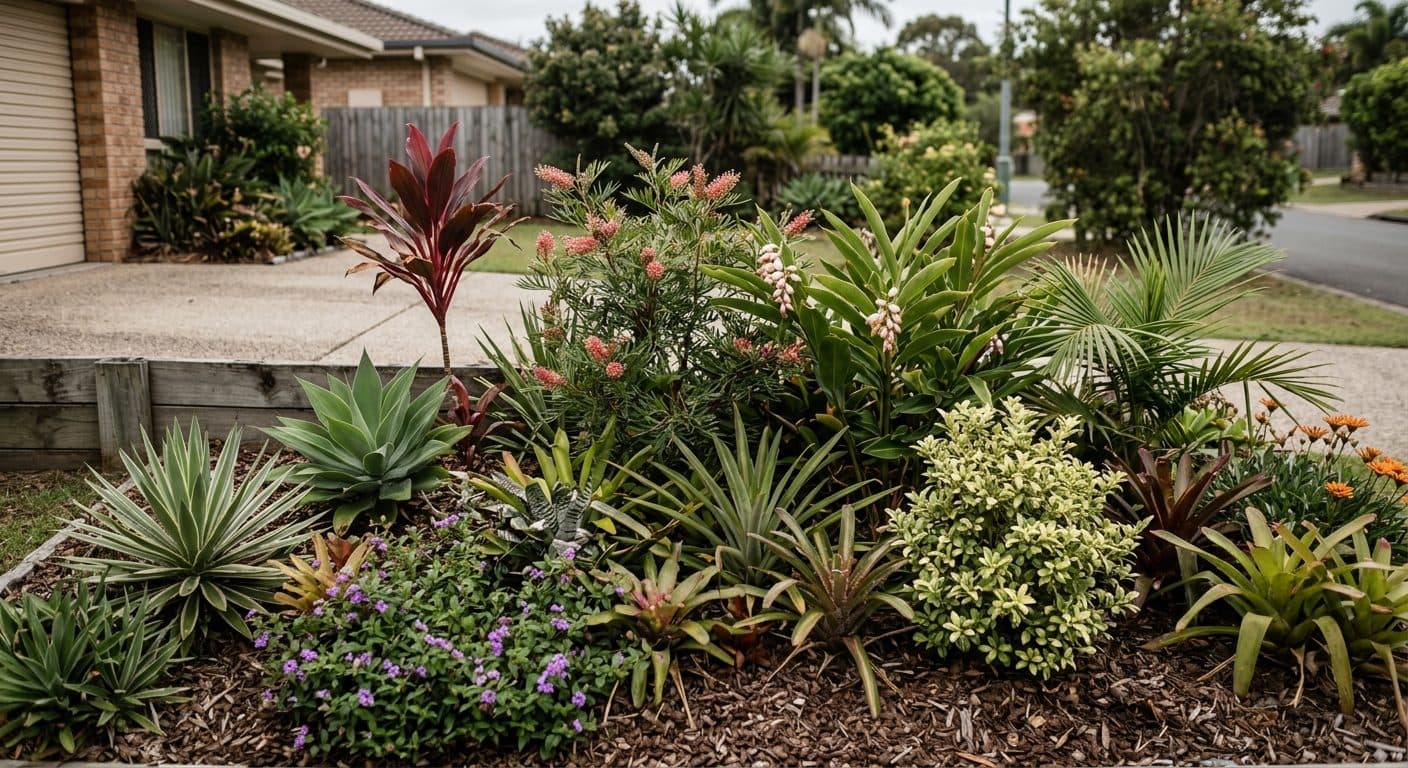
There's a second effect that's easy to miss. A single plant of each kind never gets big enough, in visual terms, to count. A lone grevillea beside a lone cordyline beside a lone ginger reads as three small, separate objects, while the same three plants planted in generous groups would read as three confident shapes. Variety spread thin is the fastest route to a garden that looks cluttered however well it is kept.
Restraint: choose a short palette and commit to it
The fix starts with subtraction. Most good gardens lean on a small number of plants for the bulk of the planting, and when I design a front garden I usually aim for three to five, with a few extras for seasonal interest. I think of it as choosing a short cast list: a structural plant, a filler or groundcover, one or two accents and perhaps a tree.
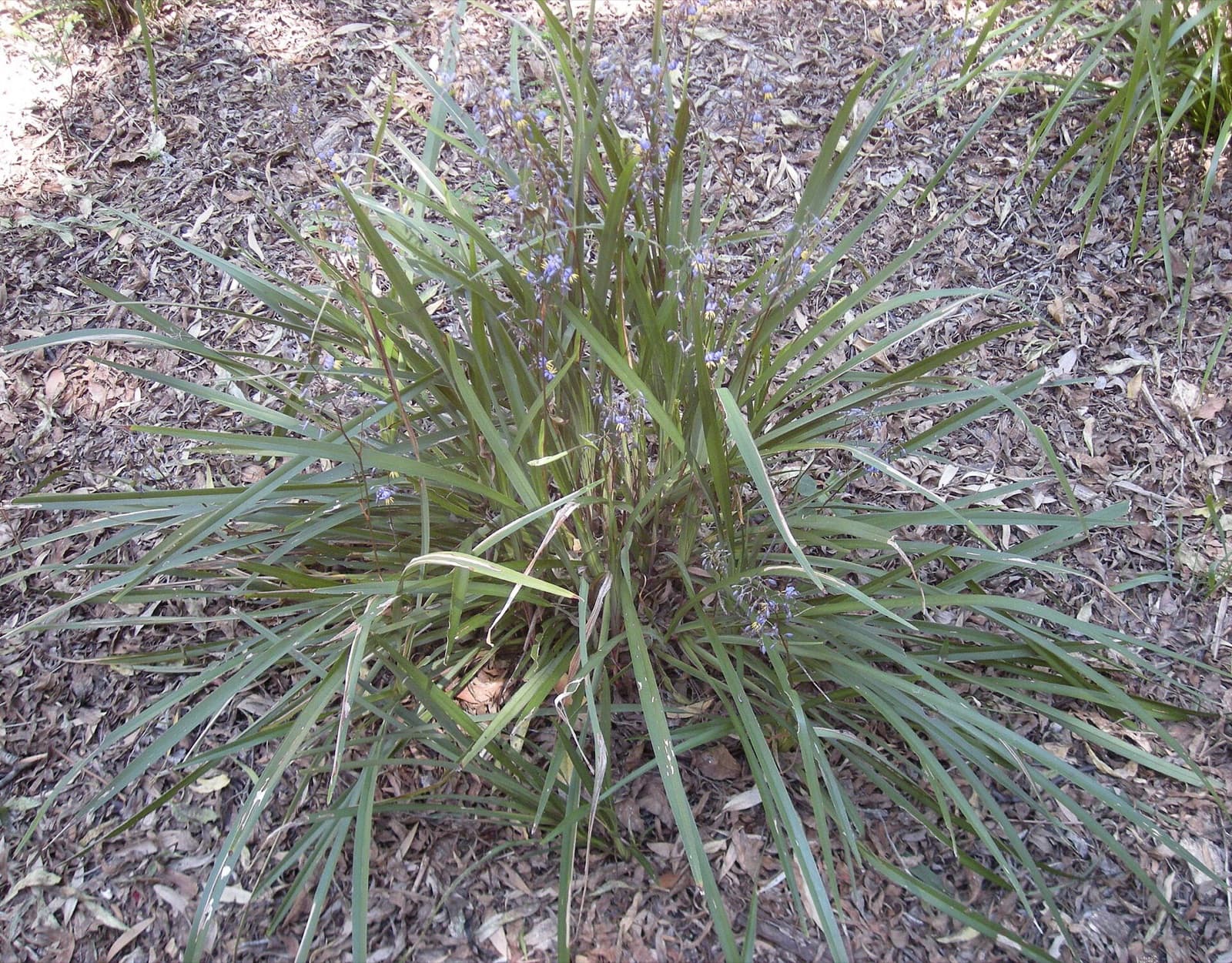
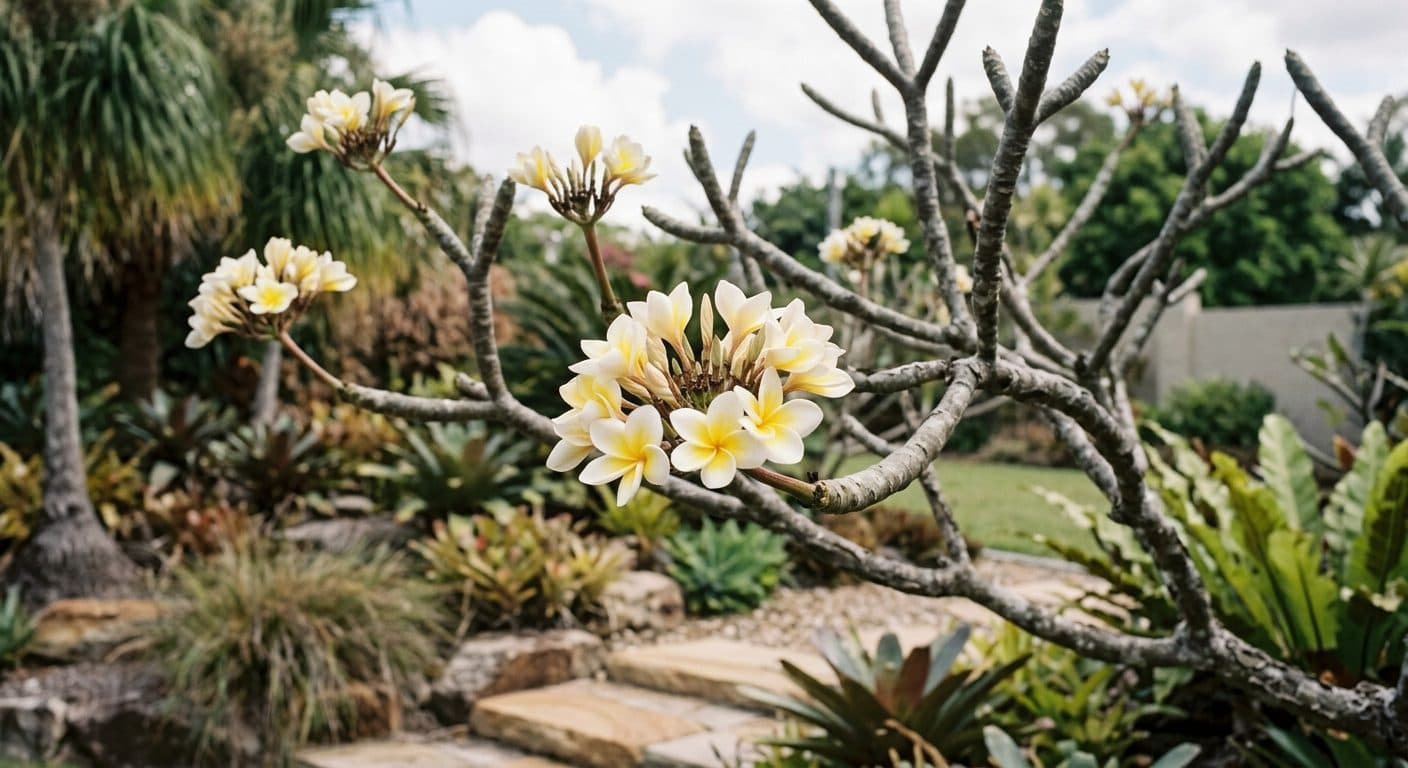
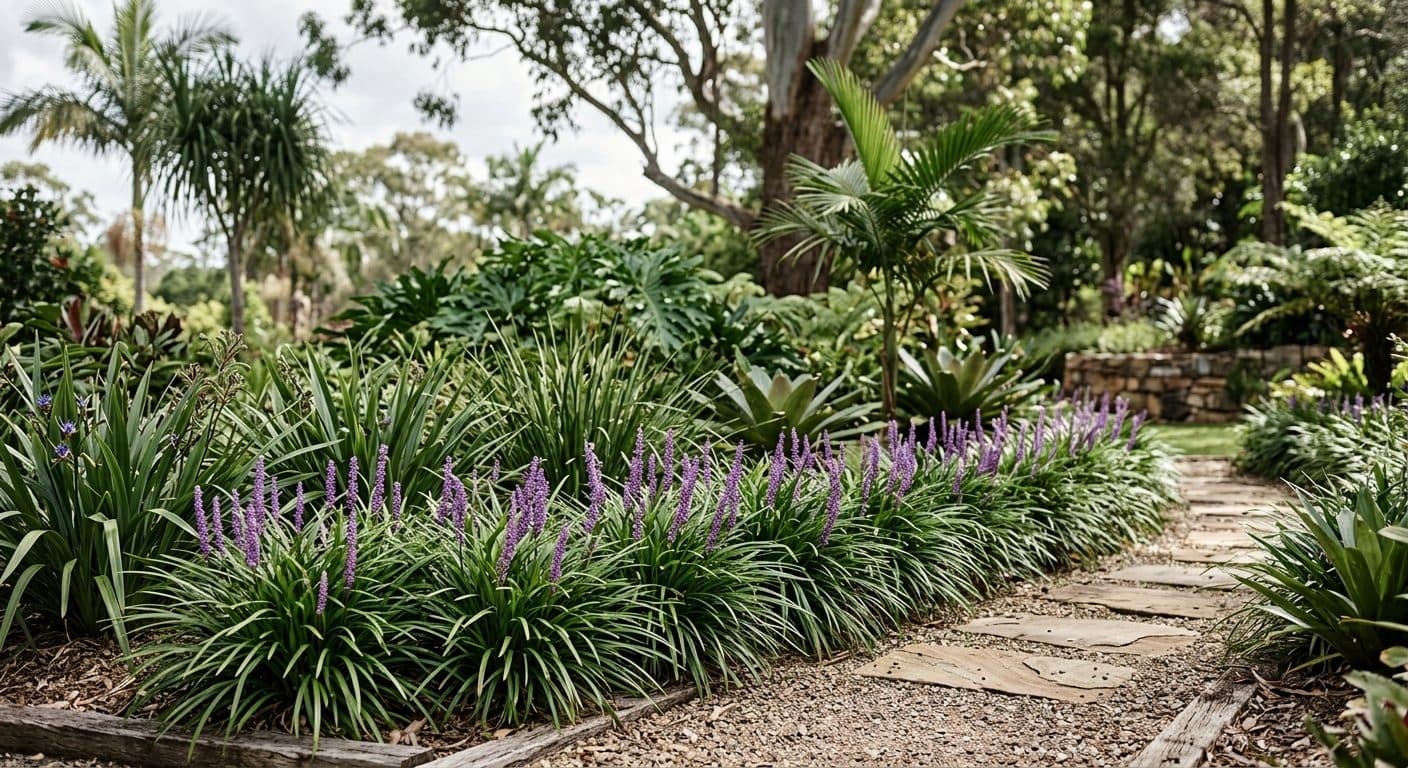
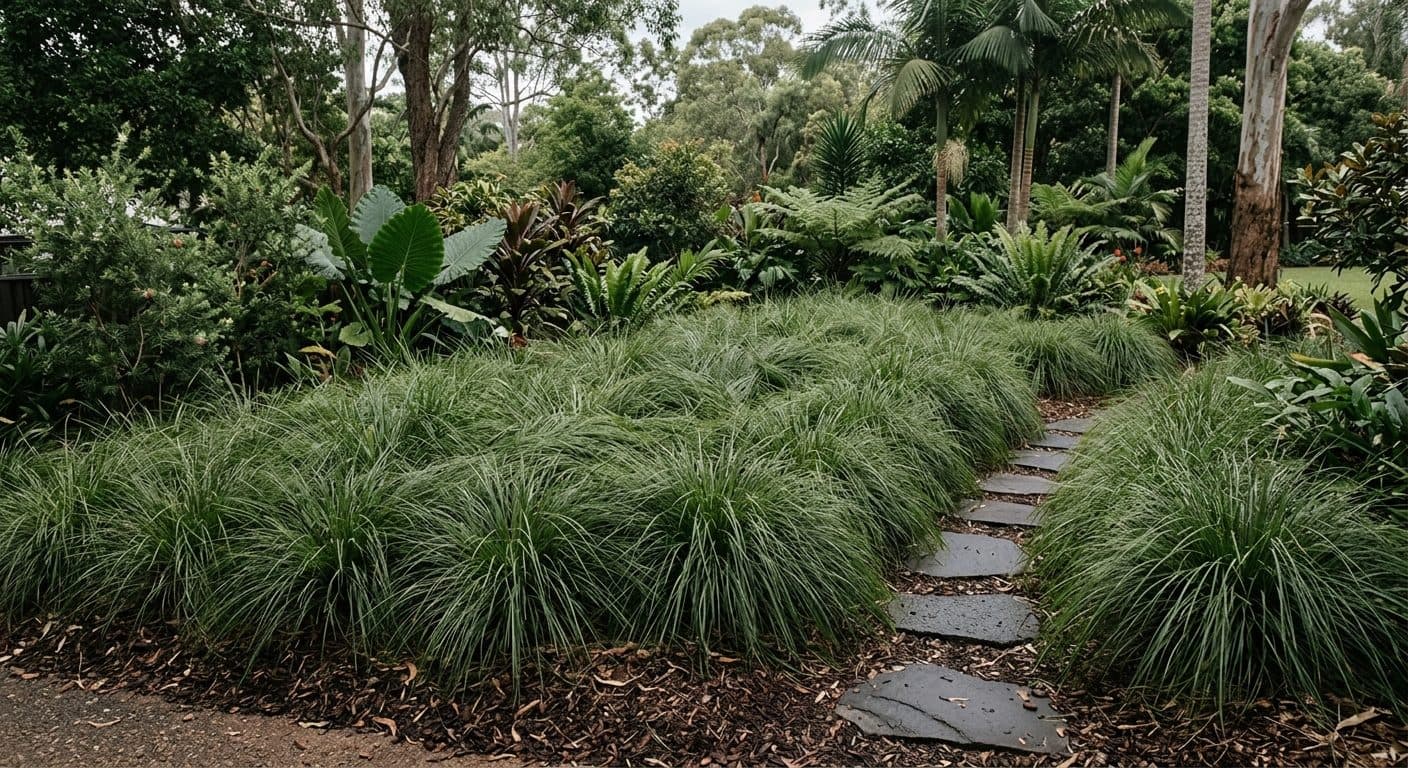
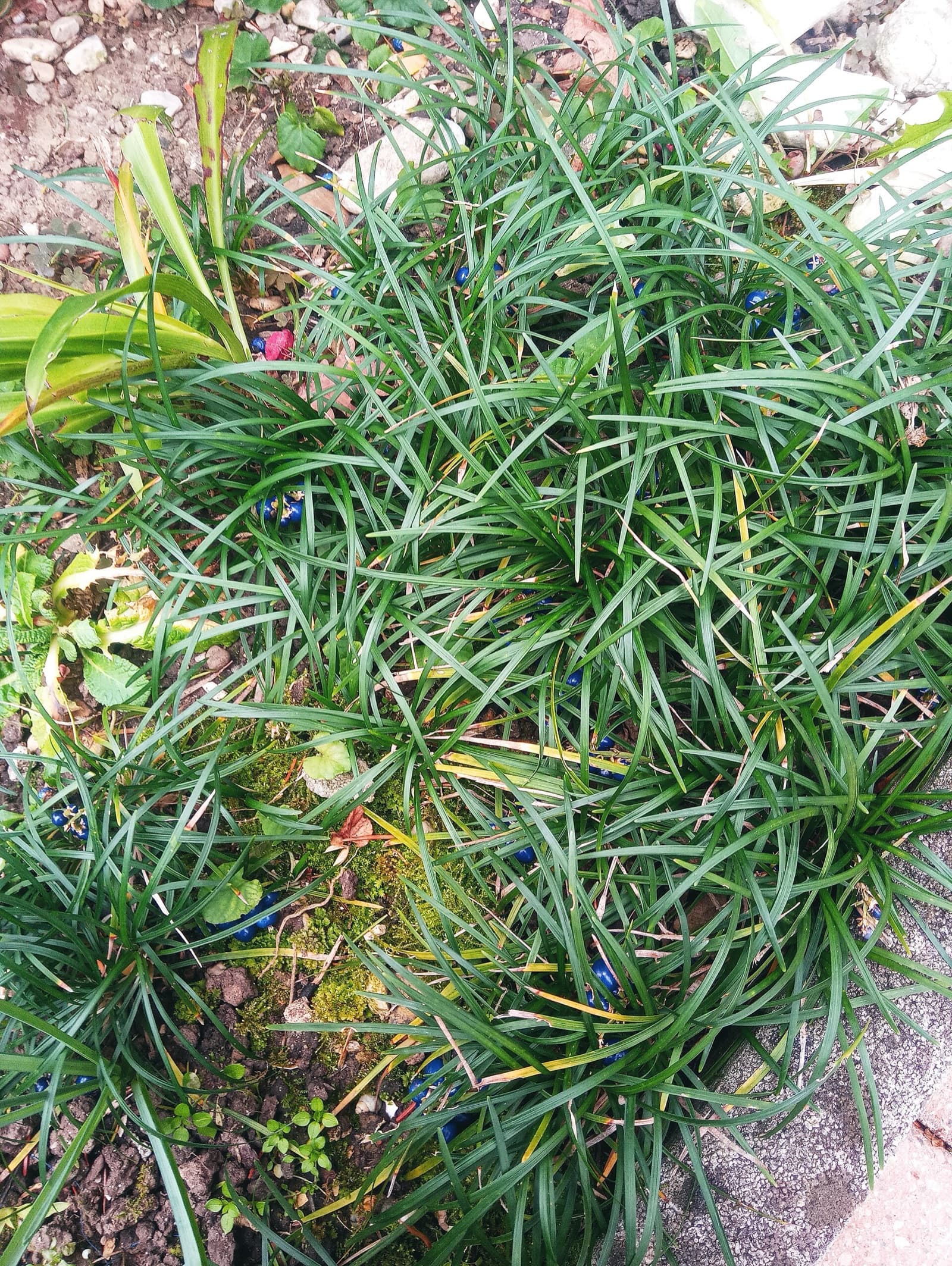
Restraint is not boring, and it doesn't mean a garden with no personality. It means picking the plants that suit your light, soil and style, and then trusting them. In Brisbane that works in our favour, because the tough, reliable plants are also the handsome ones. Lomandra (Lomandra longifolia) and dianella (Dianella caerulea) give you fine, strappy texture that suits nearly any style, liriope (Liriope) and mondo grass (Ophiopogon) make a neat, evergreen edge, and a single frangipani (Plumeria) can carry a whole front garden as the feature.
Mass and drift: plant in groups, not dots
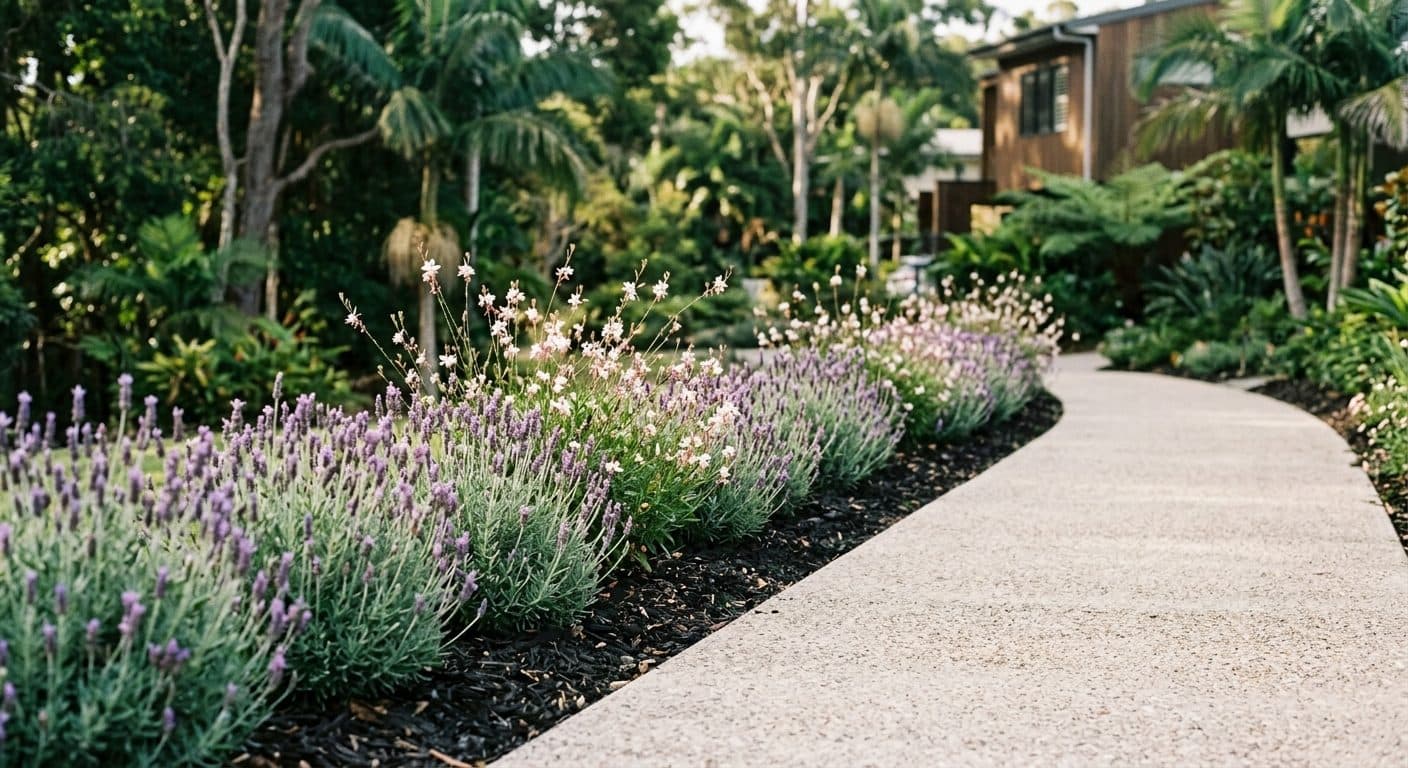
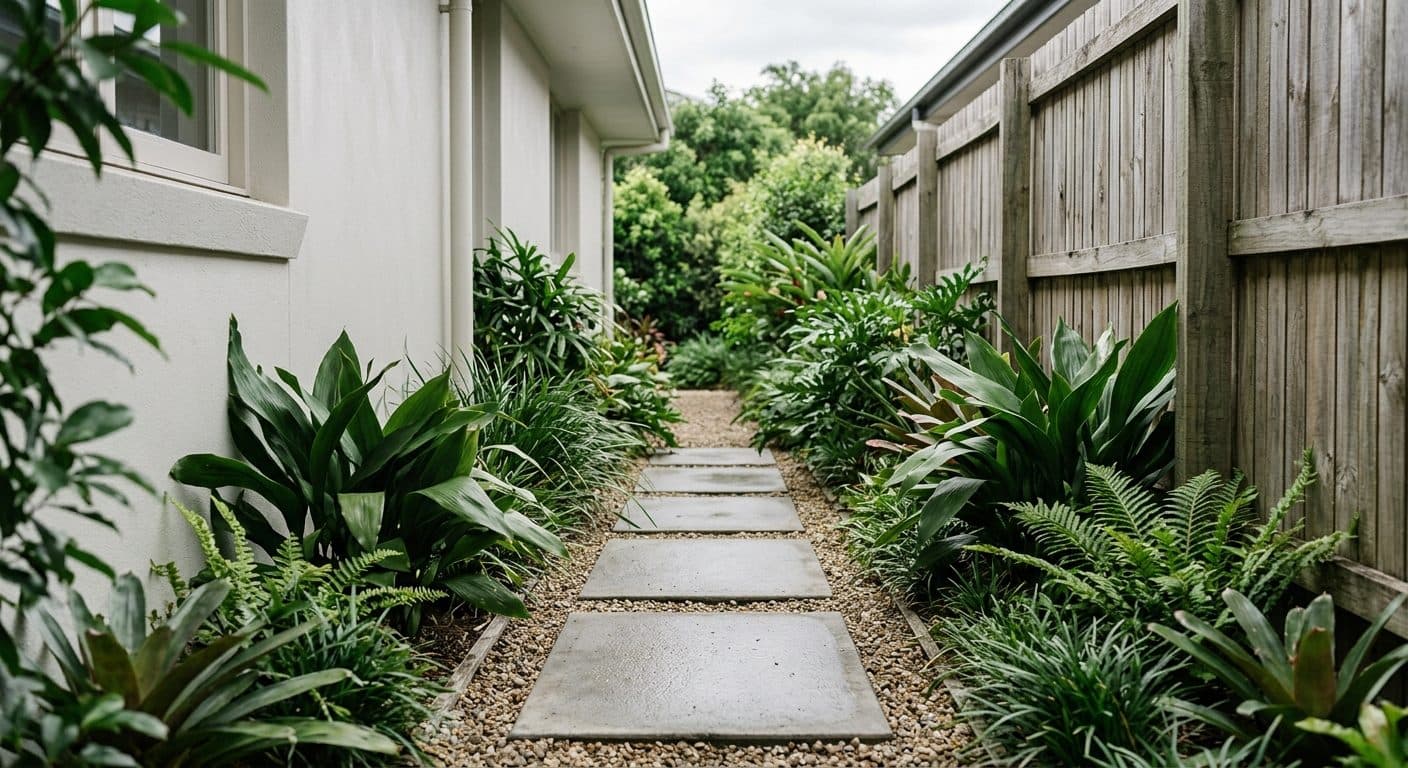
Once the palette is short, the next move is to plant each one in numbers. Instead of dotting a single plant here and there, plant a group of the same thing together so it reads as one shape. A mass of lavender or lomandra along a path looks like a deliberate decision, while the same number of lomandra spaced out one at a time between other plants looks like a few leftovers.
Designers talk about drifts, which is simply a group with a loose, irregular outline rather than a tidy block. Odd numbers tend to feel more natural than even ones, and the edges of a drift should overlap and interlock with its neighbour instead of ending in a hard line. How many plants you need depends on the species and how big they grow, so the sizing in my guide to garden bed sizes is a good companion here: massing only works when each plant has the room it will need at maturity.
Repetition: give the eye a rhythm to follow
Repetition is what turns a collection of plants into a composition. When the same plant turns up again at the other end of the bed, along the path and by the front door, the eye connects the dots and reads the whole garden as one idea. It's the same reason a good song has a chorus.
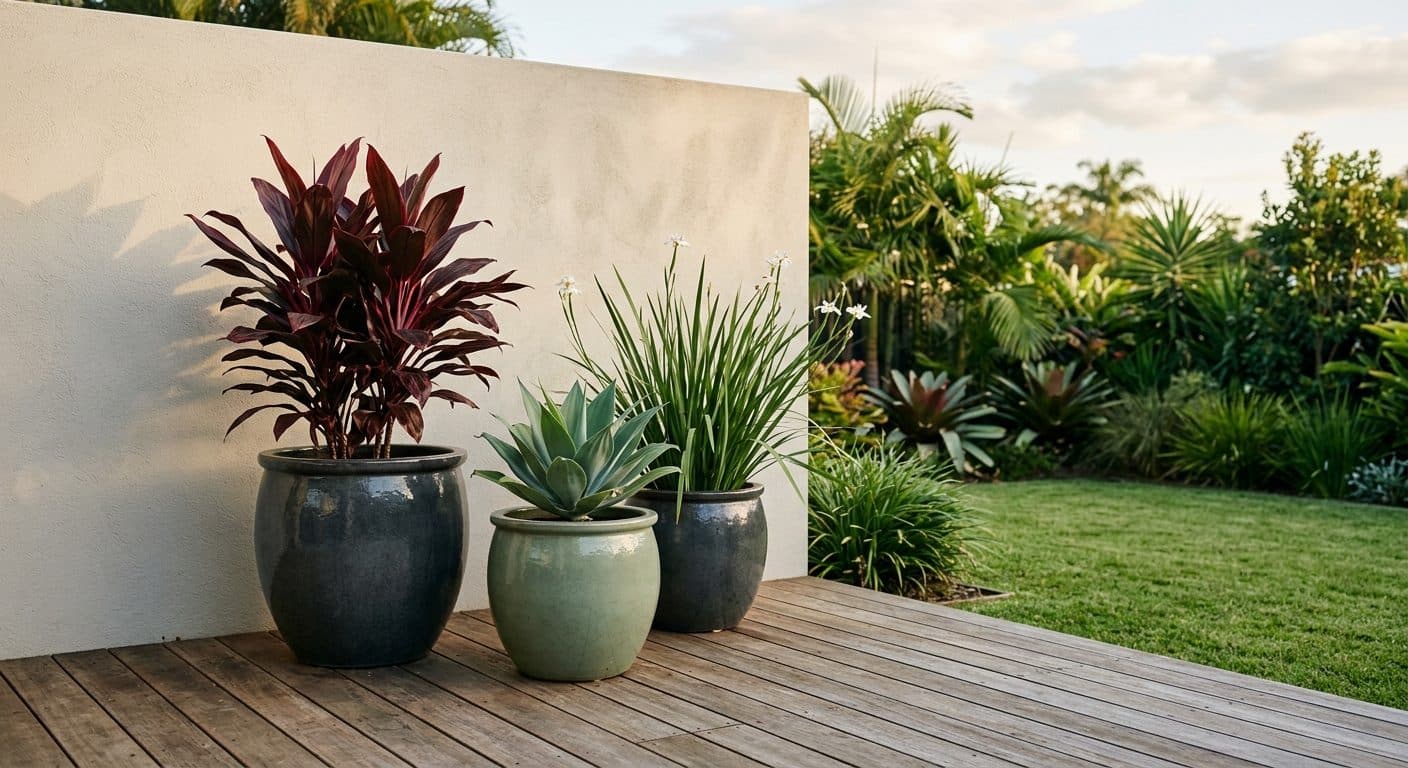
The practical way to do it is to choose two or three plants and let them recur across the garden at different scales and in different spots. A structural plant might anchor each corner, a groundcover might knit the front of the beds together, and a single accent colour might appear three times and no more. Repeating hardscape works the same way: the same paving, the same timber and the same pot colour will do half the work of tying the garden together before a single plant goes in.
Give the eye a place to rest, and a place to land
Restraint also means leaving some space. A lawn, a sweep of groundcover or a calm mass of one green plant gives the more interesting parts of the garden room to be noticed, in the same way a pause makes the next sentence land. If every square metre is doing something, nothing is.
Then choose your stars. One feature tree, one sculptural plant or one beautiful pot should be the obvious focal point, with everything else playing a supporting role. A garden with a clear lead and a quiet chorus feels calm, whereas a garden with ten leads feels like a plant sale.
Does this mean no flowers, no variety, no collector's garden?
Not at all. If you love plants and collect them, that is a perfectly good way to garden, and plenty of people enjoy a cottage-style tumble of many things (my cottage garden notes cover how to make that work in our climate without it falling apart). The point is to make it a choice rather than an accident. A mixed border can still look composed if there is a backbone of repeated plants holding it together, and a collector's corner works best when it has a calm setting around it.
It also helps on the practical side. A short palette means fewer plants to learn, fewer different watering and pruning needs, and an easier time replacing something that fails, because the replacement is the same plant you already have. If you are drawn to the idea but want the plants to be right for the place, my guide to the best plants for Brisbane gardens is a good place to pick your short list, and the thinking behind a native-led palette is in my piece on native gardens that don't look like revegetation.
How to fix a busy garden you already have
You rarely need to start again. Walk the garden with a notebook and write down every different plant in a bed, then circle the two or three you like most and that are growing best. Those become the backbone. Where you have singles of something that doesn't earn its place, consider moving or removing it, ideally in the right season for planting and with the plant's needs in mind, and fill the gap with more of the backbone plants instead.
Do it a bed at a time rather than all at once, and photograph the garden before and after, because the difference is often easier to see in a picture than standing in it. Staging the work is also kinder on your budget and your weekends, which is a theme I come back to in my notes on phasing a garden renovation.
If you'd like help working out which plants should form the backbone of your garden and where they should repeat, a Design Discovery Consultation is where I walk the block with you and sort the palette before anything is bought. The same restraint runs through my modern garden design work, where a limited palette is the whole look.
Ready to start designing?
We're currently taking on new landscape design clients across Brisbane. Reach out for a personalised quote, whether you're a homeowner or a design professional.
Book a Free Discovery Call