How deep should a garden bed be? Size it to the plant's mature width, not the nursery pot. Here's how I work out bed depth and spacing for Brisbane gardens, and why cramped beds fail.

By Shannon Trevisiol, Landscape Designer, Brisbane · 6 min read
- Size the bed to the plant's mature width, not the pot it came in: the label's spread is the number that decides how much room you need.
- A bed that's too shallow is the most common mistake I see. Plan for the shrubs at the back to sit well clear of the edge, with a front layer that doesn't shove them forward.
- Spacing plants at their mature width looks sparse for a year or two, and mulch, a few quick fillers and patience cover the gap better than overplanting does.
- Trees and big shrubs need their space measured in all directions, including down, so keep them clear of slabs, fences and each other.
The question I get asked most often about planting isn't what to plant, it's how much room to leave for it. The short answer is that a garden bed should be sized to the mature width of what's in it, not the size of the pot it came home in, and a shallow strip hugging the fence almost never works. Brisbane's warm, wet summers grow plants faster than most people expect, so a bed that looks about right on planting day is often an argument by the second Christmas. Here's how I work out garden bed size, depth and spacing before anything goes in the ground.
Start with the label, then believe it
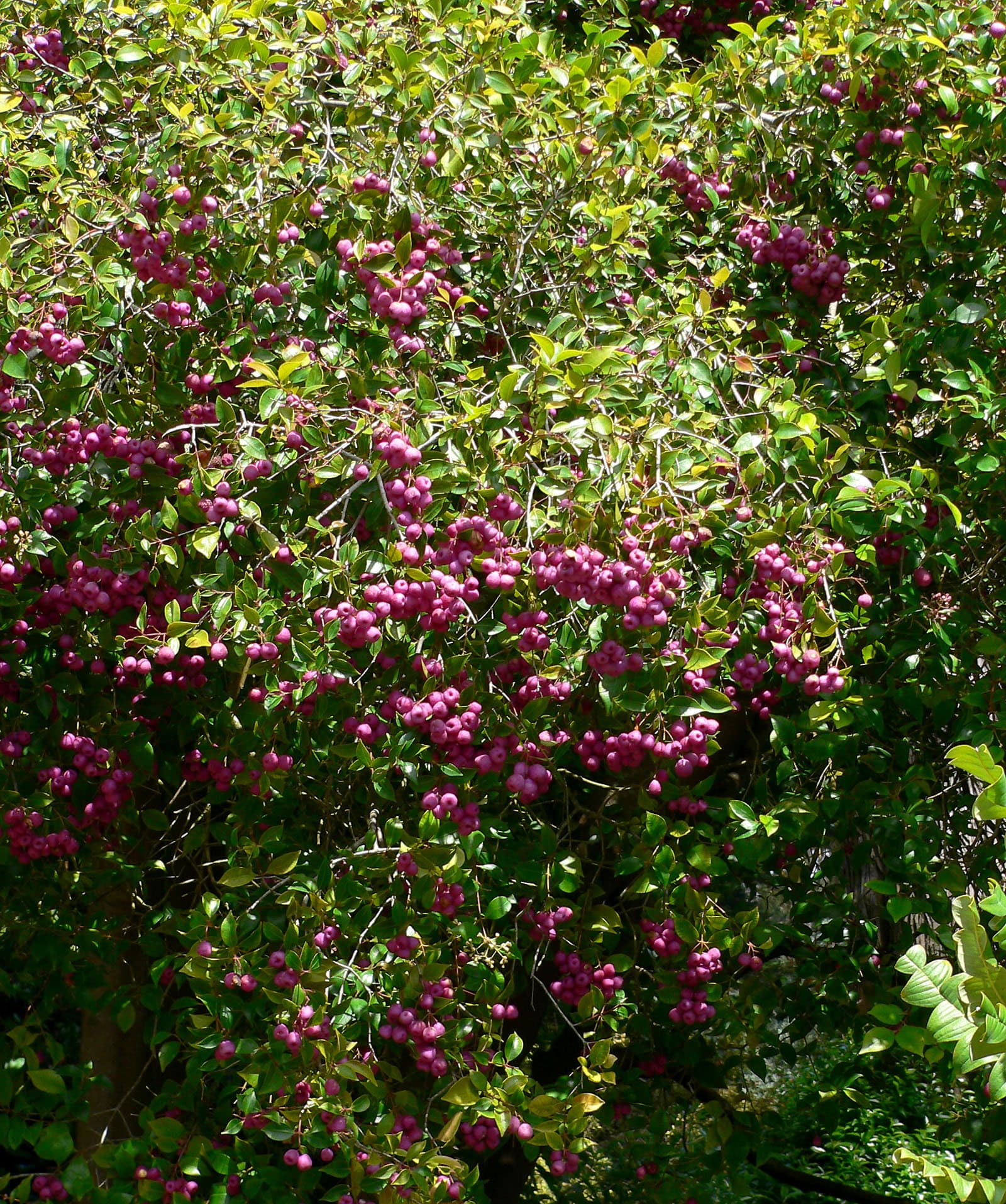
Every plant tag carries a mature height and spread, and the spread is the number that decides your bed. A lilly pilly in a 200 millimetre pot is a tidy little thing that looks like it needs half a metre, and in five or six years it wants a good deal more than that. The habit I'd build is to read the mature width, halve it, and treat that as the minimum distance from the plant's centre to anything it shouldn't swallow, whether that's a path, a wall, a window or the neighbour's plant.
Mature size also varies between varieties of the same plant, so check the specific cultivar rather than the species. A compact lilly pilly (Syzygium) selected for hedging and a full-sized one are different propositions, and it's worth asking the nursery which you're holding. Growth in a real garden also depends on sun, water and soil, so treat label figures as a guide and expect your block to nudge them up or down.
How deep should a garden bed be?
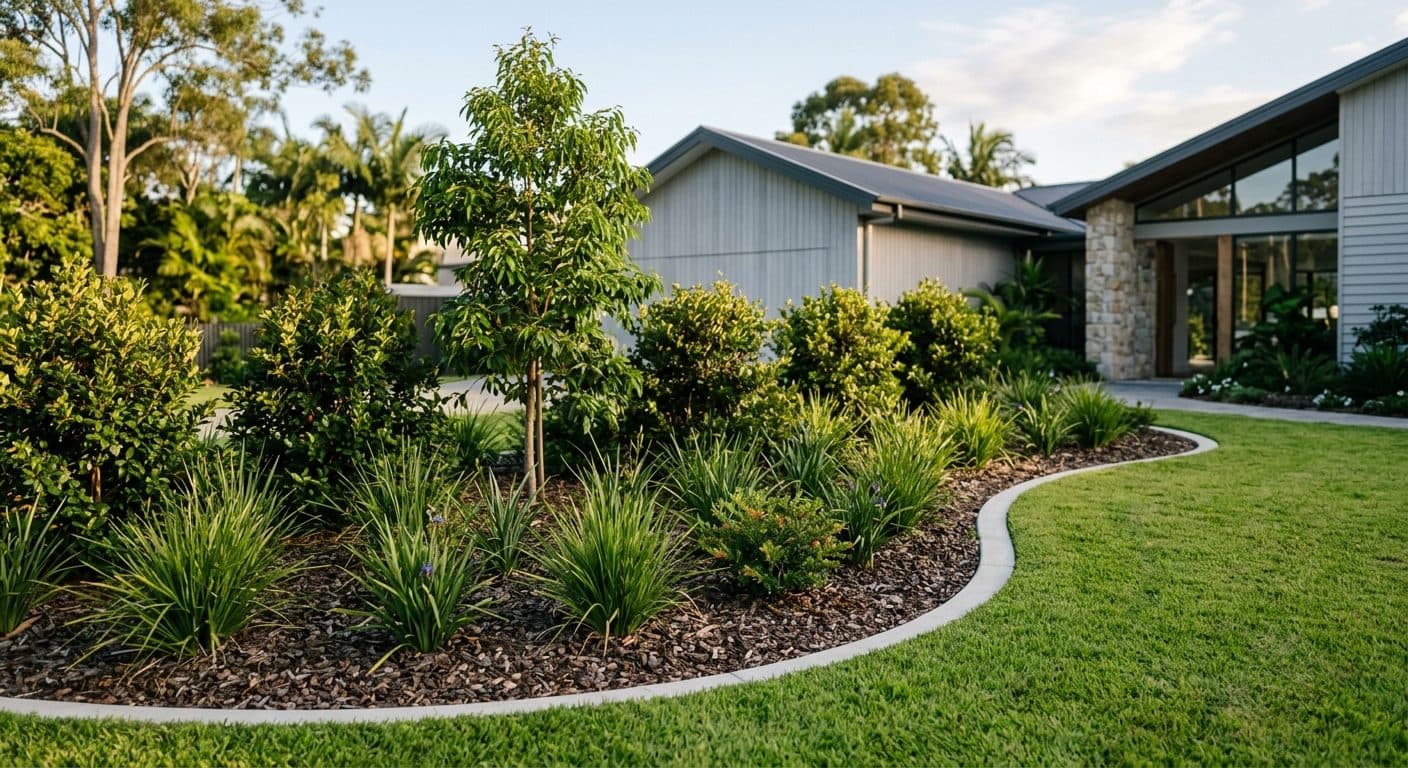
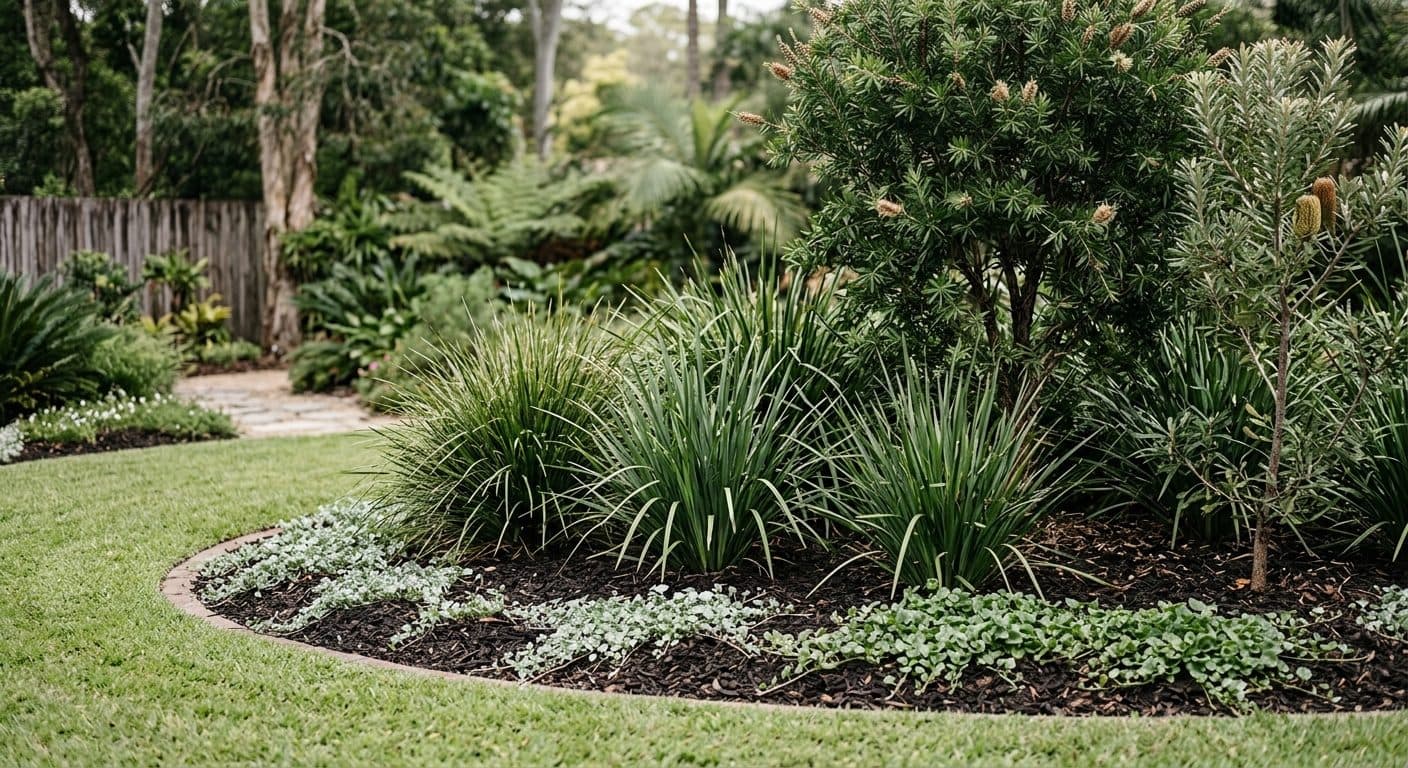
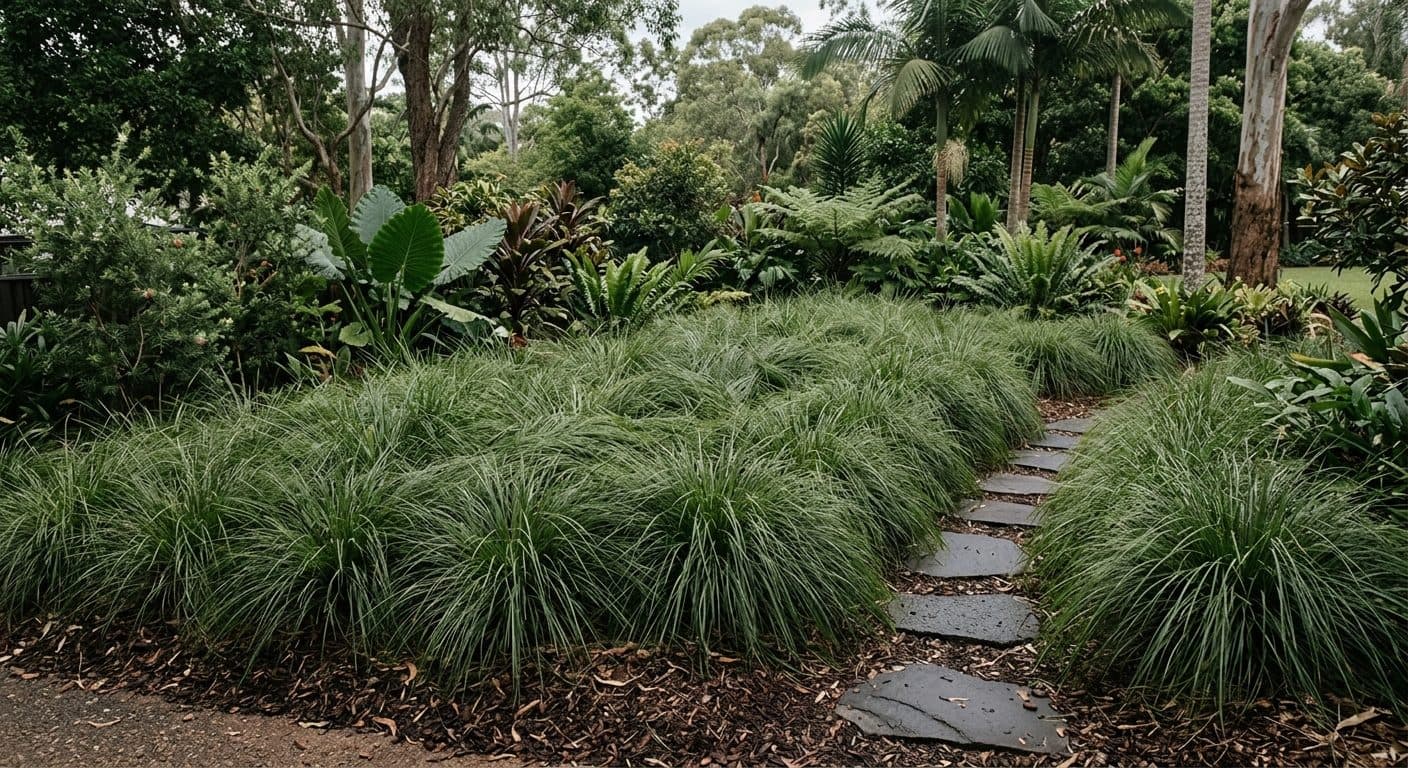
For most Brisbane gardens I'd rather see a bed too deep than too shallow. A single row of shrubs needs a bed at least as deep as the shrub's mature width, plus a little extra at the front so foliage isn't constantly brushing a path or lawn edge and getting hacked back. Once you want layers, with a taller structure plant at the back, mid-height planting in the middle and groundcover or low clumps at the front, the bed has to be properly deep to hold them, and that's where narrow strips fall apart.
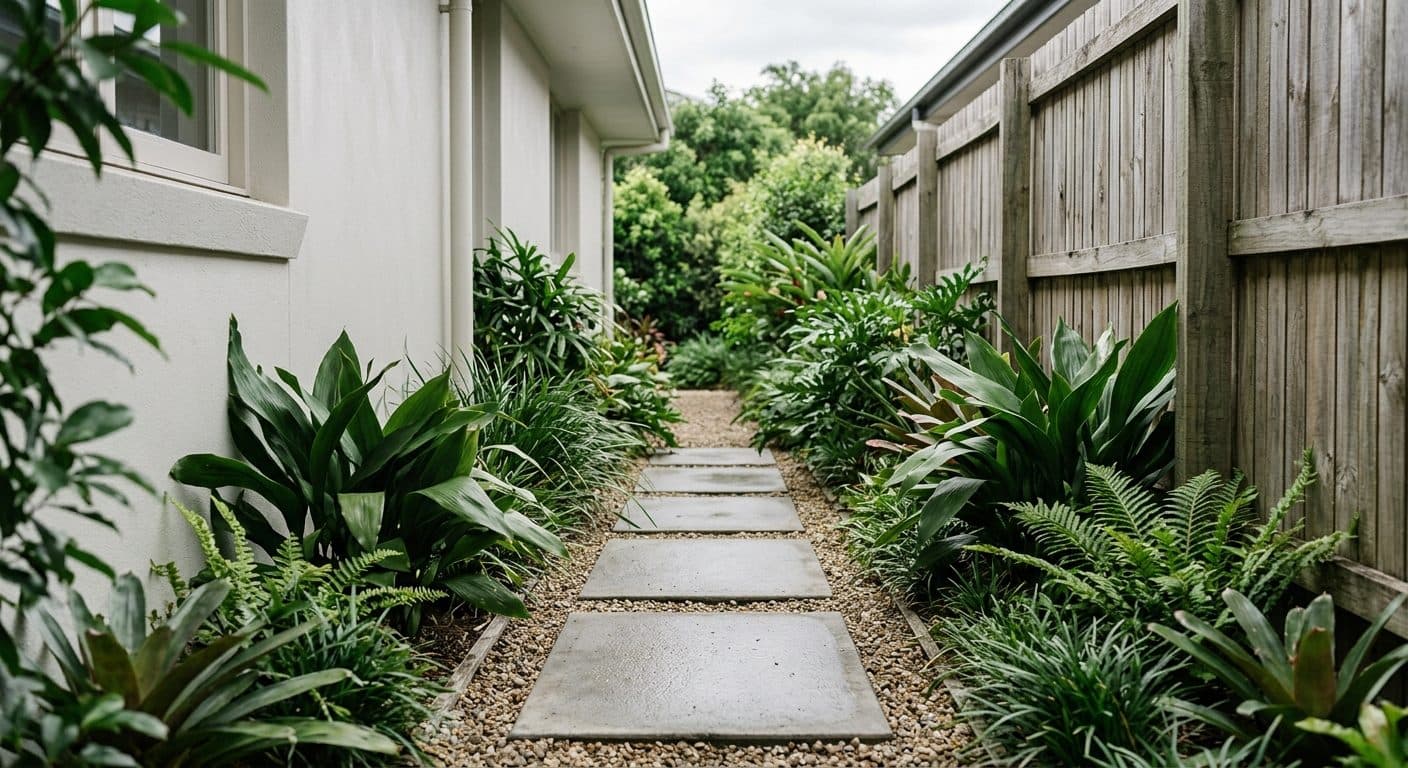
A thin bed forces you into one of two compromises. Either you plant small things that never give the garden any presence, or you plant the right things too close together and spend years pruning them back to a size they were never going to stay at. Neither is a garden that looks after itself. If you only have a narrow strip to work with, the honest fix is usually to widen the bed in the design rather than cram a layered scheme into it, and my guide to small garden design in Brisbane covers how to make the most of a tight footprint.
The overplanting trap
Planting at the right spacing feels wrong on day one. A bed of shrubs placed at their mature width looks sparse for the first season or two, and almost everyone, understandably, reaches for more plants to fill the gaps. That's the overplanting trap: a full-looking garden in year one and a congested, competing, disease-prone one by year four, with plants leaning toward the light and rubbing each other bare.
Crowded beds also hold humidity around the foliage, which is exactly what fungal problems like in a Brisbane summer, and the thinning that follows is a lot more work than leaving room in the first place. Mulch the gaps well, which also keeps weeds down, and if you need something to look generous in the meantime use a few fast, cheap fillers you plan to remove, such as quick perennials or annuals. A pair of well-chosen groundcovers or clumping plants like dianella or Lomandra 'Tanika' can carry the front of the bed while the bigger plants find their feet.
Trees and big shrubs: measure in every direction
Big plants need space in more than the two dimensions of a plan. A tree needs canopy room above, which means checking for eaves, powerlines and the neighbour's boundary, and root room below, which means keeping it a sensible distance from slabs, pools, drains and old pipes. My post on small trees for Brisbane gardens goes into how I choose them for a normal suburban block, and the same logic of picturing year ten applies to any large shrub.
It's also worth leaving a gap between the bed and the building. Plants jammed against a wall hold moisture there, block airflow and make it hard to get a ladder, a gutter clean or a pest inspector near the house. A strip of mulch or a narrow path between the garden and the wall isn't wasted space, it's access.
Screens and hedges are the exception, kind of
If you're planting a hedge or privacy screen you do want plants to knit together, so the spacing is deliberately closer than for specimen plants. Even so, the bed needs to be deep enough for the hedge at its full width, plus room to reach in and trim both faces. My guide to screening plants for Brisbane covers which species suit that job and how they behave as they mature.
A quick way to check your own bed
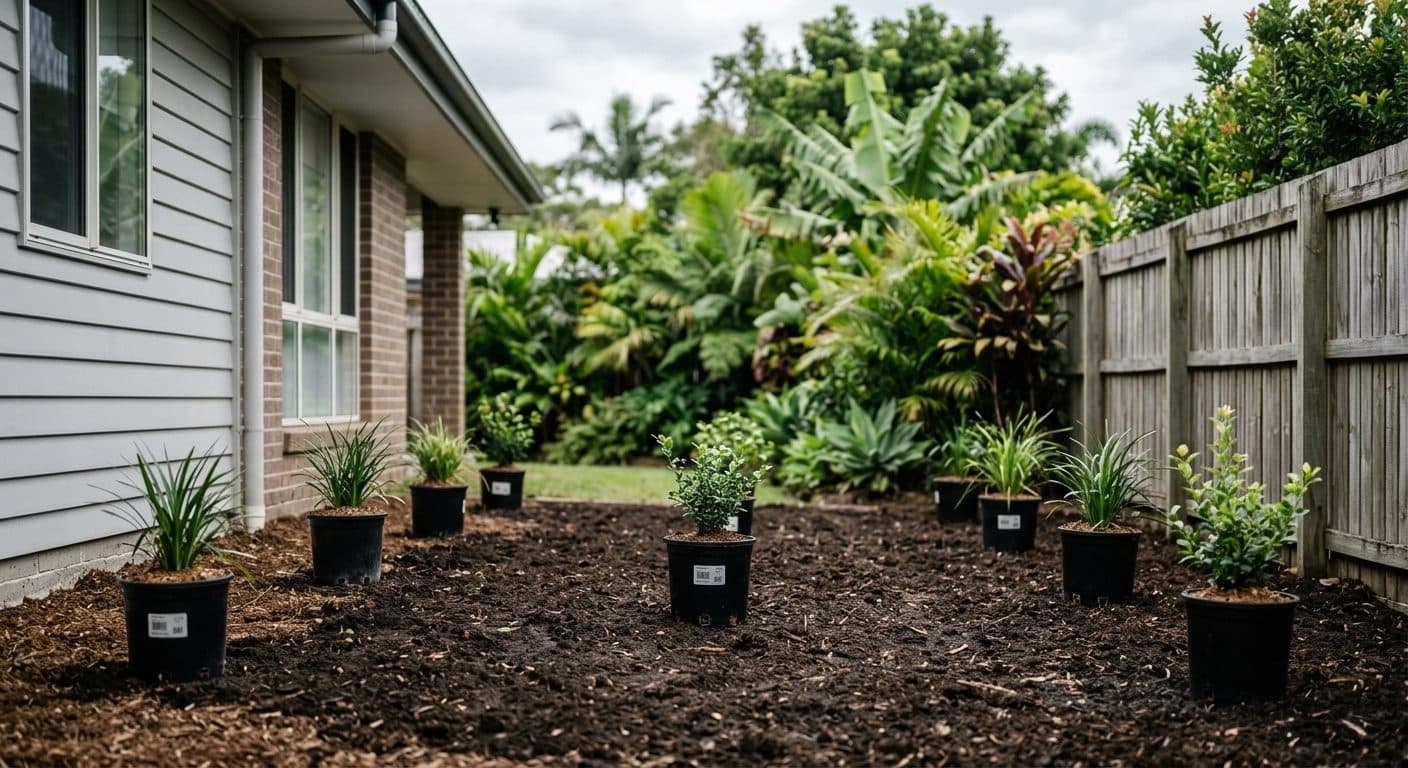
Before you plant, lay the pots out on the ground where they're going to sit, then stand back and imagine each one at its mature width, using a hose, a length of rope or some stakes and string to mark the outline of each plant's eventual spread. If the circles overlap heavily, or run onto the path, the wall or the lawn, the bed is too small for the plan. Either widen the bed, choose a smaller plant, or plant fewer of them. It takes ten minutes and saves years of pruning.
The best plants for Brisbane gardens are a good place to look for reliable options once you know how much room you've got to give them.
Working out bed depths, layers and spacing for your actual block is one of the things a Design Discovery Consultation is for, and it's often where a garden that never quite worked gets fixed on paper. It's $350 on-site within the Brisbane metro area, with any travel beyond that quoted up front when you book, and you'll leave with a clear idea of how big each bed should be and what belongs in it.
Ready to start designing?
We're currently taking on new landscape design clients across Brisbane. Reach out for a personalised quote, whether you're a homeowner or a design professional.
Book a Free Discovery Call