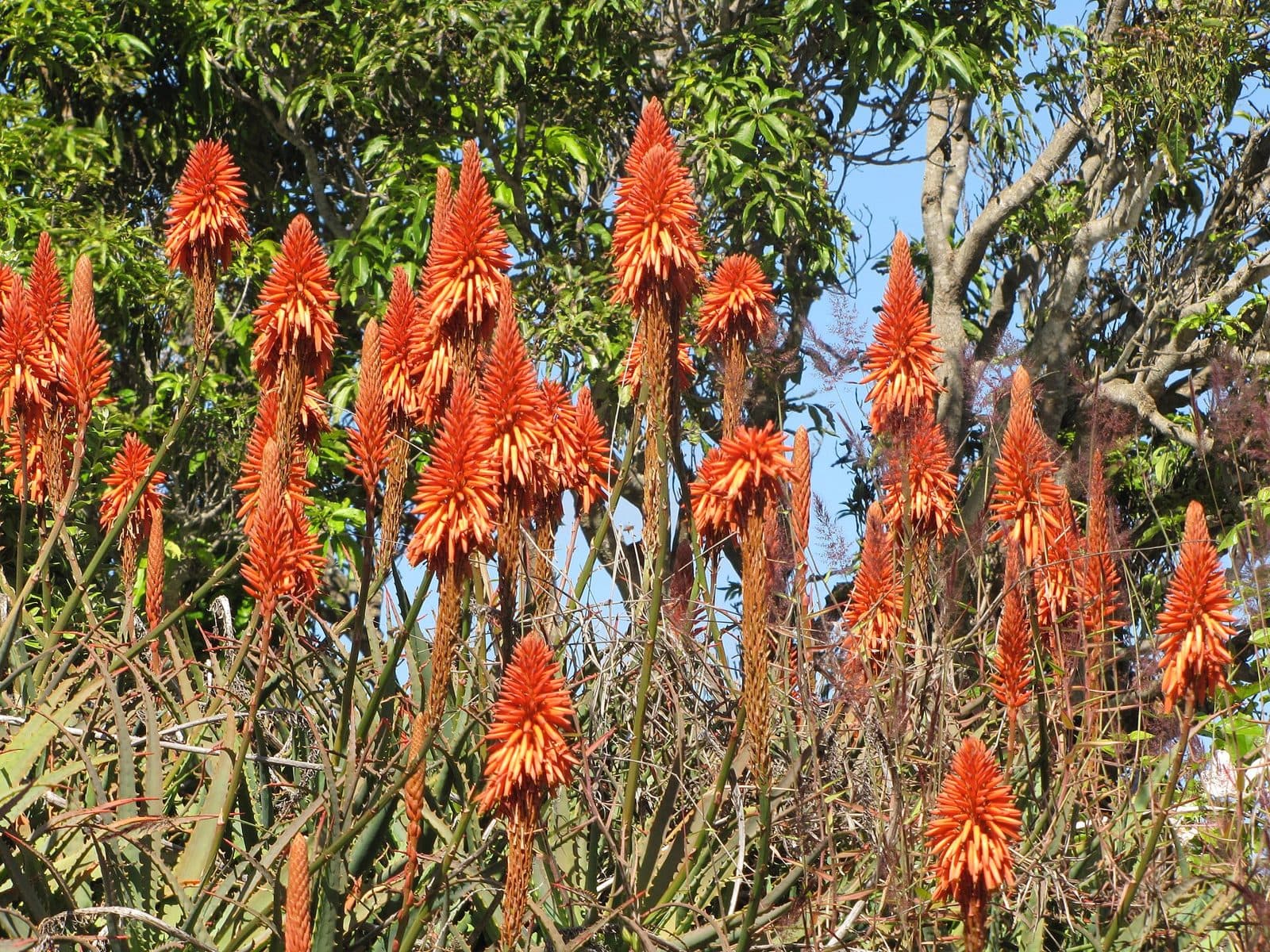
Aloe arborescens and its relatives, sculptural succulents that hold their shape through the hottest Brisbane summer and light up in winter with spikes of nectar.
Aloe arborescens · Also known as Candelabra Aloe, Krantz Aloe, Aloe vera, Torch Aloe
Aloe is the plant we reach for when a hot, dry, difficult corner needs to look deliberate rather than defeated. The rosettes of fleshy, often toothed leaves give a garden real architecture, and unlike most feature plants they ask for almost nothing in return. Aloe arborescens, the candelabra aloe, is the big landscape workhorse that can reach shoulder height and beyond, while smaller species and hybrids like the compact 'Safari' types and the familiar Aloe vera suit pots and low borders.
The reason we use aloe so often in Brisbane is timing as much as toughness. Right through winter and into spring, when little else is putting on a show, it throws up tall spikes of orange, red, coral or yellow that pull in honeyeaters and rainbow lorikeets from streets away. A plant that shrugs off the heat, drinks almost nothing and feeds the birds at the leanest time of year earns its place in most gardens we design.
In a Brisbane garden
Aloe and Brisbane heat are a natural match, but the plant has one firm requirement that decides everything: drainage. Aloes store water in their leaves, so they rot from the base when the soil around them stays wet, and our summer storms sitting in a heavy clay hollow are exactly the conditions they cannot survive. Give them a raised bed, a slope, a gritty sandy mix or a hot dry bank and they thrive on neglect. Get the drainage wrong and no amount of care will save them. That single rule is why we treat aloe as a structure and feature plant rather than something to scatter through a lawn area.
The other Brisbane consideration is humidity settling in the crown of the rosette, which encourages the same rot that wet feet do. We plant aloes with a little air around them and often on a mound or bank so water and moist air drain away rather than pool. Frost is only a worry in the coldest inland pockets, where the more tender species want a warm, protected spot; along the coast and across most of the city they are effectively bulletproof. They also handle salt-laden wind well, which makes them a genuinely useful plant for exposed positions.
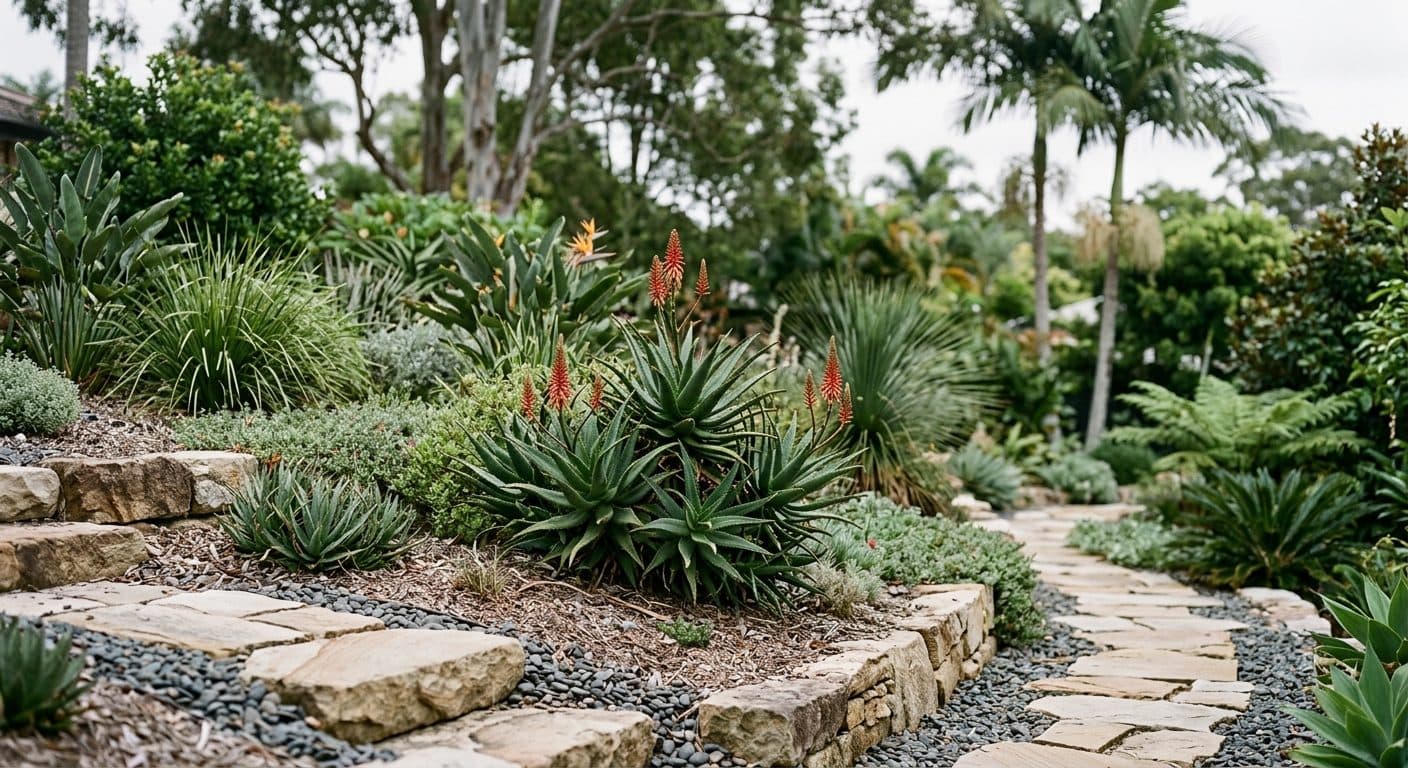
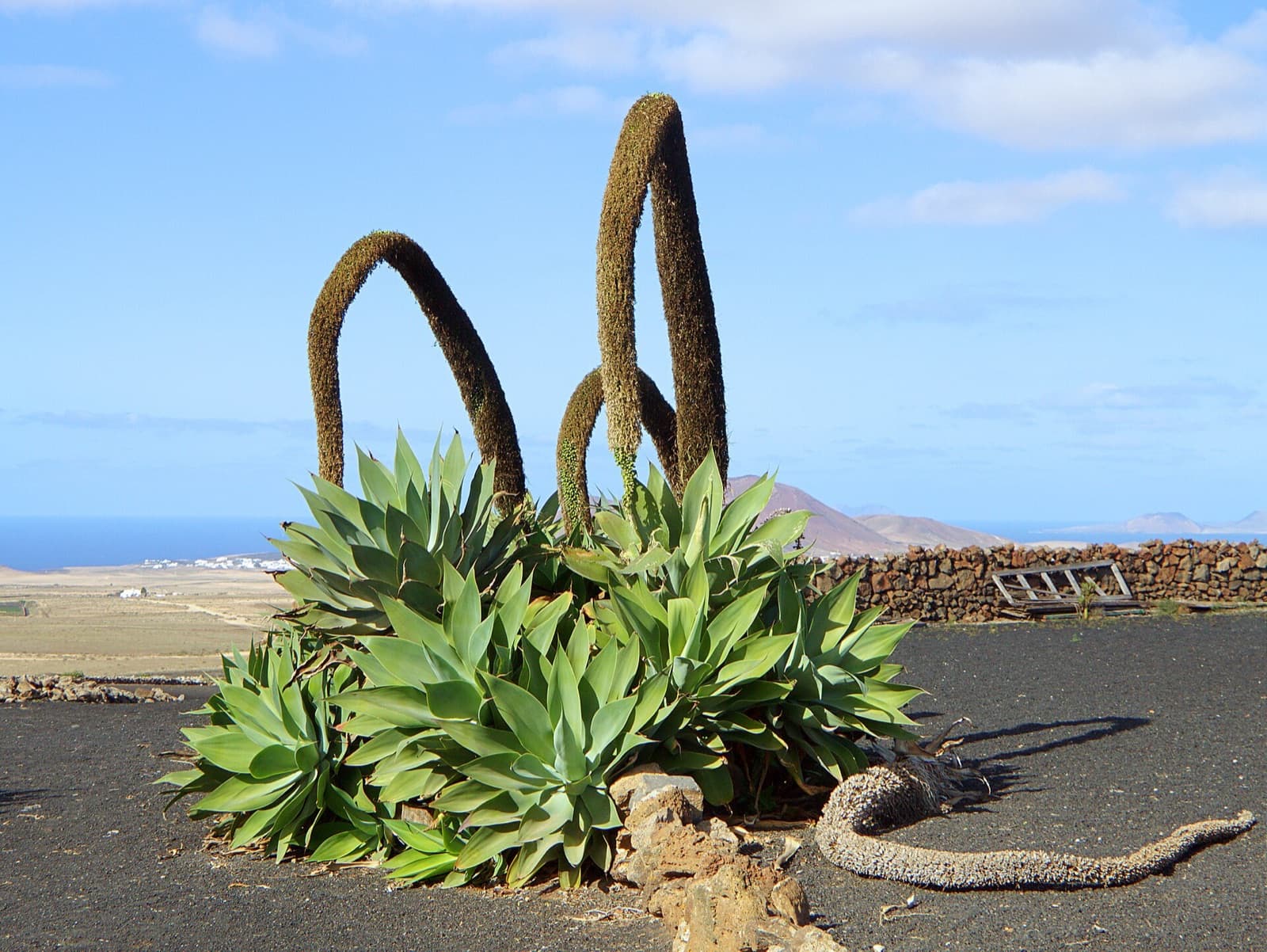
Photo: Forest and Kim Starr, CC BY 3.0, via Wikimedia Commons
How we design with it
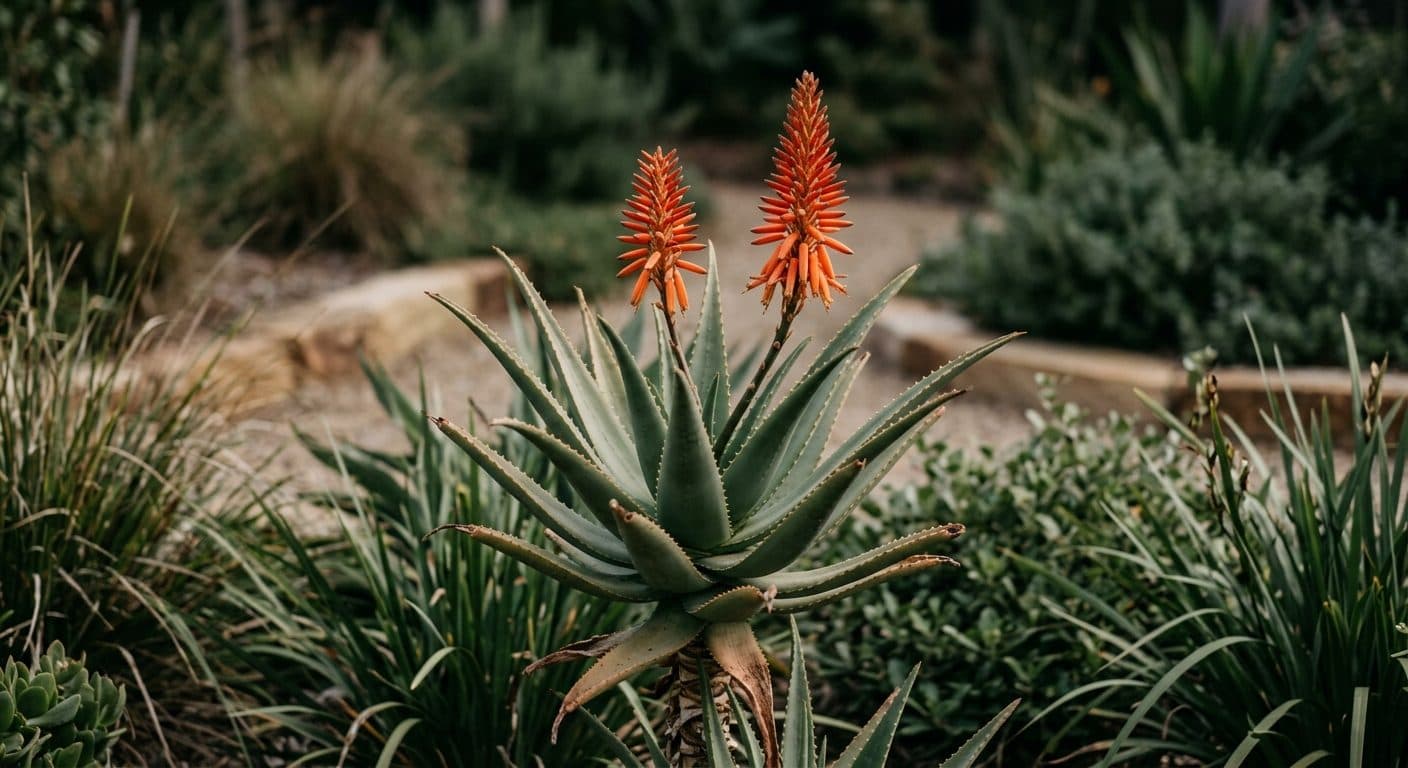
We use aloe as living sculpture, placing the larger forms where a garden needs a clear focal point and letting the rosettes read against something plain like a rendered wall, a gravel field or a low band of groundcover. Its most natural companion is agave, which shares the same love of heat and sharp drainage while offering a smoother, more geometric leaf to play against aloe's toothed edges. We layer in textural grasses and tough groundcovers to soften the base, and often add another rugged form such as a bromeliad where a pop of colour and a different leaf shape helps the planting feel composed rather than spiky.
The conditions aloe wants also happen to be the conditions that defeat most other plants, which is why it does so much work in a coastal garden on a hot western bank or a fast-draining sandy site. It is a mainstay of the low-maintenance planting we design for owners who want structure without a weekend of upkeep, and the winter flower spikes make it a quiet hero of a native-friendly, bird-attracting garden even though the plant itself is an exotic. Where drainage or aspect is genuinely marginal, the right species and the right position are the whole decision, and that is exactly the sort of call we work through in a design consultation before anything goes in.
Where we write about aloe
Common questions
Want structure that thrives on Brisbane heat?
We're currently taking on new landscape design clients across Brisbane. Reach out for a personalised quote, whether you're a homeowner or a design professional.
Book a Free Discovery Call