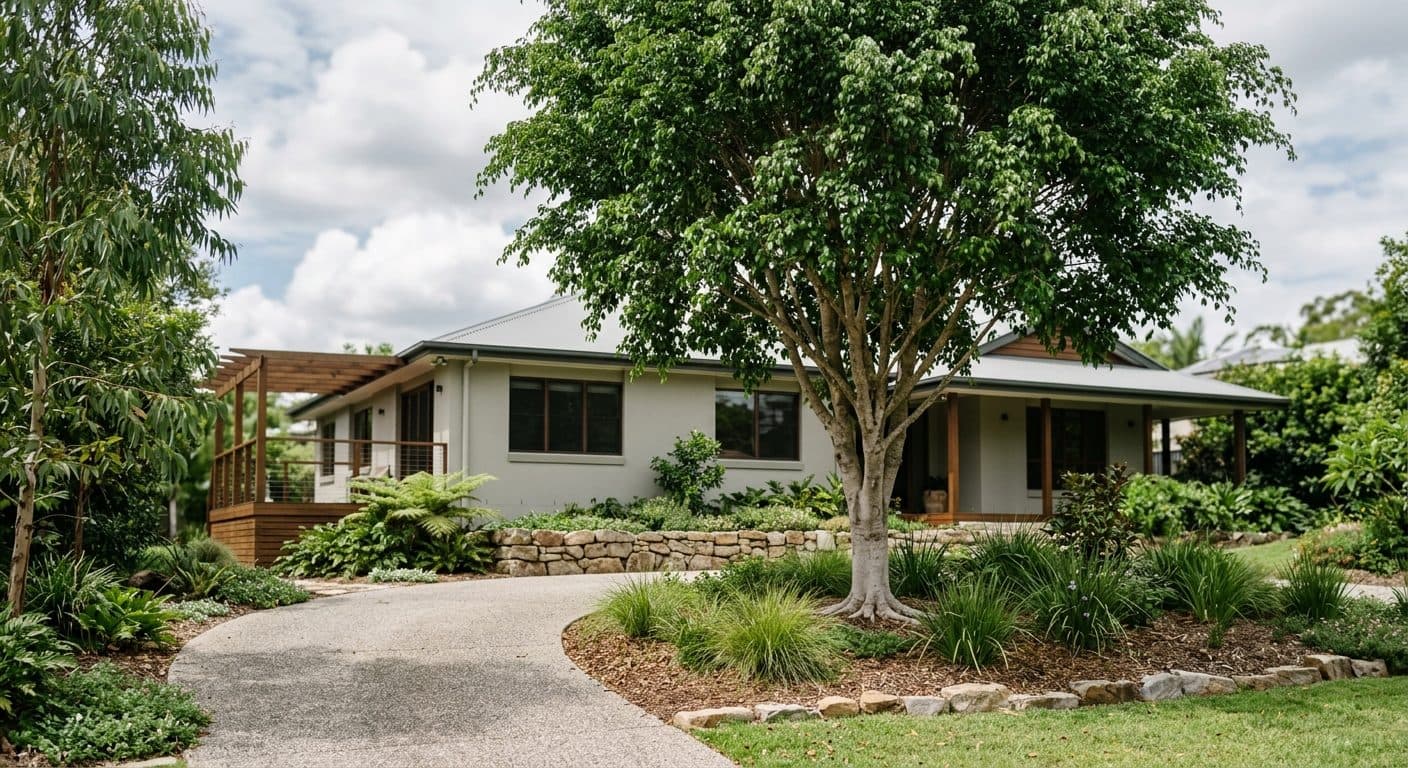
A tree in the wrong spot lifts slabs, cracks pools and hunts out pipes long after you've forgotten you planted it. Here's how far to keep trees from the house, which Brisbane roots to fear, and the well-behaved picks I actually plant.
By Shannon Trevisiol, Landscape Designer, Brisbane · 6 min read
- A tree's roots roughly mirror its canopy, so the mature spread is the number that decides where it can safely go, not the size in the pot.
- Keep large trees well clear of the house, paving, pool shell and underground pipes: roots go looking for water and lift whatever's in the way.
- Brisbane's classic offenders are the big figs, poincianas, jacarandas and camphor laurels: gorgeous, and only for blocks with real room.
- For normal suburban blocks, choose a naturally smaller, better-behaved tree over a giant you'll spend years managing.
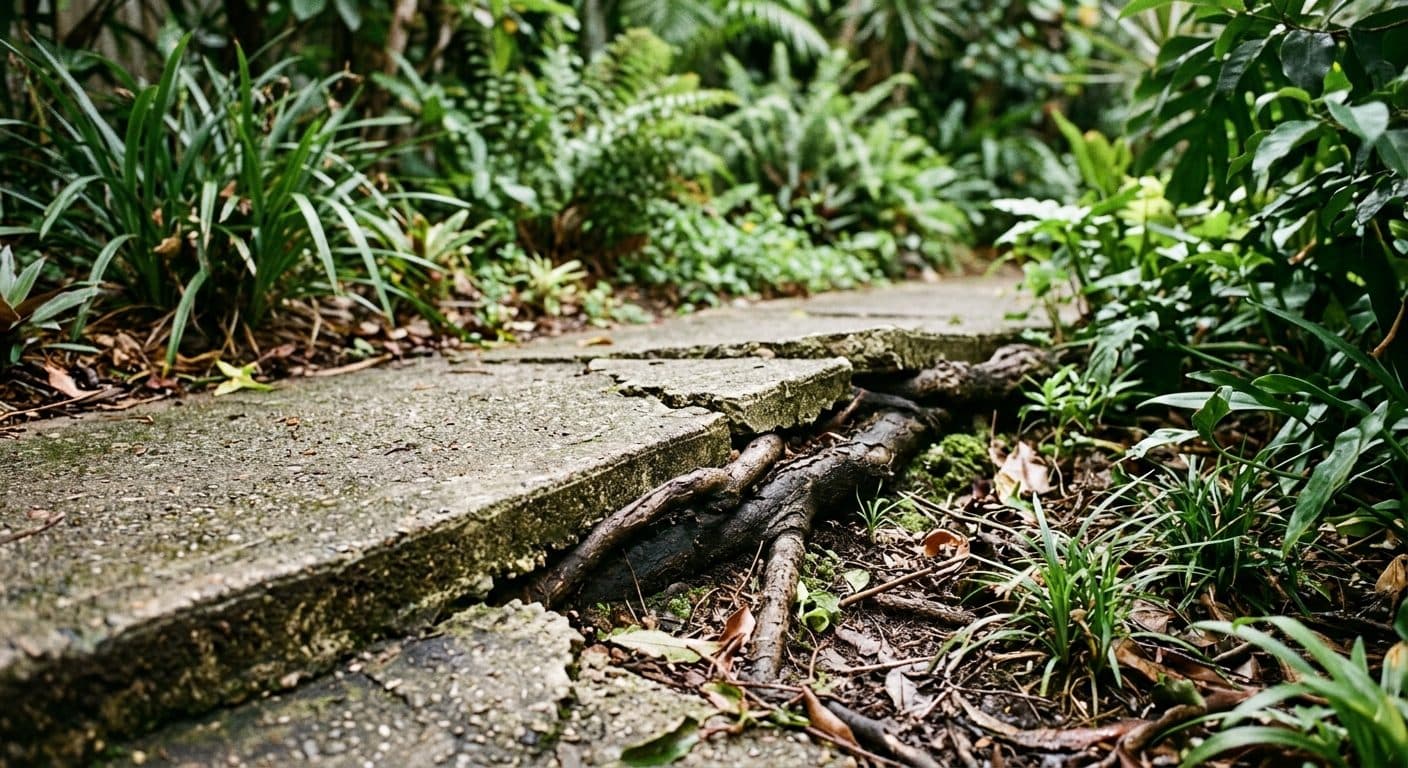
A tree is the one thing you plant that outgrows every other decision on your block, and the roots you can't see are usually the ones that cost you. Get the placement right and a tree gives you shade, privacy up high and a garden with a ceiling for fifty years. Get it wrong and, long after you've forgotten planting the charming thing from the nursery, you're looking at a lifted driveway, a cracked path, a pool shell under pressure or roots into an old earthenware pipe, and none of those is a cheap Saturday. The good news is that where to plant a tree, and which trees to keep well away from the house, comes down to a few reliable rules rather than luck.
Roots roughly mirror the canopy
The most useful mental model is the simplest: a tree's root system broadly mirrors its canopy, spreading out to find the water and stability the crown needs, and often reaching well beyond the drip line. So the number that decides safe placement isn't the height on the label, it's the mature spread, because that's roughly the radius the roots will explore. When you stand on the spot picturing the tree, picture the roots as a mirror image underground, and ask what's within that circle: the house footings, the driveway, the paving, the pool, the retaining wall and, crucially, the pipes you can't see. If something important sits inside that mirrored canopy, the tree is too close, and no amount of hoping will change where the roots want to go. Thinking in mature dimensions this way is the same habit that underpins choosing small trees for Brisbane gardens in the first place.
The distances that matter
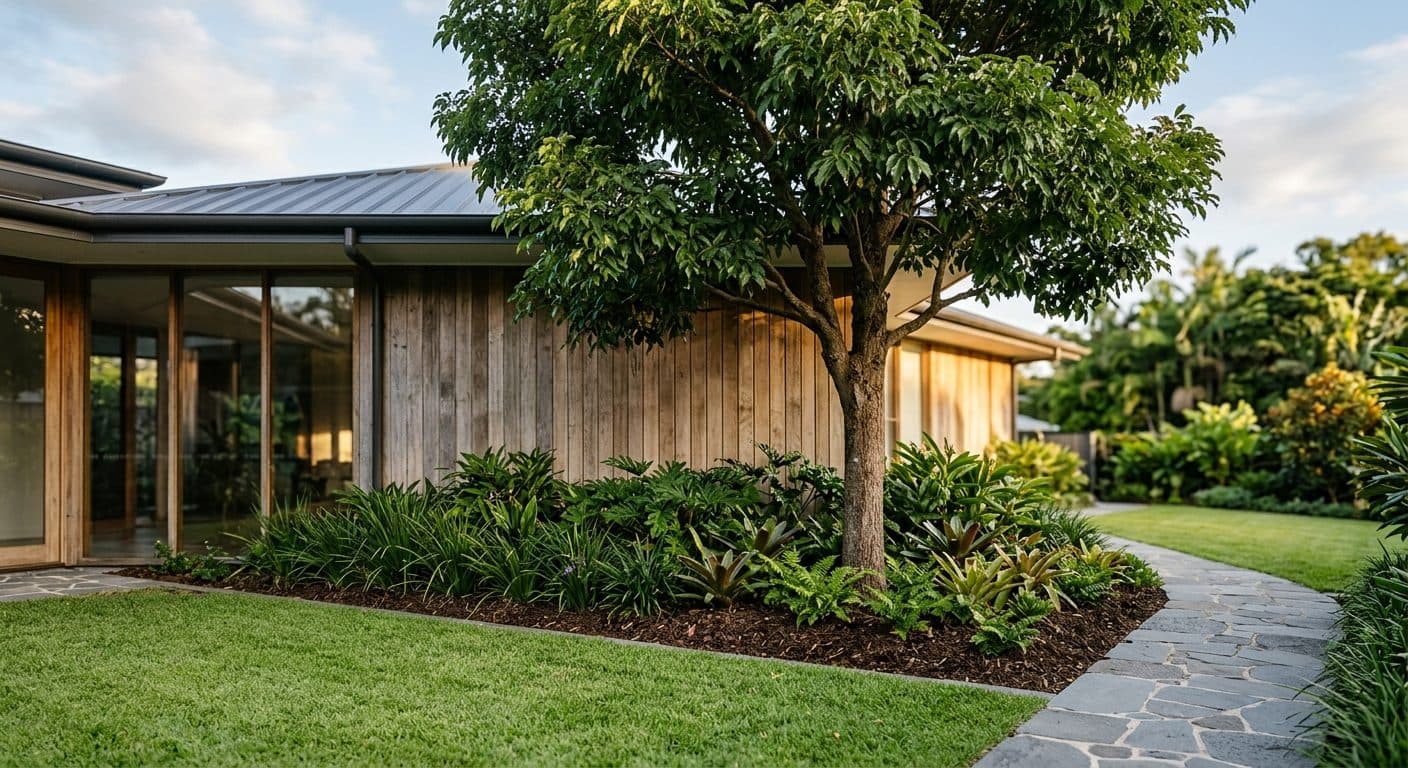
There's no single legal number that fits every tree and every block, so treat these as sensible starting points rather than rules, and give bigger trees more room than you think. A large tree wants to sit well back from the house, ideally at least as far as its mature height from the footings, so a canopy that shades the west wall in summer doesn't put roots under the slab. Keep any sizeable tree clear of the pool, because a root under a shell or against the coping is a genuinely expensive problem, and clear of the driveway and main paths, where a surfacing root turns into a trip hazard and a repair bill. The invisible one that catches people is underground services: old clay sewer and stormwater pipes leak slightly at the joints, roots find that moisture and grow into it, and a mature tree over the sewer line is asking for a plumber. If you don't know where your services run, it's worth finding out before you dig, not after.
Look up as well
Before you commit to a spot, stand on it and look straight up. If there are powerlines overhead, the mature canopy simply can't share that airspace, and the network provider will prune it on their schedule and to their shape rather than yours, which is how a beautiful tree ends up with a brutal channel cut through its middle. Boundary and footpath setbacks matter too, and those requirements change over time, so it's worth checking the current Brisbane City Council rules or letting your certifier or arborist confirm what applies to your street before planting near a boundary or the verge.
The Brisbane offenders (and why we still love them)
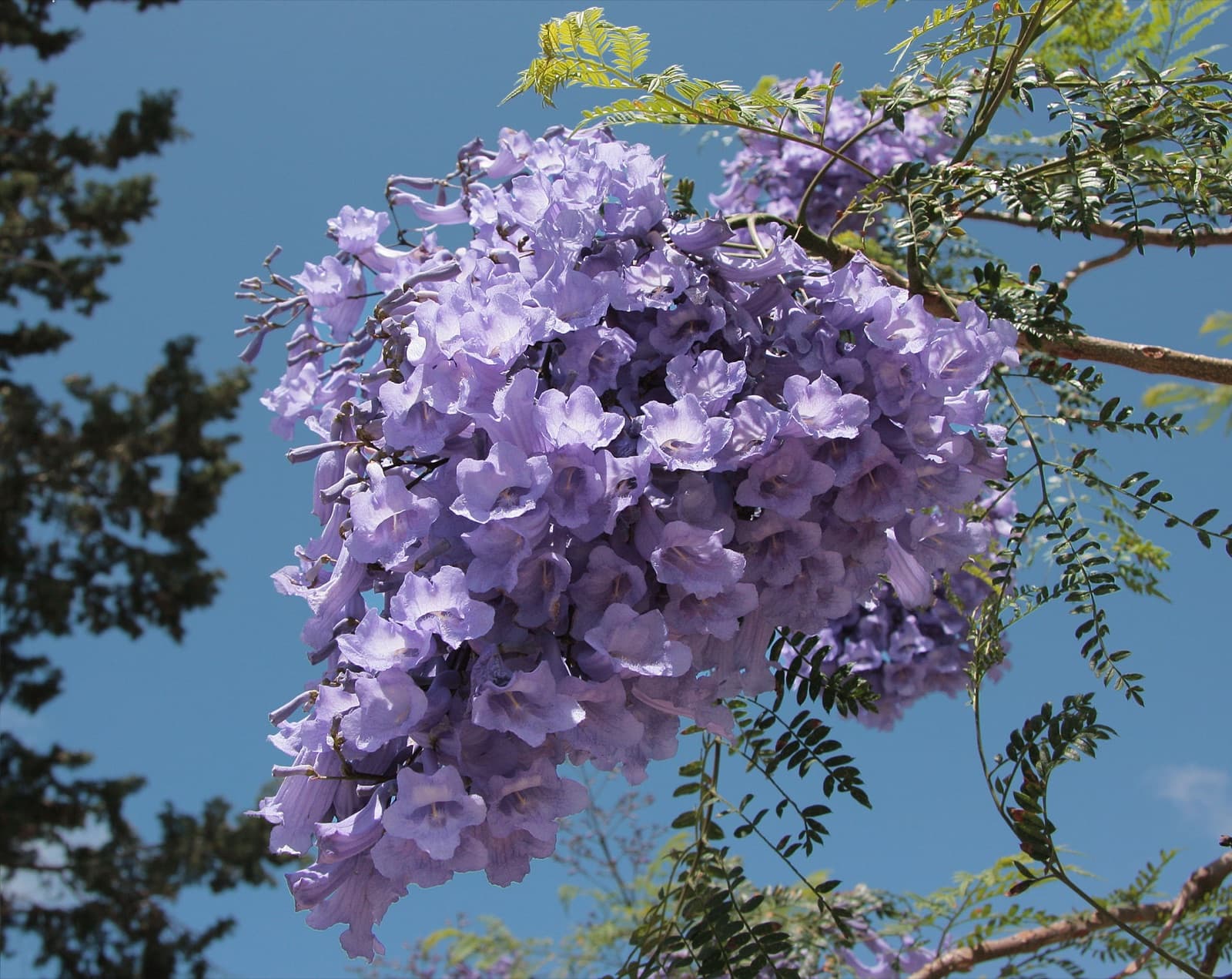
Some trees earn their invasive-root reputation honestly, and they're often the ones Brisbane is most sentimental about. The big figs, Moreton Bay and weeping fig especially, have aggressive, far-reaching roots that lift everything and belong only on acreage or in a park. The poinciana is a glorious summer canopy and a genuinely large tree with surface roots to match, wonderful on a big block and a menace over a small one. The jacaranda is gentler but still wants real room for its spread, and the old camphor laurels, while lovely, are a weedy, greedy-rooted problem you shouldn't be planting at all. None of these is a bad tree; they're just big trees that people keep putting on small blocks, and the mismatch is what causes the grief. If you love the flowering giants, my flowering trees for Brisbane gardens guide spells out which ones need space and which stay polite.
What I actually plant near buildings
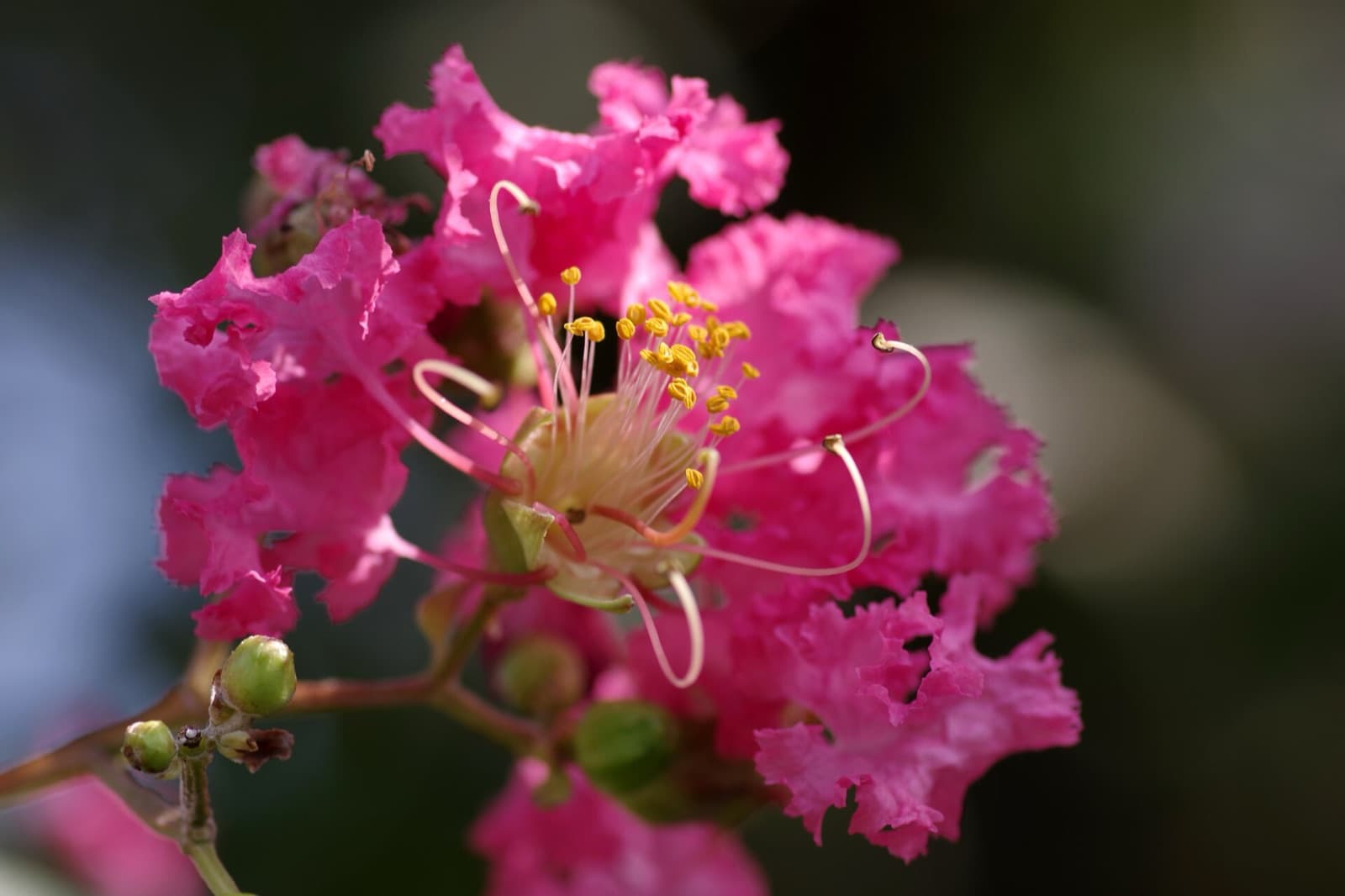
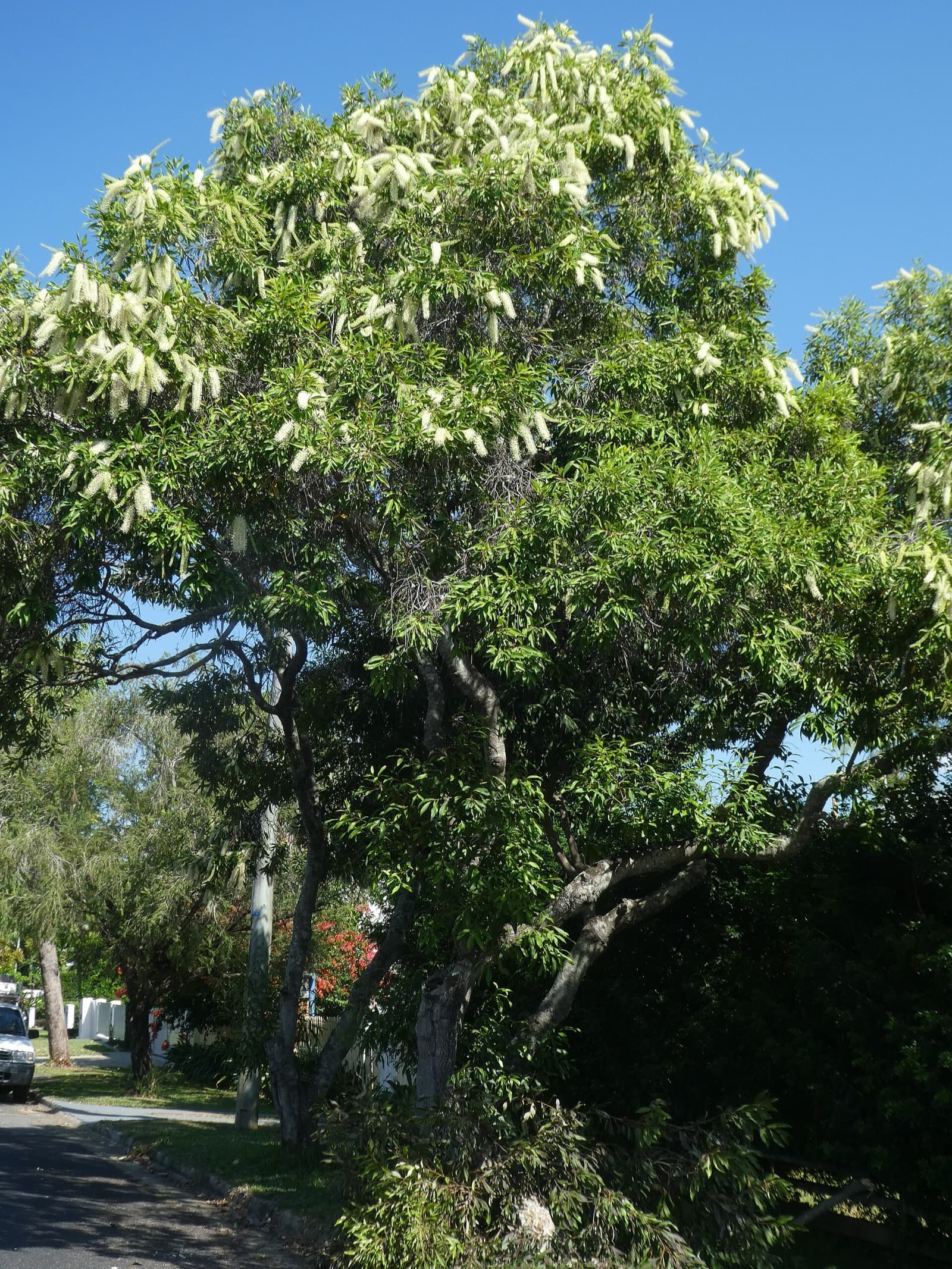
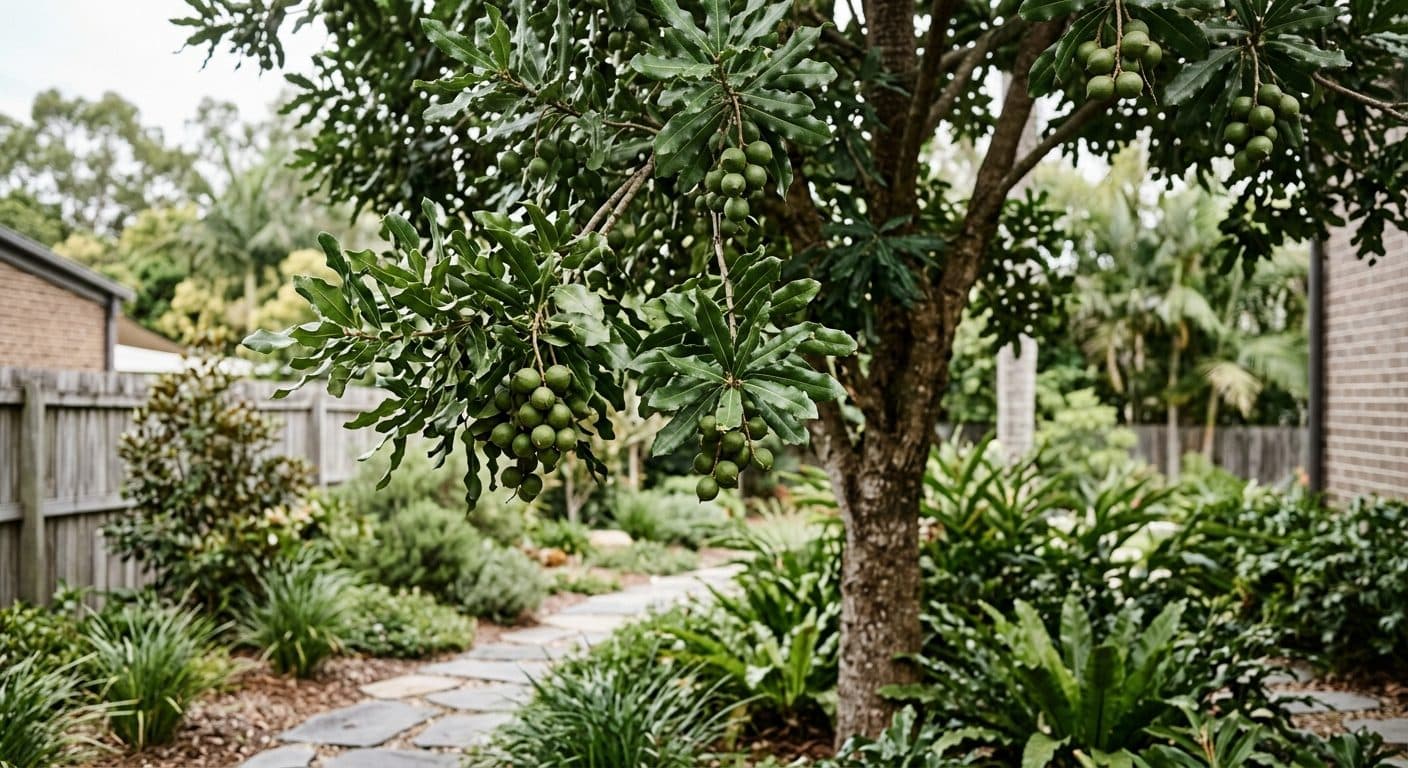
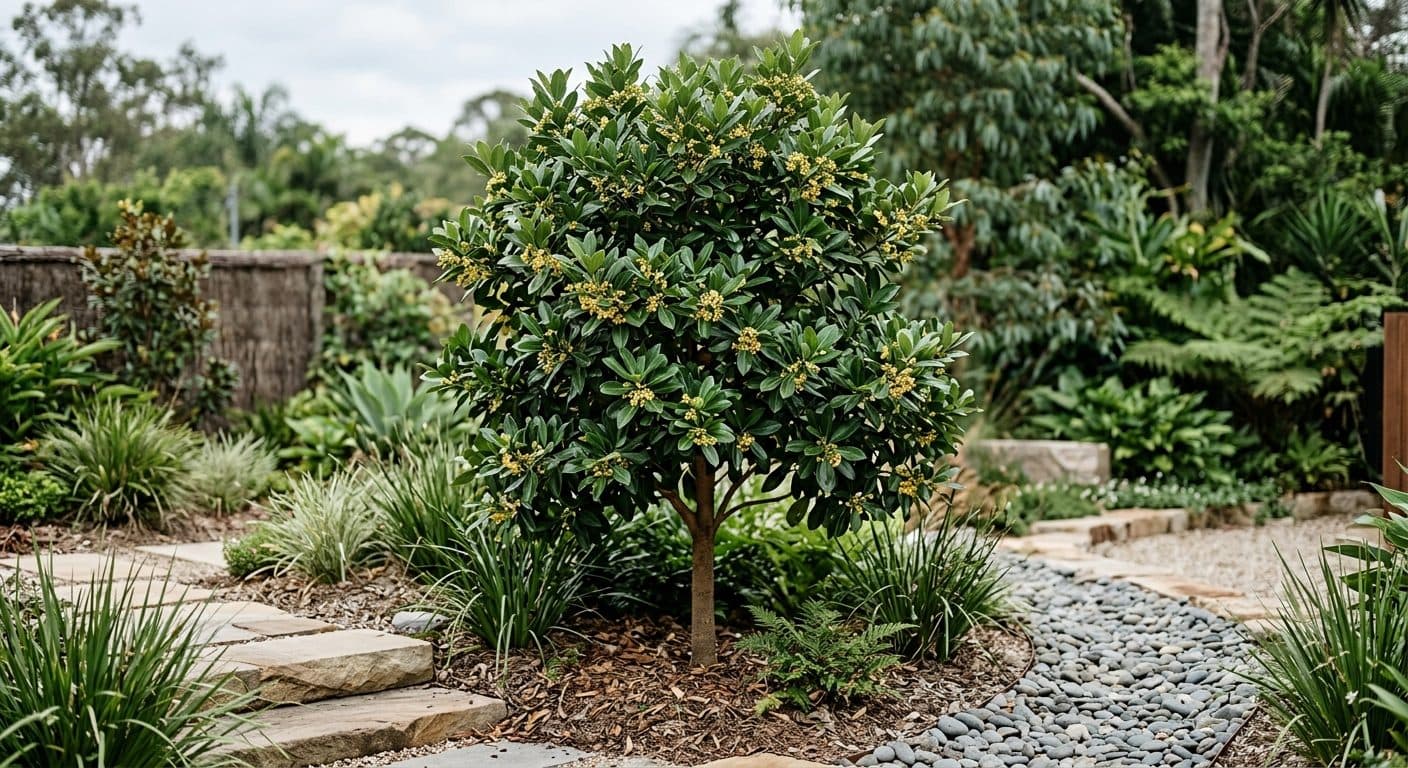
On a normal suburban block I'd almost always choose a naturally smaller, better-behaved tree over a giant I'll spend decades managing, because the tree that never threatens the slab is worth more than the one that looks spectacular for a photo and cracks the path by year twelve. The tuckeroo (Cupaniopsis anacardioides) is a tough, rounded native that takes wind and poor soil and behaves near paving, the water gum (Tristaniopsis 'Luscious') is a glossy, well-mannered evergreen with a non-invasive habit that suits narrow blocks and driveways, and the ivory curl tree (Buckinghamia celsissima) and crepe myrtle (Lagerstroemia) both stay modest and flower generously without going hunting for your pipes. If you'd like something productive, the native macadamia (Macadamia integrifolia) grows into a proper shade tree over time on a block with room. For the wider palette to build around whichever you choose, the best plants for Brisbane gardens sorts the rest by the job each one does.
Working out exactly which tree suits your block and precisely where it belongs, clear of the things it could damage and shading the spots you actually use, is a large part of what a Design Discovery Consultation is for. It's $350 on-site within the Brisbane metro area, with any travel beyond that quoted up front when you book, and you'll leave knowing what to plant and, just as usefully, where not to.

Ready to start designing?
We're currently taking on new landscape design clients across Brisbane. Reach out for a personalised quote, whether you're a homeowner or a design professional.
Book a Free Discovery Call