The right flowering trees give a Brisbane garden a different colour every season, from jacaranda purple in spring to poinciana red at Christmas. Here's what flowers when, how big each really gets, and where it belongs.
By Shannon Trevisiol, Landscape Designer, Brisbane · 6 min read
- A considered mix of flowering trees gives you colour across the year: jacaranda in spring, poinciana at Christmas, crepe myrtle right through the hot months.
- Match the tree to the block: jacaranda and poinciana are large and need real room, while crepe myrtle and ivory curl stay modest.
- A deciduous flowering tree earns its keep twice, with a season of colour and then bare branches that let the low winter sun back onto the house.
- Beautiful and big-rooted often go together, so pair this with sensible placement well clear of slabs, pools and pipes.
Brisbane does flowering trees better than almost anywhere, and a garden that's planned around them changes colour with the calendar rather than sitting the same shade of green all year. The trick is to choose for succession, so something is always coming into flower, and to be honest about size, because the most spectacular flowering trees are usually the biggest ones, and a giant in the wrong spot is a problem no amount of bloom makes up for. Here's a colour calendar of the flowering trees I reach for in Brisbane gardens, what flowers when, and where each one actually belongs.
Spring: the jacaranda moment
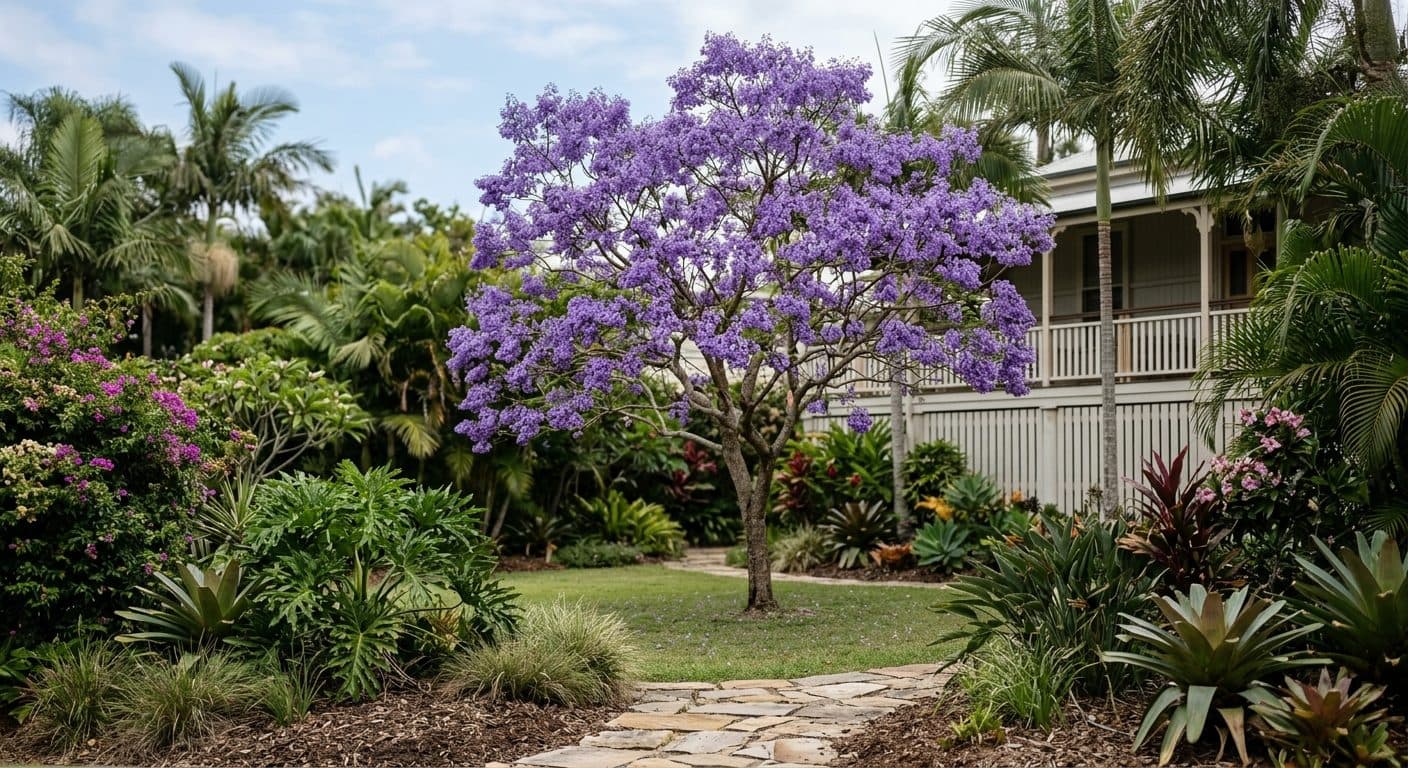
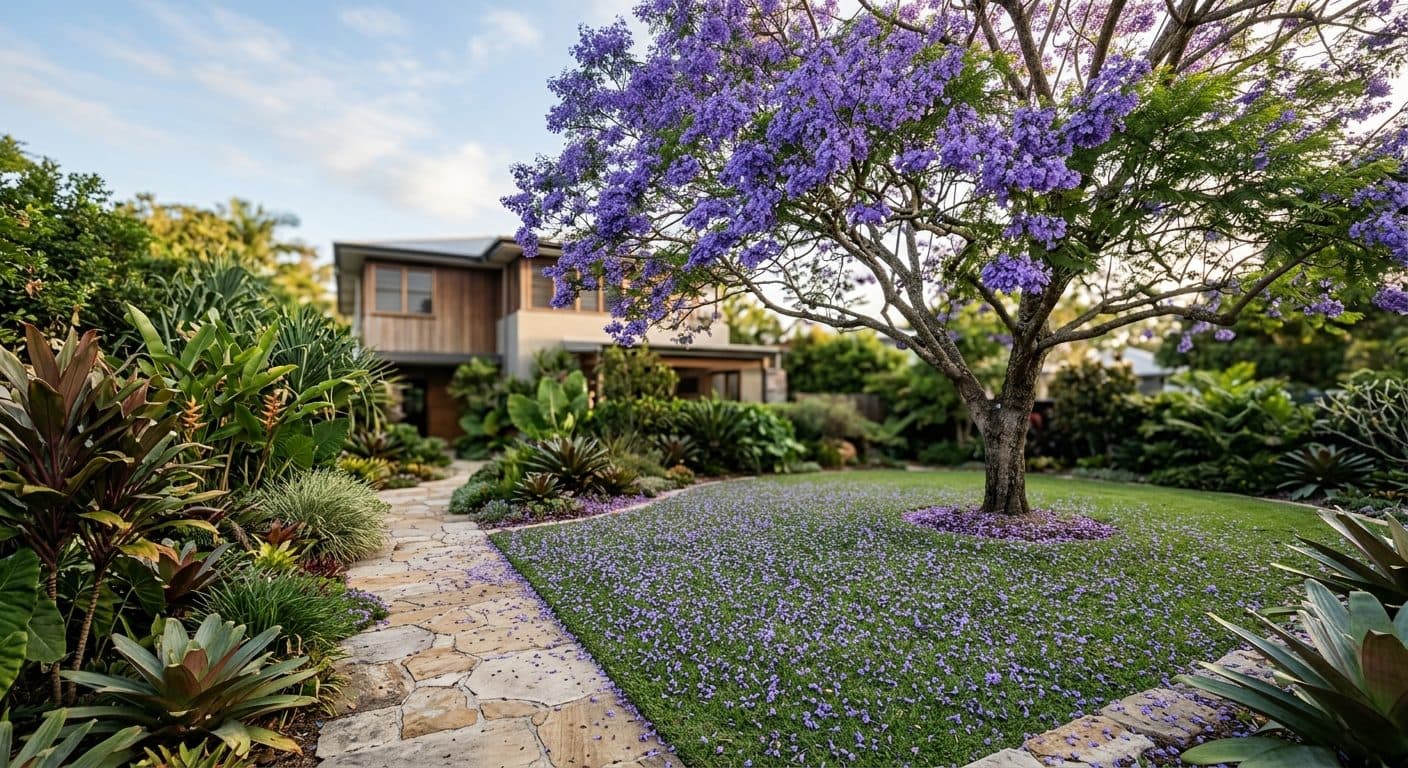
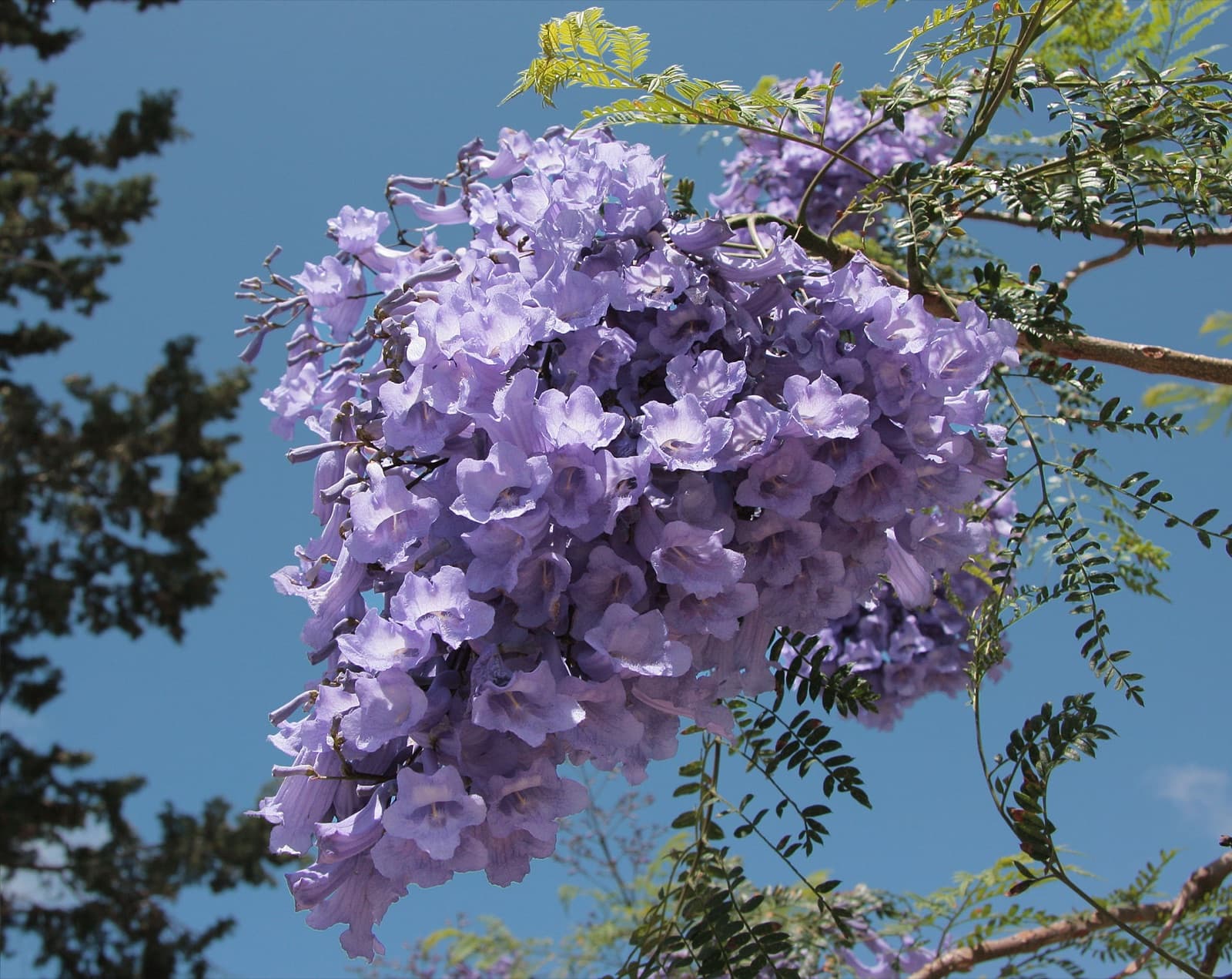
Nothing announces spring in Brisbane like the jacaranda (Jacaranda mimosifolia), which drops its leaves, covers itself in a haze of soft purple flowers from about October, and then carpets the ground beneath in the same colour. It is the city's sentimental favourite for good reason, and it is also a genuinely large tree that wants real room for its spreading canopy, so it belongs on a block that can give it space rather than squeezed against a house. Plant it where you can look at it from a distance and where the flower and leaf drop won't clog a pool or a gutter, and it will reward you every spring for decades. If your block can't take something that big, the good news is that spring has gentler options too, and the point of a colour calendar is that you don't need every tree to be the giant.
Early summer and Christmas: poinciana red
As the jacaranda finishes, the poinciana (Delonix regia) takes over, unfurling its broad umbrella canopy and setting it alight with scarlet-orange flowers through late spring and into summer, which is why so many of us associate that fiery red with Christmas. The poinciana is a magnificent shade tree and an unapologetically big one, with a wide spreading crown and surface roots to match, so it is a tree for a large block or a park rather than a courtyard. Give it the space it needs and it becomes the tree the whole street knows; put it on a small block and you'll be managing roots and shade forever. It's the classic example of a tree worth planting only where it can be itself.
The long haul: crepe myrtle through the hot months
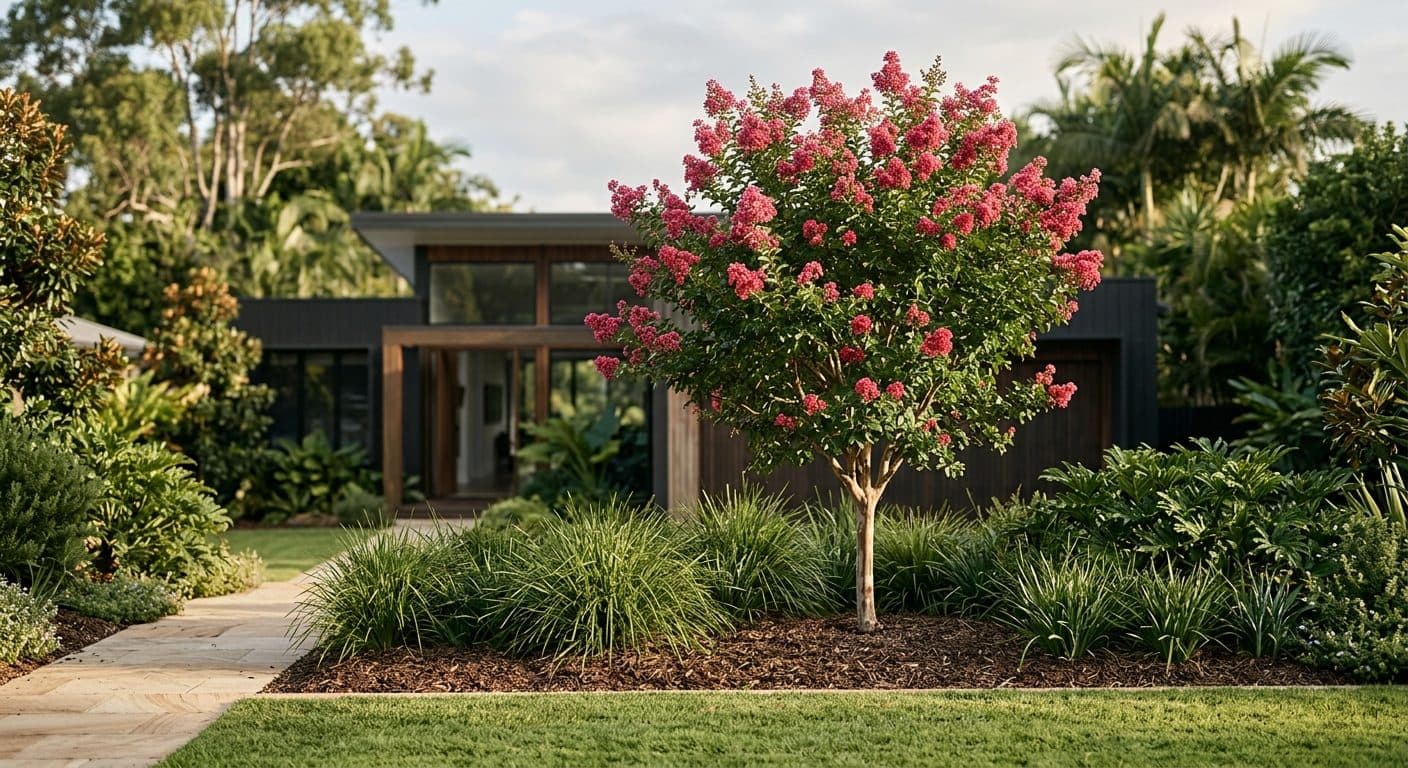
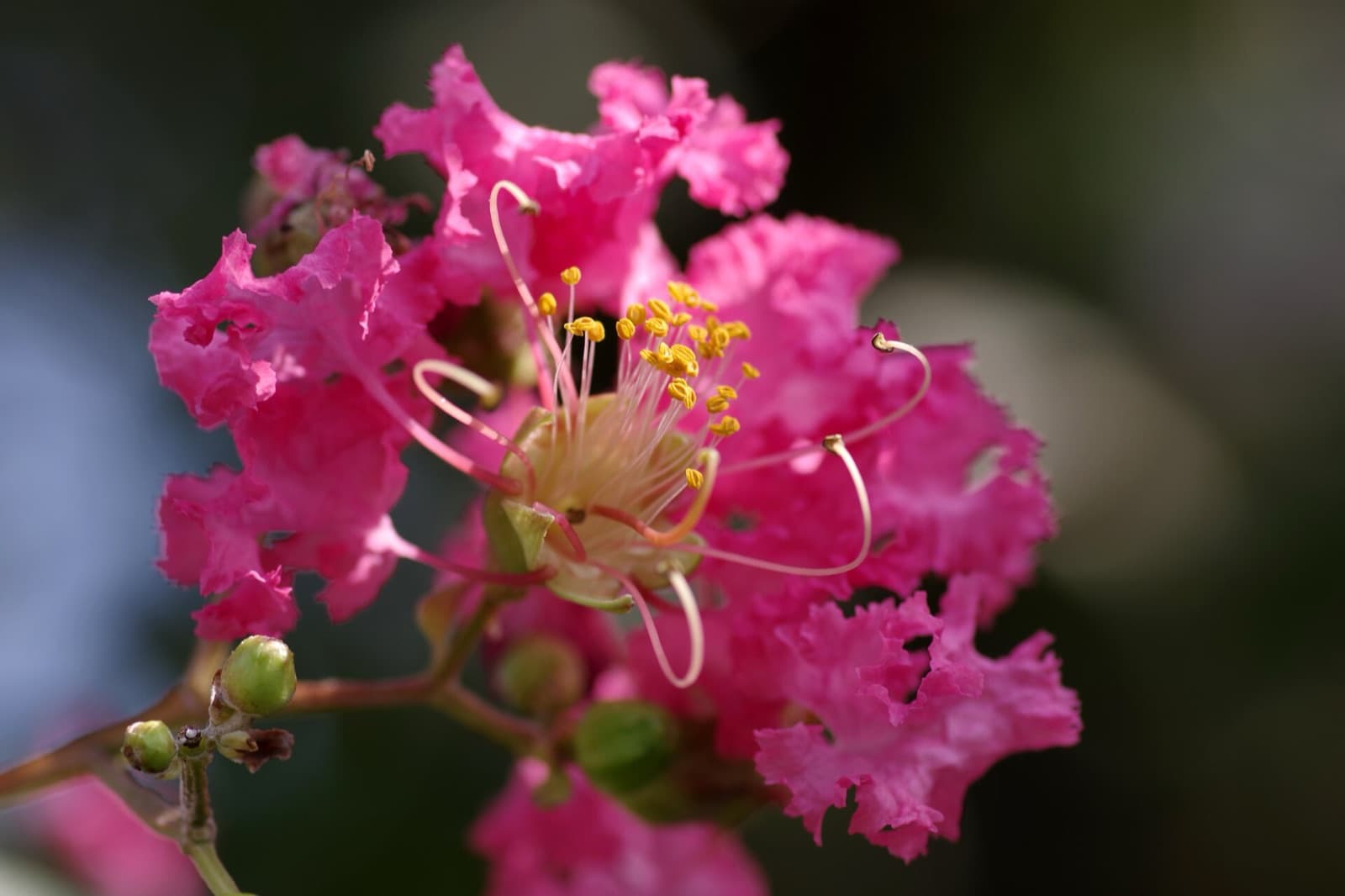
If the giants are the headline acts, the crepe myrtle (Lagerstroemia) is the reliable workhorse that carries the summer, flowering in white, pink, red or mauve for months through the hottest part of the year when most trees have finished. It stays modest in size, suits a front lawn or a bed near the house, has beautiful smooth mottled bark for winter interest, and, being deciduous, drops its leaves to let the low winter sun from the north back onto the house exactly when you want the warmth. For a normal suburban block it's very hard to beat, and it's one of the first trees I suggest when someone wants long colour without a large tree. My guide to small trees for Brisbane gardens covers where a modest feature like this sits best.
Natives that flower: ivory curl and silky oak
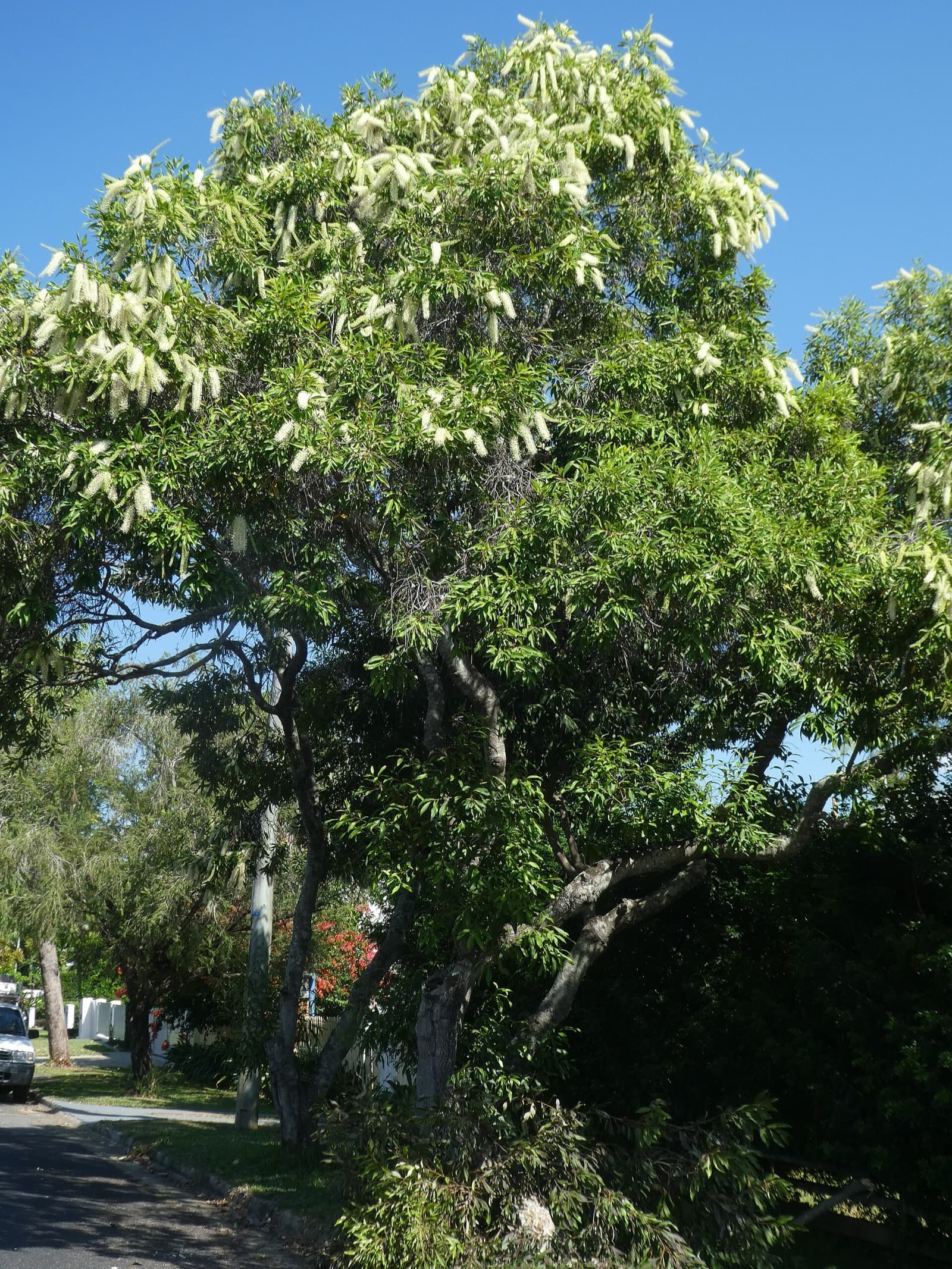
For a native option with real presence, the ivory curl tree (Buckinghamia celsissima) is a rainforest species that stays a sensible size, throws long cream flower spikes through summer and behaves itself near a path, which makes it one of the most useful flowering natives for a suburban garden. If you have more room and want the drama, the silky oak flowers in bold golden-orange combs in spring and grows into a large tree over time, so it sits in the same needs-space category as the giants above. Both bring the birds in when they flower, which is a bonus if you're also planning a bird-attracting garden, and both extend the native palette beyond shrubs and grasses into the canopy layer.
Filling the gaps: trumpet trees and tibouchina
To round out the calendar there are a couple of showy performers worth knowing. The trumpet trees (Tabebuia and Handroanthus) flower in vivid pink or gold, often on bare branches for a startling display, and stay smaller than the jacaranda, which makes them a good choice when you want that flush of colour without the size. Tibouchina covers itself in intense purple flowers in autumn, filling the gap after summer's trees have finished and giving you a late splash of colour, and it comes in sizes from a large shrub to a small tree so there's usually one to fit. Both are worth asking your designer or nursery about for your particular spot, and I mention them here because a good colour calendar leans on more than the famous four.
Beautiful and big-rooted often go together
The one caution that ties all of this together: the most spectacular flowering trees are frequently the largest and the most vigorous-rooted, so the flower is only half the decision and placement is the other half. A poinciana or jacaranda in the wrong spot lifts paving and hunts for pipes, and the colour won't console you when the driveway cracks, so pair your choice with sensible placement well clear of the slab, the pool and the services. I've written a full guide to where to plant a tree and which roots will wreck your slab precisely because the flowering giants are the ones people most often put too close. And if you'd like the wider planting palette to surround your feature tree, the best plants for Brisbane gardens sorts them by the job each one does.
Working out which flowering trees suit your block, how they'll sequence through the year, and exactly where each one belongs, is a large part of what a Design Discovery Consultation is for. It's $350 on-site within the Brisbane metro area, with any travel beyond that quoted up front when you book, and you'll leave with a garden that changes colour with the seasons rather than staying the same all year.

Ready to start designing?
We're currently taking on new landscape design clients across Brisbane. Reach out for a personalised quote, whether you're a homeowner or a design professional.
Book a Free Discovery Call