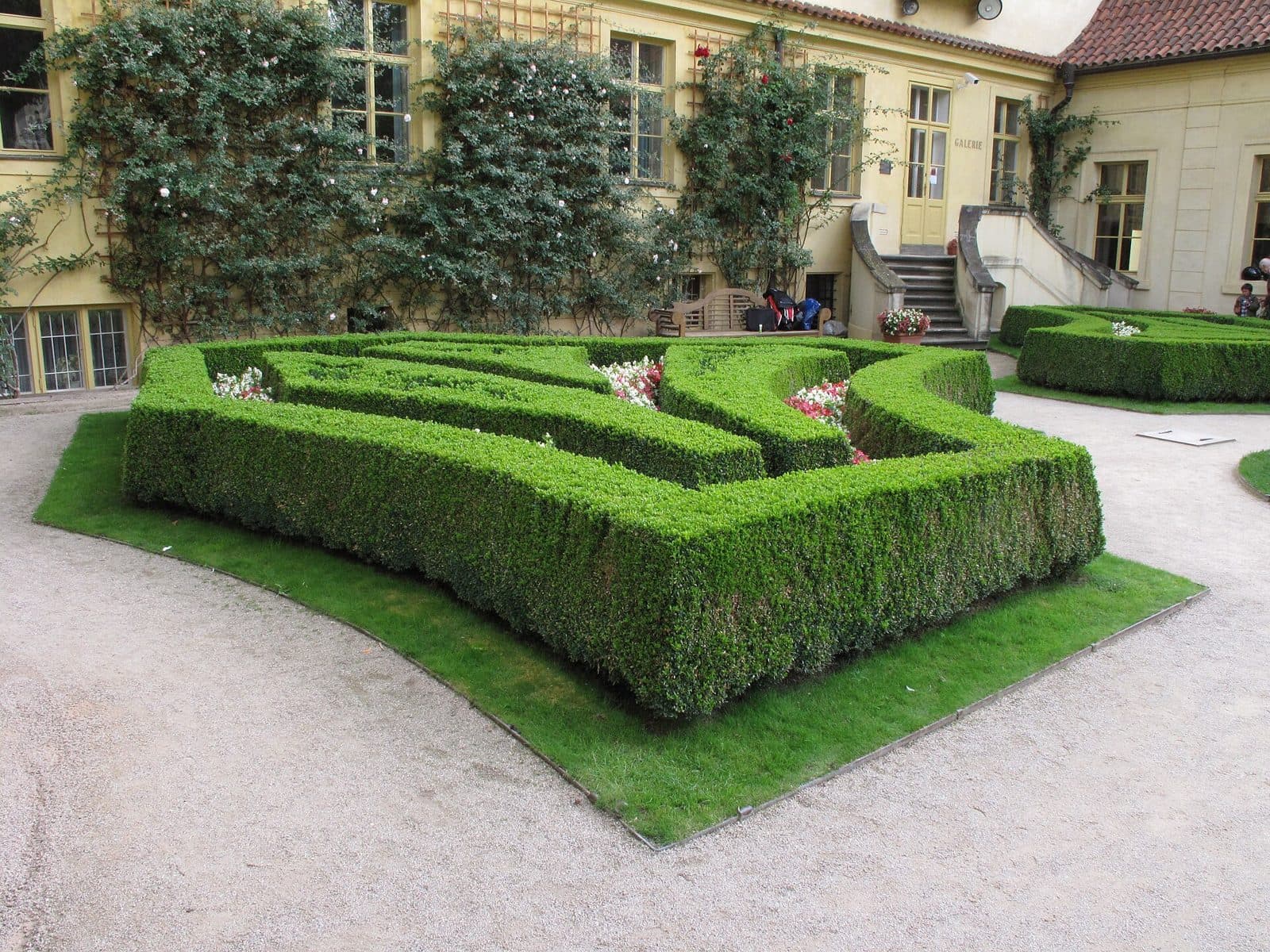
Buxus microphylla var. japonica, the small-leafed evergreen behind almost every crisp low hedge, parterre and clipped green edge.
Buxus microphylla var. japonica · Also known as Buxus, Box, Japanese Box, English Box, Boxwood
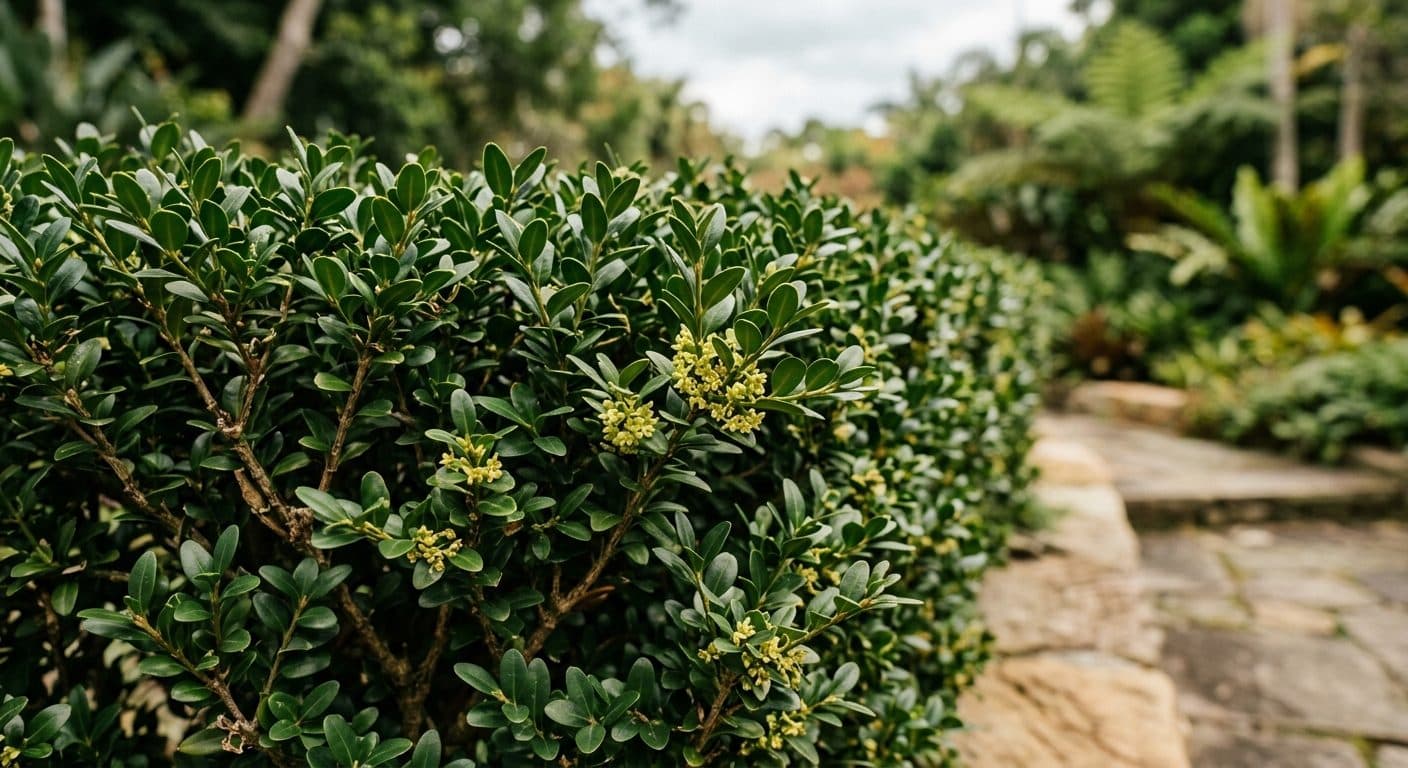
Box is the plant you picture the moment someone says "formal hedge": a dense, small-leafed evergreen clipped into low borders, parterres and tight geometric edges that give a garden its architecture. There are two common types sold under the name, and the difference matters enormously in Brisbane. English box (Buxus sempervirens) is the classic of cool European gardens; Japanese box (Buxus microphylla var. japonica) is the tougher, glossier, more heat-tolerant cousin, and it is the one we specify here.
Does box work in Brisbane? Yes, but only if you plant the right box and give it the conditions it wants. Japanese box handles our heat and humidity far better than English box, which sulks, thins and is prone to fungal trouble in a wet subtropical summer. Get the variety, the drainage and the airflow right and box will hold a razor edge for decades. Get any of those wrong and it is one of the most disappointing plants you can put in the ground.
In a Brisbane garden
The honest Brisbane truth about box is that most failures trace back to two things: the wrong species and poor drainage. English box in a humid Brisbane summer is a slow disappointment, thinning out, browning off and inviting box blight and root rot, especially where it sits in heavy clay that stays wet after storms. Reaching for English box out of habit is exactly the kind of error we flag in our note on common DIY landscaping mistakes. Specify Japanese box instead, plant it into a raised, free-draining bed with real airflow around it, and most of the trouble simply never starts.
The second thing to know is that box is not low-maintenance, whatever its neat looks suggest. A crisp box hedge needs clipping at least twice a year, and often three times through a warm, growthy Brisbane season, to hold that hard edge. It is also genuinely slow-growing, so buy plants close to the finished height you want rather than expecting little tubestock to knit into a hedge quickly. Where a client wants the clipped-green look without the fuss, or where conditions are simply too wet for box, we say so early and design around a tougher plant.
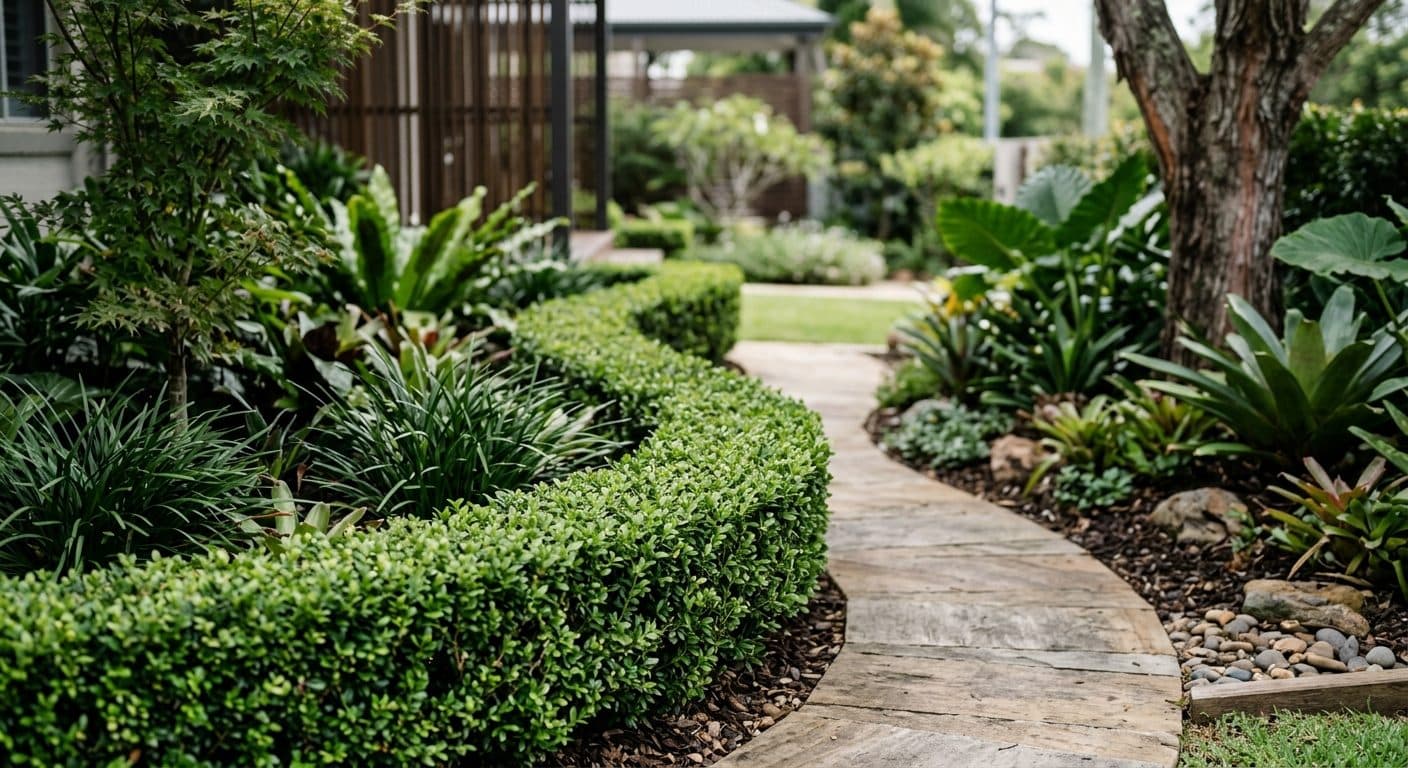
Photo: Juan de Vojníkov, CC BY-SA 3.0, via Wikimedia Commons
How we design with box
Box earns its keep as structure. We use it for the low clipped borders, knot patterns and framed beds that give a Hamptons garden its tailored bones, and for the calm geometric hedging that reads so well in a Japanese-inspired garden, where a single clean line of clipped green does more work than a bed full of colour. In a formal front yard a low box edge along the path is one of the quietest, most reliable ways to lift kerb appeal, provided the bed drains and the owner is honest about keeping up the clipping.
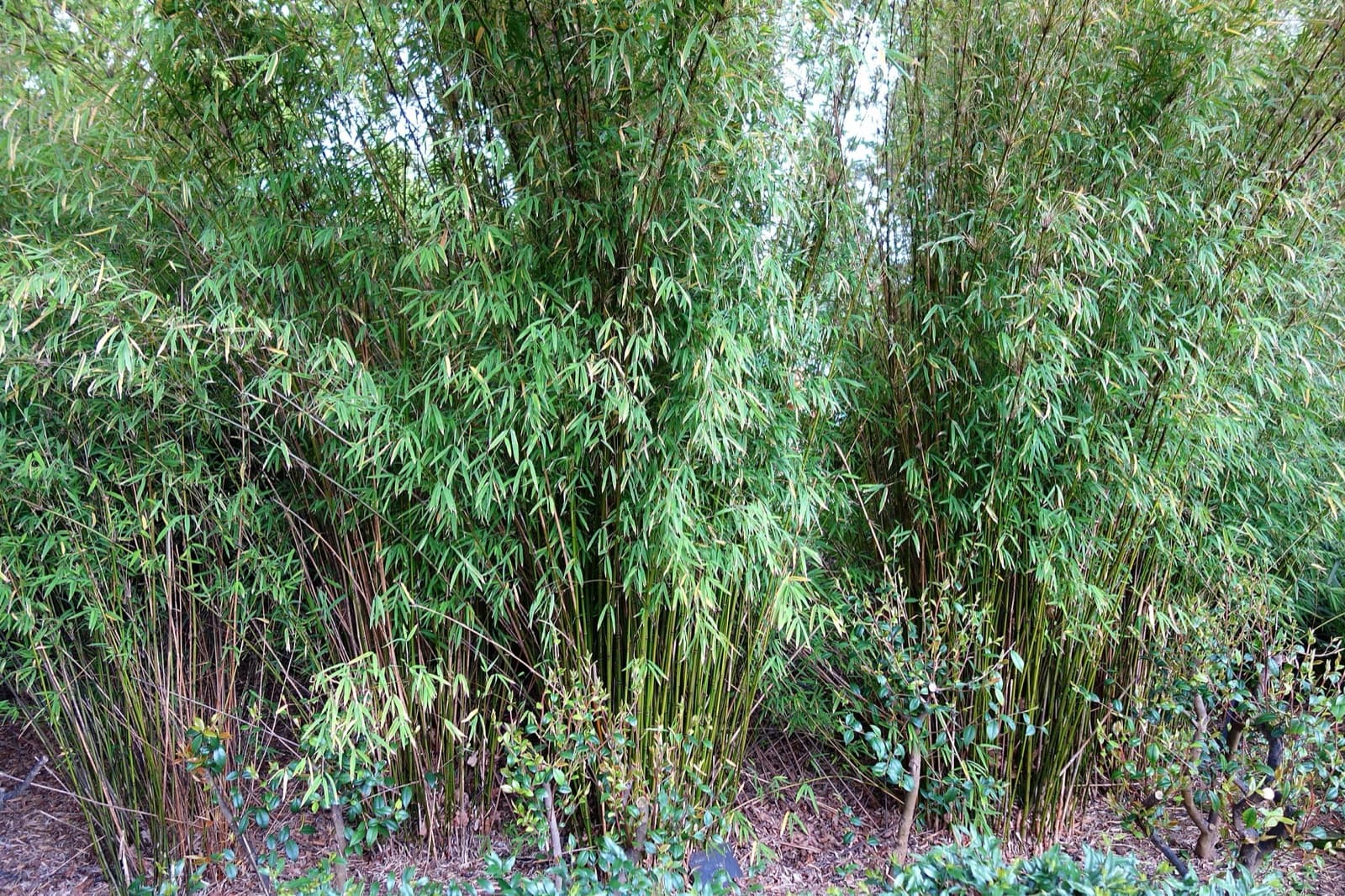
We treat box as a commitment, not a default. On a brief where the clipping simply will not happen, or the ground stays wet, we reach for alternatives that give a similar tight green wall with far more vigour and forgiveness: a clipped murraya for a taller scented hedge, or a dwarf lilly pilly for a faster, more humidity-proof low border. Choosing between real box and a box substitute is precisely the kind of call we work through with clients in a design consultation, because the right answer depends on the aspect, the soil and how the garden will actually be looked after.
Common questions
Want clipped structure that actually holds in Brisbane?
We're currently taking on new landscape design clients across Brisbane. Reach out for a personalised quote, whether you're a homeowner or a design professional.
Book a Free Discovery Call