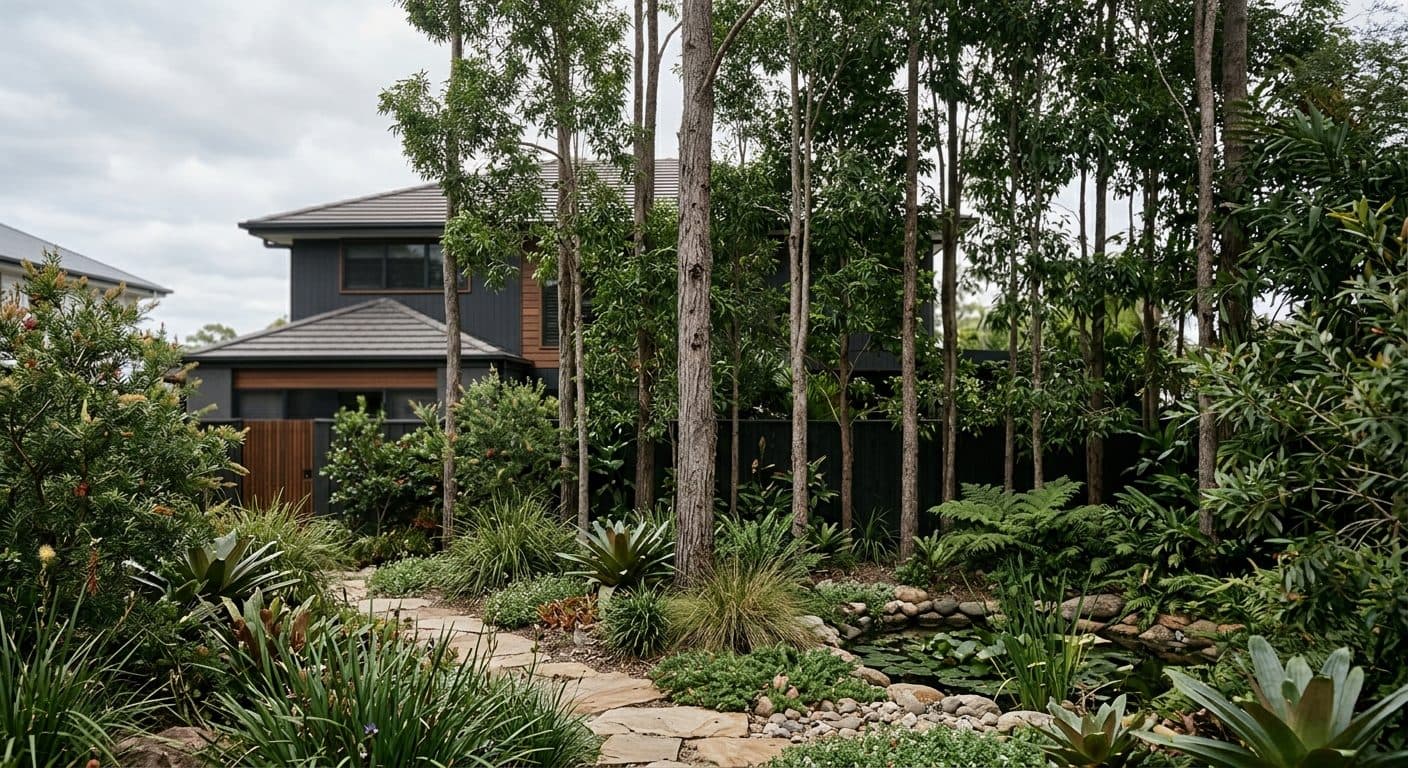
When the new house next door looks straight down into your yard, a taller fence won't fix it. The answer is up high, with the right screening trees. Here's how to block a second-storey window without walling yourself in.

By Shannon Trevisiol, Landscape Designer, Brisbane · 6 min read
- You can't fix an upstairs sightline with a taller fence: the problem is up high, so the solution has to be too.
- Screen the sightline, not the whole sky: block the specific window looking in rather than trying to wall off everything.
- Choose slim, tall, well-behaved evergreens over fast-and-greedy giants, so you gain height without losing half the yard or the light.
- Layer the planting so it reads as a garden, not a green wall, and place it close enough to the house to do the work at the right angle.
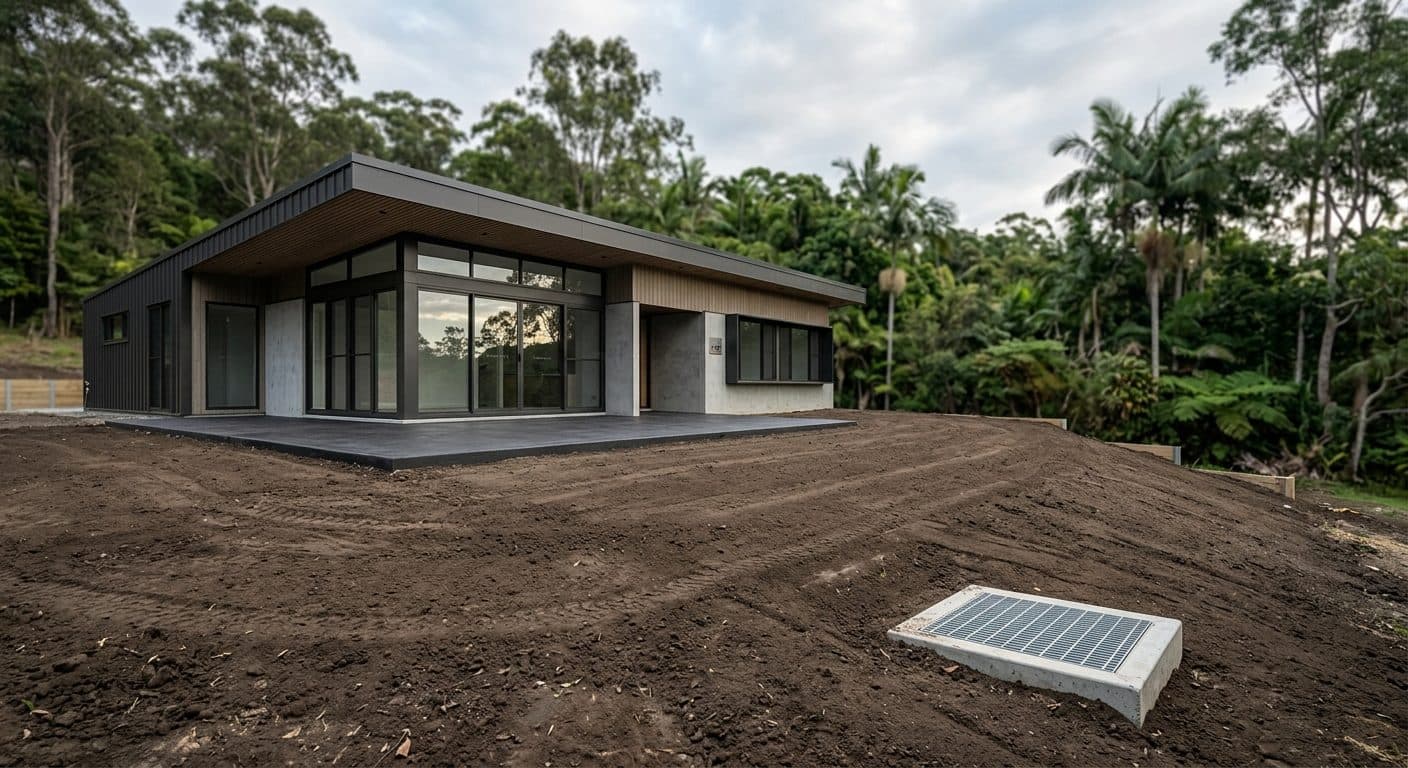
Brisbane is filling in, the old single-storey house next door comes down, and up goes something with an upstairs deck and windows that look straight into your back garden. It's one of the most common privacy problems I get asked about, and the first instinct is almost always wrong: people want to build the fence higher. A taller fence does very little about a second-storey window, because the sightline is coming in from above the fence line entirely, and all a two-metre wall of hardwood buys you is a darker, more boxed-in yard and the same person still looking down at your barbecue. The problem is up high, so the solution has to be up high too, and that means the right trees rather than a bigger fortress.
Screen the sightline, not the whole sky
The most useful shift in thinking is to stop trying to block everything and start blocking the one thing that matters: the specific window or deck that looks into the spot you actually use. Stand in your outdoor area, or sit where you'd sit, and look back at the offending window; that line between your eye and theirs is the sightline, and if you can interrupt just that, you've solved the problem without walling off the entire boundary. This matters because a full-height green wall along the whole back fence costs you light, air movement and a good chunk of the yard, whereas a well-placed cluster of tall planting on the exact line does the job while the rest of the garden stays open. You're aiming a screen, not building a bunker, and that precision is what keeps the garden feeling like a garden. My guide to creating privacy in a Brisbane garden works through the same idea across the whole block.
Slim and tall beats fast and greedy
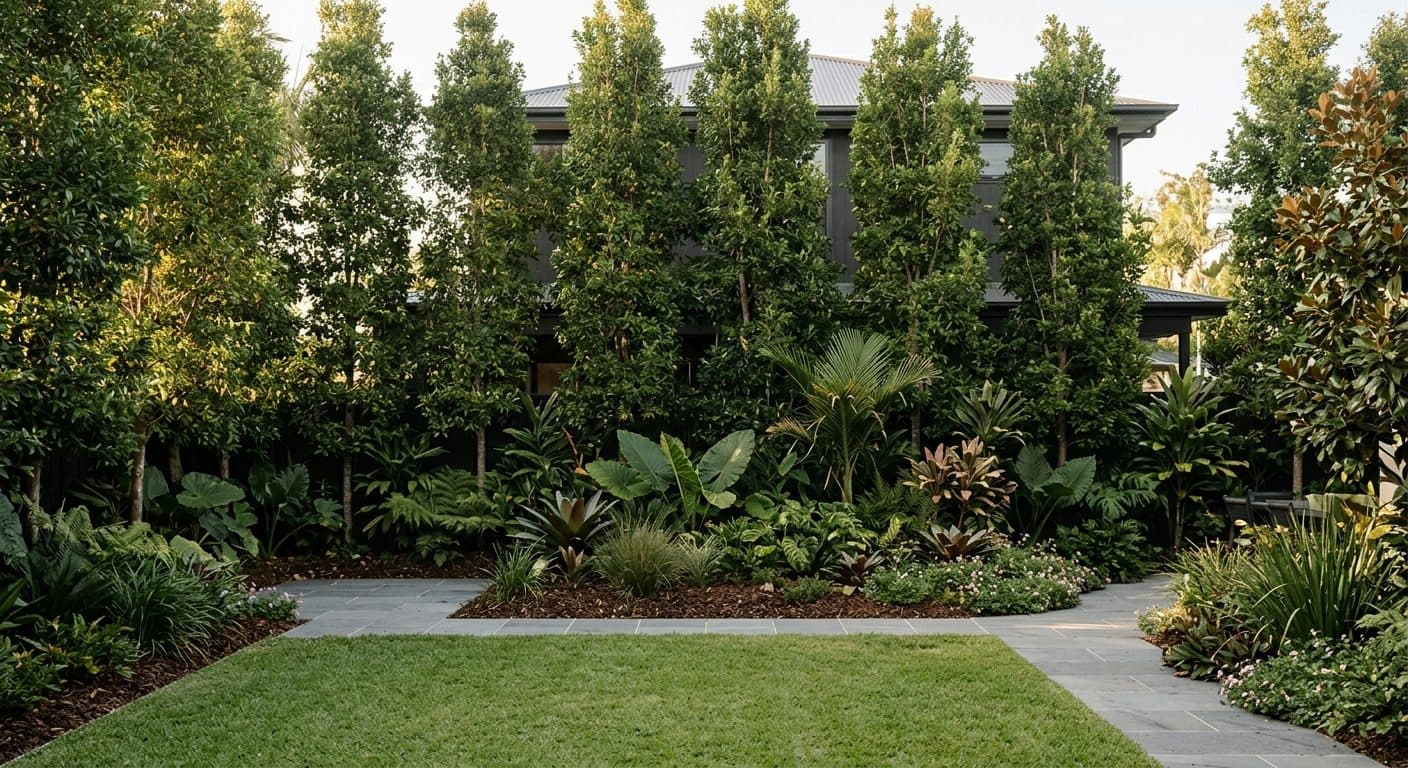
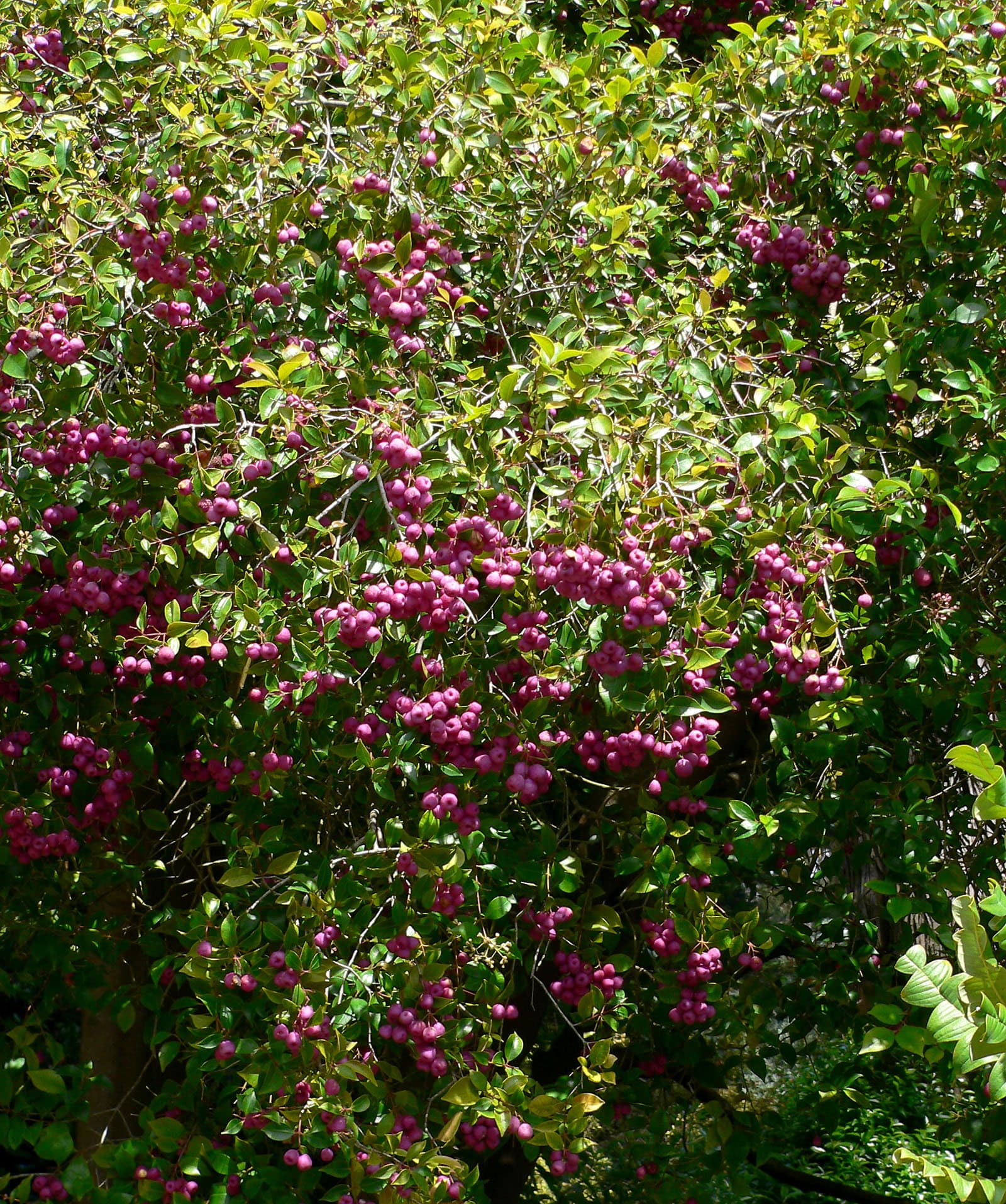
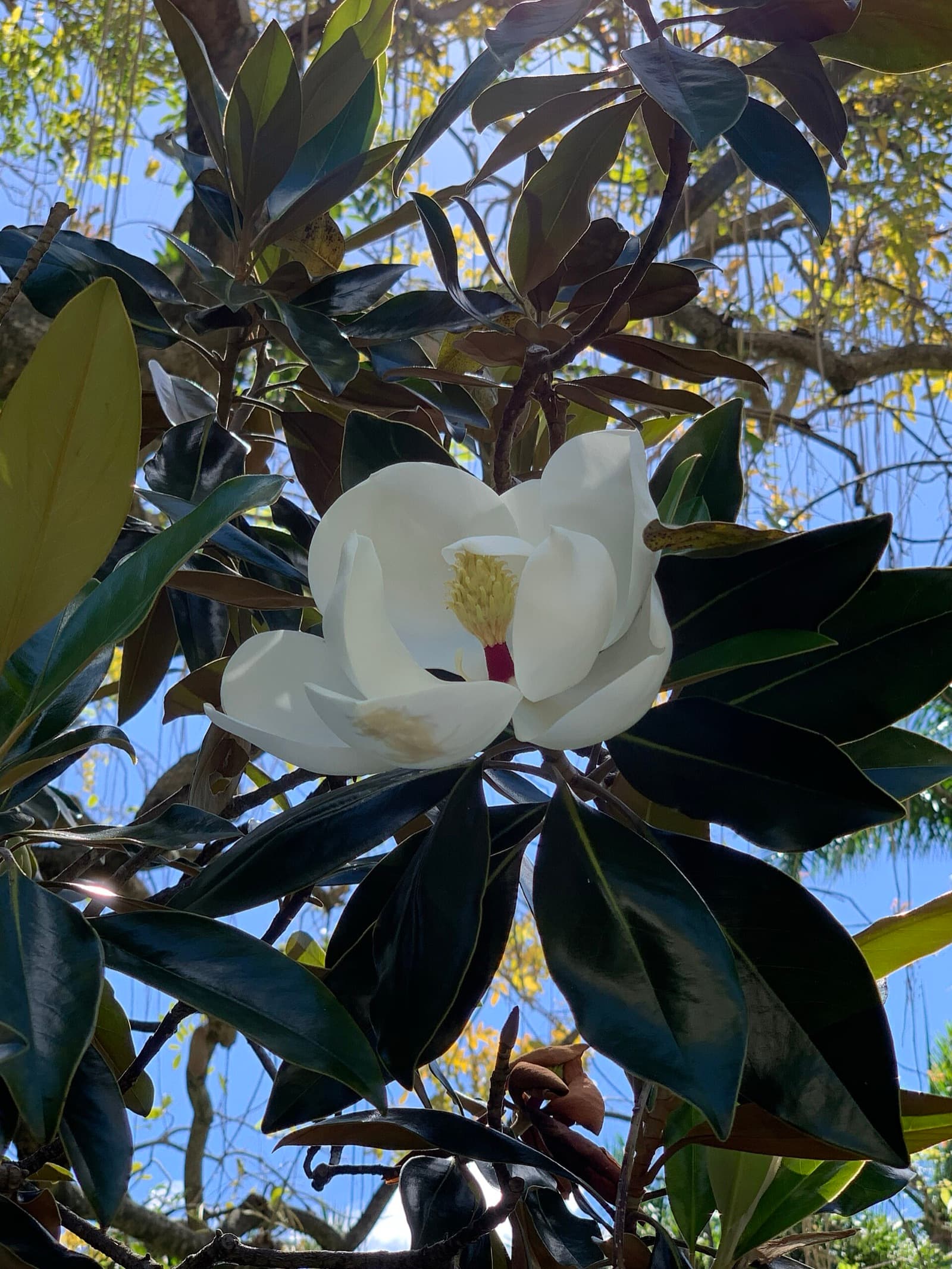
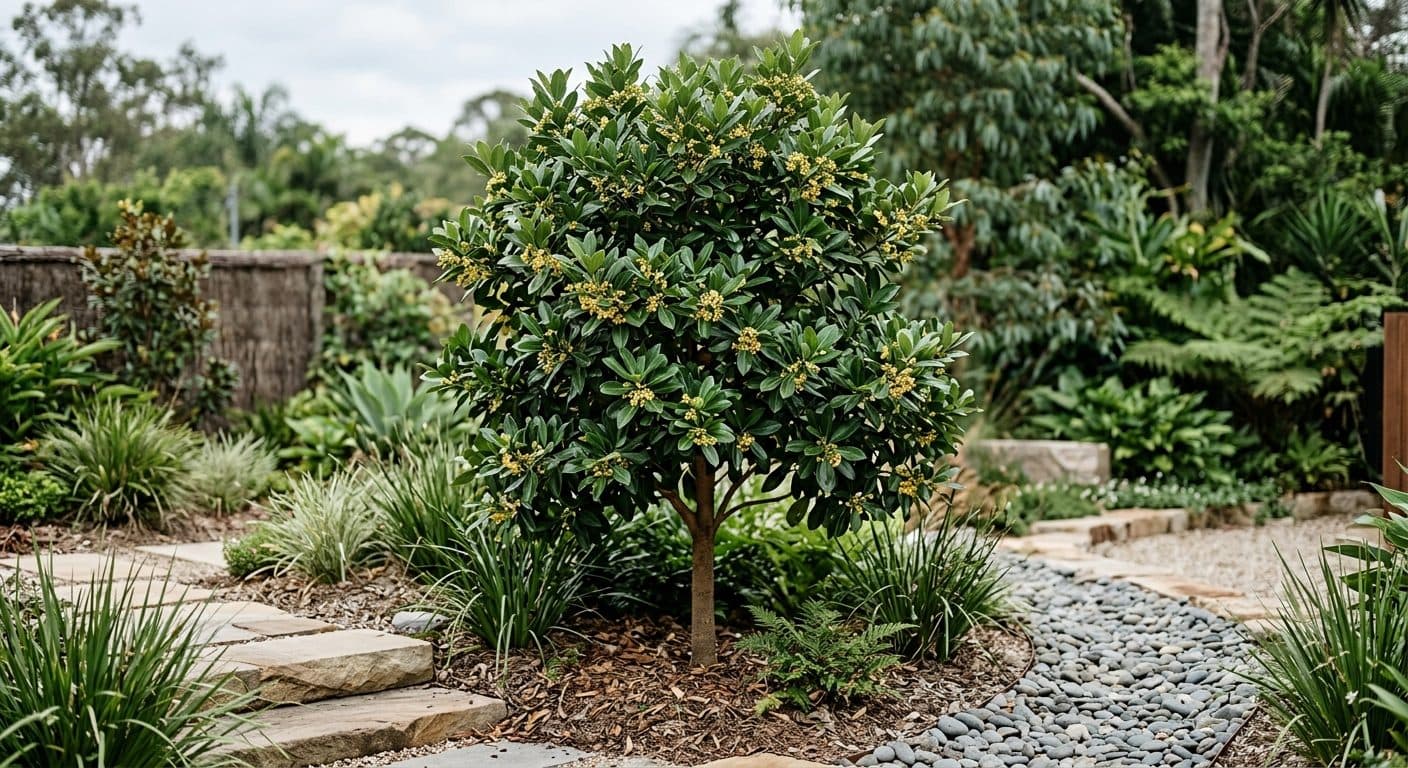
When people want height fast, they reach for the quickest-growing thing available, and that's usually how you end up with a monster that hits the target height and keeps going, throwing shade over the whole yard and roots under the paving. The better move is to choose plants that are naturally tall and narrow, so you gain the height you need at the window without the width that eats the garden. A columnar lilly pilly (Syzygium), chosen from one of the narrow, well-behaved cultivars, makes a superb tall slim evergreen screen and clips to keep its shape. The water gum (Tristaniopsis 'Luscious') is a glossy, upright, non-invasive small tree that suits a narrow boundary and screens a two-storey neighbour without misbehaving near structures, and a little gem magnolia (Magnolia grandiflora) gives a dense, handsome, upright evergreen screen with the bonus of large white summer flowers. For a lush subtropical feel, a stand of bangalow palm (Archontophoenix cunninghamiana) planted in a group throws its screening foliage right up at upper-storey height while staying slender at ground level, which is exactly the geometry you want. My guide to the best screening plants for Brisbane goes deeper on matching the plant to the gap.
A note on bamboo
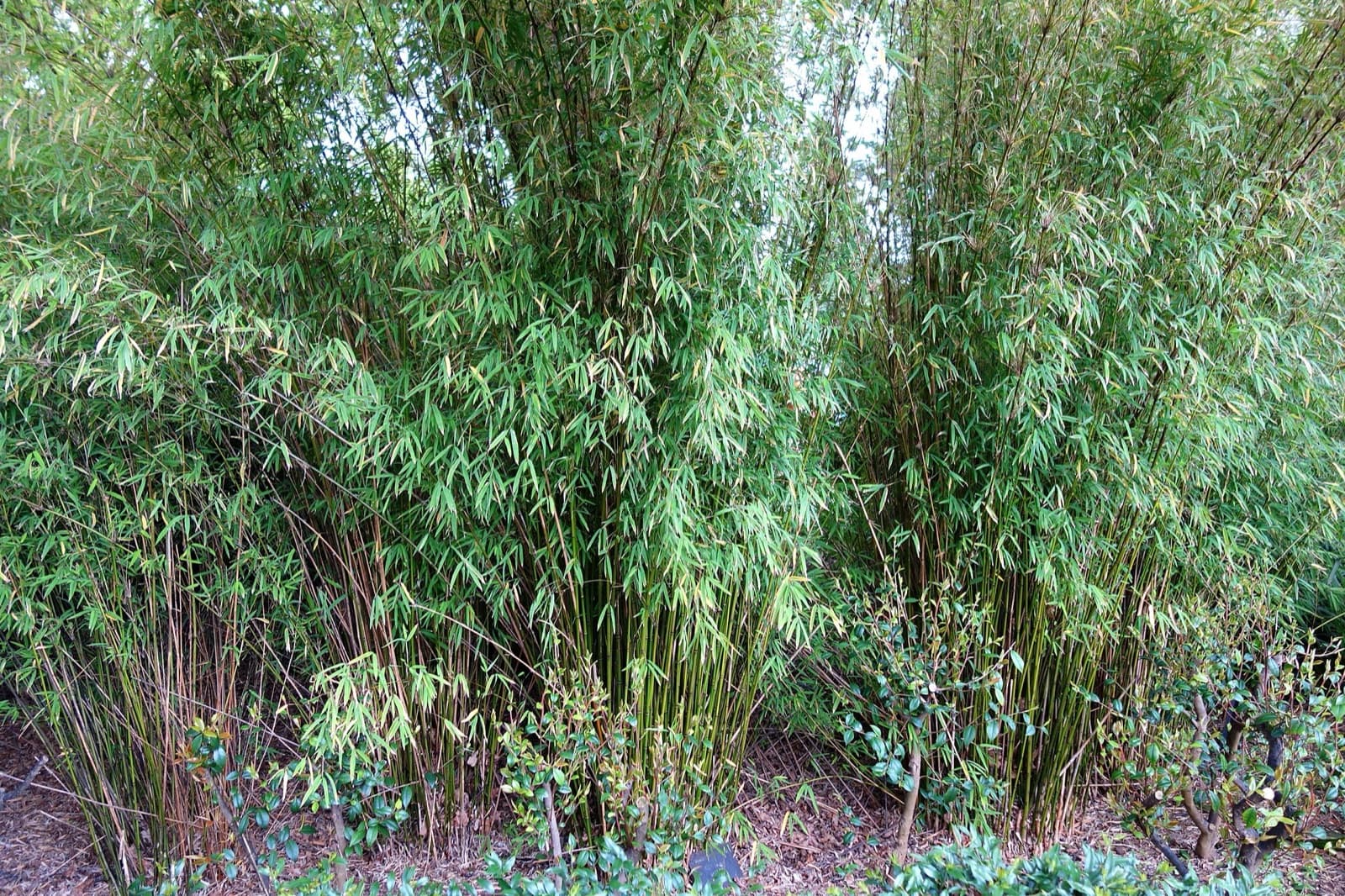
Bamboo comes up in every screening conversation because it grows tall and fast and looks wonderful, and it can be a brilliant answer, with one firm condition: clumping bamboo only, never a running type. A well-chosen clumping bamboo gives you a tall, elegant, dense screen at exactly upper-storey height and stays where you plant it, whereas a running bamboo is one of the few plants that can genuinely damage a friendship with a neighbour and a foundation at the same time. If you go this way, get the species right and, where appropriate, contain the root zone, and it will screen a double-storey window as well as anything.
Layer it so it reads as a garden
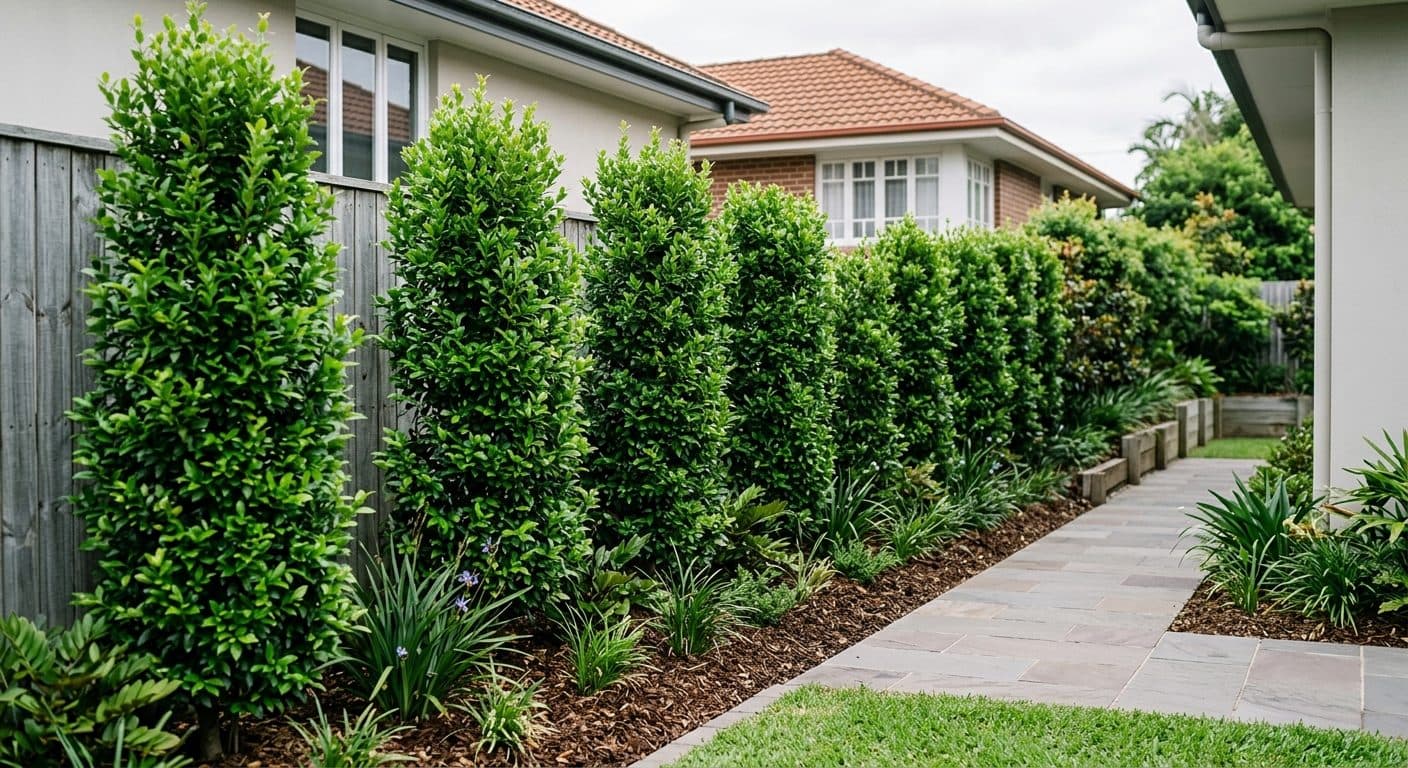
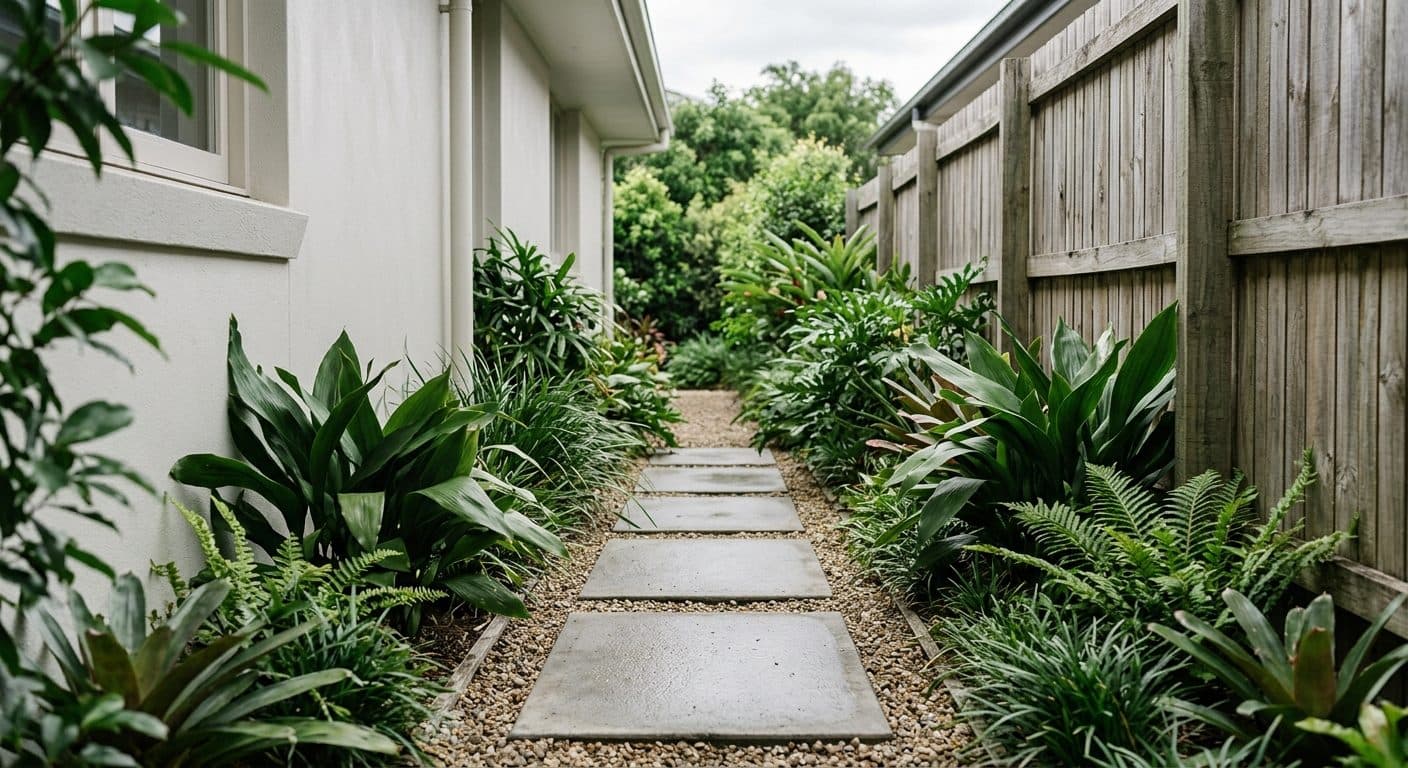
A single hard line of one plant along the boundary solves the privacy but looks like exactly what it is: a defensive hedge. The gardens that work have the screen woven into a layered planting, with the tall slim screeners at the back, a mid-layer of shrubs in front and some massed groundcover at your feet, so the eye reads a full, generous garden rather than a green fence with a job to do. This is also more forgiving in practice, because if one screening plant sulks or a gap opens up, a layered bed disguises it far better than a bare row would. A useful companion here is the tuckeroo (Cupaniopsis anacardioides), a tough rounded native that fills the mid-to-upper layer and takes wind and poor soil in its stride. Getting the layers and the heights right is the difference between a screen that feels like landscaping and one that feels like a barricade, and if you're weighing trees against a built structure, my small trees for Brisbane gardens guide covers how a tree earns its place near boundaries.
Place it where the angle works
The last piece is geometry, and it's the one people miss: a screen only works from where you're standing, so it has to be placed on the line between your eye and their window, which is often closer to your house or seating area than to the boundary. Plant hard against the back fence and a tall tree may screen the neighbour's yard beautifully while doing nothing about the steep downward angle from their upstairs window into your deck. Bring the screening planting forward onto the actual sightline, even by a couple of metres, and the same tree suddenly does the job, because it's now interrupting the angle at the right point. It feels counterintuitive to plant a screen away from the fence, but the angle is everything with an upstairs window.
Working out precisely where a screen belongs, how tall it needs to grow and which well-behaved plants will get you there without swallowing the yard, is a large part of what a Design Discovery Consultation is for. It's $350 on-site within the Brisbane metro area, with any travel beyond that quoted up front when you book, and you'll leave with a plan to get your privacy back without boxing yourself in.

Ready to start designing?
We're currently taking on new landscape design clients across Brisbane. Reach out for a personalised quote, whether you're a homeowner or a design professional.
Book a Free Discovery Call