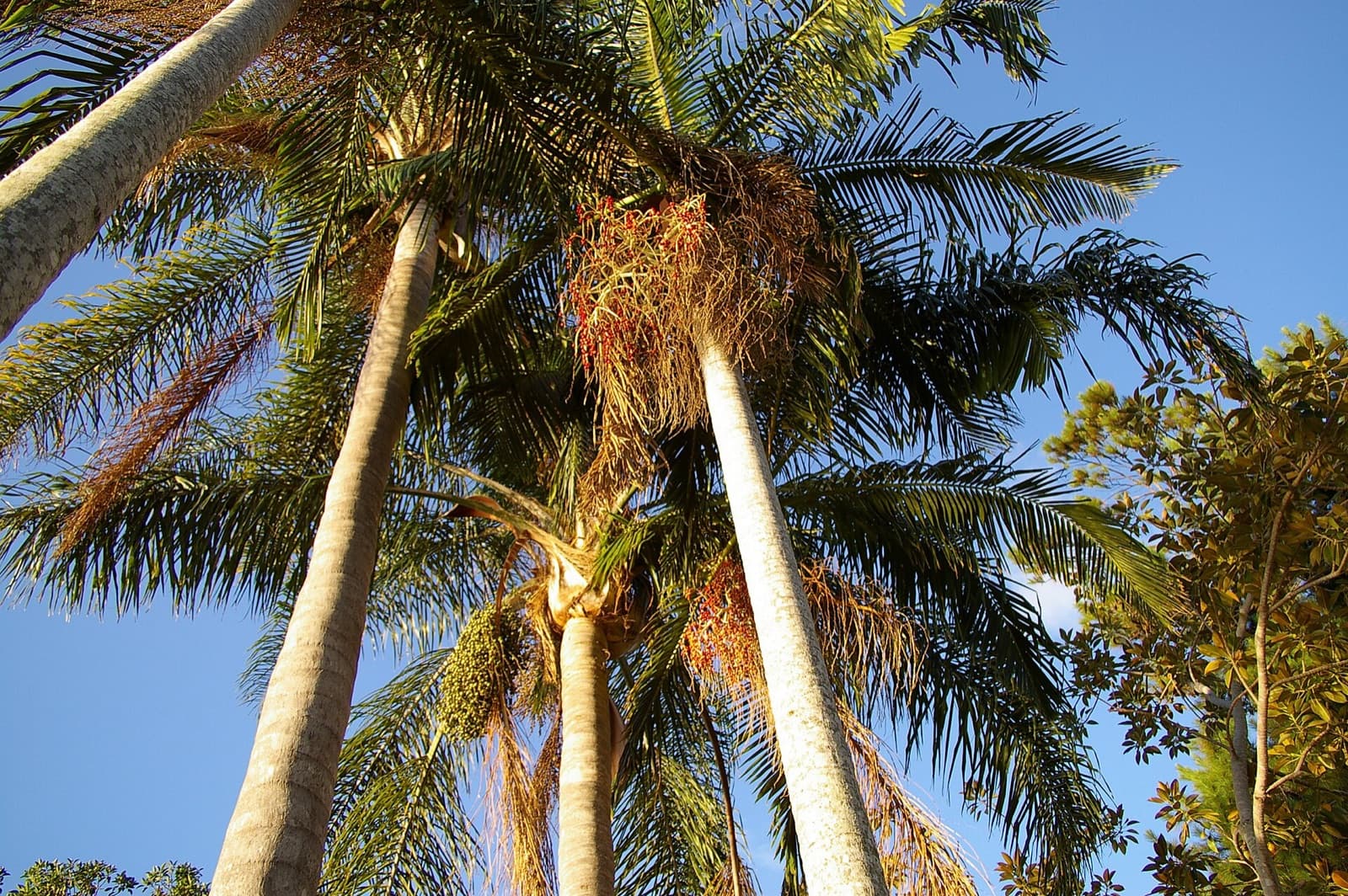
Archontophoenix cunninghamiana, the local rainforest palm that lifts a tall green canopy and belongs here more than most things we plant.
Archontophoenix cunninghamiana · Also known as King Palm, Piccabeen Palm
The bangalow palm is a genuine local, a rainforest palm native to the wetter gullies of south-east Queensland and northern New South Wales, so planting one is less an act of importing the tropics than of putting back something that grew here first. You'll hear it called bangalow, king palm for its stature, and piccabeen, an old name from the same country, and it reads as tall, slender, and unmistakably native with its smooth green crownshaft and arching fronds.
We use it as a canopy plant, the tall green ceiling a subtropical garden is arranged beneath, and unlike an imported feature palm it slots into a Brisbane block as though it always belonged, because it did. Grown in a clump of three or five it does something particularly useful, casting the dappled, moving shade that a whole understorey of ferns and bromeliads then lives happily within.
In a Brisbane garden
As a plant that evolved in our own rainforest gullies, the bangalow is beautifully at home in Brisbane and, once it's up and established, largely looks after itself, which is a real point in its favour among the thirstier tropical palette. The honest qualifier is that it is a rainforest species at heart, so it wants moisture and does its best in a spot that doesn't bake bone-dry, and a young palm on a hot, exposed, west-facing bed will struggle and yellow where one in a cooler, damper, part-shaded position powers away.
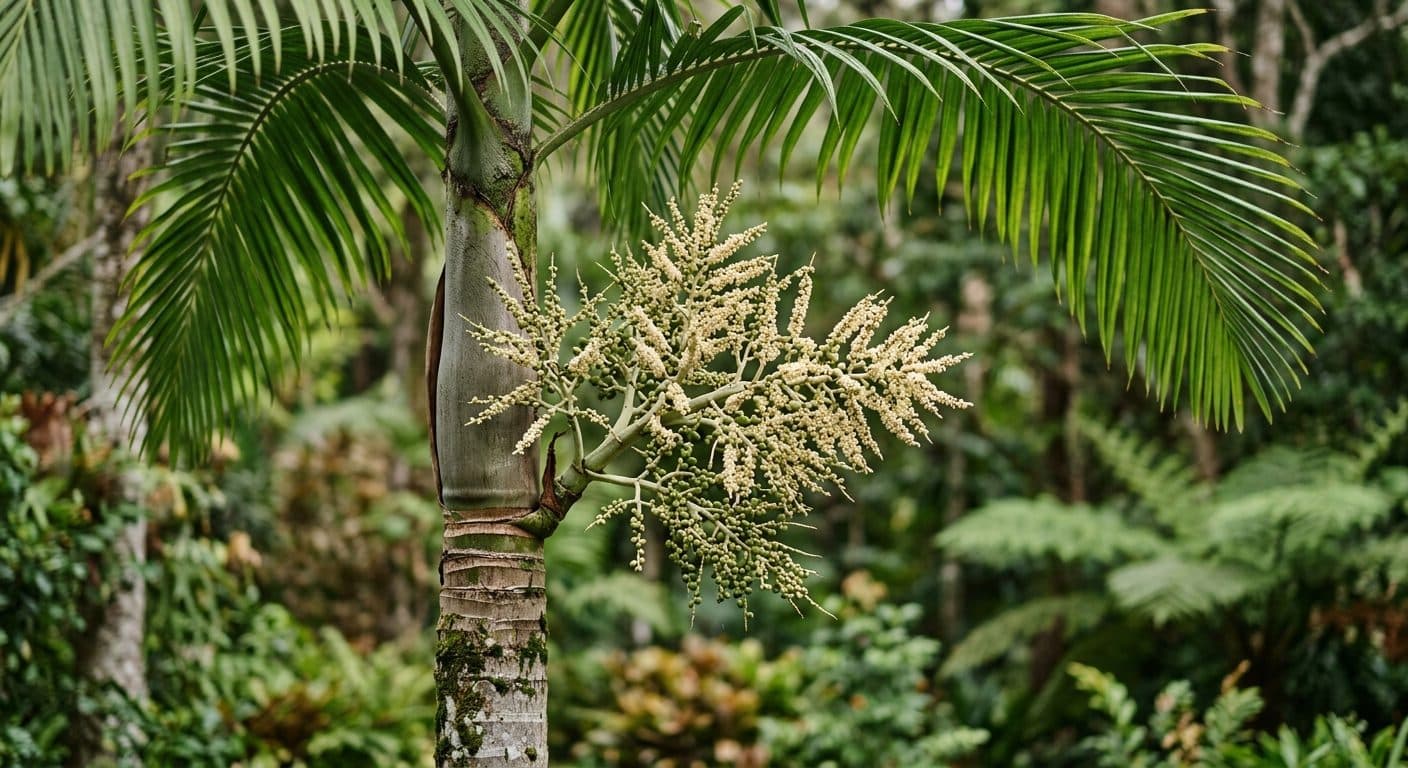
Planted young it appreciates the shelter of some overhead shade before it reaches for the sky, and it drops the odd frond and a quantity of red fruit as it matures, which is minor litter rather than the constant mess of a messier palm. Grouped as a clump it develops into a graceful multi-stemmed canopy far more quickly and handsomely than a lone trunk, and because it is a local we can plant it with a clear conscience about how it fits the surrounding bushland rather than fighting the site.
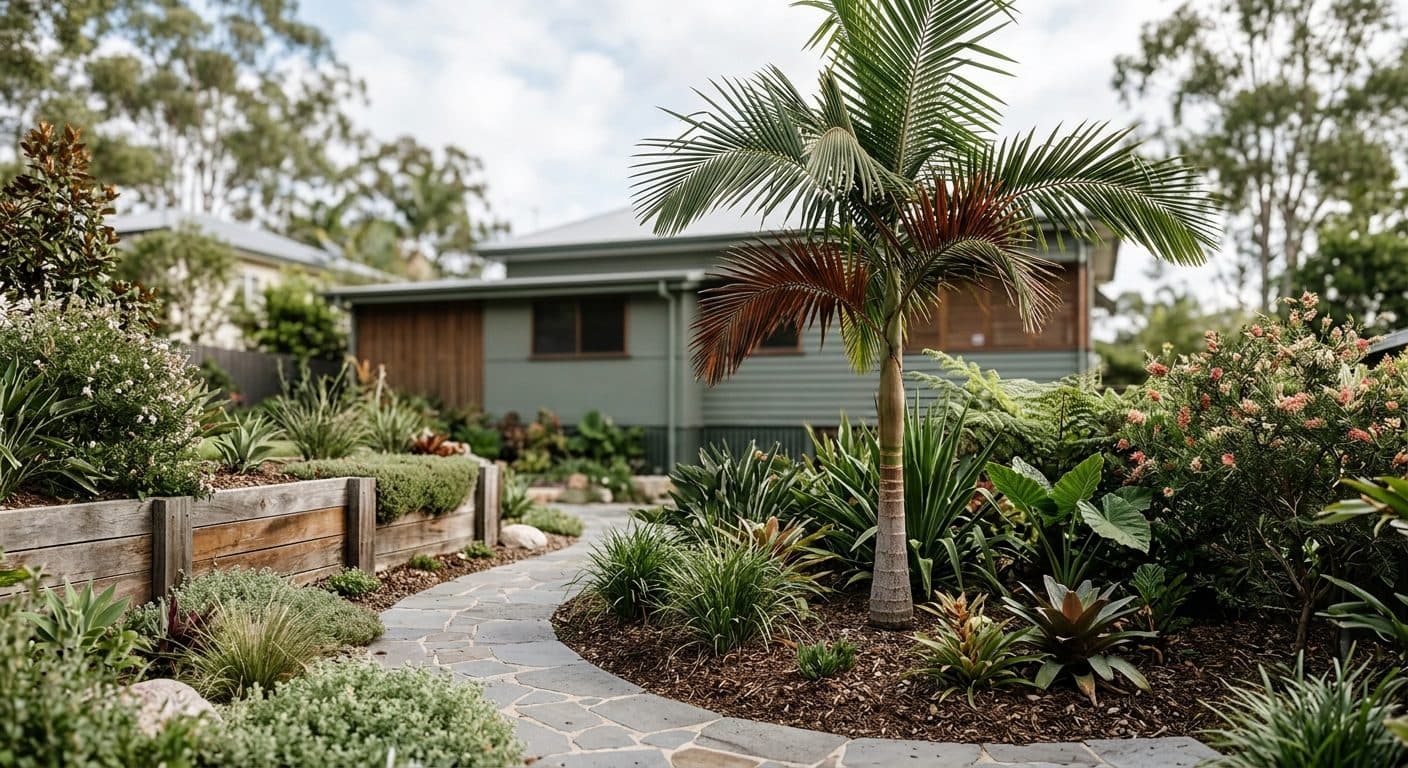
Photo: John Robert McPherson, CC BY-SA 4.0, via Wikimedia Commons
How we design with it
The bangalow is our first choice of canopy palm in a native garden design, precisely because it is a true local that ties a garden to the surrounding south-east Queensland landscape rather than sitting in it like an import. In a tropical garden design we plant it in odd-numbered clumps to lift a tall, dappled green ceiling, and that filtered shade is what lets the fern-and-bromeliad understorey we describe in our guide to designing a subtropical garden in Brisbane actually thrive.
We use the clumping habit deliberately, staggering three or five palms so the canopy knits together and the trunks read as a small stand rather than a row of poles. Given that it wants moisture, we place it in the cooler, damper parts of a garden and let it shade the plants below, so a single planting decision solves both the canopy layer and the shade the understorey depends on.
Common questions
Want a canopy that actually belongs on your block?
We're currently taking on new landscape design clients across Brisbane. Reach out for a personalised quote, whether you're a homeowner or a design professional.
Book a Free Discovery Call