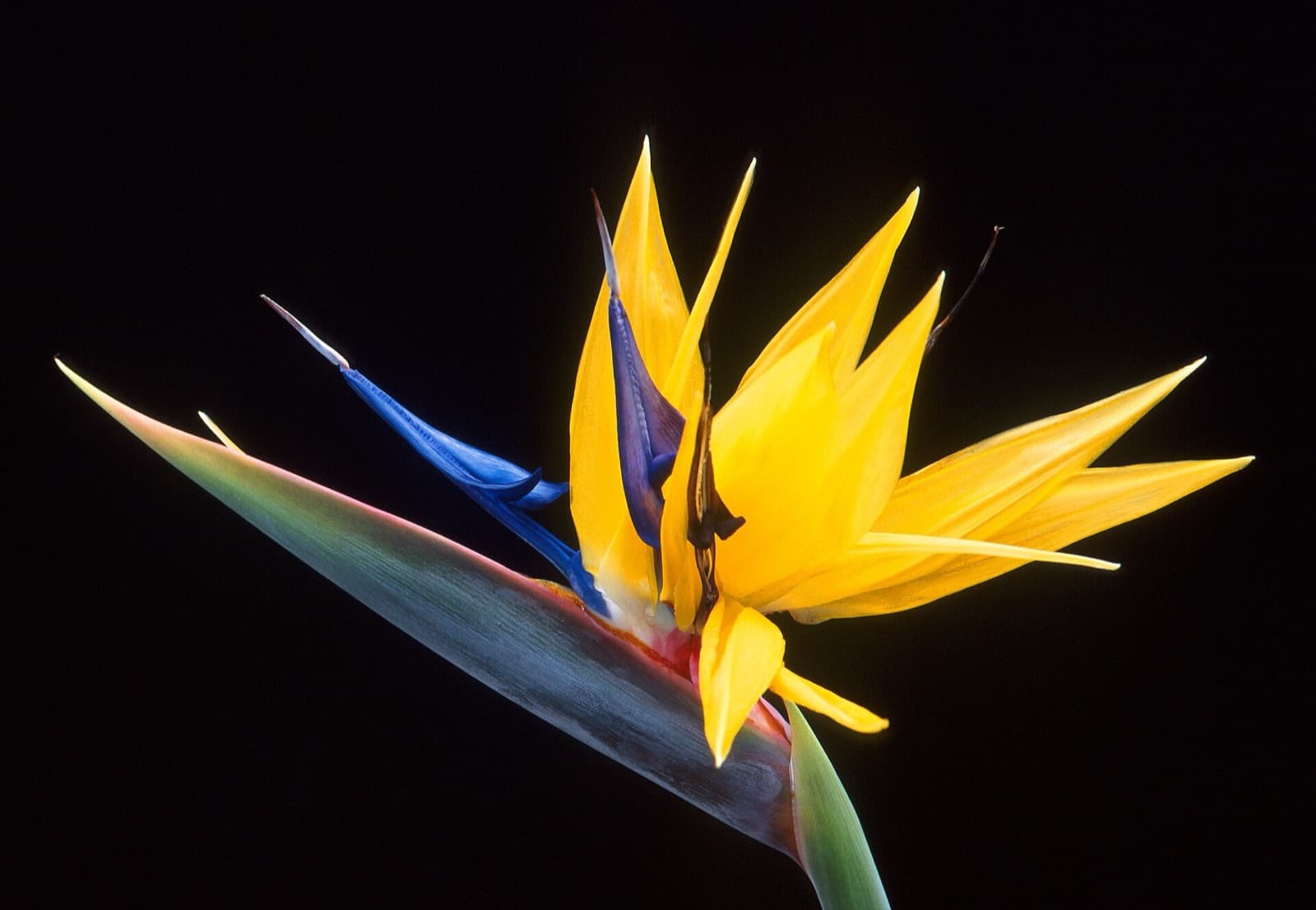
Strelitzia reginae, the architectural clump whose crane-shaped orange flower is as tough as it is unmistakable.
Strelitzia reginae · Also known as Crane Flower, Strelitzia
The bird of paradise earns its name from a flower that genuinely looks like a bird in flight, a crest of orange and blue perched on a stem above bold paddle leaves, and it's one of those rare plants that is both a showpiece and a genuine tough guy. It's known as bird of paradise, as the crane flower for that beaked bloom, and by its botanical name strelitzia, and the one people usually mean is Strelitzia reginae, the clumping, human-scale species with the famous flower.
Worth clearing up straight away, because it causes real confusion at the nursery, is that there is a second, very different plant sold under the same common name: the giant bird of paradise (Strelitzia nicolai), a big banana-like thing that grows several metres tall with white-and-blue flowers and no orange at all. Get the two mixed up and you plant a giant where you wanted a tidy clump, so we always specify reginae for the flower and nicolai only where the scale is wanted.
In a Brisbane garden
This is one of the easiest tropical-looking plants we can give a Brisbane garden, because unlike most of the lush subtropical palette it is genuinely tough: an established Strelitzia reginae shrugs off dry spells, copes with full western sun, takes a light frost that would flatten a heliconia, and flowers reliably through the cooler months with very little help. That toughness is exactly why we reach for it when a client wants the tropical look without the tropical watering regime, and it slots happily into a low-water scheme where thirstier statement plants simply couldn't.
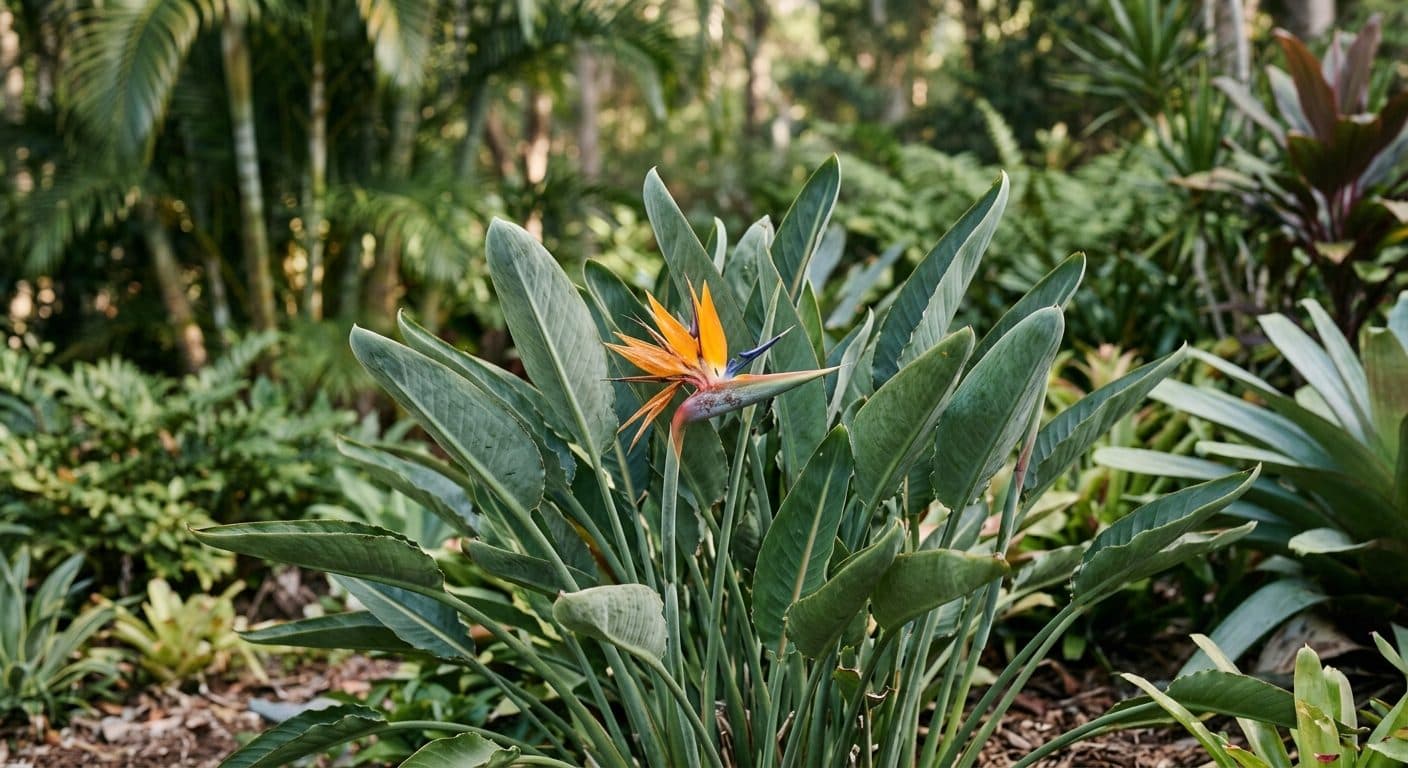
The one thing to get right is the choice between the two strelitzias, because the giant (nicolai) is a completely different proposition: it grows several metres tall, spreads into a substantial multi-trunked clump, drops big leathery leaves that shred in the wind, and will quickly overwhelm a small courtyard planted on a whim. We use the giant only where its bulk is a deliberate feature, screening a two-storey wall or anchoring a large bed, and everywhere else we specify reginae, which stays a manageable clump and delivers the flower people actually came for.
One caution is really about which strelitzia you buy, not about this one. Reginae is a well-behaved clumper whose root system stays in proportion to the plant, so it sits happily in a bed or near a pool with the ordinary care you'd give anything. The plant to watch is its giant cousin, the giant bird of paradise (Strelitzia nicolai), which carries a vigorous, genuinely intrusive root system that can lift paving and push at pool coping and pipes over the years. Because both are sold as bird of paradise, check the label: the tidy reginae is the one for a pool surround or a courtyard, and the giant belongs only in open ground well clear of anything expensive.
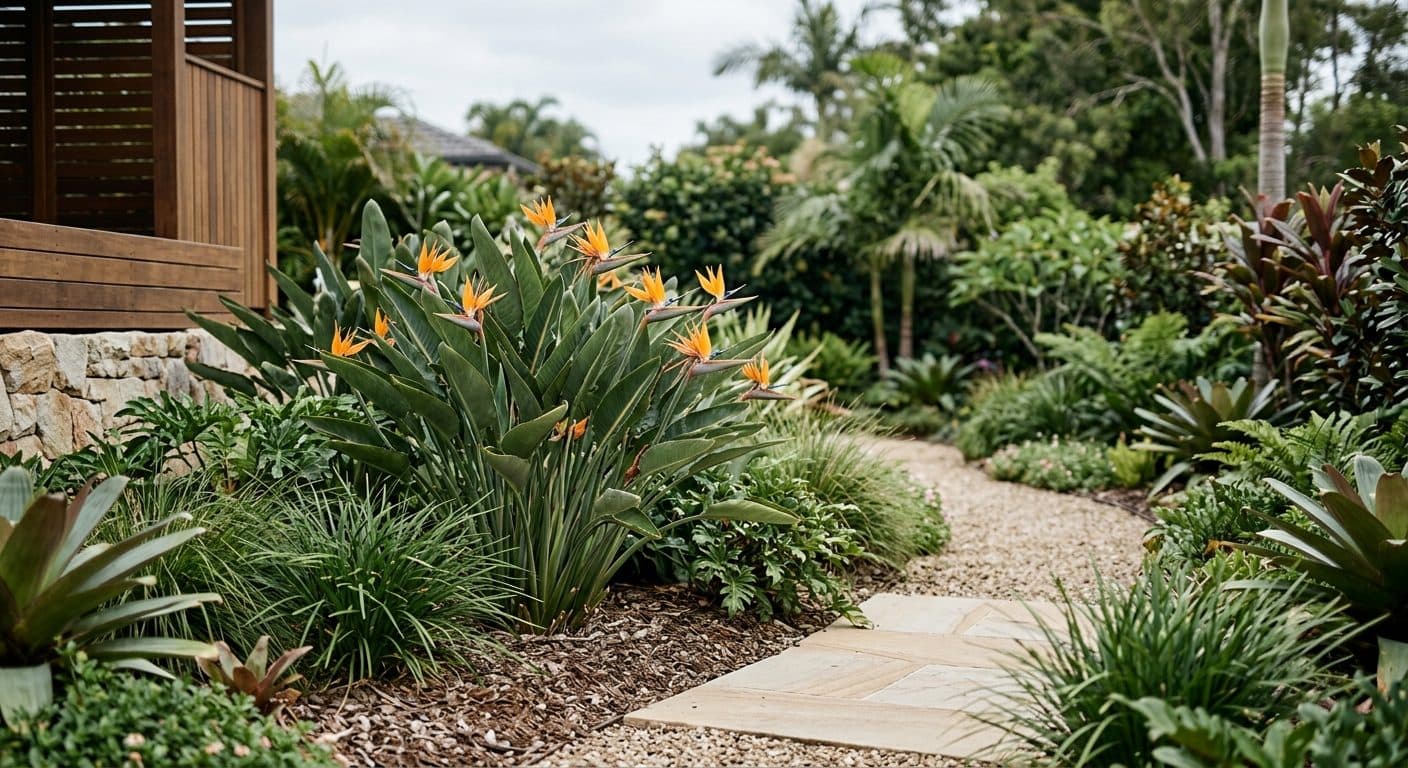
Photo: Scott Bauer, USDA, Public domain, via Wikimedia Commons
How we design with it
We use Strelitzia reginae as tough architecture, a clump of bold upright leaves that gives a bed instant structure and reads as tropical while asking for almost nothing, which makes it a mainstay of our low-maintenance garden design. Its clean, sculptural form and strong lines also suit a modern garden design, where a single well-placed clump or a repeated rhythm of them holds a minimalist bed without any fuss.
In a tropical garden design we let it carry the look in the sunnier, drier spots where the thirstier gingers and heliconias would struggle, giving the planting reliable backbone and colour. The giant nicolai we deploy sparingly and always on purpose, as a big architectural screen against a tall wall, never as an impulse buy in a courtyard it will swallow within a few years.
Common questions
Want the tropical look without the tropical water bill?
We're currently taking on new landscape design clients across Brisbane. Reach out for a personalised quote, whether you're a homeowner or a design professional.
Book a Free Discovery Call