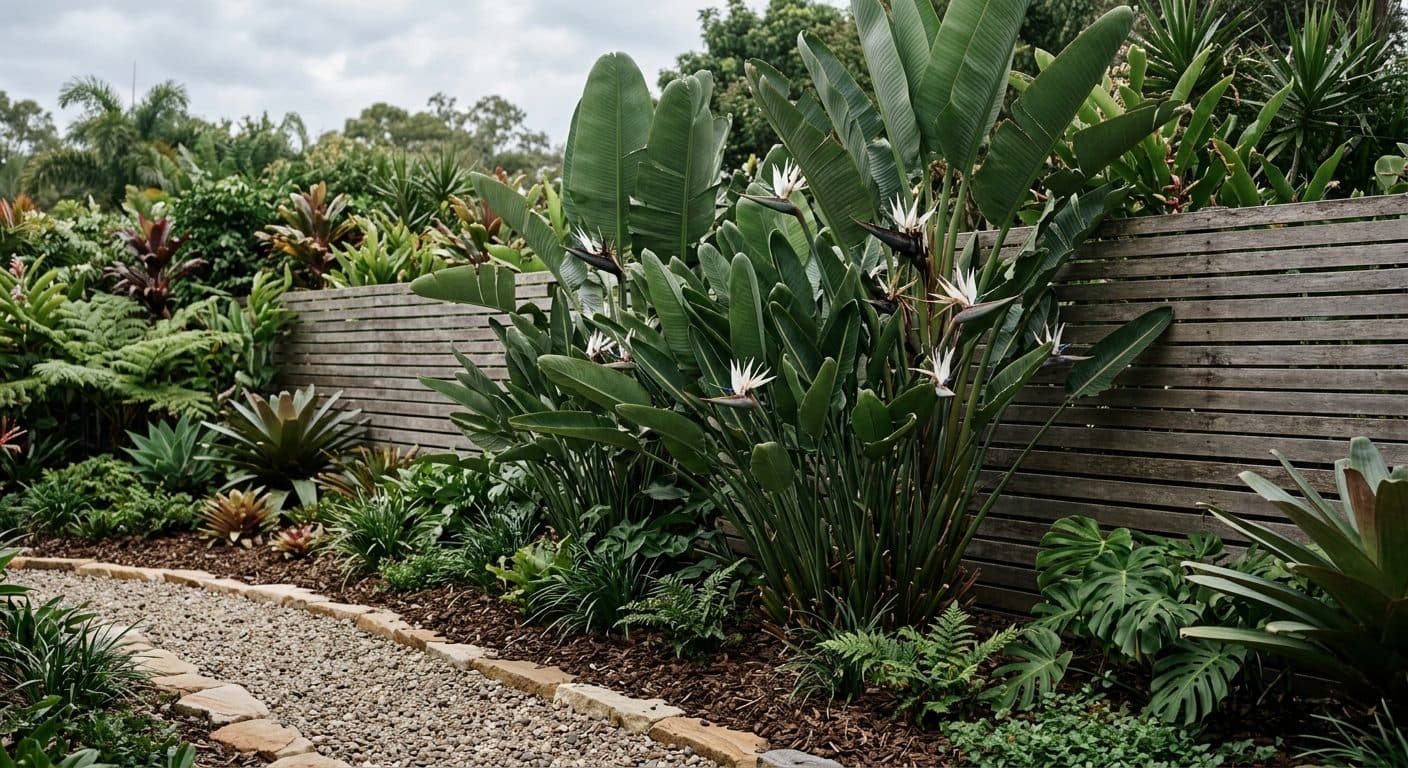
Strelitzia nicolai, the towering banana-leaf clump that screens a two-storey wall, with roots to plant well clear of anything you value.
Strelitzia nicolai · Also known as Giant White Bird of Paradise, Wild Banana, Natal Wild Banana, Strelitzia
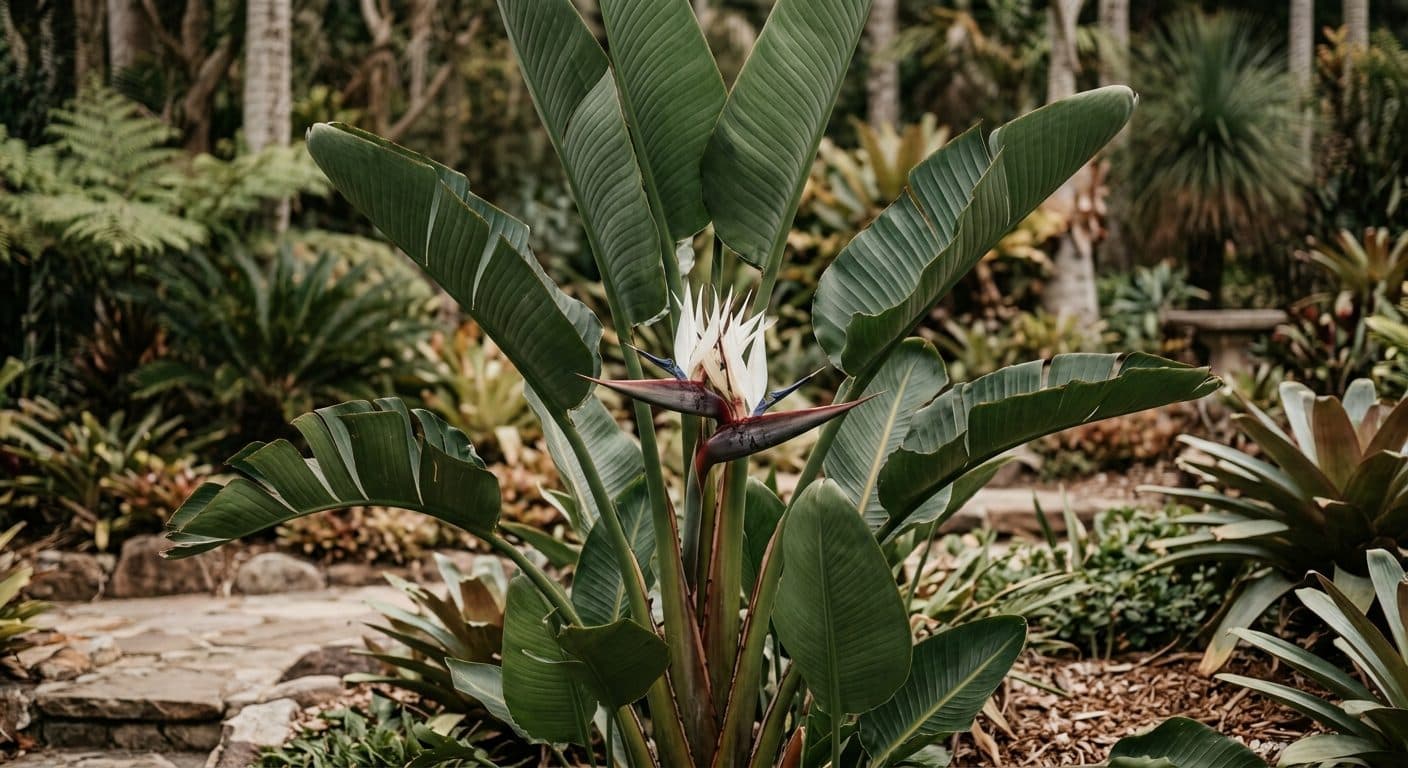
The giant bird of paradise is the big cousin most people don't realise they're buying. It shares the common name and the crane-shaped flower with the tidy Strelitzia reginae, but nicolai is a different beast: a towering, multi-trunked clump of huge, banana-like paddle leaves that reaches several metres, with flowers in white and steely blue rather than orange. Used deliberately it is one of the most dramatic architectural plants we can put in a Brisbane garden, and used by accident it swallows a courtyard whole.
So the honest headline for this plant is scale and roots. Give it real room and it earns every metre, screening a blank two-storey wall or anchoring a big tropical bed the way little else can. Squeeze it against the house, a pool or a boundary and you inherit two problems: leaves that shred in the wind and a vigorous root system that does not respect paving.
In a Brisbane garden
In our warmth the giant bird of paradise grows fast and reads pure tropical, which is exactly why it turns up in courtyards it will overwhelm within a few years. It is genuinely tough once established, shrugging off dry spells and full sun, and its big leaves give instant lushness, but the honest note is that this is a large plant pretending to be a shrub at the nursery. Plant it where a four to eight metre clump is a feature, not a surprise: against a tall blank wall, screening a neighbour's upper storey, or anchoring the back of a big bed with space to spread.
The part that matters most is underground. Nicolai carries a vigorous, genuinely intrusive root system, a dense mass of thick, fleshy roots and expanding rhizomes that can lift paving, push at pool coping and crowd pipes and shallow services over time. Keep it well clear of the pool shell, paths, driveways, slabs and the boundary, and if a spot is too tight to give those roots open ground, choose the clumping bird of paradise (Strelitzia reginae) instead, which stays in proportion and behaves itself near hard edges. Its other Brisbane quirk is the leaves: in an exposed, windy position they tear into a ragged fringe, so a sheltered aspect keeps it looking its best.
How we design with it
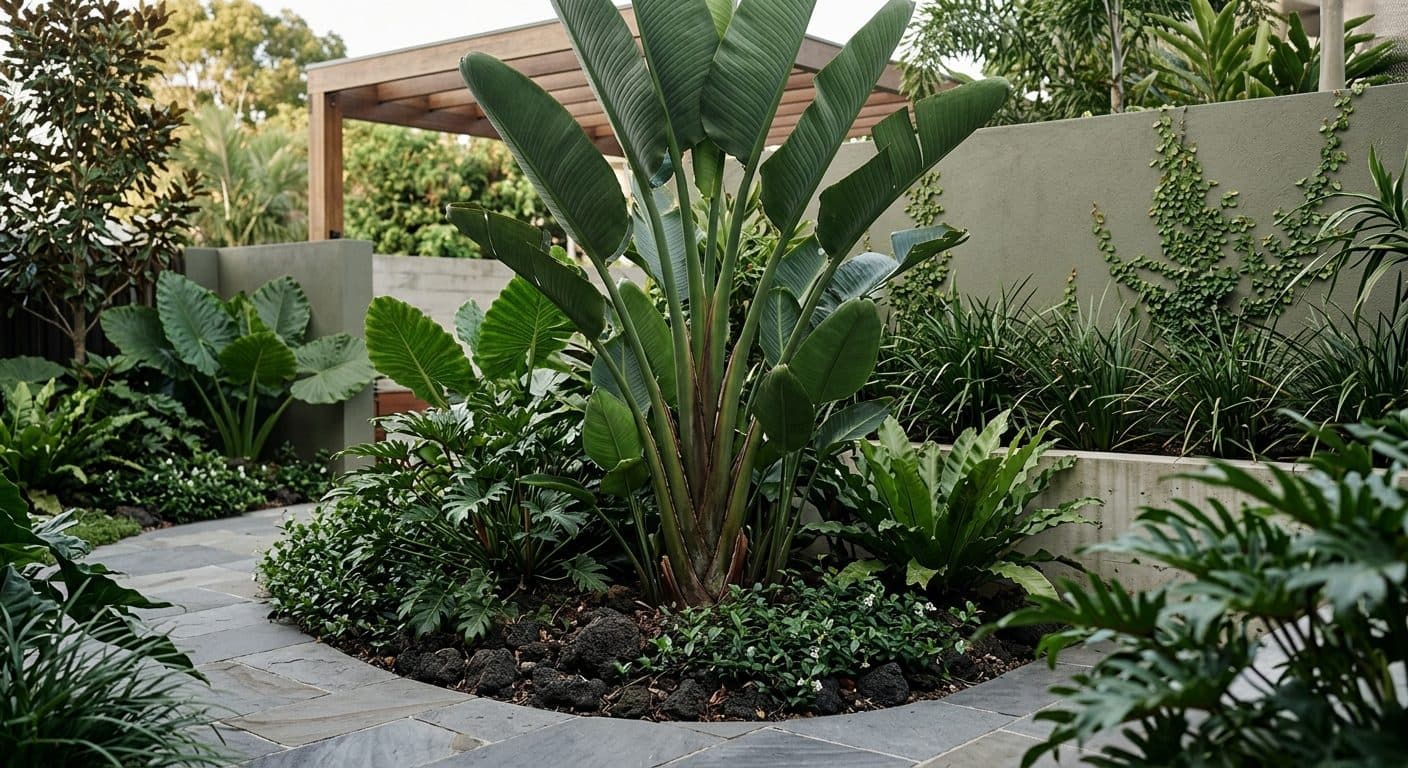
We treat the giant bird of paradise as deliberate architecture, never an impulse buy. In a tropical garden design it carries the top layer where you need real height and bold leaf, throwing a canopy of paddles above the gingers and cordylines and reading as instant resort. Its most useful job is screening: a clump against a two-storey wall or along a back boundary blocks an upper-storey sightline that a normal hedge never could, which is why it earns a place in our thinking on screening plants for Brisbane.
The one rule we never bend is room. We site it well clear of the pool, paving and the house so its roots and its bulk both have somewhere to go, and we pair it with tougher low planting beneath rather than anything precious that will be shaded out. Get the position right the first time and it is close to no work; get it wrong and moving an established clump is a genuine excavation.
Where we write about giant bird of paradise
Common questions
Want the drama without planting a problem?
We're currently taking on new landscape design clients across Brisbane. Reach out for a personalised quote, whether you're a homeowner or a design professional.
Book a Free Discovery Call