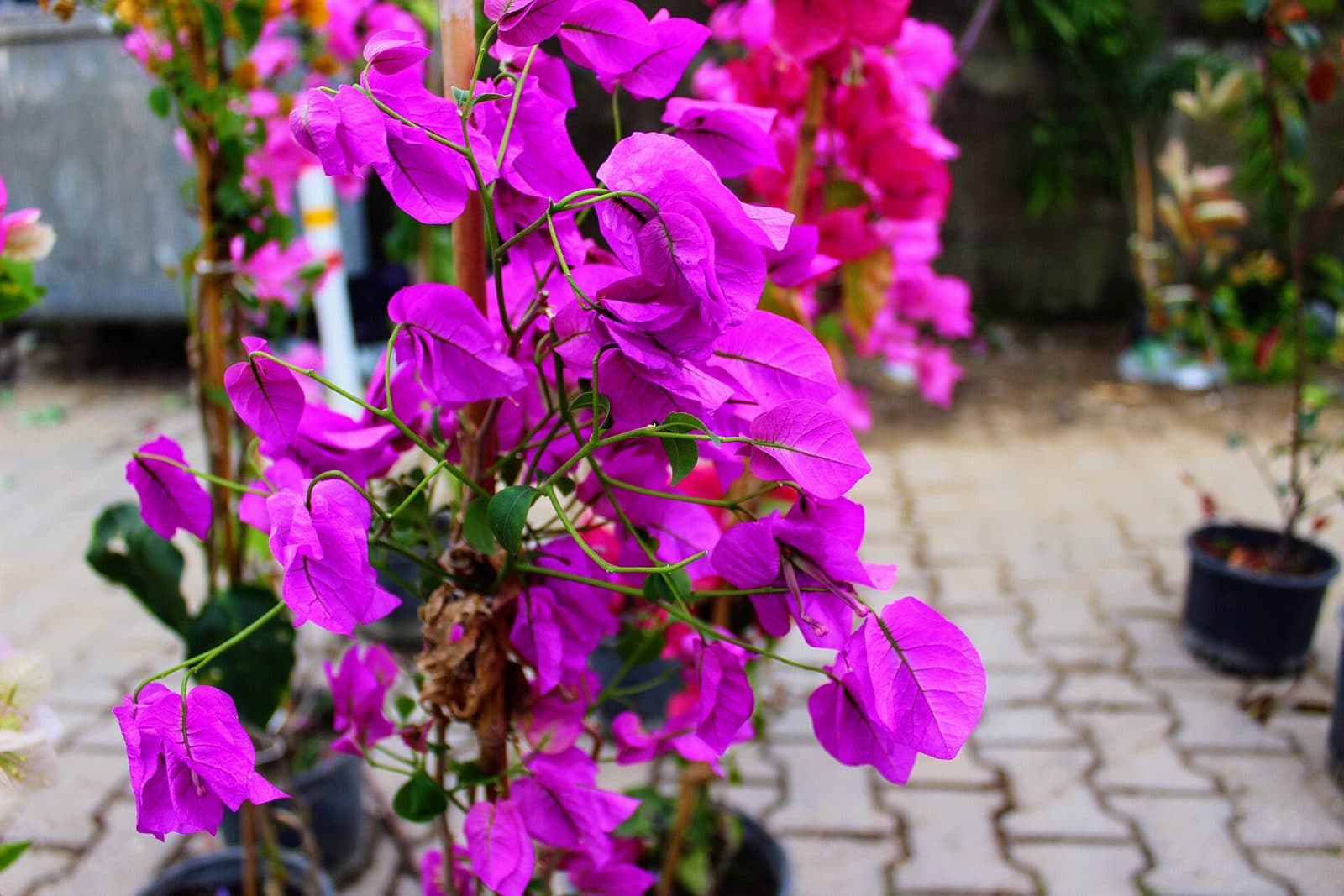
Bougainvillea glabra, the hot-blooded subtropical scrambler that turns a bare fence or west wall into a wall of magenta, orange and paper-white bract.
Bougainvillea glabra · Also known as Bougie, Paper Flower, Paperflower
Nothing else covers a structure in colour quite like bougainvillea. Through the warm months it throws sheets of papery bracts in magenta, orange, red, apricot and white, and those bracts (not the tiny true flowers tucked inside them) are what read from the street. It loves everything Brisbane throws at it: blazing full sun, reflected heat off masonry, long dry spells and the kind of west-facing wall that cooks most other plants.
It is also the plant we most often have to talk clients through carefully, because its virtues and its hazards come from the same source. The vigour that clothes an ugly fence in a season is the vigour that will pull down a flimsy trellis, and the drought-hardiness that makes it thrive on neglect is exactly why it sulks into all leaf and no colour the moment it is coddled. Used with open eyes it is one of the great subtropical performers. Used carelessly it becomes a thorny thug.
In a Brisbane garden
Bougainvillea is one of the few plants that genuinely flowers better when it is a little stressed. Rich soil, frequent watering and a hit of high-nitrogen lawn feed will give you a lush green monster and almost no bract. Keep it lean, let it dry out between soaks once established, and hold back the fertiliser, and it colours hard. This makes it a natural for a hot, low-water bed, and it sits comfortably in the kind of dry, sun-baked planting we lean on for low-maintenance garden design.
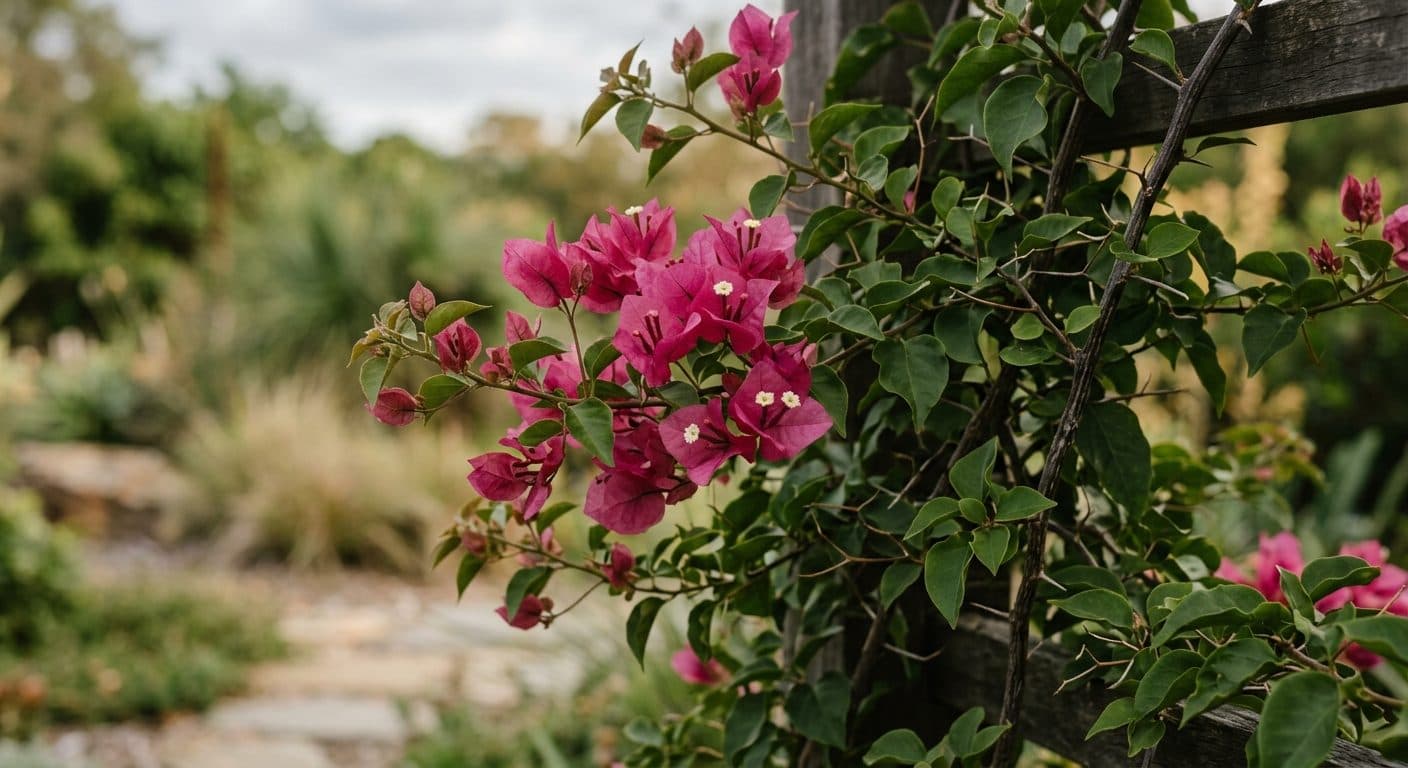
The trade-off every Brisbane gardener meets is the thorns. Bougainvillea carries vicious hooked spines along its stems, so we never place it beside a path, a pool gate, a doorway or anywhere children brush past. It wants a wall, a solid fence, a sturdy pergola frame or a big bank with room to sprawl. Young plants are frost-tender, which rarely troubles inner Brisbane but is worth knowing in the colder western and southern pockets that catch a winter ground frost.
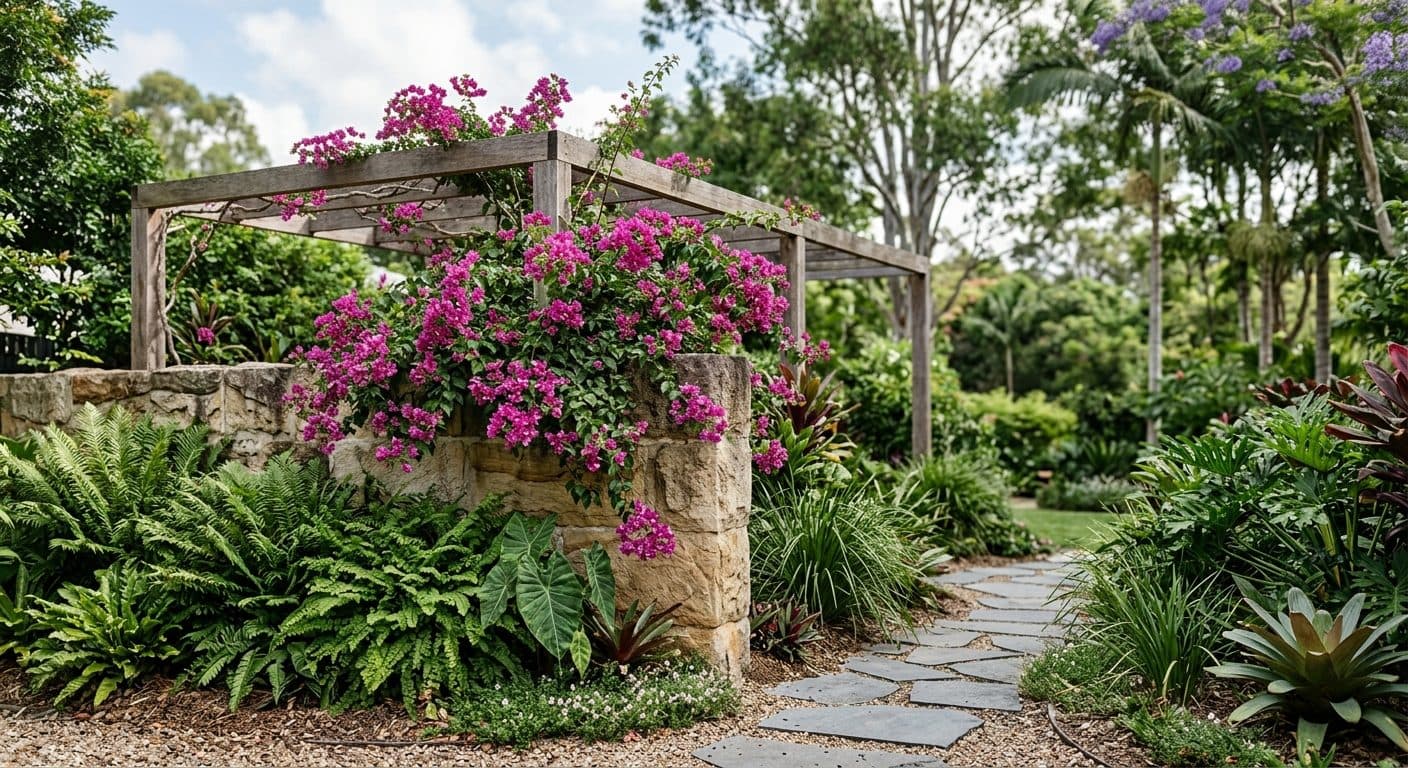
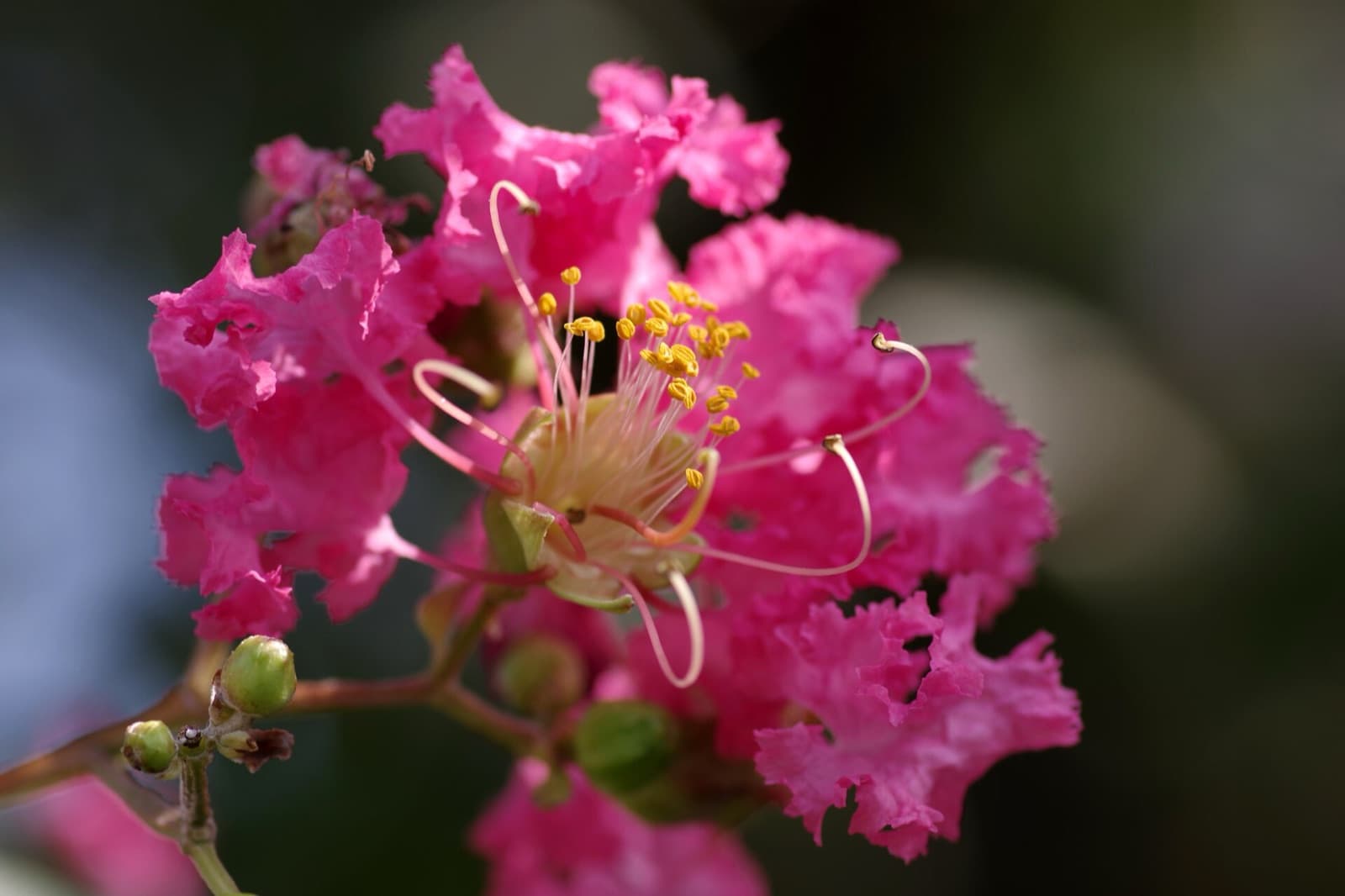
Photo: Kızıl, CC BY-SA 4.0, via Wikimedia Commons
How we design with it
We reach for bougainvillea when a garden needs a jolt of hot colour on a vertical surface: screening an ugly boundary fence, softening a blank west wall, or spilling over the top of a retaining wall so the colour cascades down a bank. It is a signature plant of the bold, saturated palette we love in tropical garden design, and trained over a solid frame it can throw colour across an outdoor entertaining area exactly where you want to be looking in summer. The one rule we hold to is structure first: because a mature vine is heavy and relentless, it only ever goes on something engineered to hold it, and it gets a hard prune every year to keep it in bounds and force fresh flowering wood.
Where a client wants the colour without the monster vigour, we specify the dwarf and shrub forms instead. The 'Bambino' series and its relatives (including compact types sold as 'Bambino Baby') stay knee to waist high, behave in a large pot, top a low wall or sit in a small courtyard, and carry far gentler thorns. That makes bougainvillea usable in courtyard and balcony gardens where the full climber would be a liability. When we help a client weigh the climbing form against a dwarf, and match it to a structure that can actually carry it, that is the sort of call we work through in a design consultation.
Where we write about bougainvillea
Common questions
Want hot subtropical colour without the thorny regrets?
We're currently taking on new landscape design clients across Brisbane. Reach out for a personalised quote, whether you're a homeowner or a design professional.
Book a Free Discovery Call