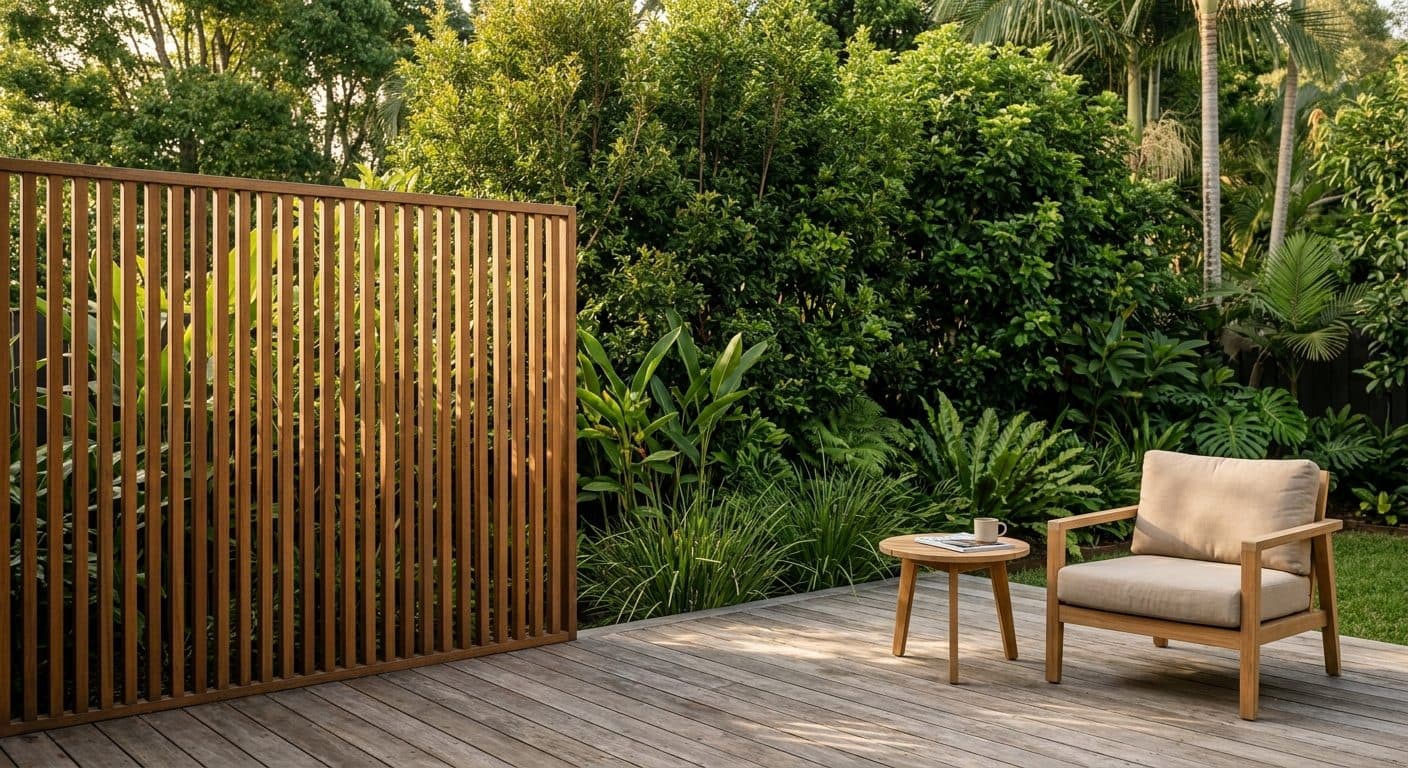
A taller fence rarely fixes the real problem. Here's how I design privacy for close-set Brisbane blocks and overlooked decks, using space and planting instead of a bigger wall.

By Shannon Trevisiol, Landscape Designer, Brisbane · 5 min read
- Privacy is about blocking specific sightlines, not walling off the whole block, so start by finding exactly where you feel watched.
- An elevated neighbour or a two-storey window can't be solved with a taller boundary fence; the screen has to sit closer to you and higher up.
- Layered planting breaks sightlines more softly and completely than a single hedge or a solid barrier.
- Fast screening and slow screening each have a place: use quick growers to buy time while the permanent structure planting matures.
The instinct, when you feel overlooked, is to build the fence higher. It almost never works. A taller boundary fence casts more shade, boxes the garden in, often runs into height rules, and still leaves you staring up at the neighbour's second-storey window, because the thing looking at you is above the fence line anyway. Privacy isn't a wall problem, it's a sightline problem, and once you see it that way the solutions get better, cheaper and far nicer to live with.
On Brisbane's close-set blocks, where houses sit near the boundary and decks look straight into each other, the goal isn't to seal yourself off. It's to break the specific lines of sight that make you feel watched, while keeping the garden light, open and green. This is a design job about space and planting, not a defensive one about barriers, and it starts with working out exactly where the exposure is.
Find the actual sightline first
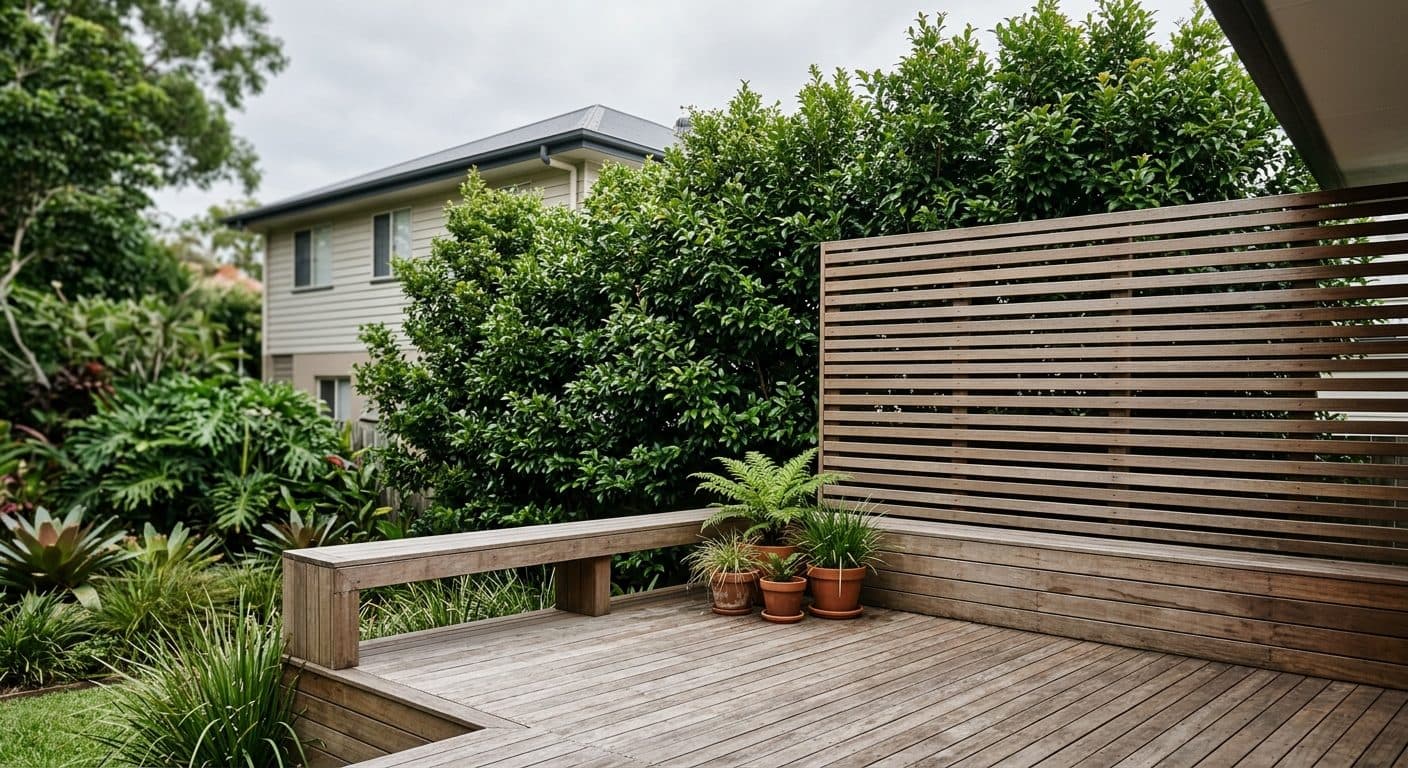
Before choosing a single plant, I stand where you actually sit: the spot on the deck, the outdoor table, the kitchen window, the pool. Then I look for where the eyes are, the upstairs window next door, the neighbour's deck, the footpath along the front. Privacy is almost always about a handful of specific sightlines, not a full perimeter, and a screen placed close to you blocks far more of the view than the same screen on the distant boundary. That's the key insight people miss: a modest screen two metres from your chair does more than a towering fence ten metres away, because it's the angle that matters, not the height of the whole block.
Layered planting beats a single hedge
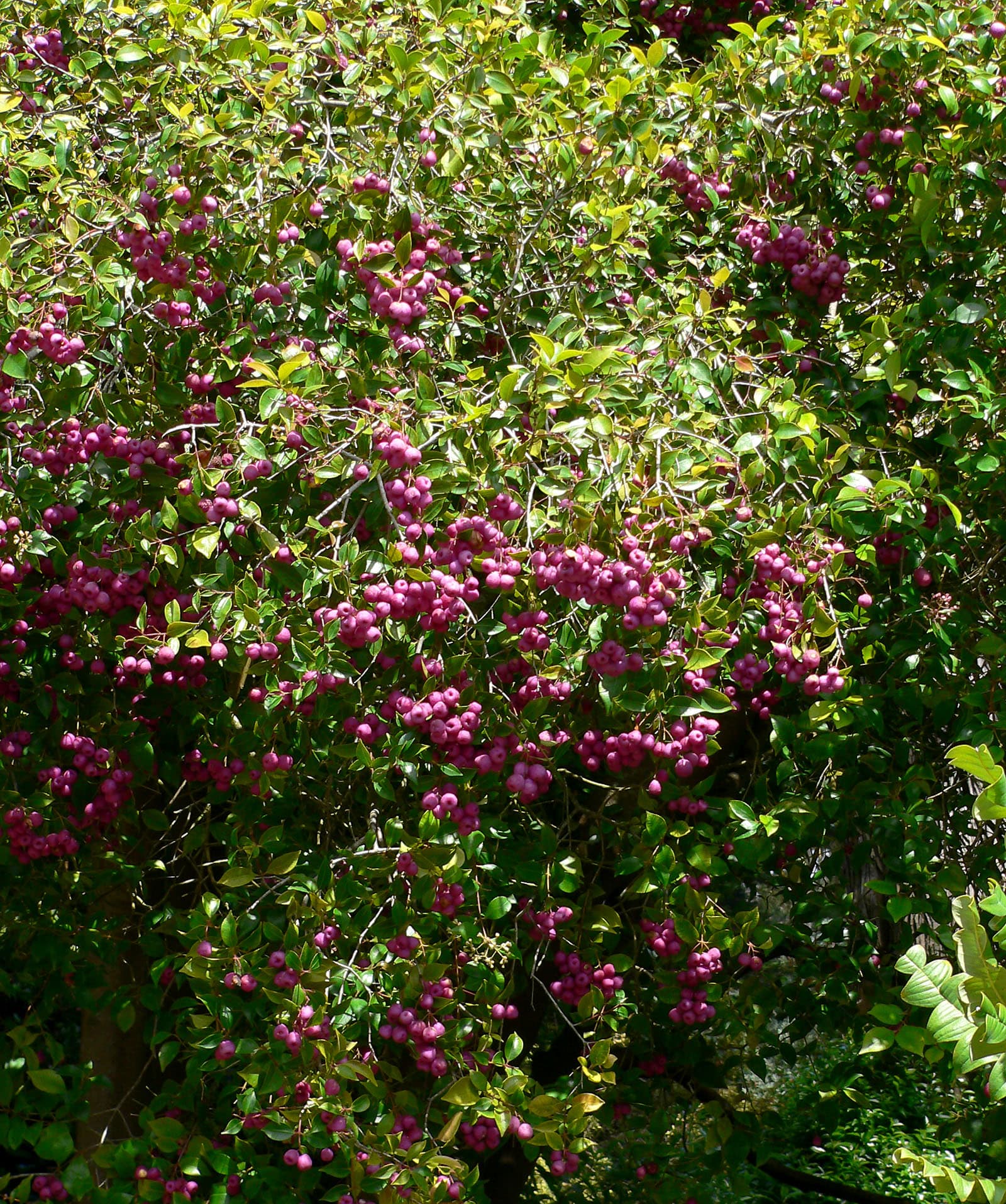
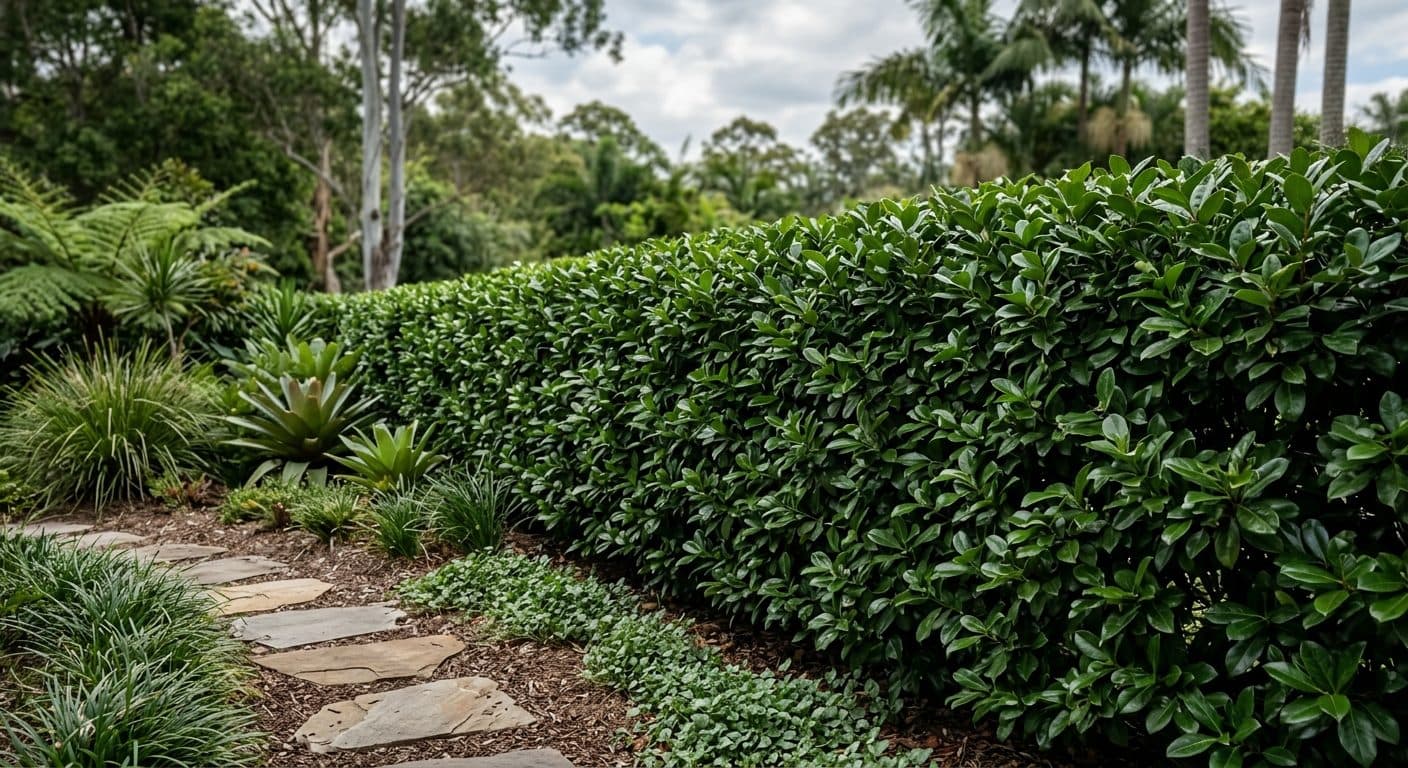
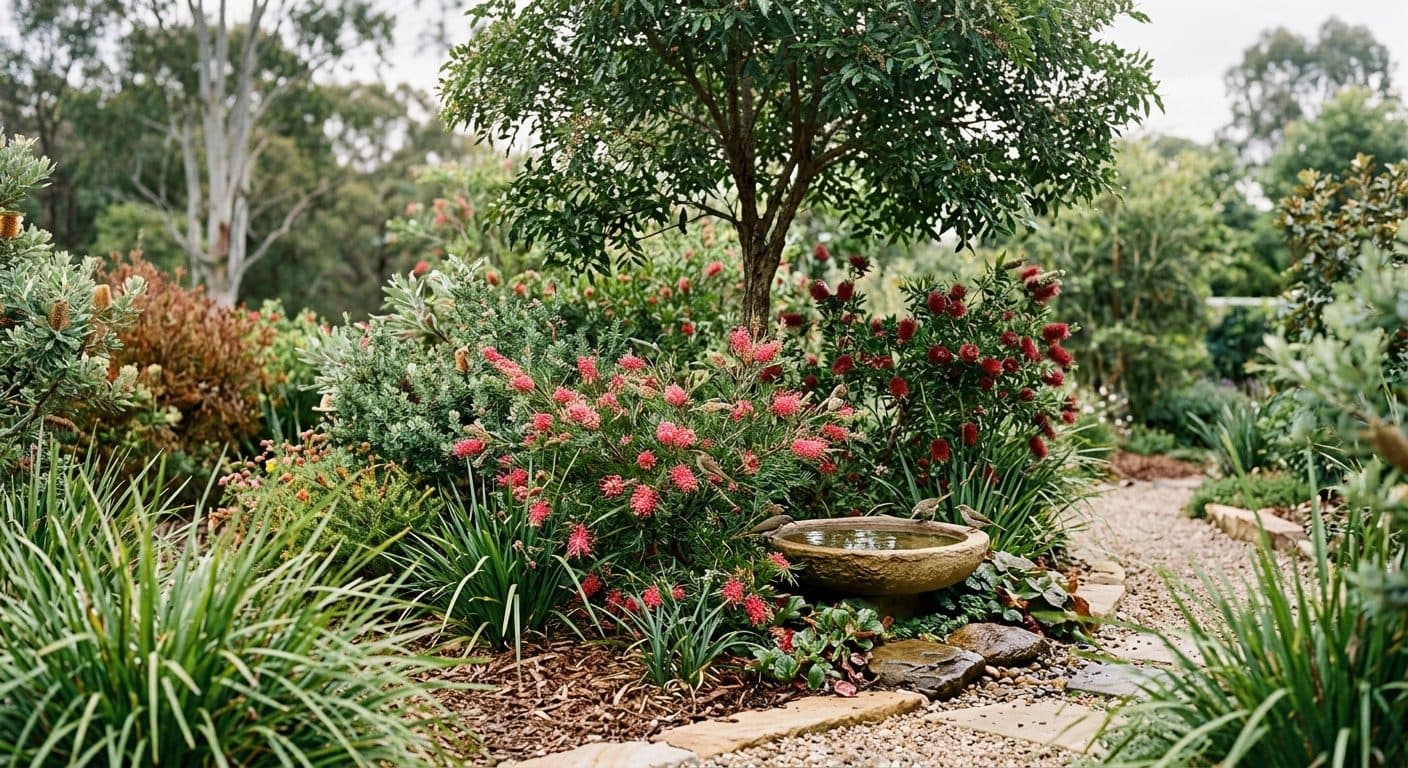
A single row of hedging is the usual answer and it's rarely the best one. Layered planting (a taller tree or large shrub, a mid-height layer, and something soft underneath) breaks a sightline more completely and reads as garden rather than barrier. The eye can't find a clean line through depth the way it can past a flat hedge, and you get a richer, cooler, more alive edge in the bargain. For a fast, dense green wall a screen of lilly pilly (Syzygium) is the Brisbane default for good reason, and a layer of viburnum or murraya fills the middle beautifully. My guide to screening plants runs through the full palette and the spacing that actually closes a gap, because this piece is about where the screen goes, and that one is about what to put there.
The elevated-neighbour problem
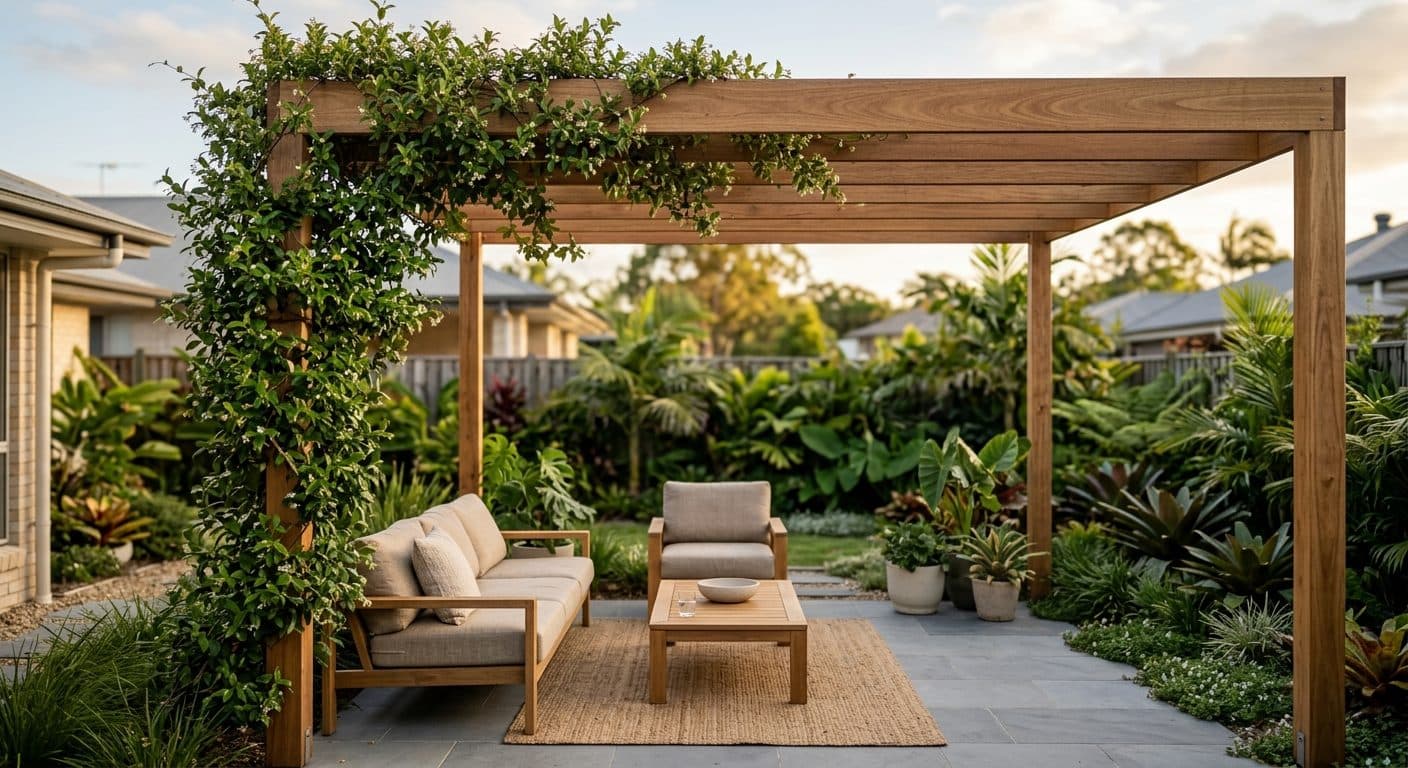
The hardest case in Brisbane is the two-storey house or the raised Queenslander next door looking down into your yard. No boundary fence reaches that, and this is where people give up and accept feeling watched. The fix is to lift the screen closer to you and higher up: a well-placed tree with a canopy at the right height, a pergola or an overhead structure with a planted or slatted top that intercepts the downward view, or a screen built up around the deck itself rather than along the fence. You're not trying to block their whole house, just the cone of view into the spot where you sit, and that's a much smaller, more achievable target.
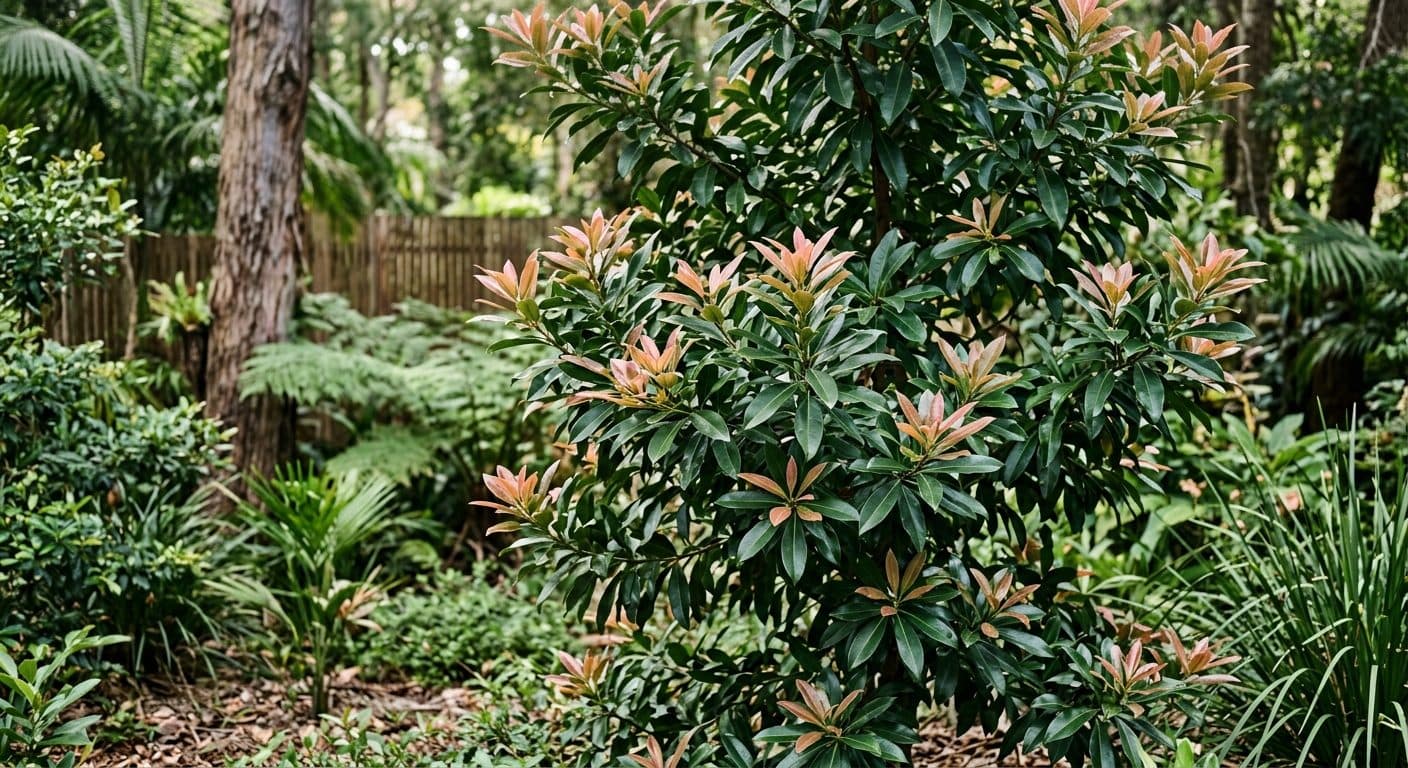
The trick with trees here is shape. On a tight block you want height without width, so a naturally upright, columnar species screens the sightline without spreading a canopy across a garden that hasn't got the room. Eumundi quandong (Elaeocarpus eumundi) is a lovely choice for exactly this, a tall, narrow rainforest tree that holds dense glossy foliage low on the trunk and flushes pink at the tips, so it lifts a screen against an upstairs window while keeping its feet out of the usable garden. Planted in a row it knits into a tall green wall, and as a single tree it still breaks the one sightline that's bothering you.
Structures and green screens together
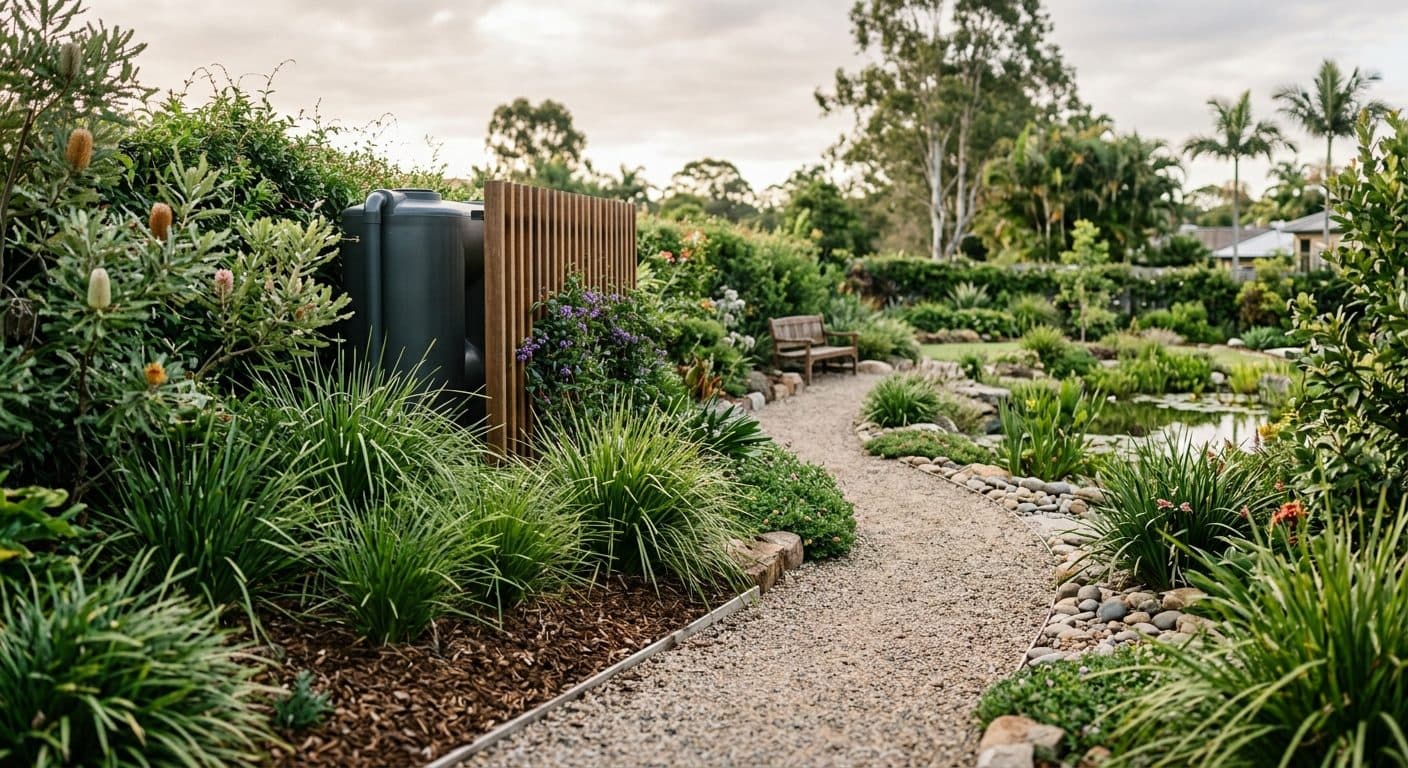
Planting alone is the ideal, but it takes time, and sometimes the geometry needs something built. A slatted timber screen, a batten panel or a run of vertical greenery gives you an instant sightline break with an architectural edge, and clothed in a climber it softens into the garden within a season or two. The best results usually pair the two: a structure for the immediate, reliable screen, and planting layered in front of and around it so that within a couple of years the structure disappears and the garden does the work. On a compact site this doubles as good small garden design, because a screen that's also a green feature earns its footprint twice.
Fast versus slow, and buying time
Screening is a patience game, and the honest trade-off is speed against longevity. The quick growers that give you cover in a season are usually the ones that keep growing hard and need managing forever, while the slower, better-behaved plants that make a superb permanent screen leave you exposed for a year or two while they fill in. The move I usually make is to plant both: the permanent structure planting for the long game, with a faster grower or a built screen buying you privacy in the meantime, then easing back as the good stuff matures. It's the same logic that makes a privacy scheme work at the front of the house as well as the back.
If you're eating dinner feeling like you've got an audience, a bigger fence isn't the answer. Our Design Discovery Consultation is the place to start, and we'll stand where you actually sit and design the screen around the view that's bothering you.
Ready to start designing?
We're currently taking on new landscape design clients across Brisbane. Reach out for a personalised quote, whether you're a homeowner or a design professional.
Book a Free Discovery Call