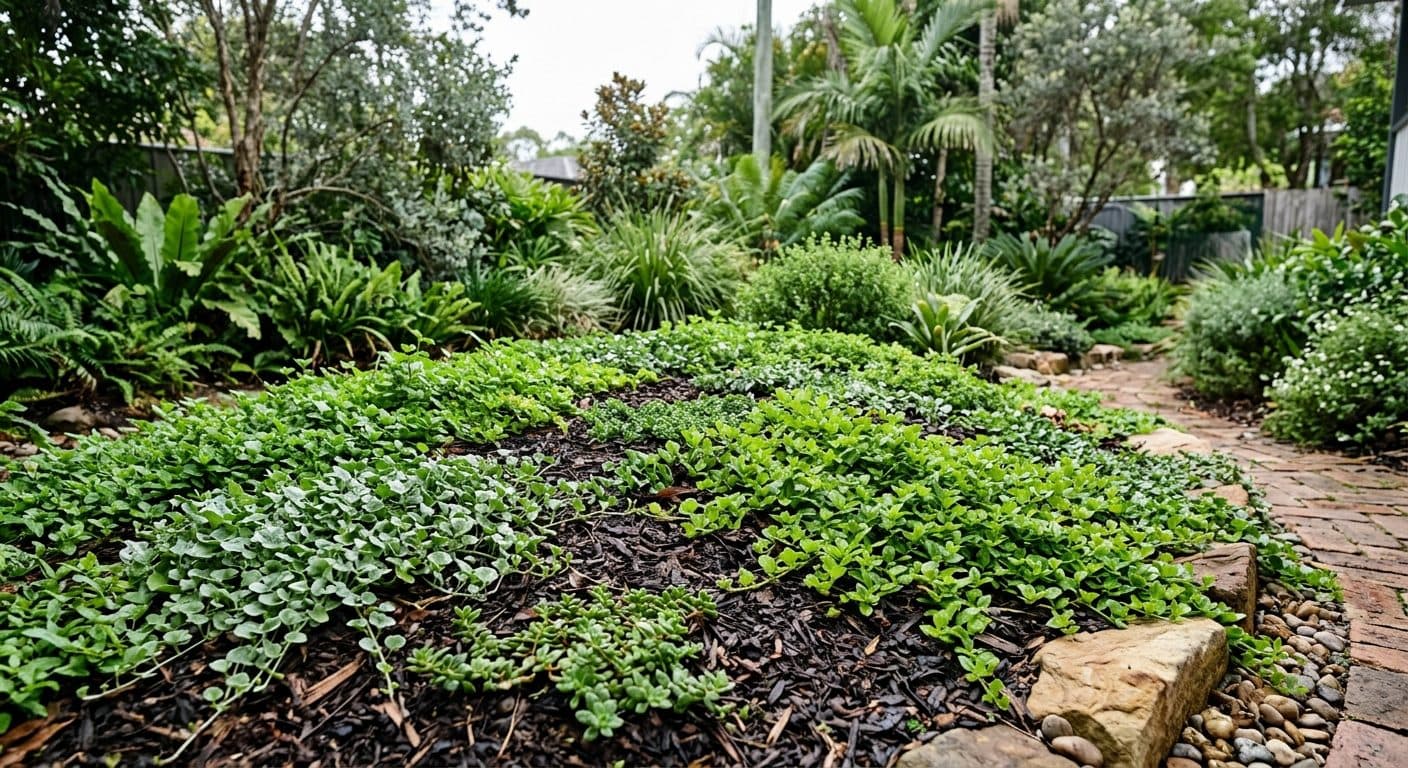
Ground cover plants earn their keep in Brisbane as living mulch: smothering weeds, holding a slope through a storm, and softening the strips too narrow to mow. Here's how I choose them.

By Shannon Trevisiol, Landscape Designer, Brisbane · 5 min read
- Treat ground cover as living mulch: a knitted mat keeps suppressing weeds and cooling the soil long after bark chips have broken down and blown away.
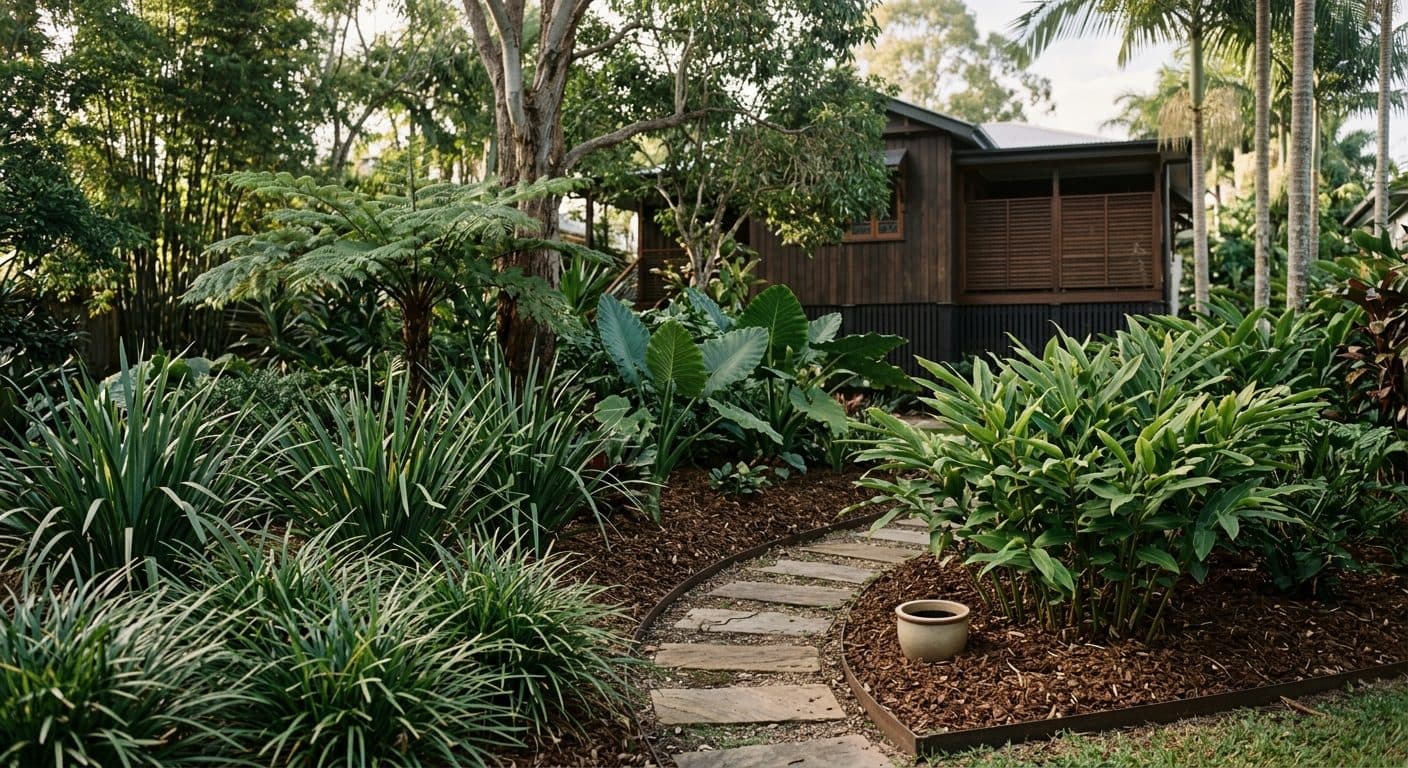
- Match the plant to the job. Walk-on covers like native violet and mondo grass take foot traffic between pavers; bank-and-bed covers like dianella, liriope and fan flower mass-plant to hold soil.
- Nothing suppresses weeds until it knits together, so space plants for year one, mulch between them, and water through the first dry spell.
- On reactive clay that sheds a summer storm, a living mat slows the run-off and threads roots through the topsoil so a slope stays put.
Ground cover plants earn their keep in Brisbane by doing the two jobs no one enjoys doing by hand: smothering weeds before they get a foothold, and holding soil in place when a February storm tries to move it. The frame I want you to hold for the rest of this piece is that a good ground cover is living mulch. A layer of bark chips suppresses weeds until it breaks down and blows into the gutter, whereas a knitted mat of foliage keeps suppressing them, keeps the soil cool, and slowly builds the ground underneath it.
The catch, and there's always one, is that ground covers don't suppress anything until they've knitted together, and knitting takes a season or two of mulch and water while the plants are still small and the gaps between them sit wide open to weeds. Plant them, walk away, and you've built a weed nursery with decorative edges. Get the establishment right and you've bought yourself years of not weeding, which in a Brisbane growing season is worth a great deal.
Walk-on covers versus bank-and-bed covers
The first fork in the road is whether feet ever land on the plant. Walk-on covers take the odd footstep between pavers, a shortcut across a narrow strip, a dog doing its laps, and they knit low and tight enough to read as a soft green floor. Bank-and-bed covers are for mass planting where nobody walks: the batter beside the driveway, the slope you can't safely mow, the bed you'd rather not weed. They can be taller, looser and more vigorous because you're asking them to cover ground and grip soil, not to survive a boot. Mixing the two up is how people end up with a lovely groundcover worn to bare footprints, or a bank plant that never quite holds the bank.
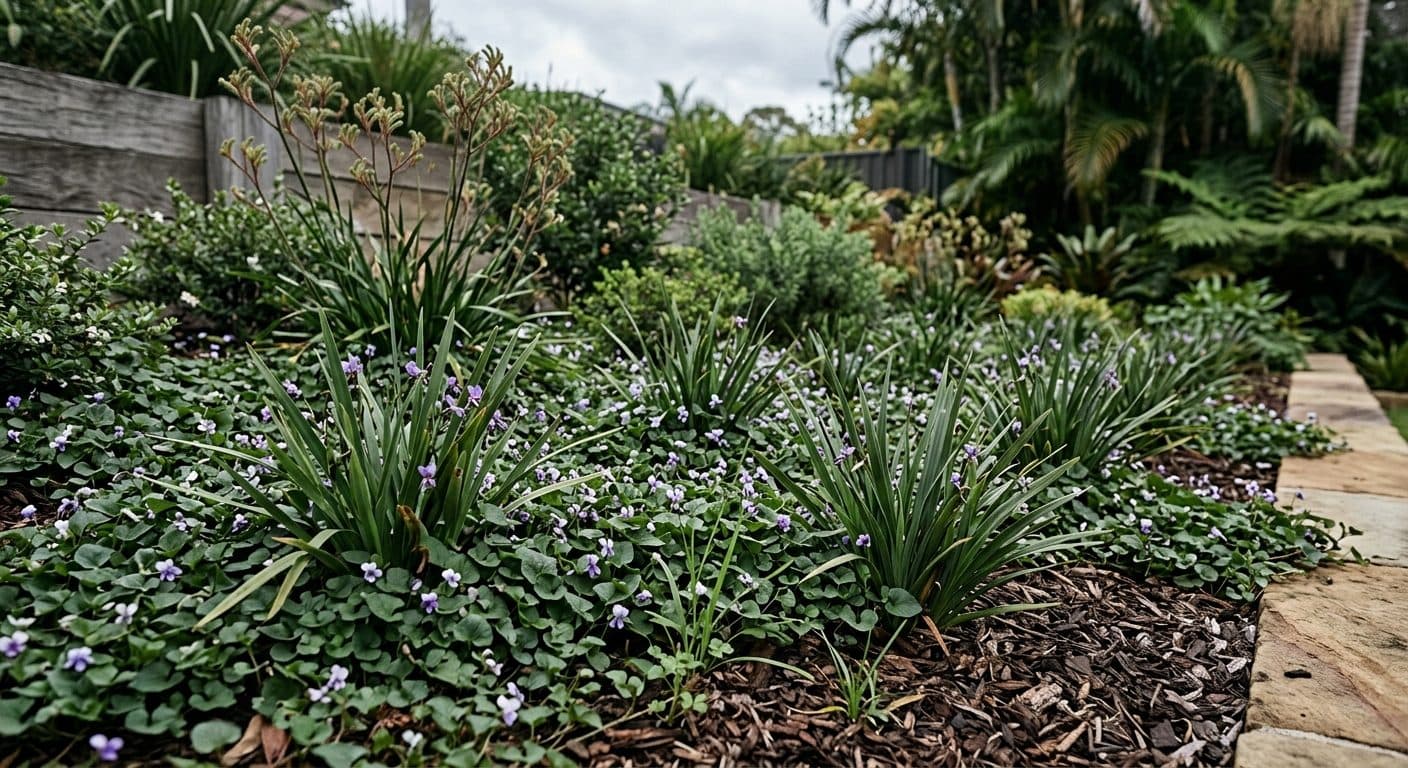
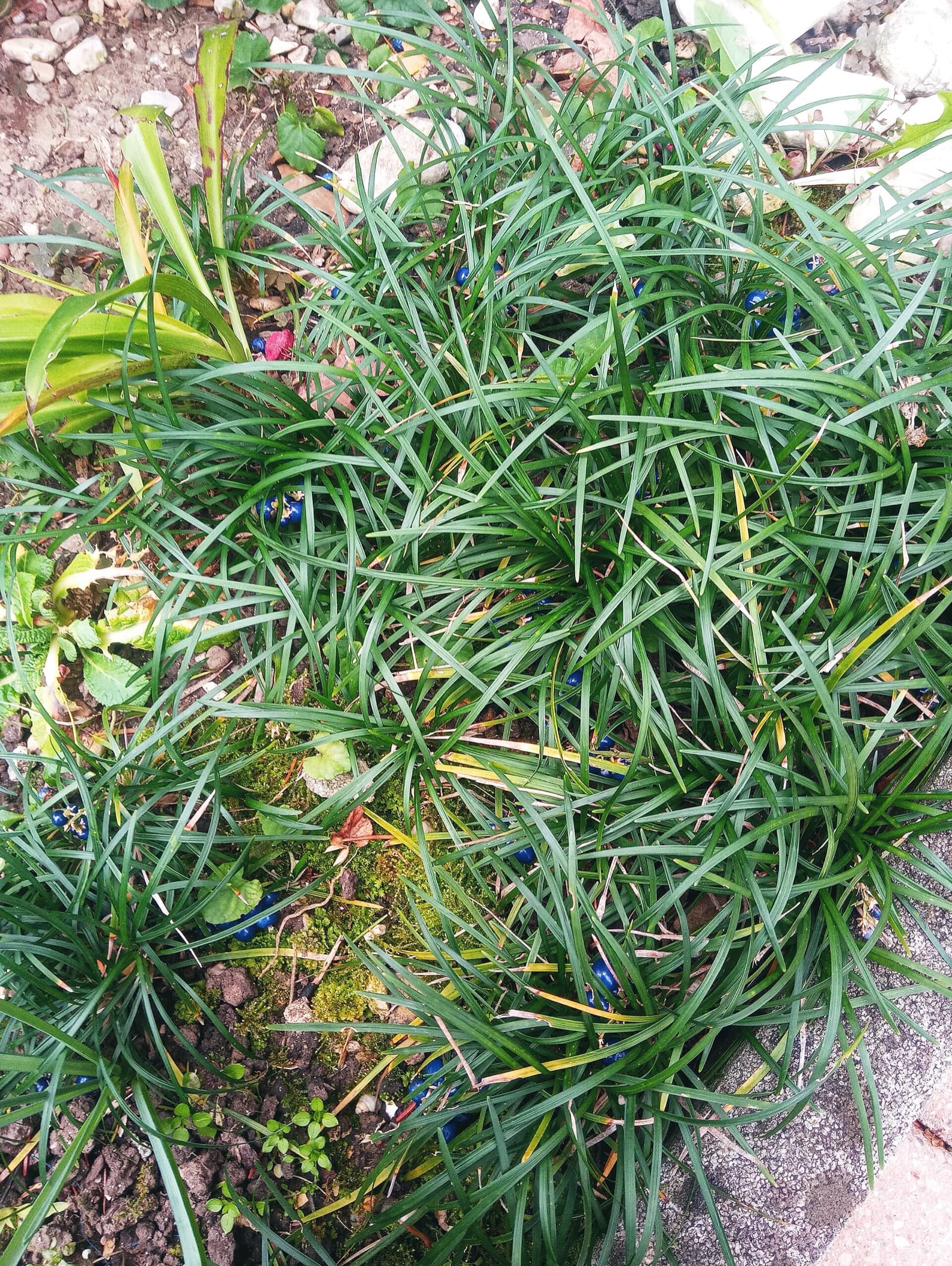
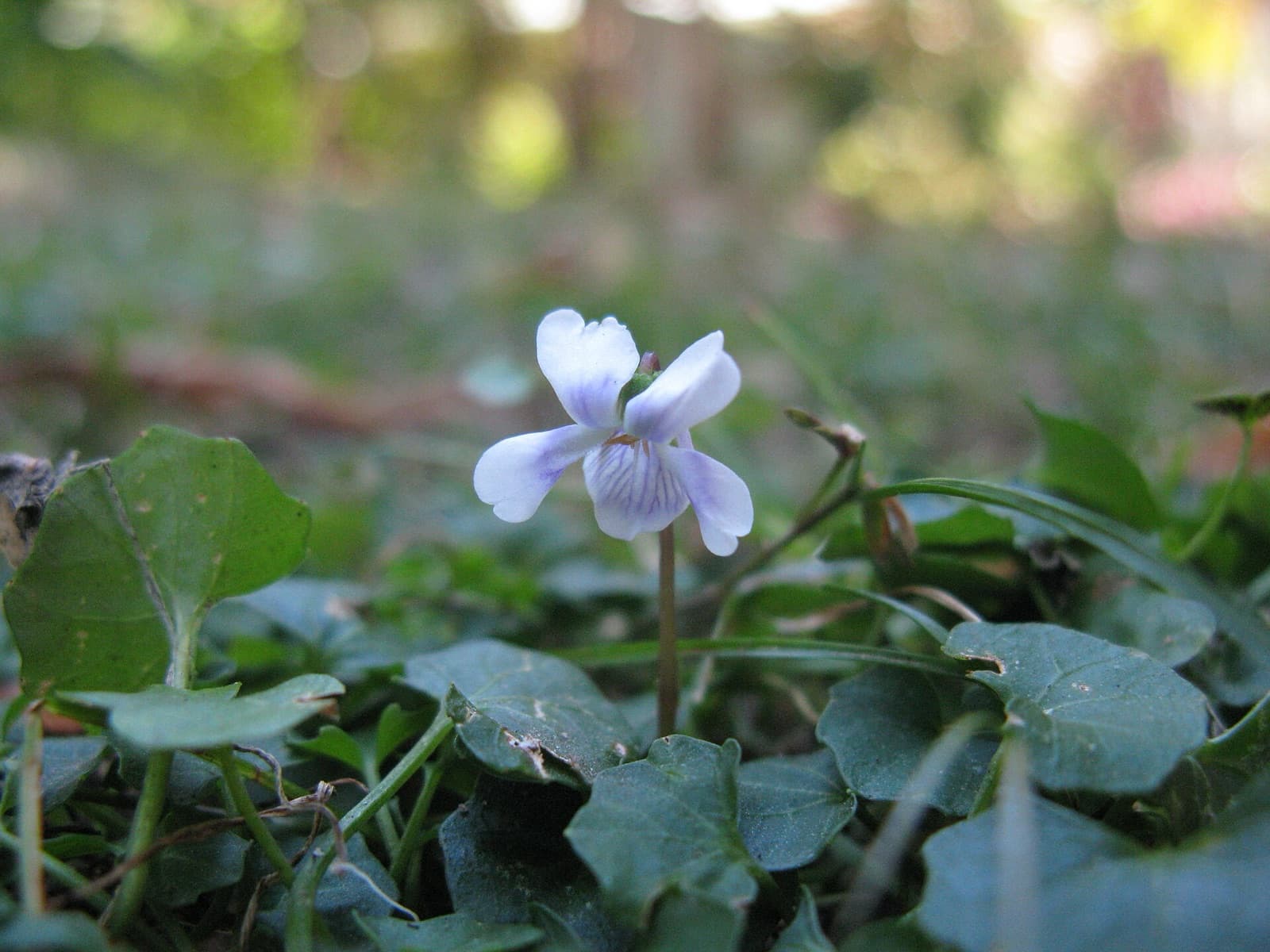
For the walk-on job in shade or part shade, native violet (Viola hederacea) is my first pick. It's a genuine local, it carpets damp ground under trees where lawn only sulks, it takes light foot traffic, and it flowers on and off most of the year without asking for much. Mondo grass (Ophiopogon japonicus) is the other classic between pavers and steppers: a tough, dark tuft that settles into the gaps, copes with shade, and never needs mowing, and the dwarf form hugs even tighter where the joints are shallow.
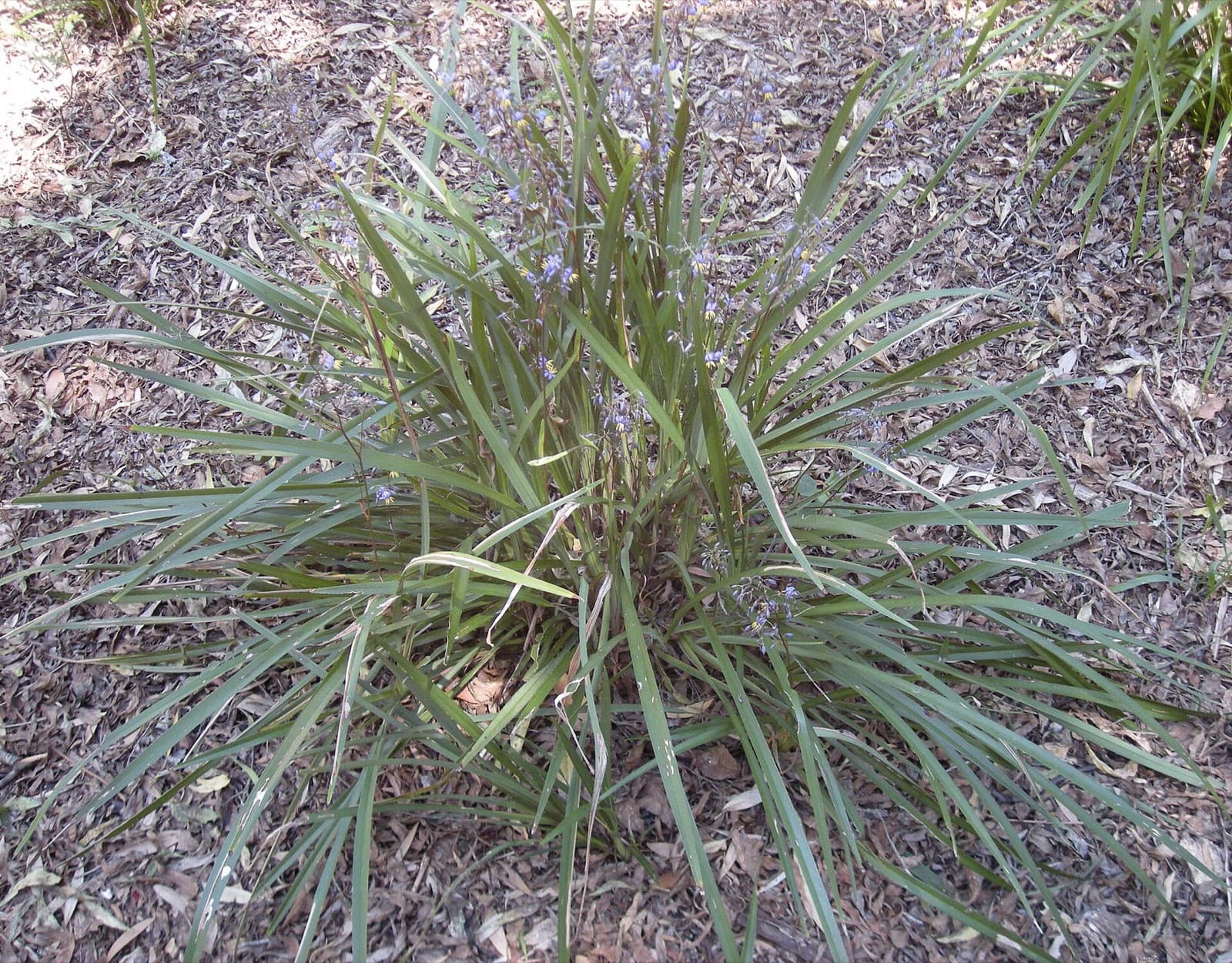
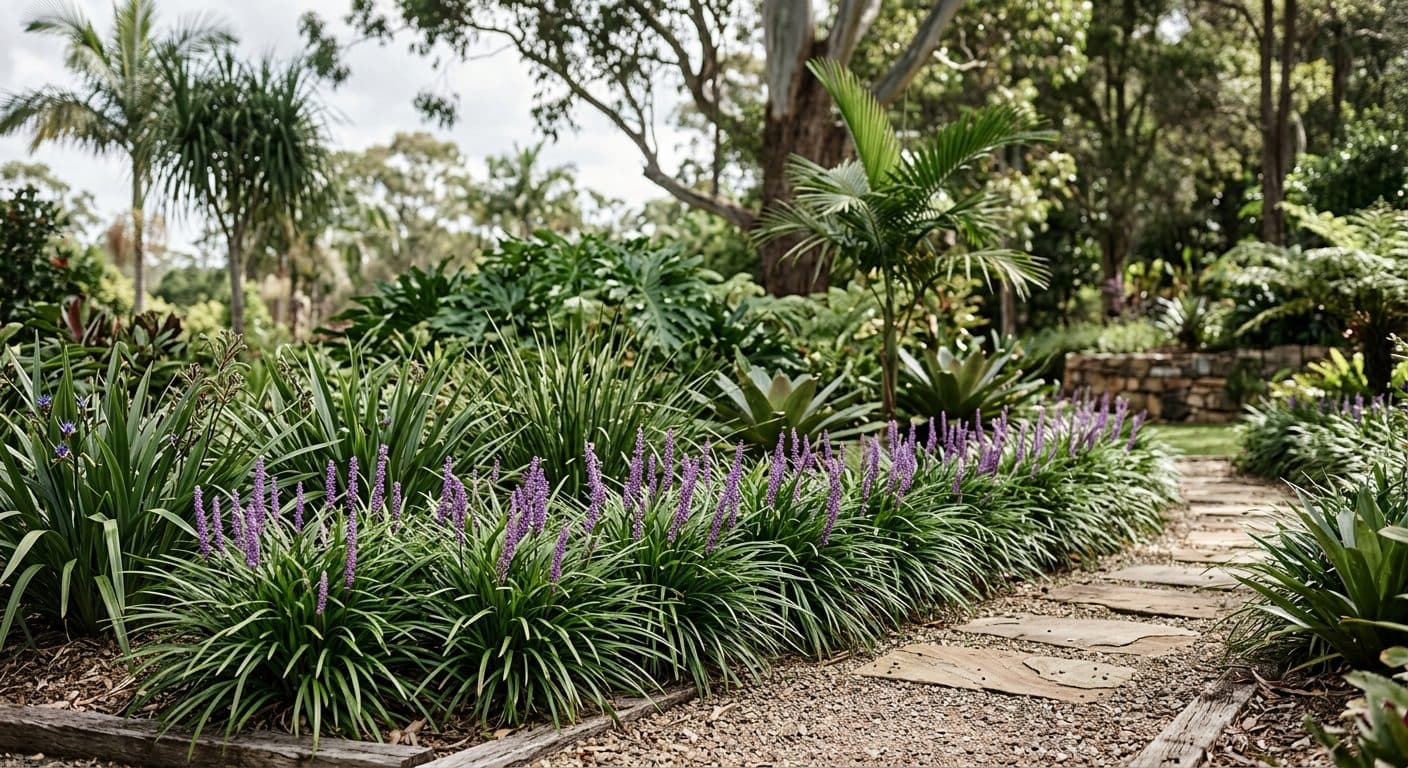
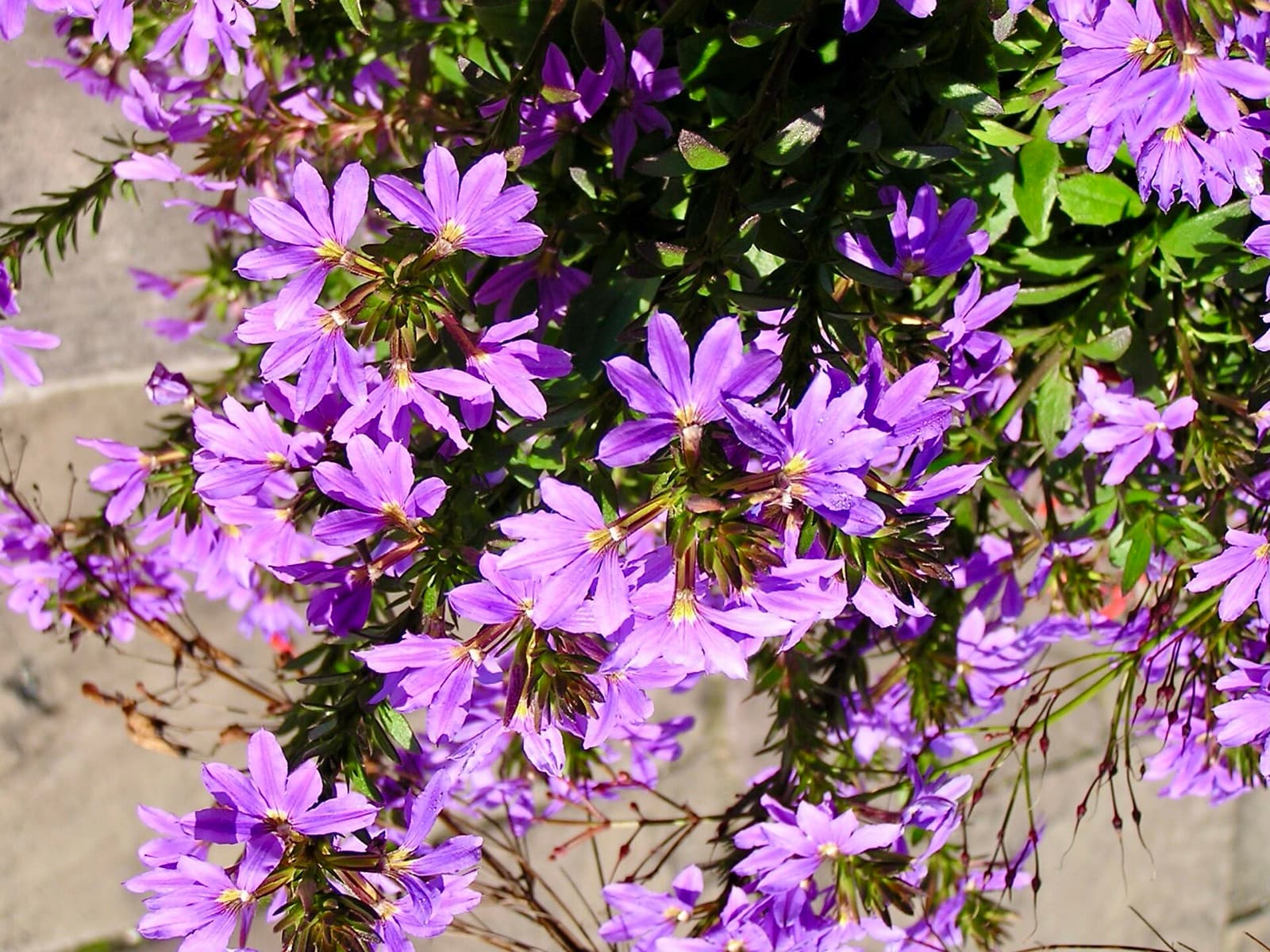
For the bank-and-bed job in full sun, fan flower (Scaevola aemula) sprawls fast across hot, open ground and flowers blue-purple for months, which makes it a favourite for the front of a sunny slope. Dianella, the flax lily (Dianella species), does the heavier structural work, because its strappy clumps and fibrous roots knit into a batter and hold soil through a downpour, and it shrugs off both the sun and the dry once established. Liriope (Liriope muscari) plays a similar part in sun or shade, clumping into a dense, weed-excluding edge that's as at home lining a path as it is massed down a slope.
Holding a slope on Brisbane clay
The reason ground covers matter more here than in a cooler city is the way a Brisbane summer storm arrives: fast, hard, and often onto ground that's been baked dry for weeks. Where you've got reactive clay, and plenty of Brisbane blocks do, that baked surface sheds water rather than drinking it, so the rain runs off and takes bare soil with it. A living mat breaks the fall of the rain, slows the sheet of water across the surface, and threads roots through the topsoil so it stays where you want it. I'd still want a soil test rather than assuming your particular block is clay the whole way down, since the right fix changes with what's actually under the mulch, but the principle holds: cover the ground and you lose far less of it.
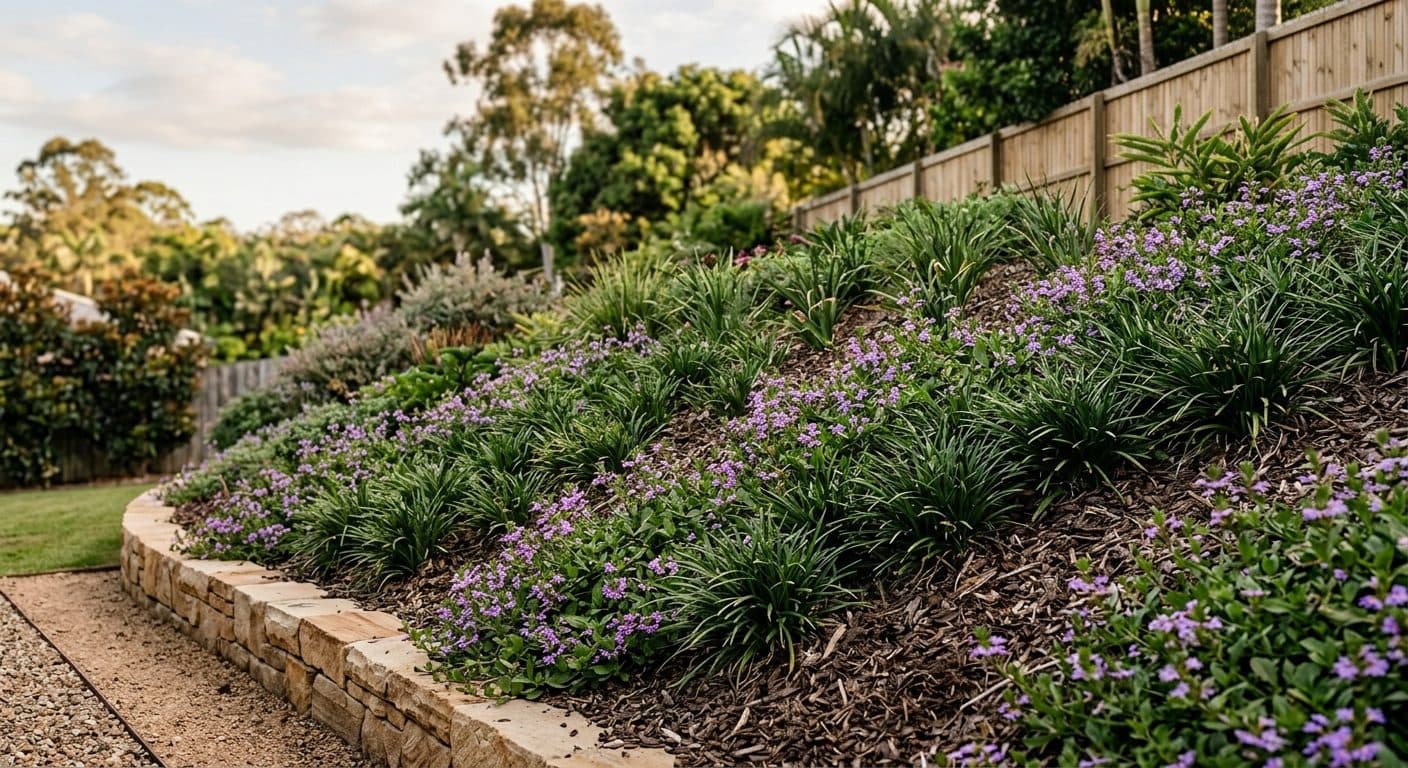
On a steeper site this is only one layer of a bigger drainage and terracing conversation, which my sloping block landscape design page walks through in full.
Spacing, mulch and the plants that misbehave
Space them for year one, not year three. Plant too far apart to save a few dollars and the gaps grow weeds for two seasons, whereas planting sensibly close, mulching between them while they fill in, and watering through that first dry spell gets them closing over before the weeds win. That's the whole trick, and it's far less glamorous than the plant list.
There's an honest warning to add: the same vigour that makes a good ground cover can make a bad neighbour. A few of the keener spreaders will jump the edge and march into the lawn or the bed next door, so I keep the runners well away from anything I'm not happy to see them colonise, and I lean on clumping plants like dianella and liriope wherever a crisp edge matters. Contained, they're brilliant. Left to their own devices, they're a weekend you won't get back.
Ground cover instead of lawn
Some strips simply aren't worth mowing: the metre-wide run down the side of the house, the verge you dread in January, the shady patch where grass has never once looked good. Replacing that thirsty lawn with the right ground cover gives you the green without the mower, the fertiliser and the water bill, and it's a core move in low-maintenance garden design. It won't take a backyard cricket match the way turf will, so keep real lawn where the kids and the dog actually play, and put ground covers where lawn was only ever there to fill space.
If you're weighing up a whole palette rather than a single bed, my guide to the best plants for Brisbane gardens sorts the wider list by the job each plant does. And if you'd like someone standing in the garden with you, working out which cover belongs on which patch, that's exactly what a Design Discovery Consultation is for.
Ready to start designing?
We're currently taking on new landscape design clients across Brisbane. Reach out for a personalised quote, whether you're a homeowner or a design professional.
Book a Free Discovery Call