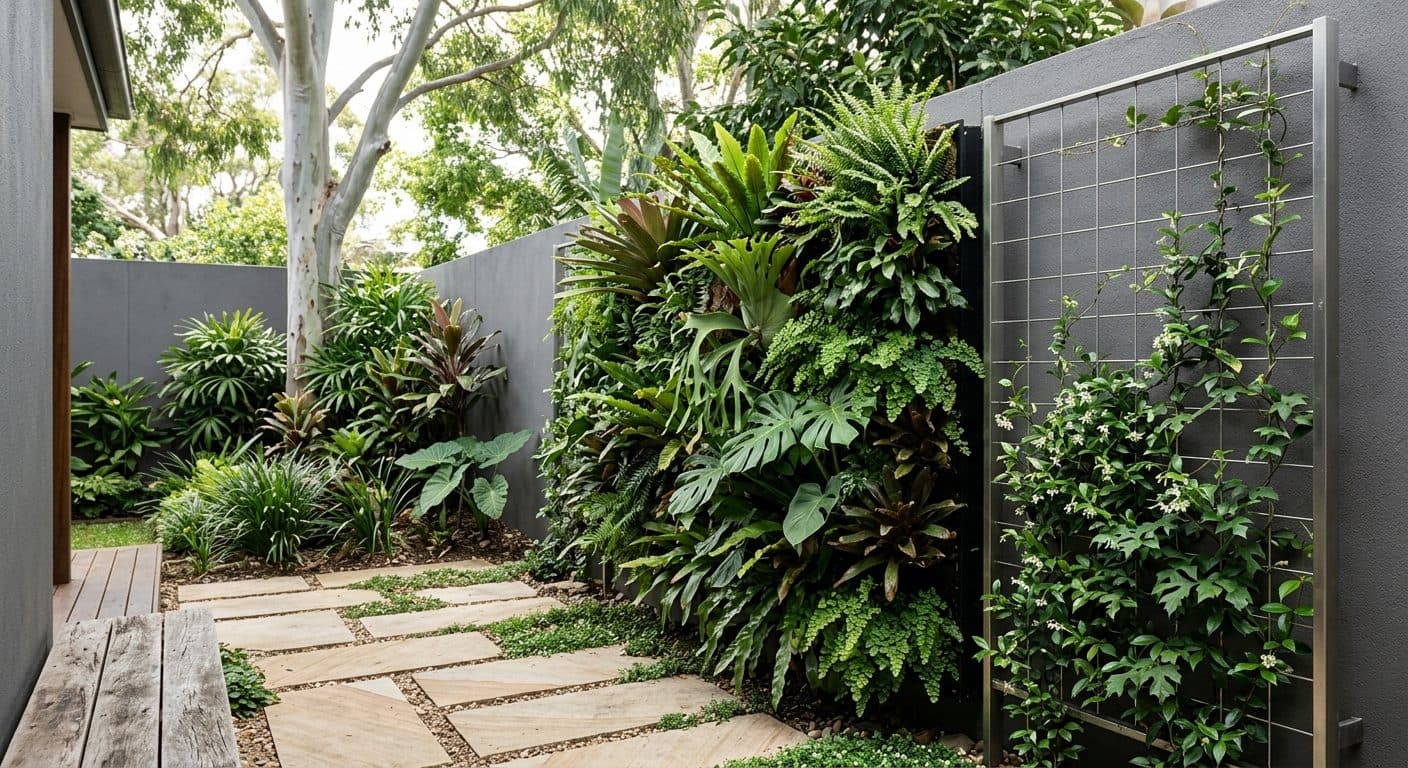
A green wall can turn a bare fence into a feature and a small courtyard into a jungle. Here's how I design vertical gardens that actually last in Brisbane, and the lower-fuss alternatives worth considering first.

By Shannon Trevisiol, Landscape Designer, Brisbane · 4 min read
- A green wall is the highest-impact way to add greenery where there's no ground, but it's also the highest-maintenance, so go in with eyes open.
- Modular green-wall systems live or die on irrigation and are genuinely specialist work: we can shape the concept and plant palette, but the system itself is best built by green-wall specialists.
- Cheaper, lower-fuss alternatives often win: a trellis or wire system with climbers gives you a green wall that grows in the ground.
- Climbing fig will cover a wall fast and can strip paint and render off it, so keep aggressive self-clinging climbers off any surface you value.
Vertical gardens are having a moment, and it's easy to see why. A wall of living green does something no other planting can: it turns a blank fence into the best thing in the garden, it buys lushness where there's simply no ground to plant in, and in a tight courtyard or on a balcony it can be the difference between a paved box and a jungle. They also have a reputation, not entirely undeserved, for being expensive to install and quick to turn into a sad grid of brown gaps. Both things are true, and the difference between the two outcomes is almost always the design and the irrigation, not the plants. Here's how I think about growing up when there's no room to grow out.
Before committing to a full modular system, it's worth being honest about what you're taking on, and about the alternatives, because the flashiest option isn't always the right one.
Modular green walls: brilliant, and demanding
A true green wall, a modular system of planted pockets or panels fixed to a structure, is the most spectacular and the most demanding of the options, and it is genuinely specialist work. These systems have almost no soil to hold moisture, so they live or die on reliable, automatic irrigation, and the moment the watering fails a hot Brisbane week turns a lush wall into a brown one faster than you'd believe. Getting all of that right, the system, the irrigation, the drainage and where the runoff goes, is a niche field in its own right, handled by skilled horticulturists and irrigation specialists who do little else.
So I am upfront with clients about where we fit: I don't design the modular systems themselves. If a true green wall is what you're after, we can develop the concept and the plant suggestions and make sure it belongs to the wider garden, but the final design and installation is best left to green-wall specialists who build and maintain them for a living. Done properly, with the right system and the right plants for our humidity and heat, a green wall is a stunning centrepiece. Gone into casually, it's an expensive way to grow brown rectangles.
The lower-fuss alternatives, which often win
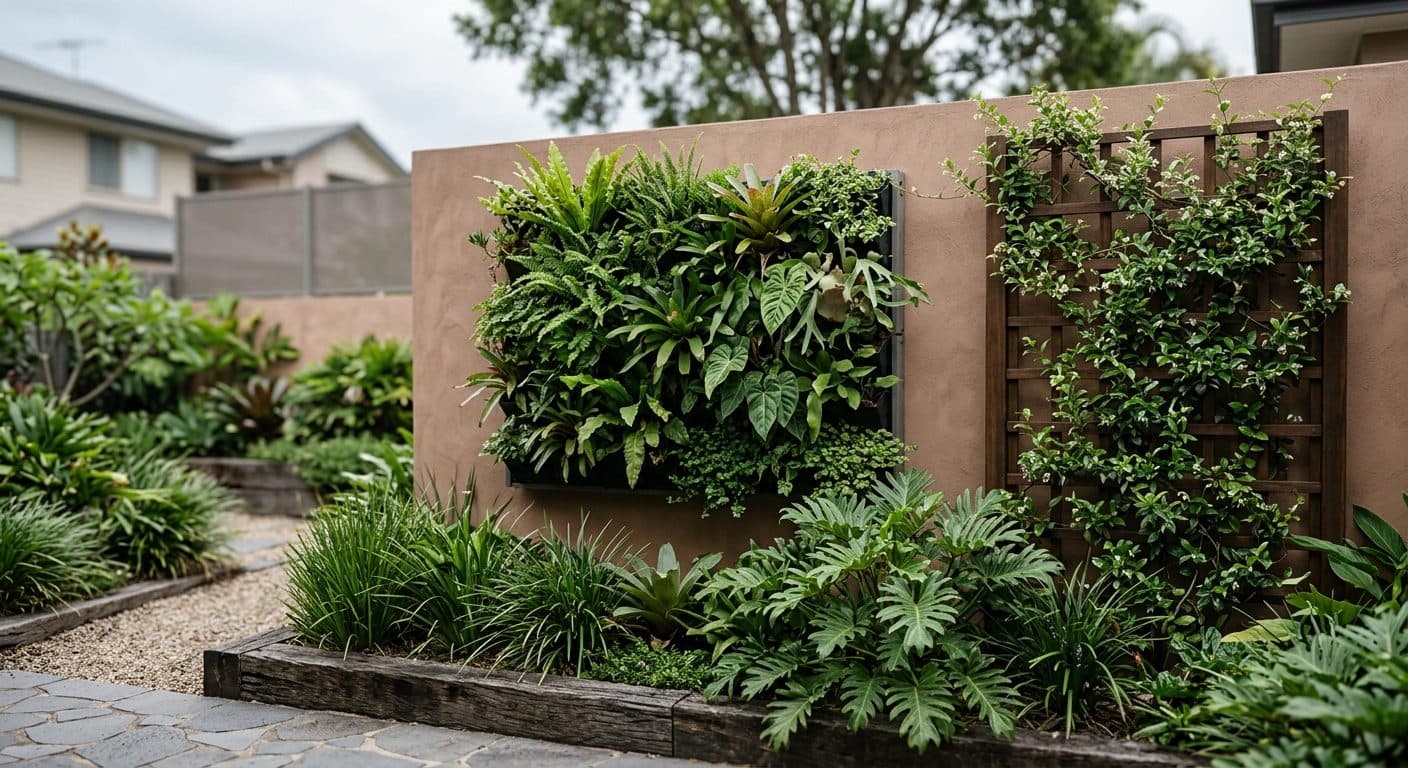
Before you commit to a full system, look at the simpler ways to green a wall, because they're cheaper, tougher and frequently the smarter choice. A trellis or a tensioned stainless-steel wire system with climbing plants gives you a green wall that's actually rooted in the ground, so it draws on real soil and normal garden watering rather than a fussy irrigation rig, and steel mesh does the same job with a more architectural look. Climbing plants trained on a structure will cover a wall over a season or two, cost a fraction of a modular system, and are far more forgiving if you miss a watering. For a lot of the courtyards and small blocks where people ask me about green walls, this is the answer I actually recommend, and it ties straight into the wider small garden design principle of getting more garden out of less ground.
The climbing fig warning, and choosing the right climber
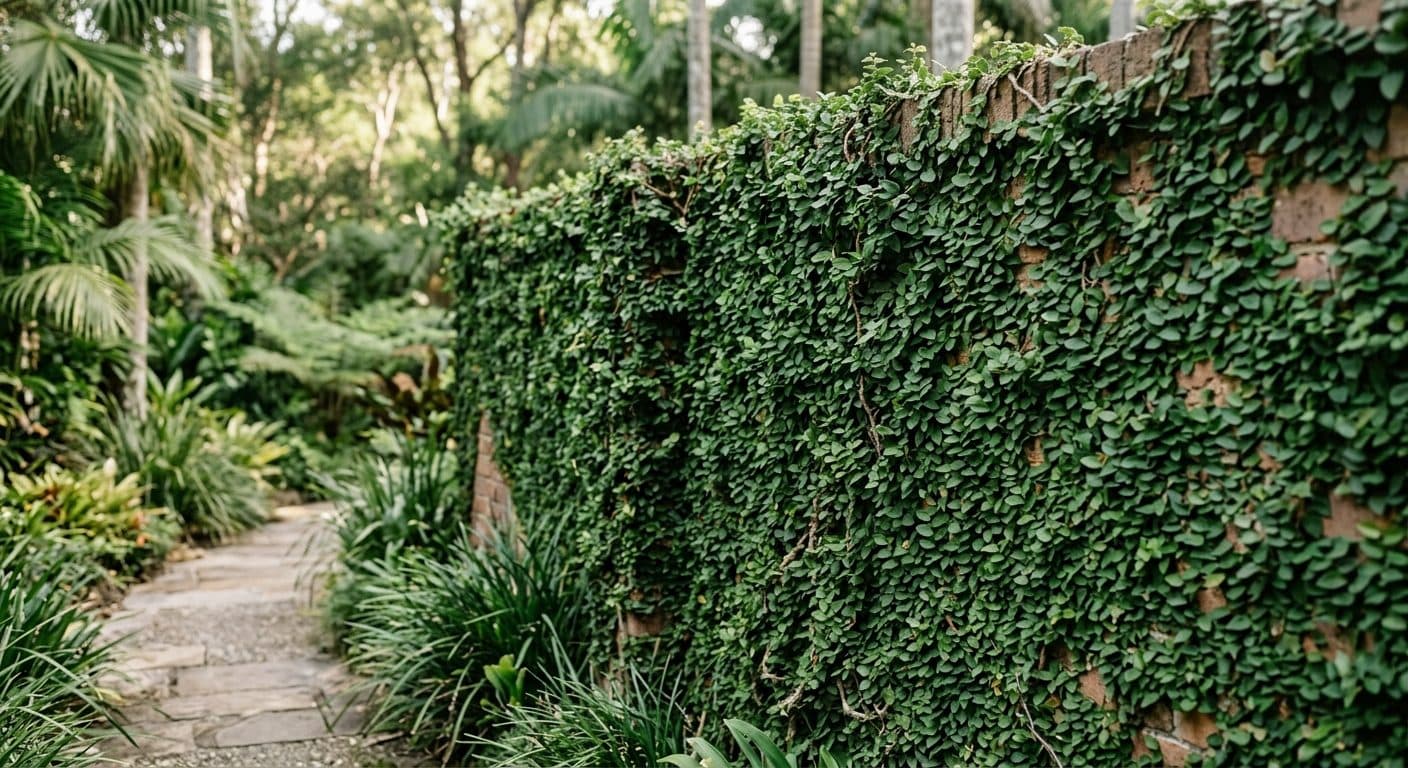
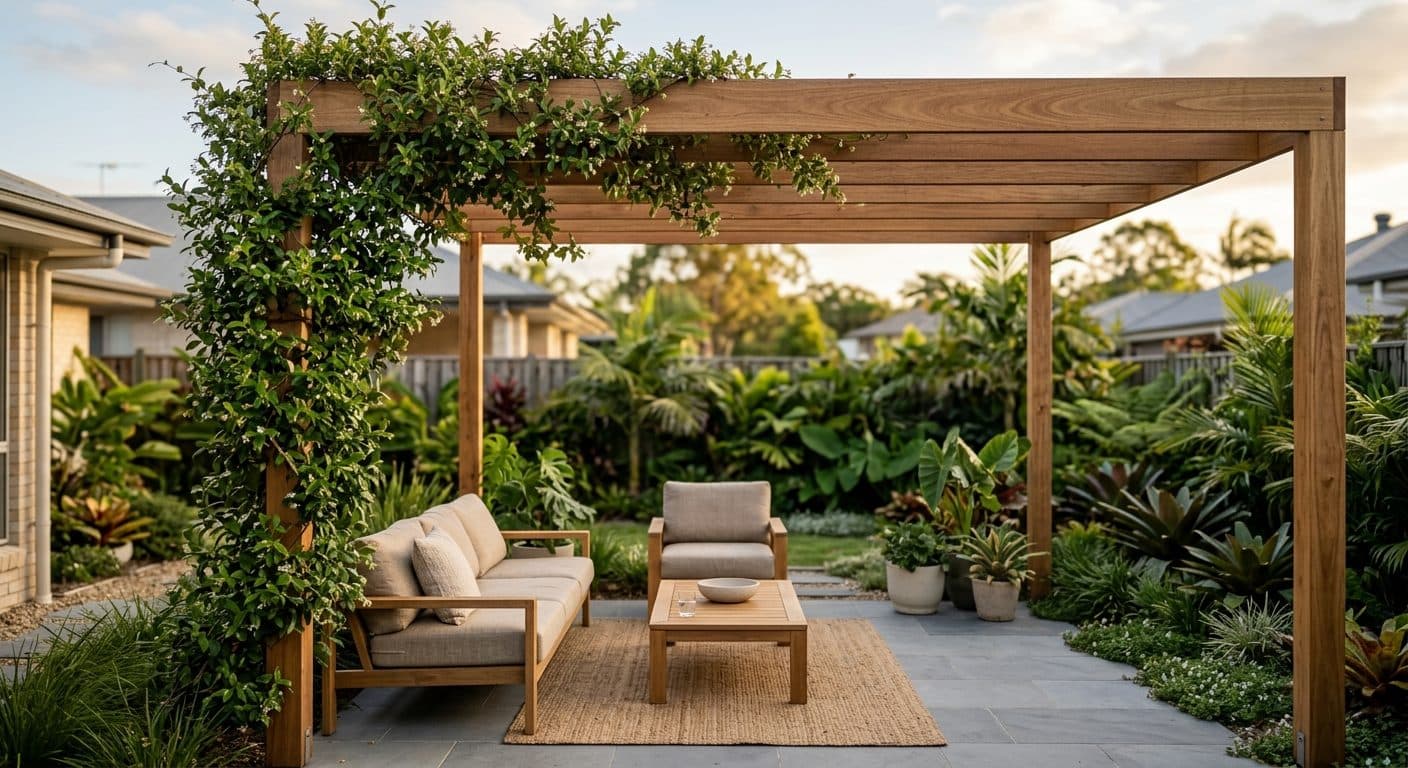
One hard warning, because it catches people out: climbing fig (Ficus pumila) will smother a wall in dense green astonishingly fast, and that's exactly the problem, because it clings with aerial roots that can strip paint and render straight off the surface and work into mortar, so it should never go on a rendered, painted or heritage wall you care about. It's fine on a bare, sacrificial masonry wall you're happy to give over to it entirely, and nowhere else. For most walls I'd reach for a better-behaved climber instead, star jasmine is a reliable, fragrant, non-destructive choice on a trellis, and the wider palette of screening plants covers the taller, denser options where you want green height without the risk. Matching the climber to the surface is the whole game: the vigorous ones that cover fastest are also the ones that do the damage.
Where a vertical garden earns its place
Used in the right spot, vertical planting does real work beyond looking good. In a hot courtyard it cools the space and softens the hard walls, on a small block it delivers privacy and greenery without stealing floor area, and against a blank boundary it turns dead surface into the garden's best feature. The keys are to be realistic with yourself about the maintenance and irrigation a living wall demands, to choose the system, or the simpler alternative, that matches how much fuss you actually want, and to keep aggressive climbers off anything you'd hate to see damaged. Get those three right and growing up is one of the most rewarding things you can do in a small Brisbane garden.
If you've got a bare wall or a tight block crying out for greenery, a vertical garden might be the answer, or a trellis and the right climber might be the smarter one. Our Design Discovery Consultation is where we work out which, on site.
Ready to start designing?
We're currently taking on new landscape design clients across Brisbane. Reach out for a personalised quote, whether you're a homeowner or a design professional.
Book a Free Discovery Call