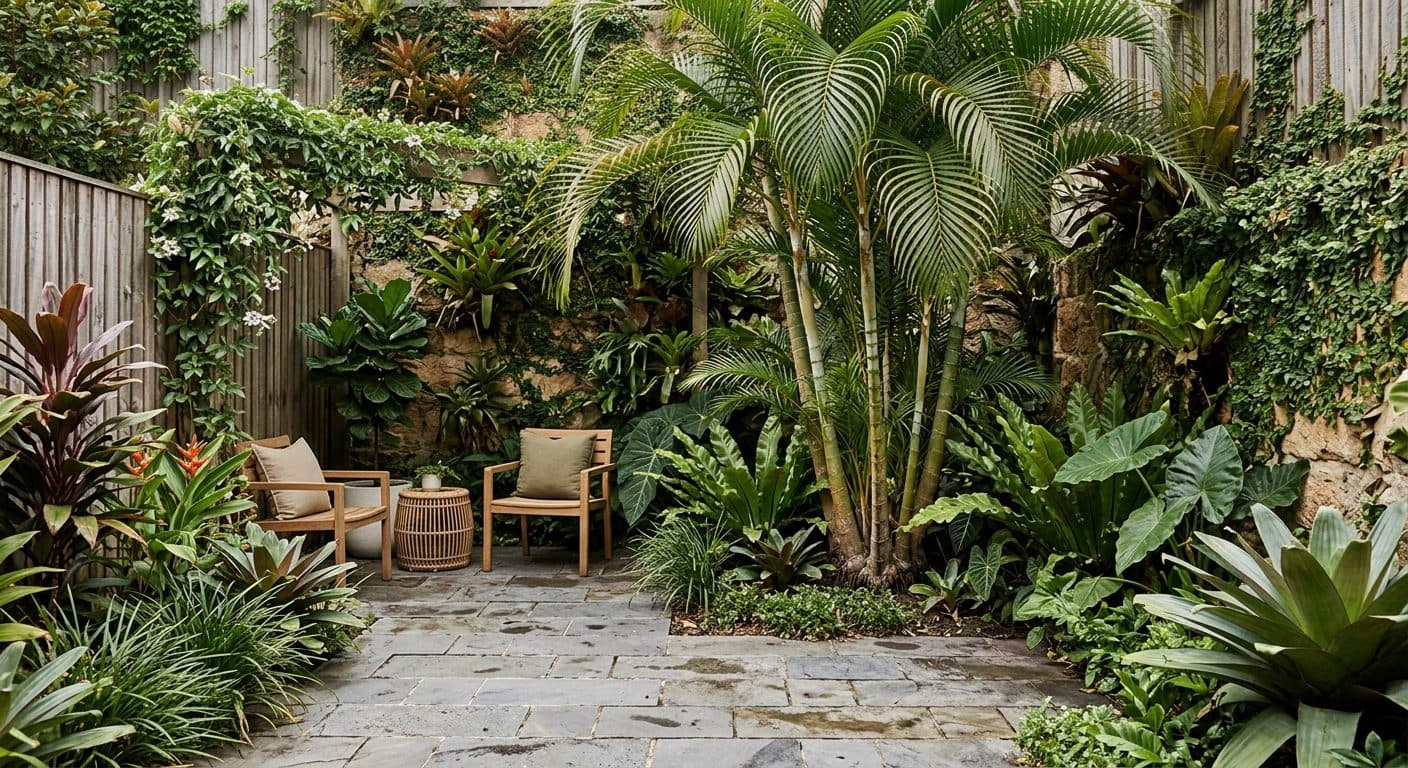
A courtyard is small, enclosed and often hot, and it can still feel like a jungle. Here's how I design Brisbane courtyards for townhouses, terraces and Queenslanders, so a paved box becomes a lush retreat.

By Shannon Trevisiol, Landscape Designer, Brisbane · 4 min read
- In a courtyard, grow up, not out: vertical planting and wall greenery buy you lushness that the floor area can't.
- Choose one bold feature over a scatter of small pots, so the tiny space reads as designed rather than cluttered.
- Courtyards funnel wind and trap heat between walls, so the microclimate matters more here than in an open garden.
- Privacy in a courtyard usually comes from above, so plan for overlooking windows and balconies, not just the fence line.
A courtyard should be the easiest garden to get right, because it's small. In practice it's one of the hardest, because every decision is on show and there's nowhere to hide a mistake. The space is enclosed, often shaded on one side and baking on another, wind whistles between the walls or sits dead still, and whatever you plant is two steps from where you sit. Get it right, though, and a courtyard punches far above its size: a townhouse, terrace or Queenslander courtyard can feel like a genuine lush retreat, a green room you step into rather than a paved box you walk across. It just has to be designed for what it is.
The instinct with a small space is to keep everything small and scattered, and that's exactly backwards. Small spaces want a bit of boldness and a lot of green, held together by a single clear idea. Here's how I approach a Brisbane courtyard.
Grow up, not out
The floor of a courtyard is spoken for the moment you've fitted a table and a couple of chairs, so the lushness has to come from the vertical space. I plant up the walls and the corners, use the full height of the boundary, and let planting climb, cascade and layer so the eye reads a wall of green rather than a strip of garden bed around a slab. A green wall or vertical garden is the most deliberate version of this, but even without a full system, tall plants, climbers on a trellis and a few things spilling from raised planters turn a mean amount of ground into a generous amount of garden. In a courtyard, the vertical surfaces are the real estate.
One bold move beats a dozen small pots
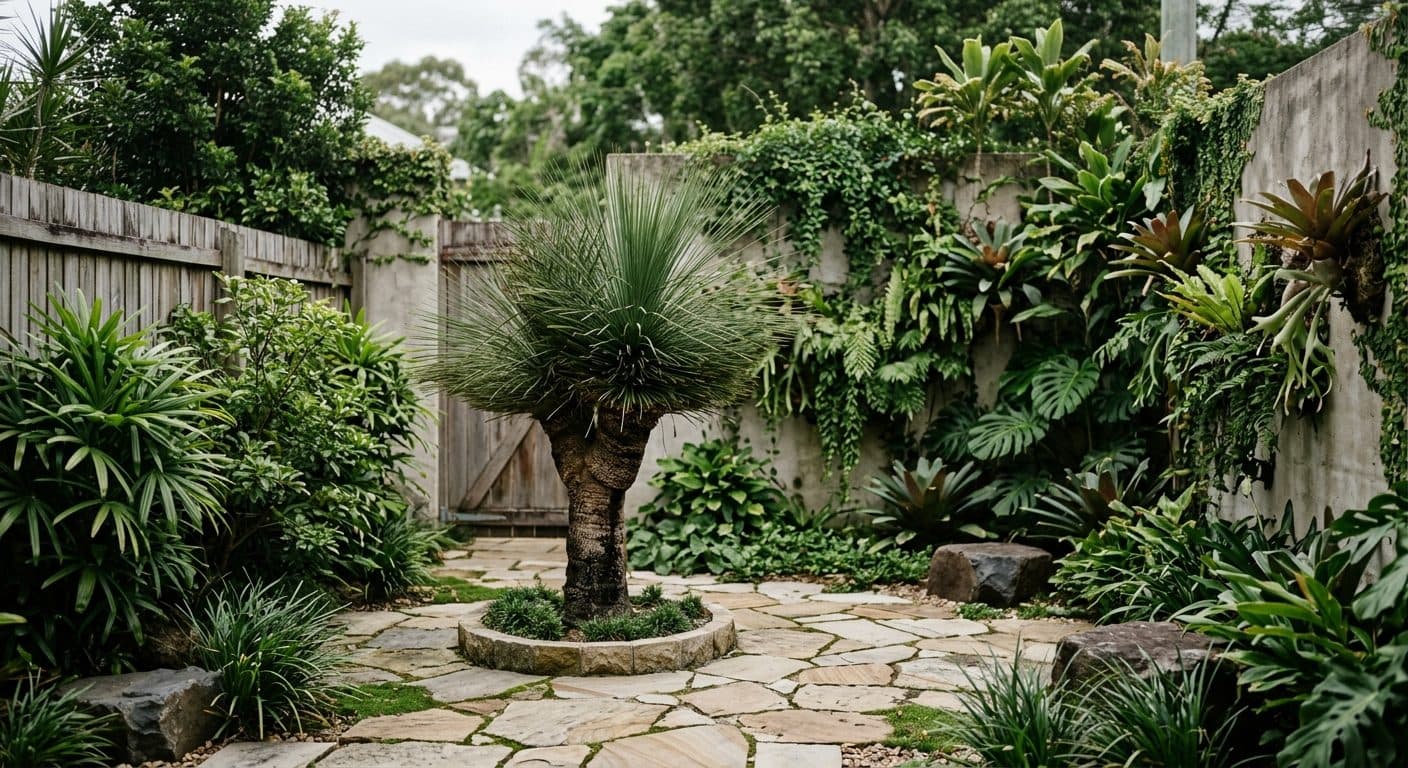
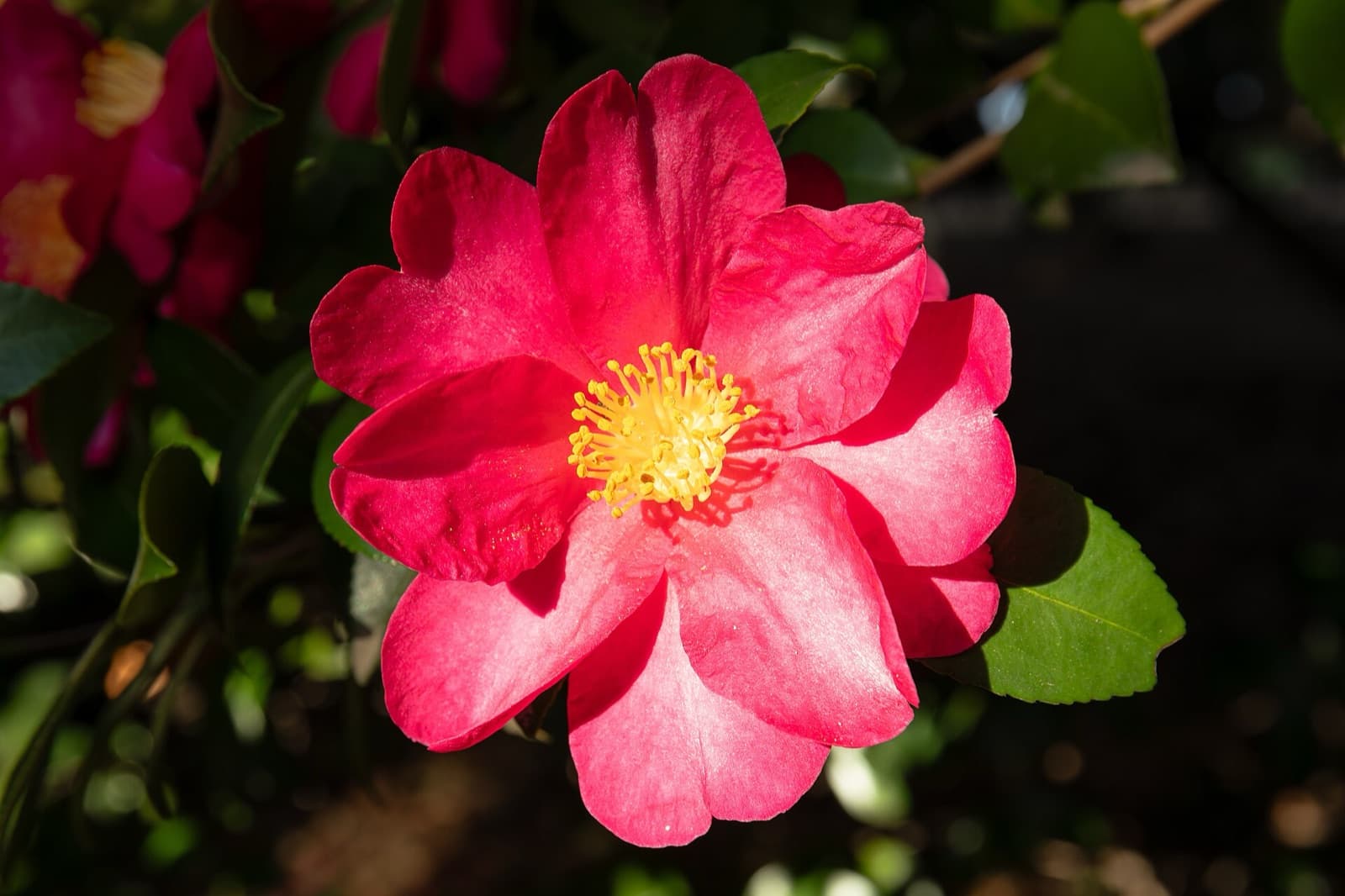
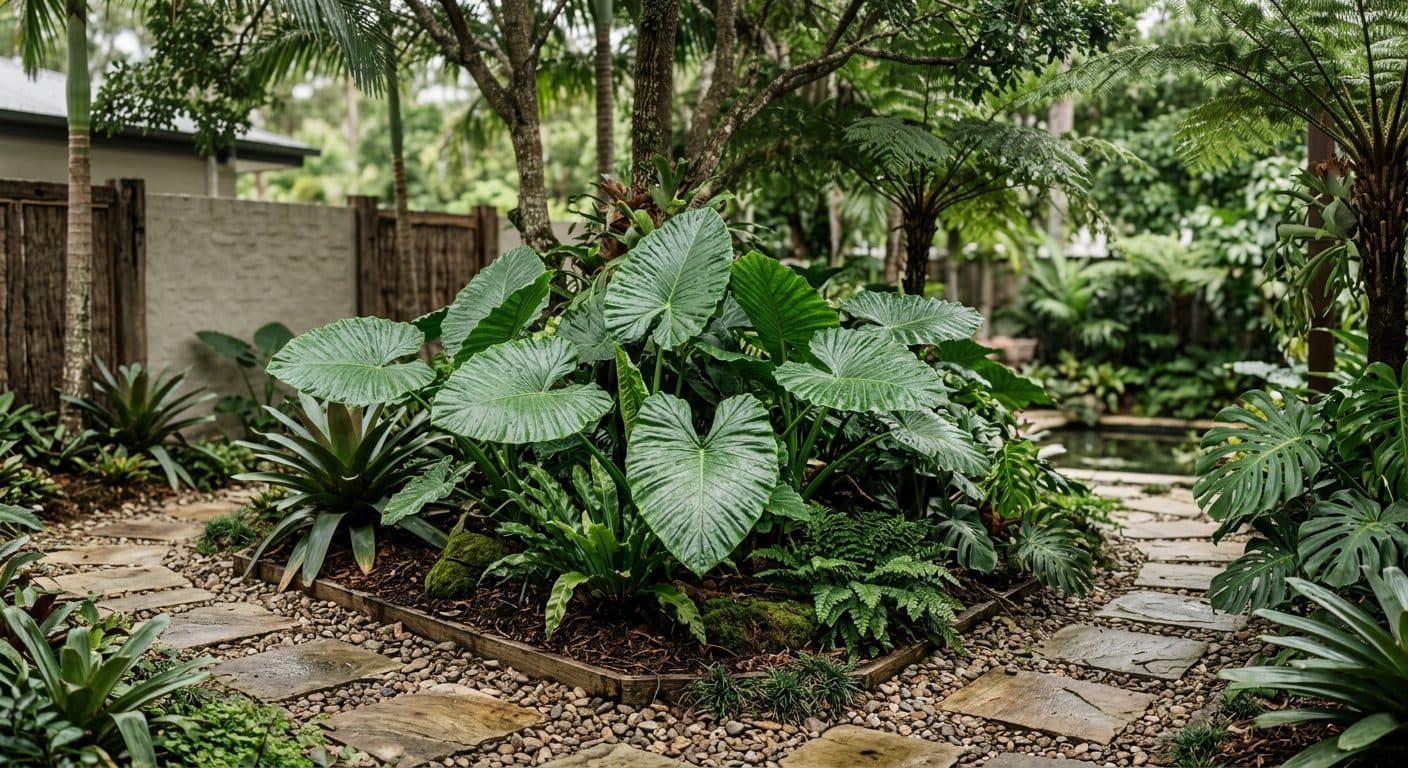
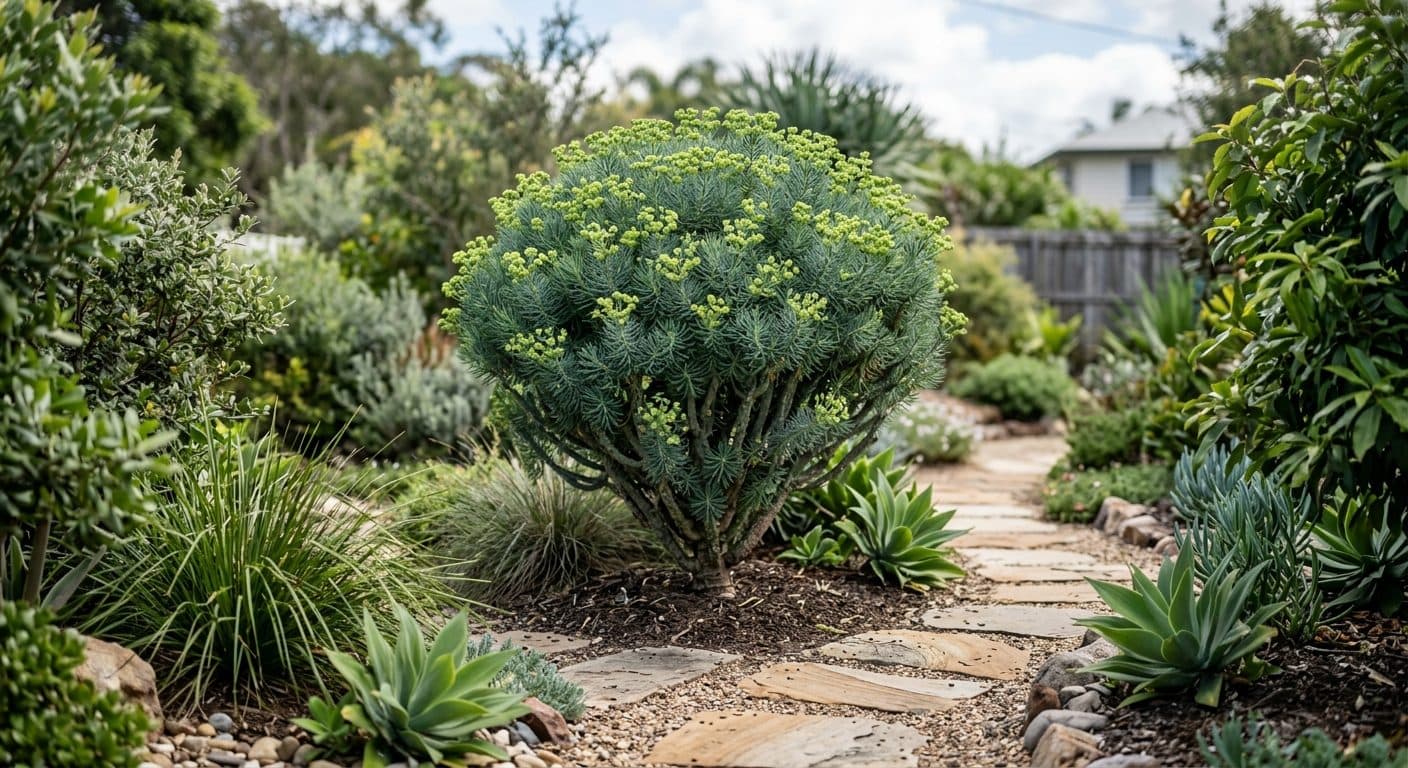
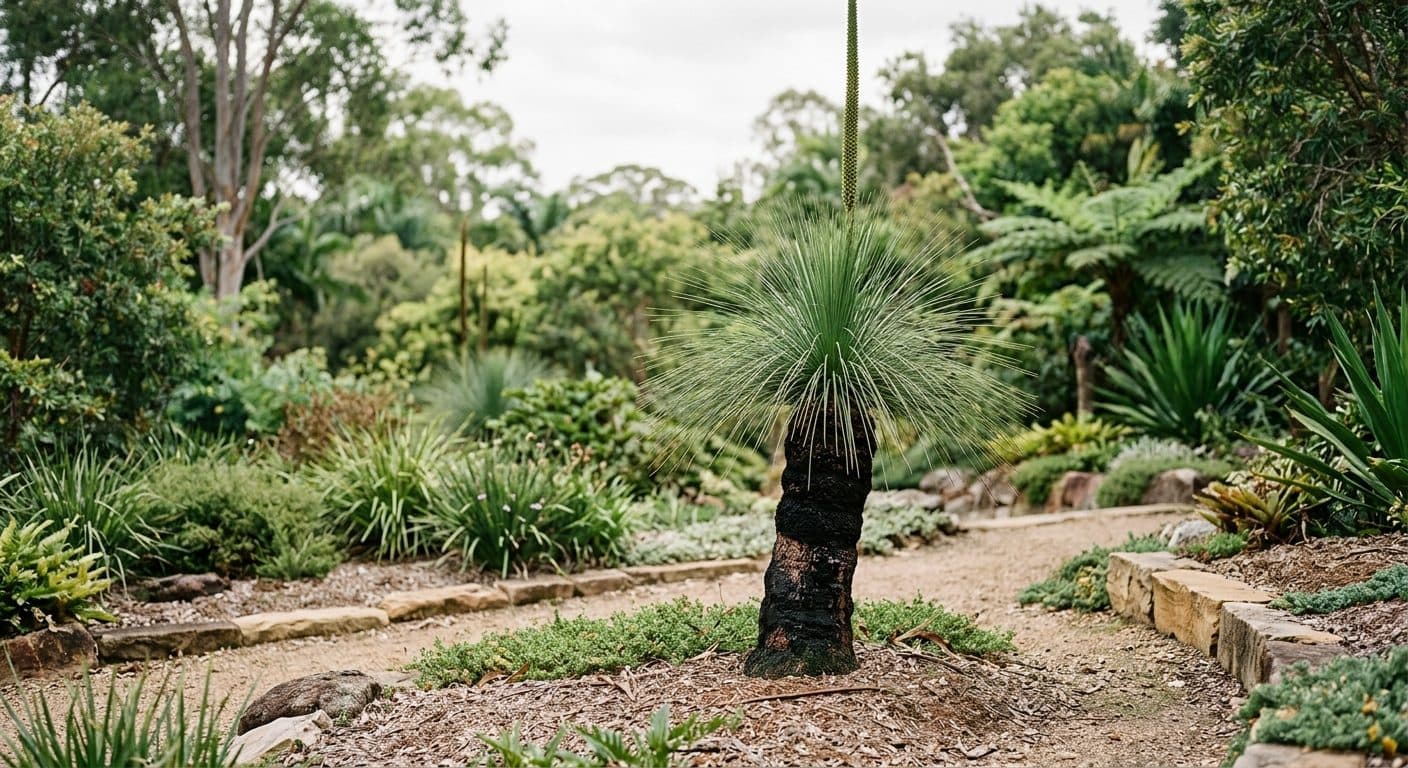
The fastest way to make a small space feel smaller is to fill it with clutter, so I design a courtyard around one clear gesture rather than a collection. That might be a single sculptural feature plant chosen to suit the courtyard's microclimate and given room to be the star: a grass tree (Xanthorrhoea) or a Euphorbia 'Cowboy' where the space is hot and sunny, or an Alocasia or a camellia in a shadier, sheltered courtyard, because it all comes back to the light and heat that particular corner gets. It might instead be a bold, repeated planting in a simple palette, or one strong material running through the floor and walls to calm everything down. Restraint reads as generosity in a tiny space, where a scatter of mismatched pots and competing features reads as busy and cramped. Pick the one thing the courtyard is about, commit to it, and let the rest support it.
Design for the courtyard microclimate
Enclosure changes the physics, so the microclimate matters more here than almost anywhere. Walls trap heat and throw it back, a paved courtyard can turn into a furnace on a summer afternoon, and the same walls either funnel the wind into a wind tunnel or kill the breeze entirely and leave the air stagnant and humid. So I read the courtyard carefully before planting: which wall bakes in the afternoon, where the air moves, where the shade sits, and I match the planting to those pockets, tough heat-lovers on the hot side and lush, leafy things like philodendron in the shaded, sheltered corners. It's the same right-plant-right-place discipline behind any good tropical garden design, just at close quarters where getting it wrong is immediately obvious.
Privacy usually comes from above
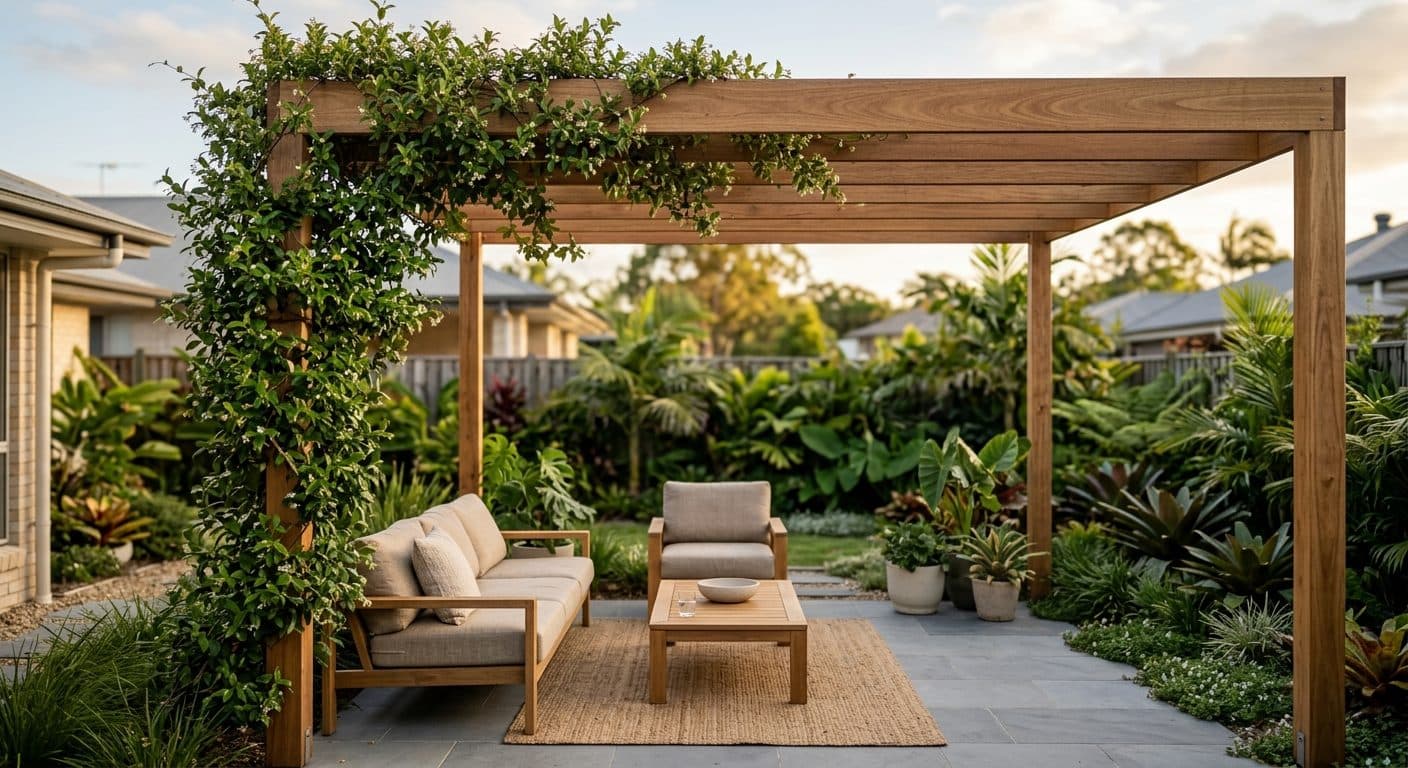
The privacy problem in a courtyard is rarely the fence, it's the overlooking, so plan for the view from above. In a townhouse or terrace, the windows and balconies looking down into the space are what actually cost you your privacy, and a taller fence does nothing about them, so the answer is usually a well-placed small tree, a tall screen plant or an overhead element like a pergola or a leafy canopy that puts something green between you and the eyes above. Designing that overhead layer also gives you shade and makes the courtyard feel like a room with a ceiling of leaves, which is a large part of what makes a small enclosed garden feel like a retreat rather than a light well. It's the courtyard version of the thinking in my broader small garden design approach.
If you've got a small, enclosed space that currently feels more like a passage than a garden, a courtyard is one of the most satisfying things to design well, because every square metre counts. Our Design Discovery Consultation is where we start, on site, reading the light, the wind and the walls.
Ready to start designing?
We're currently taking on new landscape design clients across Brisbane. Reach out for a personalised quote, whether you're a homeowner or a design professional.
Book a Free Discovery Call