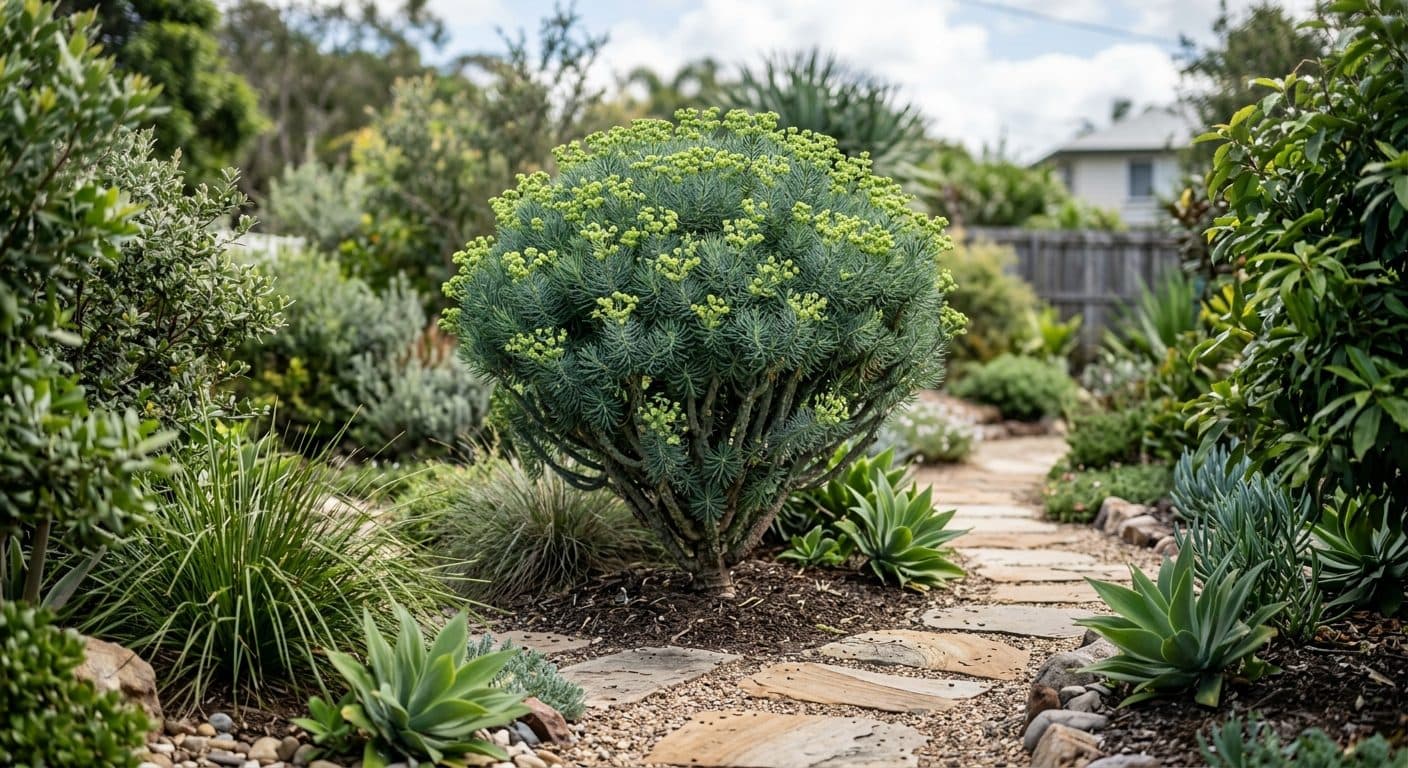
A bold, upright succulent feature that draws the eye vertically in a hot, sunny spot.
Euphorbia trigona · Also known as Cathedral Cactus, Candelabra Cactus, Friendship Cactus
Euphorbia trigona, the African Milk Tree, is a striking upright succulent that does a lot of work for very little effort. It sends up tall, three-sided ridged stems that branch into a candelabra form, edged with small teardrop leaves and short spines, and it holds that clean vertical architecture with almost no intervention, which makes it a natural choice as a sculptural feature in a hot, sunny courtyard or a bold container.
Where a lot of feature plants sulk in Brisbane's fierce afternoons, this one leans into them. It is built for heat, sun and lean, sharp-draining soil, so it earns its place exactly where softer plants struggle.
In a Brisbane garden
This is a plant for the dry, sunny side of a Brisbane garden, not the humid shade. It wants sharp drainage above all, so a raised bed, a gritty mix or a large container suits it, while a soggy, shaded corner will rot it. On a baking western aspect or a hot paved courtyard it holds its striking upright form where thirstier plants wilt. It is frost-tender, so in a cold pocket grow it in a pot you can move under cover, or shelter it during winter cold snaps.
One safety point worth knowing: like all euphorbias, it bleeds a milky sap when cut or broken, and that sap is a strong skin and eye irritant. Wear gloves and eye protection when you prune, move or tidy it, keep the cuttings away from bare skin, and wash up afterwards. It is easy to live with once you know to respect the sap.
How we design with it
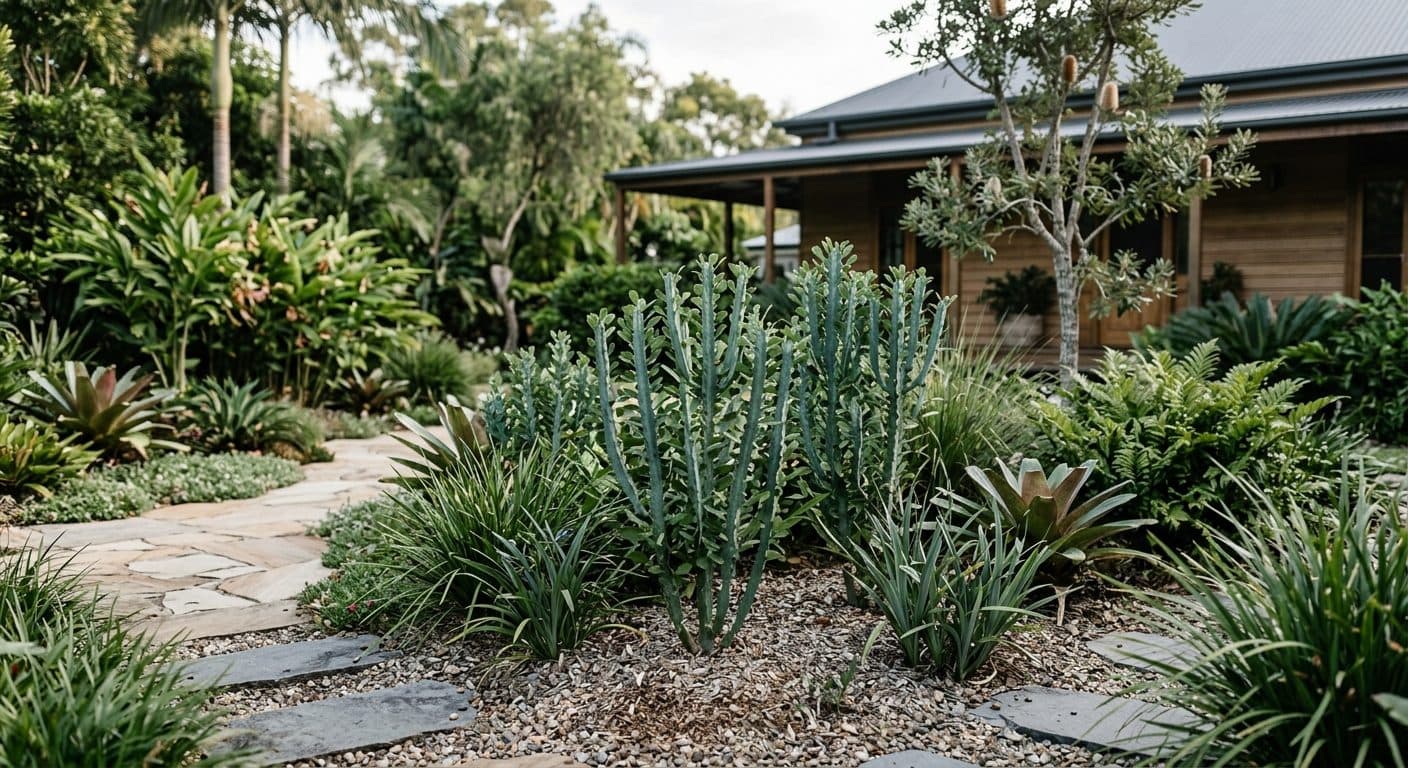
We use Euphorbia trigona as a single sculptural feature or a bold repeated vertical, the same one-clear-gesture approach behind a good small courtyard garden. Its tall triangular stems and candelabra form read beautifully against stone, rendered walls and warm-toned paving in a hot spot, and it makes a commanding potted specimen by a doorway or on a patio.
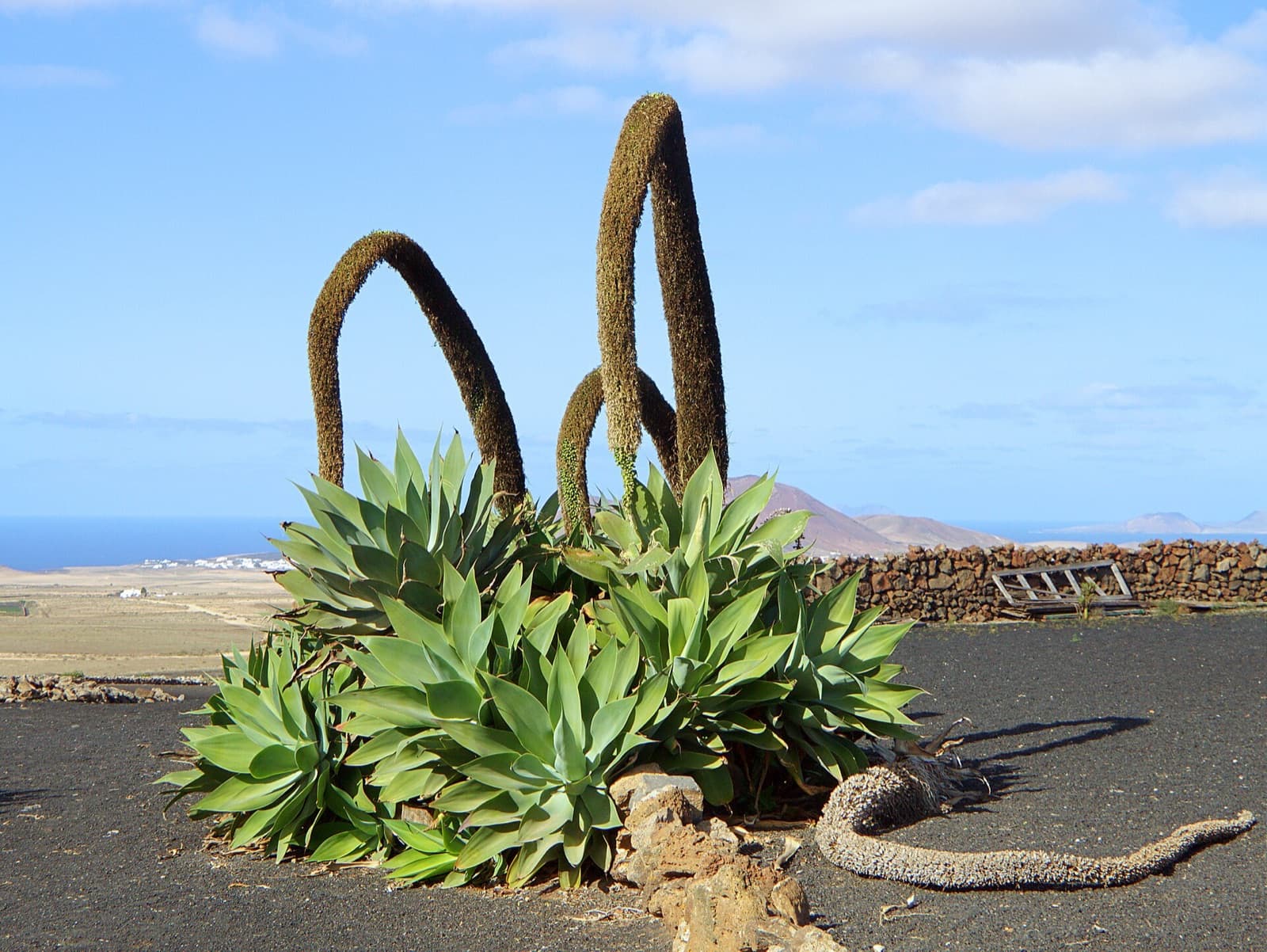
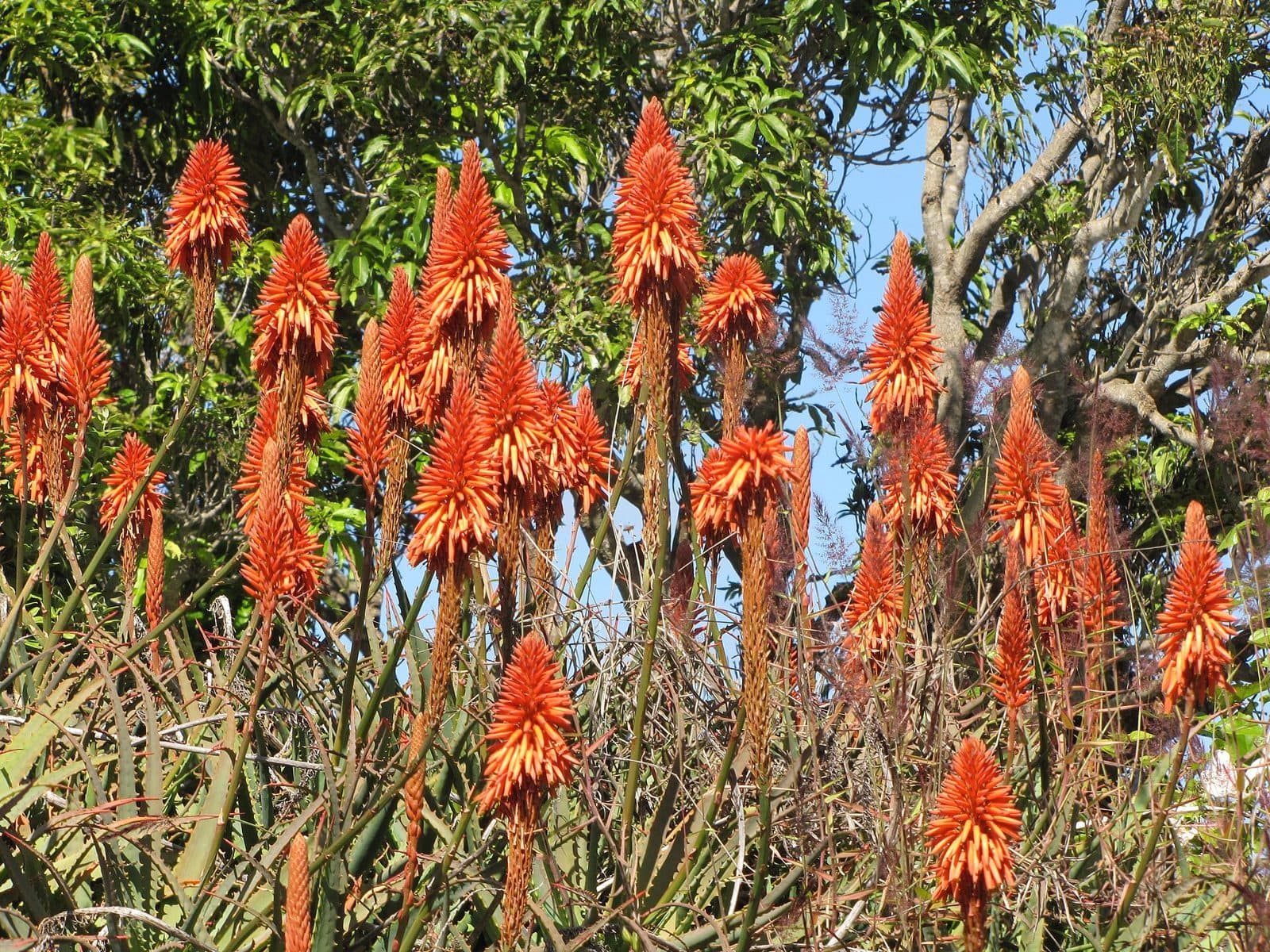
It sits naturally alongside the tough, sun-loving palette in our guide to drought-tolerant plants for Brisbane: plant it with agaves, aloes and strappy natives on the hard, sunny side of the garden and it will look sharp with almost no water.
Where we write about african milk tree
Common questions
Want a bold, low-water feature for a hot, sunny spot?
We're currently taking on new landscape design clients across Brisbane. Reach out for a personalised quote, whether you're a homeowner or a design professional.
Book a Free Discovery Call