Mulch is the least glamorous line in a garden budget and the one that quietly protects everything else. Here's how I choose between tea tree, sugarcane, hardwood and pebble in Brisbane, how deep to lay it, and the volcano mistake to avoid.

By Shannon Trevisiol, Landscape Designer, Brisbane · 6 min read
- Mulch does four jobs at once in a Brisbane garden: it cools the soil, holds moisture through dry spells, suppresses weeds and slowly feeds the ground as it breaks down.
- Choose by job, not by price: sugarcane for fast, soft, short-lived cover in veggie and annual beds, tea tree mulch (my favourite) or coarse hardwood chip for long-lasting shrub beds, and pebble only where heat and storm wash are less of a worry.
- Lay it roughly 75mm deep (a little less for fine mulches), and always pull it back from stems and trunks so there's a clear gap around the base.
- The volcano is the classic mistake: mulch heaped up against a trunk holds moisture on the bark and invites rot, so spread it wide and flat instead.
Mulch is the least glamorous line in any garden budget, and it's the one I'd defend hardest if the budget got cut. A bed of healthy plants with no mulch is a bed that spends every summer dealing with baked soil, thirsty roots and a fresh crop of weeds, whereas the same bed under a decent layer looks calmer, needs less water and quietly improves the soil over time. If you only do one cheap thing this season, the answer to what to do for your Brisbane garden is almost always to mulch it properly.
The reason mulch matters more here than in a cooler city is the climate we garden in. A Brisbane summer delivers hard sun, hot afternoons and sudden storms, and bare soil takes the full force of all three: it heats up, dries into a crust, and then either sheds a downpour as runoff or washes away in it. A layer of mulch is the buffer in the middle. It shades the soil, slows evaporation, lets rain soak in rather than run off, and keeps weed seeds from getting the light they need to germinate. It's the same thinking behind ground cover plants, which are really living mulch, and the two work best together while a young planting knits up.
Choosing the best mulch for a Brisbane garden
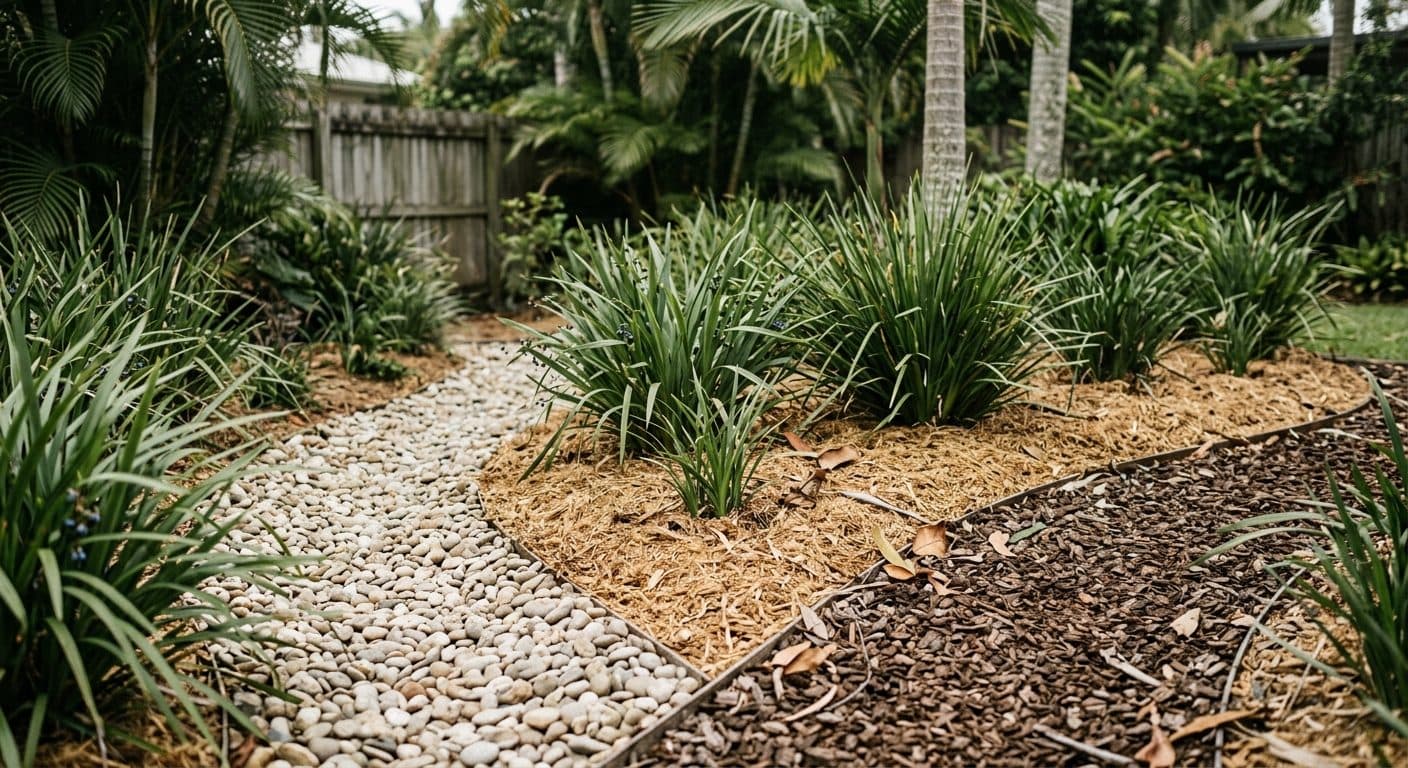
There's no single best mulch, only the right one for the job, so I start by asking what the bed is for. Sugarcane mulch is light, soft, inexpensive and easy to spread, and it breaks down quickly, which is exactly what you want in a vegie patch or a bed of seasonal colour where you're digging in and replanting. The flip side is that it's short-lived, so expect to top it up more often, and in a bed you rarely touch that gets tiresome.
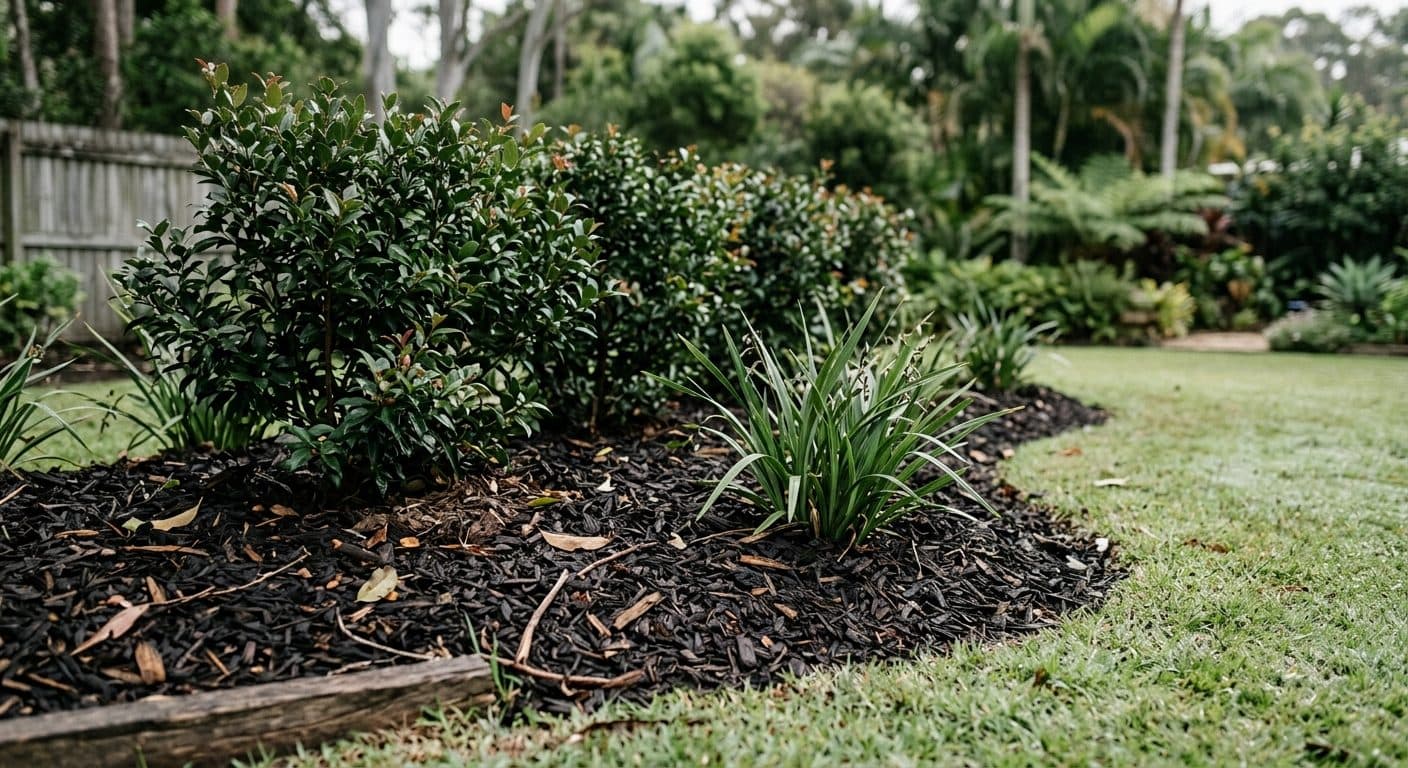
For shrub borders and established garden beds, my favourite is tea tree mulch. It's a chunky, stringy material that knits together well, so it tends to stay put on a slope better than lighter mulches, it lasts well, and it gives a bed that settled, finished look. If tea tree isn't available from your supplier, a coarse hardwood or eucalypt chip is my next choice. Either one lasts longer, it looks like a proper finished garden, and as it slowly rots down it feeds the soil underneath. It's also heavier and knits together better, which helps it stay put. Fine, dusty mulches pack down and can shed water rather than let it through, so I steer away from them on anything that needs steady moisture. Different suppliers sell products under similar names and the quality varies, so look at the actual material before you order a truckload.
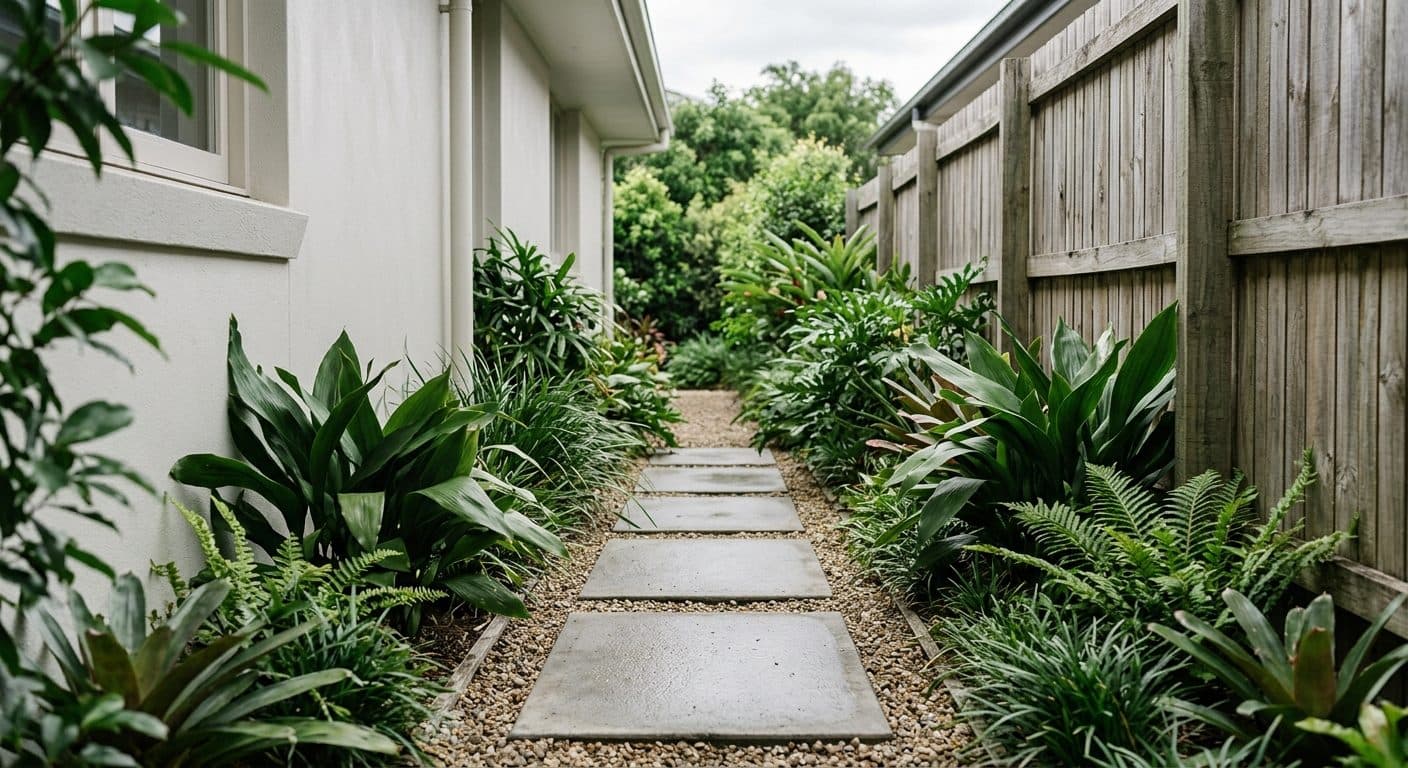
Pebble and stone have their place, particularly in a courtyard or a dry, hot, architectural planting. They don't break down, so they won't feed the soil, they hold heat in a west-facing bed, and loose stone moves in heavy rain. I'd use them as a deliberate design choice rather than a default, and usually over a weed membrane in a bed you don't plan to replant. For a hot dry spot the pairing makes sense with drought tolerant plants that don't want a wet, organic mulch around their crowns.
How deep should mulch be?
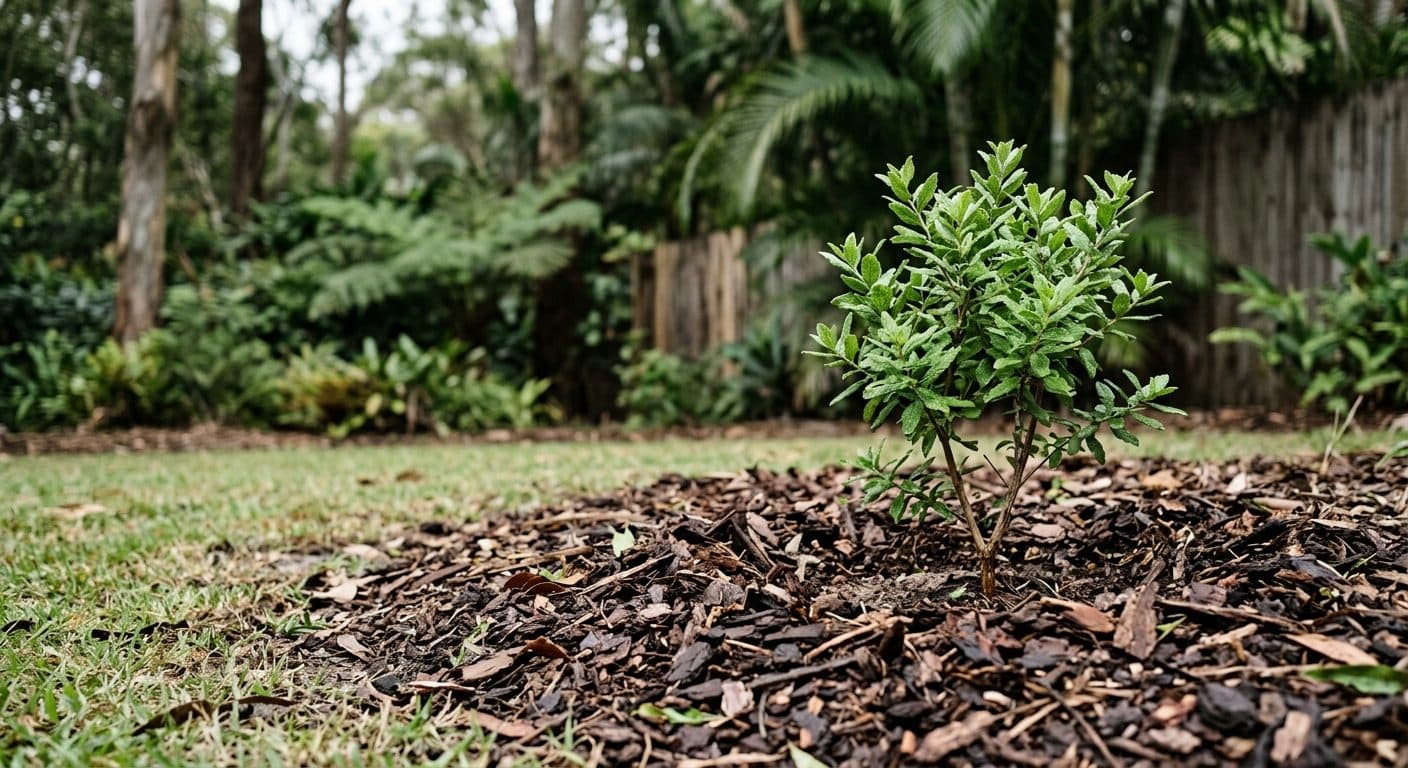
A good rule is roughly 75mm of a chunky mulch such as hardwood chip, and a bit less of finer material, enough to shade the soil and smother weeds without becoming a barrier. Too thin and light gets through, so the weeds come up regardless. Too thick and you can starve the soil of air and water, particularly with fine mulch that mats together. Water the bed well before you spread it, because mulch laid over dry soil can keep the moisture out as effectively as it keeps it in.
Mulch settles and breaks down, which is the whole point, so plan to refresh it rather than treating it as a one-off. I check beds once a year, usually heading into spring, and top up where the layer has thinned rather than laying a fresh thick blanket over the old one. The old layer is already doing useful work as it rots.
The volcano mistake
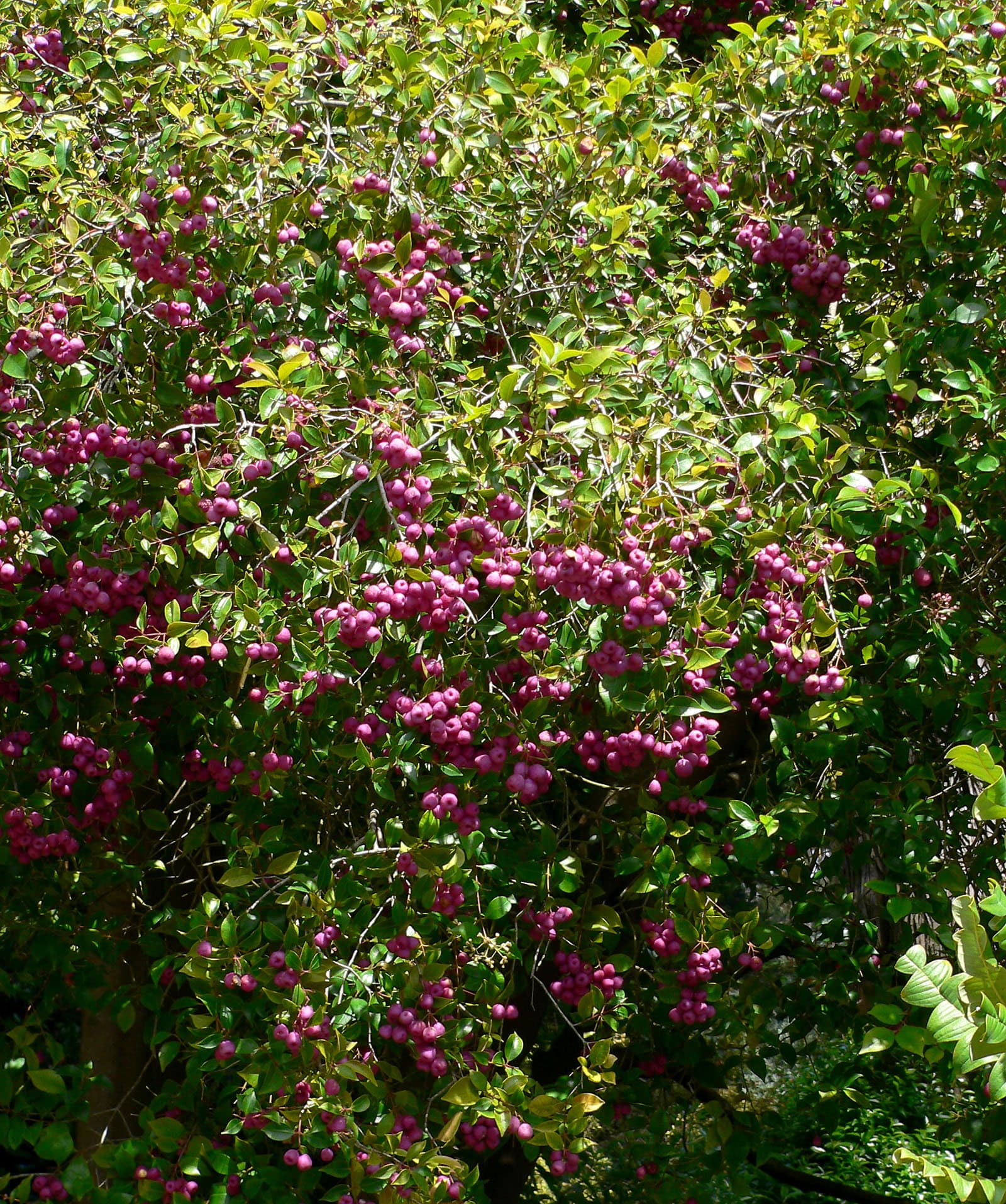
The most common mulching error I see is the volcano: mulch heaped in a steep cone against a trunk or stem. It looks tidy and feels generous, and it does real harm, because a mound of damp organic matter pressed against bark holds moisture where the plant least wants it, which invites rot and gives pests a sheltered place to work. Always pull mulch back so there's a clear gap, a hand's width or so, around the base of any trunk or stem, and spread it wide and flat out to the dripline instead. A young lilly pilly or a tree you've just planted is the plant most worth getting this right for.
Mulch and a Brisbane storm
February storms test mulch as much as they test everything else. Light bark and sugarcane can float and wash into drains or across a path in heavy rain, so on a slope or along an overland flow path I use a heavier, chunkier mulch, keep it well held with a firm edge, and avoid piling it where water wants to run. There's more on designing for that in my guide to a storm resilient garden. On reactive ground, a mulched mound also helps, as I describe in plants for clay soil, where a surface layer feeds the soil without disturbing its structure.
Mulch as part of the design
Mulch is also a design decision more than people expect. A single consistent mulch across a garden ties the beds together and makes the planting look intentional, whereas four different mulches in four beds can look like a clearance sale. Clean bed edges matter just as much, because a crisp line between mulch and lawn keeps the layer in place and keeps it looking finished. This is part of how I think about sustainable garden design: a low-effort layer that saves water, builds soil and cuts down on weeding, which is hard to beat for the price.
If you're planning a new garden or reworking beds that never quite settle, choosing the right mulch, edges and plant spacing is part of the thinking we do on site in a Design Discovery Consultation.
Ready to start designing?
We're currently taking on new landscape design clients across Brisbane. Reach out for a personalised quote, whether you're a homeowner or a design professional.
Book a Free Discovery Call