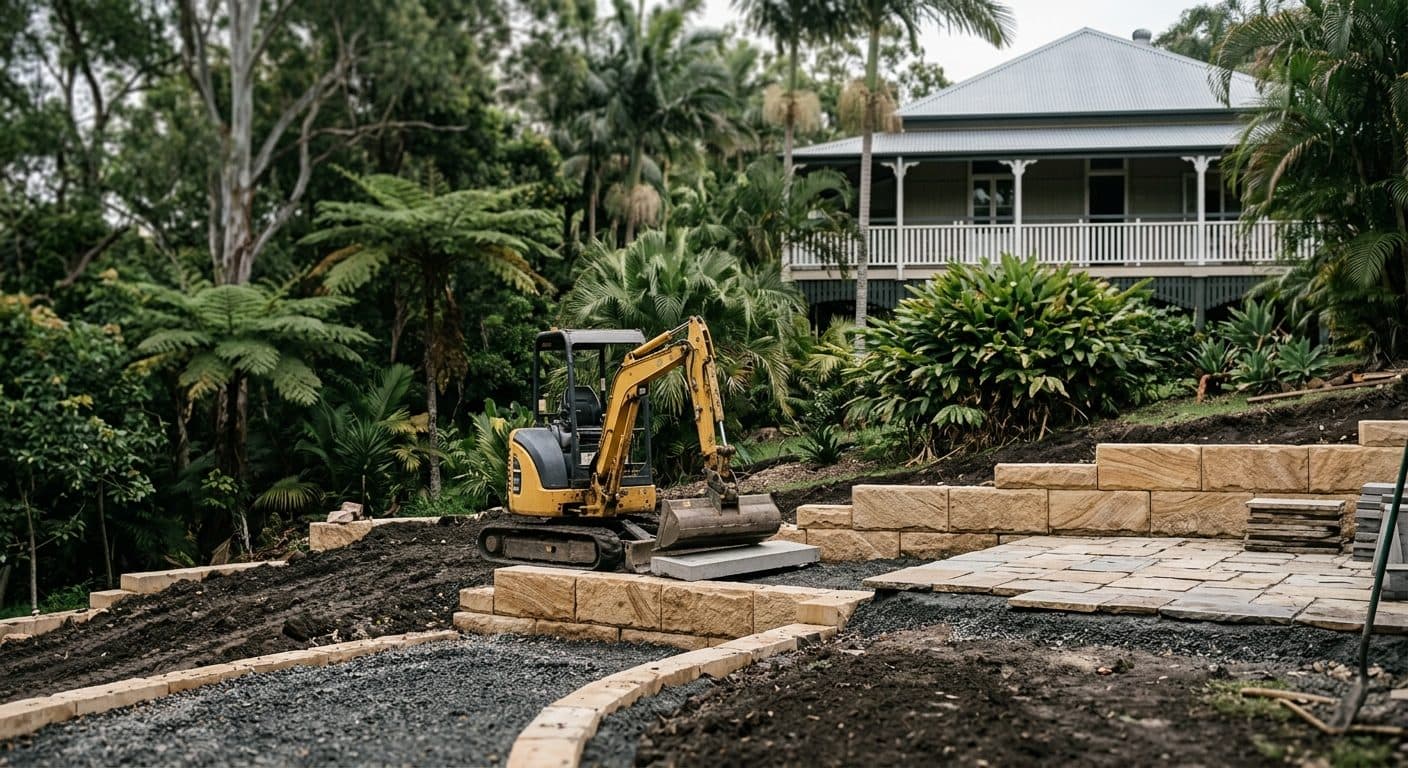
What actually drives backyard construction costs in Brisbane (access, slope, drainage, materials and pools), and why a compact yard is not automatically cheap.

By Shannon Trevisiol, Landscape Designer, Brisbane · 6 min read
- Access, slope, drainage and materials tier drive a backyard budget far more than the size of the yard does.
- Compact inner-Brisbane yards are often dearer to build, not cheaper, because tight access forces hand labour and small quantities carry premium rates.
- On our hilly blocks slope is the single biggest cost multiplier, since retaining walls are engineered structures with footings and drainage behind them.
- A resolved design with proper documentation is cheap insurance: it makes quotes genuinely comparable and cuts the mid-build variations that quietly inflate a budget.
This post is about backyard landscaping costs on the construction side: what you might pay a landscaper or builder to physically build your backyard. It is a deliberately separate subject from design fees, which I have covered openly in our guide to how much landscape design costs in Brisbane. As a very rough industry guide, landscaping overall commonly sits somewhere around five to fifteen per cent of a property's value, though that varies widely with the features you want, site access, topography and the finish you choose. So it is the construction side that deserves the most thought before you begin.
A warning before any figures: I design gardens rather than build them, and I would never pretend to know your budget or to pin down a landscaping price from the outside. Real landscaping pricing is genuinely hard to pinpoint, because it depends on the features, access, topography, materials and the site itself. What I can do is show you what moves the number, because the drivers are remarkably consistent from project to project.
What actually moves a construction budget
Four things, mostly. Access: whether an excavator can drive to the work area, or whether everything arrives by wheelbarrow through a gate. Slope: flat sites are built on; sloping sites are engineered. Drainage: water must be collected and taken somewhere lawful, and the further or deeper that somewhere is, the more it costs. And materials tier: the same courtyard can be finished in plain concrete and turf or in sawn stone, hardwood and mature trees, and the spread between those two versions is measured in multiples, not percentages.
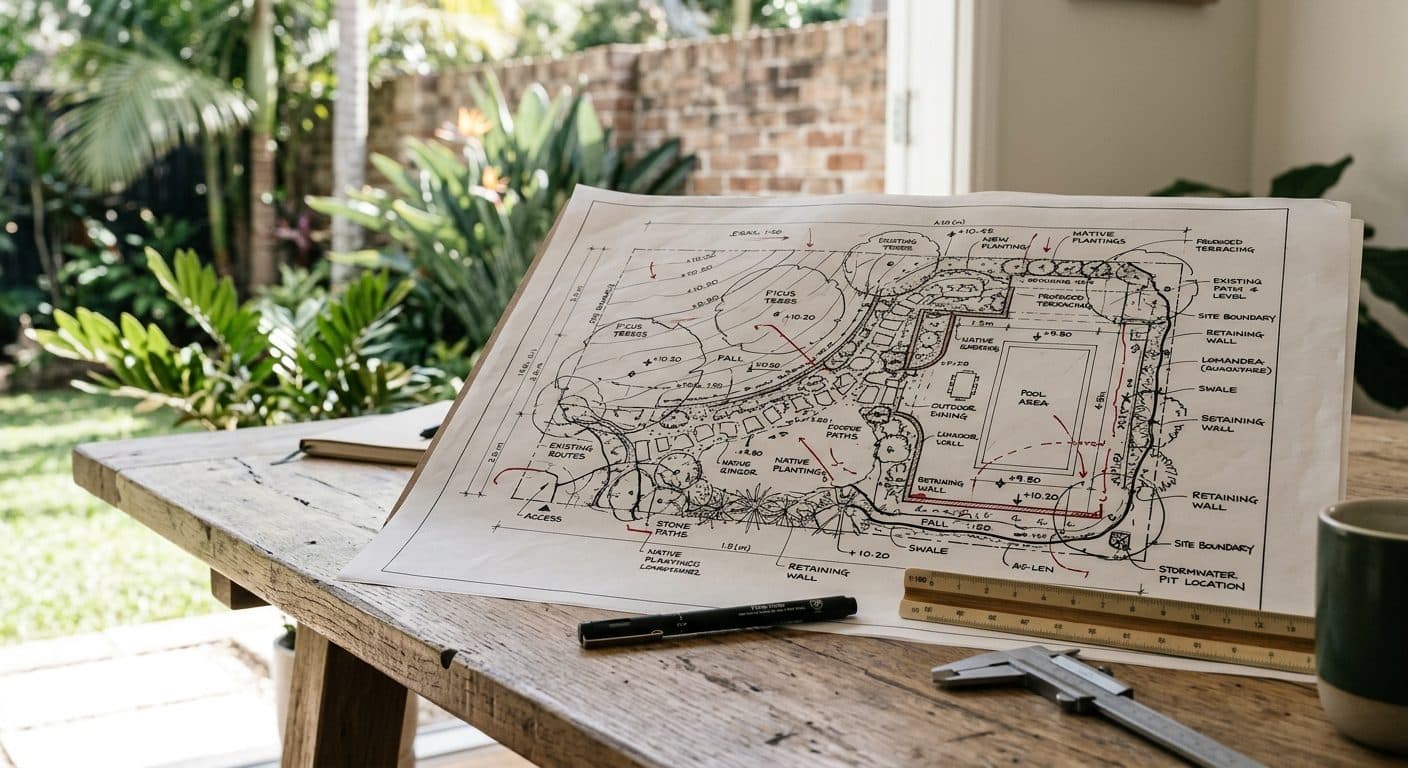
Every quote you receive is, one way or another, pricing those four things.
Notice what is not on the list: size. Area matters, but far less than people expect. A large, flat lawn with simple garden beds can cost less to build than a tiny terraced courtyard. Which brings me to the paradox.
The small-yard paradox
Compact does not mean cheap.
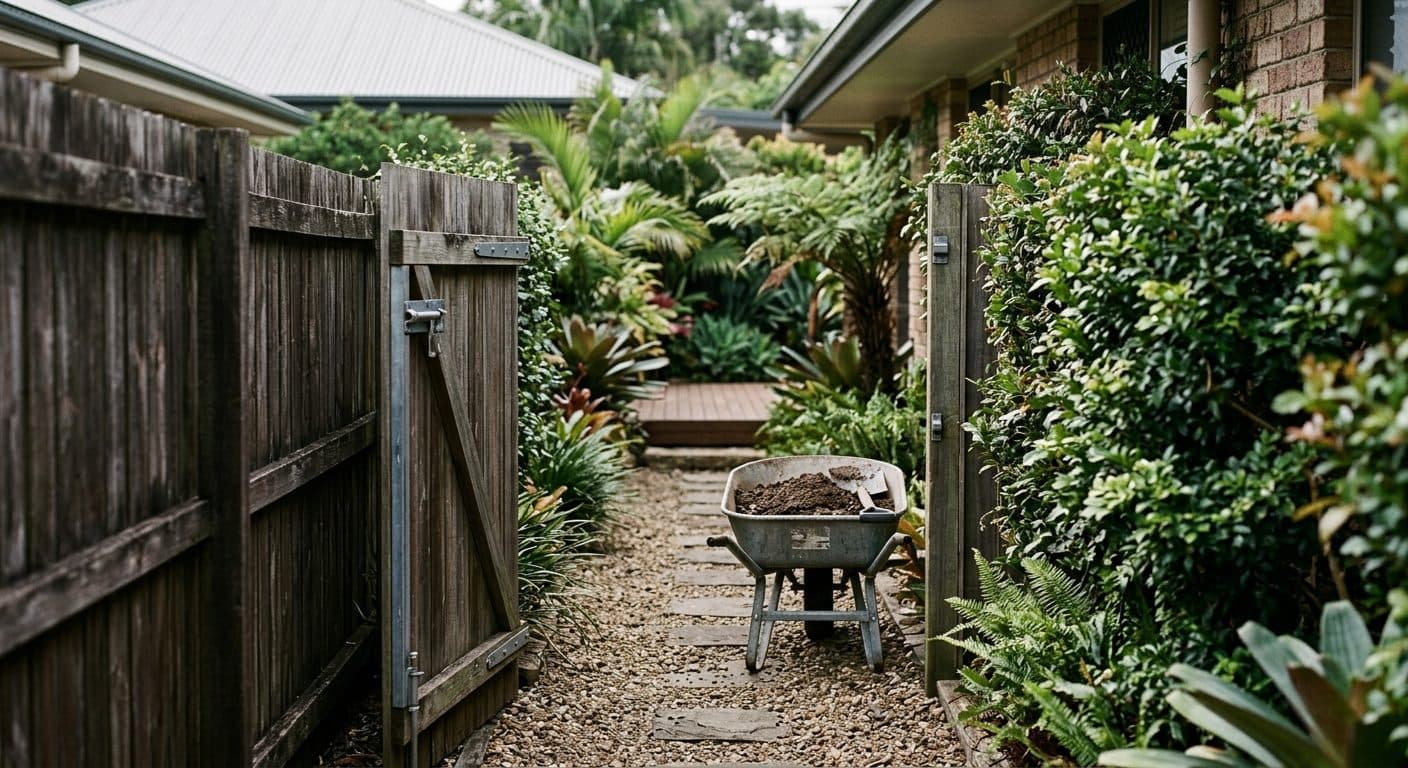
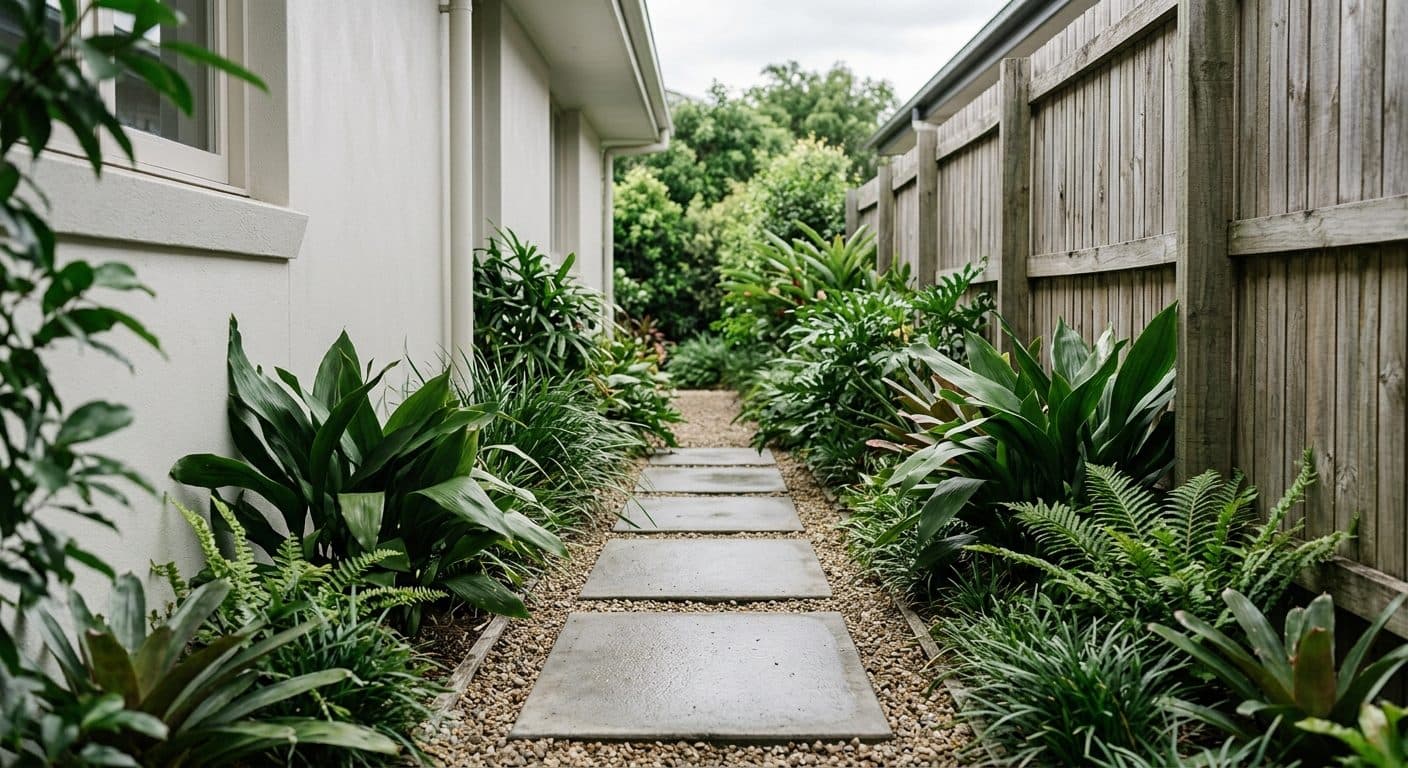
Small inner-Brisbane yards routinely surprise their owners, for three compounding reasons. Tight access means machines cannot reach the space, so demolition and materials move by hand at hand-labour prices. Small quantities attract premium rates because a concreter pouring six square metres still pays for the truck, the crew and the day. And in a small space everything is seen up close, so the standard of finish, and the cost of achieving it, rises. If anything, small spaces reward design more than large ones, because every decision is load-bearing, and I have written more about this on our small garden design page.
Pools and their surrounds
The pool itself is only part of the story, and often the more predictable part. What catches people out is everything around it: coping and surrounds, compliant fencing, drainage to manage splash and overflow, planting that tolerates reflected heat and the odd splash of chlorinated water, lighting, and somewhere for the equipment to live where you cannot hear or see it. It is not unusual for the works around a pool to approach the cost of the pool itself, particularly on sloping ground where the shell needs structural support. If the pool anchors a broader entertaining vision (cover, kitchen, dining), the thinking on our outdoor entertaining design page is a useful companion.
Sloping blocks: where budgets get tested
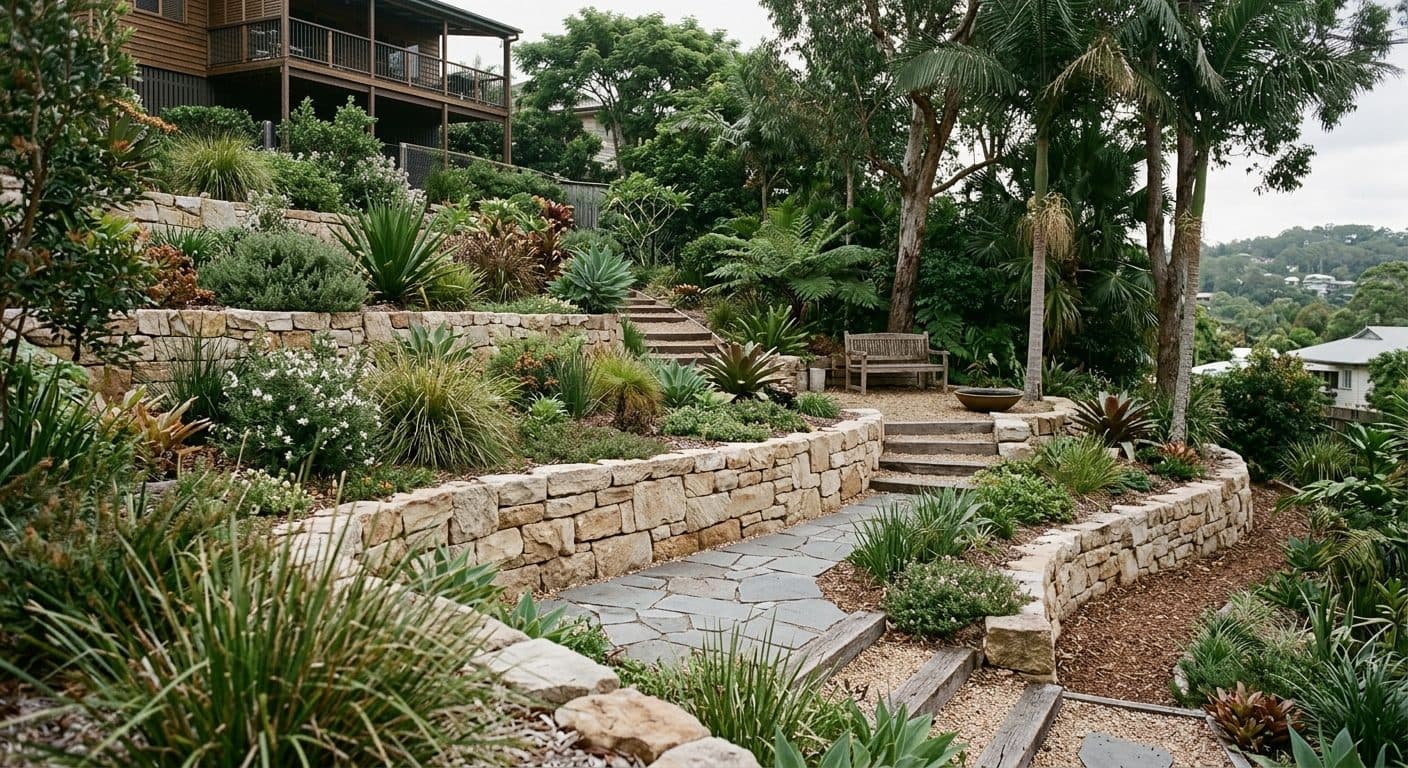
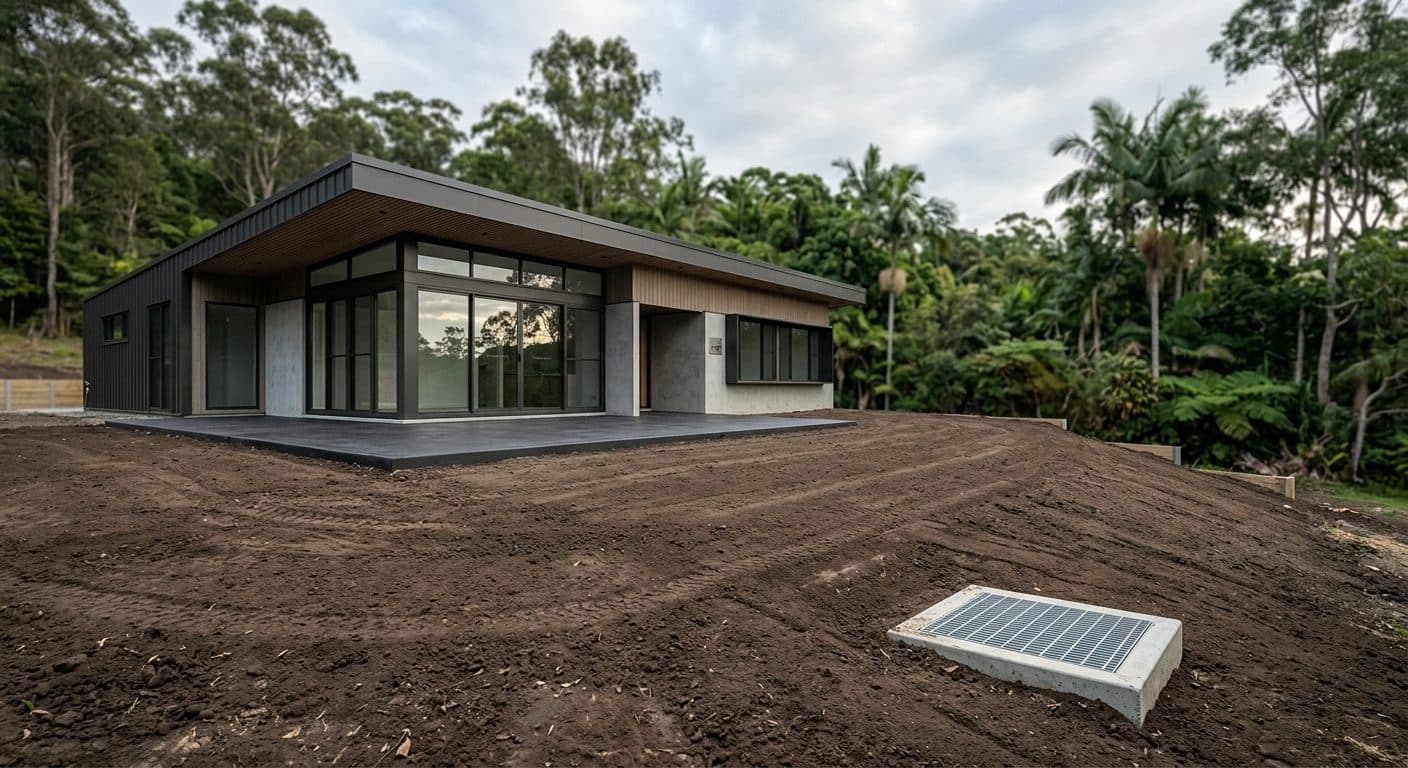
Brisbane is a hilly city, and slope is the single most powerful cost multiplier I see. Retaining walls are engineered structures with footings and drainage behind them, and their cost climbs steeply with height; beyond roughly a metre they generally involve engineering and certification. Every level change also implies stairs, balustrades where falls are possible, and a strategy for the water that now moves across your terraces. The compensation is that sloping sites, handled well, produce some of the most dramatic gardens in the city. I have collected our approach on the sloping block design page if that is your situation.
Thinking in proportion, holding it loosely
With all of those hedges declared, here is the only framing I am comfortable offering, and even then only as a rough industry guide rather than a quote. Landscaping as a whole commonly sits somewhere around five to fifteen per cent of a property's value, but that band is wide for a reason: where you land inside it (or outside it) depends entirely on the features you want, how easily machines and materials can reach the site, the topography and the finish you choose. A modest refresh of a small, accessible yard sits toward the lighter end of the effort; a full rebuild with structure, a pool, significant retaining or genuinely difficult access pushes the other way, sometimes well beyond any tidy percentage. Treat all of this as orientation rather than a number, because two backyards of identical size can differ by a factor of three for reasons that are invisible from the street, and because I have not seen your site. If a figure you are given seems surprisingly low, it usually means one of the four drivers has not been priced yet.
How design protects a fixed budget
This is the part I can speak to directly. A resolved design with proper documentation protects a construction budget in three ways. It lets multiple contractors price an identical, fully specified scope, so quotes are genuinely comparable and the honest contractors are not punished for guessing less. It lets you design to a declared budget from day one, spending on structure where it matters and simplifying where it does not. And it dramatically reduces variations, the mid-build surprises that quietly inflate loosely scoped projects. Documentation is not paperwork; it is the difference between buying a known thing and funding an experiment.
If you are trying to get a realistic sense of what your backyard might involve before committing to anything, a Design Discovery Consultation is a low-risk way to talk it through against your actual site, slope and access, so any budgeting you go on to do rests on the real drivers rather than a guess.
Ready to start designing?
We're currently taking on new landscape design clients across Brisbane. Reach out for a personalised quote, whether you're a homeowner or a design professional.
Book a Free Discovery Call