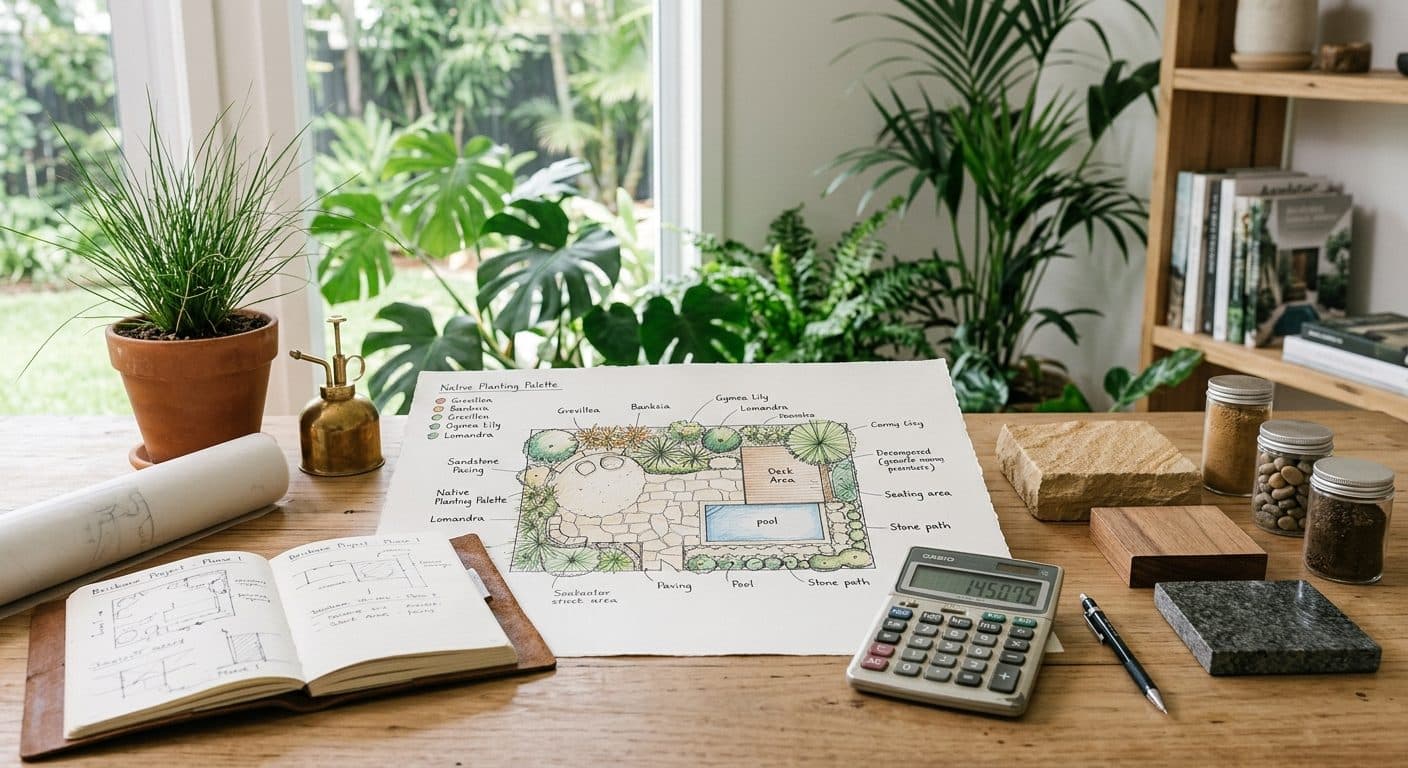
One of the most common questions I get asked. A garden is almost never one bill, so here are the ways in at different budgets, and how to break the work into areas and stages so the number feels manageable.

By Shannon Trevisiol, Landscape Designer, Brisbane · 10 min read
- A garden is almost never one bill: you can start with a $350 consultation and go no further, or build a considered garden one area at a time over several years.
- There are three levels to choose from, so you only pay for the stage your project actually needs: the consultation alone ($350), a concept design (around $2,500–$5,000), or a full builder-ready package ($5,000–$15,000).
- Keep two numbers separate in your head: the design fee (a fixed price, from around $2,500 for a concept) and the construction cost, which contractors price and which you can spread across areas and years.
- A plan drawn up front is what turns one daunting number into a series of manageable ones.
It's the question I get asked at every initial enquiry, and it's a completely reasonable one. Investing in your garden is a significant decision, and understanding what you're likely to spend before you start is just good planning.
The honest answer is that it depends on your site and your ambitions. But the more useful truth, the one that takes the fear out of the number, is this: a garden is almost never one bill. It's a collection of areas and a series of decisions, and you get to control the pace. You can spend $350 to get expert eyes on your space and go no further, or build a considered garden over several years, one area at a time. Let me lay out the options so you can see where you'd comfortably start.
Start with the consultation: $350, and no obligation to go further
The easiest number to give you is the on-site consultation. At Attn: Landscapes this is a fixed $350, and it includes a one-hour on-site session, a follow-up digital moodboard, my site notes, and a design fee for the works: a written proposal setting out what a full design would cost, so you can decide whether to go further with the real number in front of you.
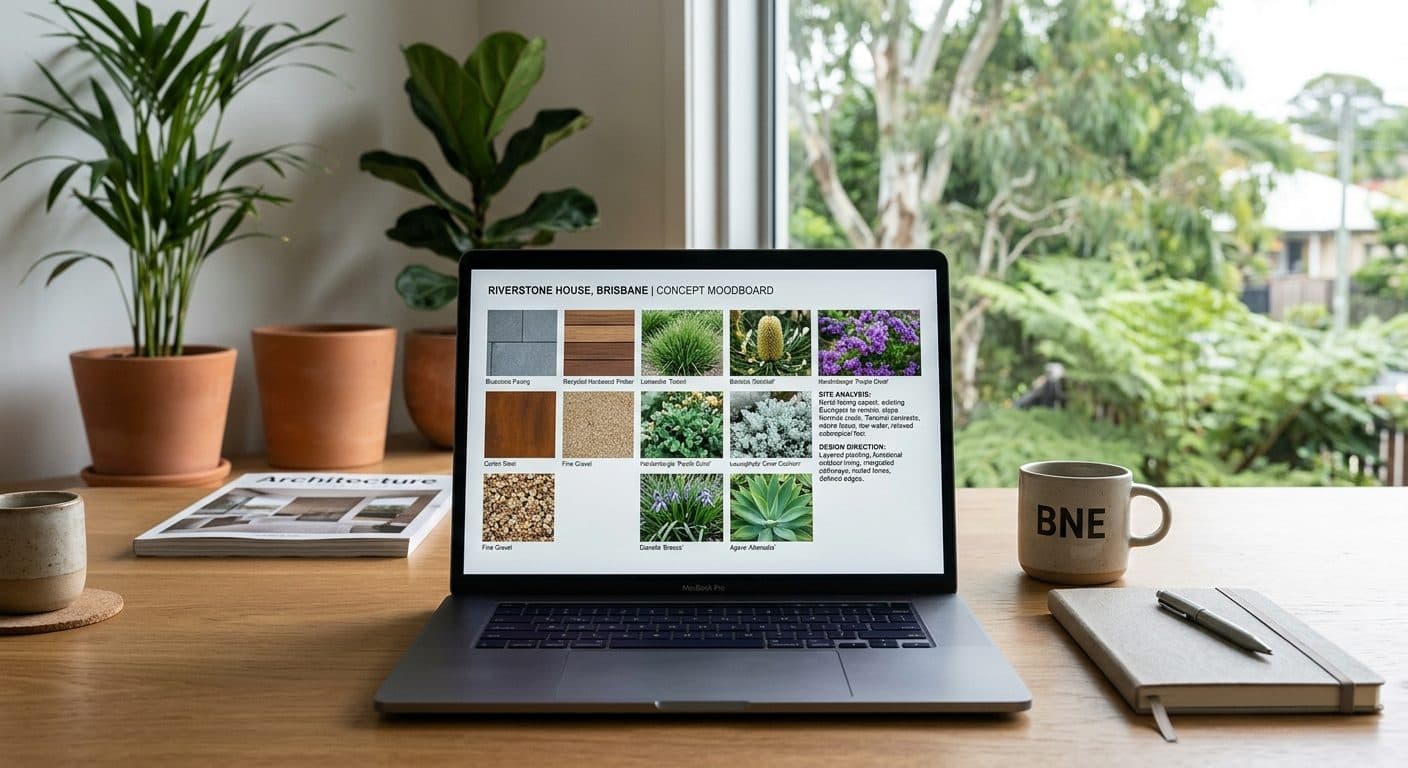
I keep this deliberately low, because it should be an easy yes. For $350 you get professional perspective on your space, a realistic sense of what's possible and what isn't, and a clear next step, whether or not you ever engage me beyond that first hour. Plenty of people take the moodboard and site notes and simply run with them themselves. That's a perfectly good outcome.
Then choose your level: three ways to work with me
Not every garden needs the full treatment, and I'd rather you spent on the stage that actually fits your project than on one you don't need. Here are the three ways people typically work with me, from the lightest touch to the most complete.
Option one: the consultation on its own, from $350
If you're confident with your hands, working on a small courtyard, or you just want a professional to sense-check a plan you've drawn yourself, the consultation alone is often enough. You walk away with direction, a plant and materials steer, and the confidence to make decisions. This is the entry point for someone who wants expertise, not a full drawing set.
Option two: consultation plus a concept design, around $2,500–$5,000
A concept design takes your garden from "I have a vague idea" to "I have a clear vision on paper." You get a 2D concept plan showing layout, zones, materials and planting direction, which is enough to picture the finished garden and to hand to a contractor for preliminary pricing.
Most residential concept designs in Brisbane land between $2,500 and $5,000, with larger or more complex blocks reaching toward $6,000. A compact 200m² courtyard in New Farm is simply a different scope to a 1,200m² Kenmore property with retaining walls and several zones. This is the right level for most people who want a proper plan to build toward, especially if they intend to stage the work over time (more on that below).
Option three: the complete concept and detailed package, $5,000–$10,000
The detailed design stage adds to your concept the complete documentation package: a scaled plan, a detailed planting plan with species schedule, a materials palette, and the landscape feature details a builder needs to quote accurately and build from without guessing.
For a standard residential project, a complete concept-and-detailed package commonly lands between $5,000 and $10,000. A complex site with significant level changes, a pool, an outdoor kitchen and multiple material zones climbs from there, sometimes to $15,000 or more. You only need this level if you're building something substantial and want it built exactly as designed. Wherever you get a quote, ask to see a portfolio and a sample documentation set, because what a "design" actually includes varies enormously between studios, and my guide to what's included in a landscape design package walks through the drawings in plain language.
Keep two numbers separate in your head: design and build
This is where a lot of the sticker shock comes from, so it's worth slowing down. The design fee and the construction cost are two different things, and they don't arrive at the same time or from the same person.
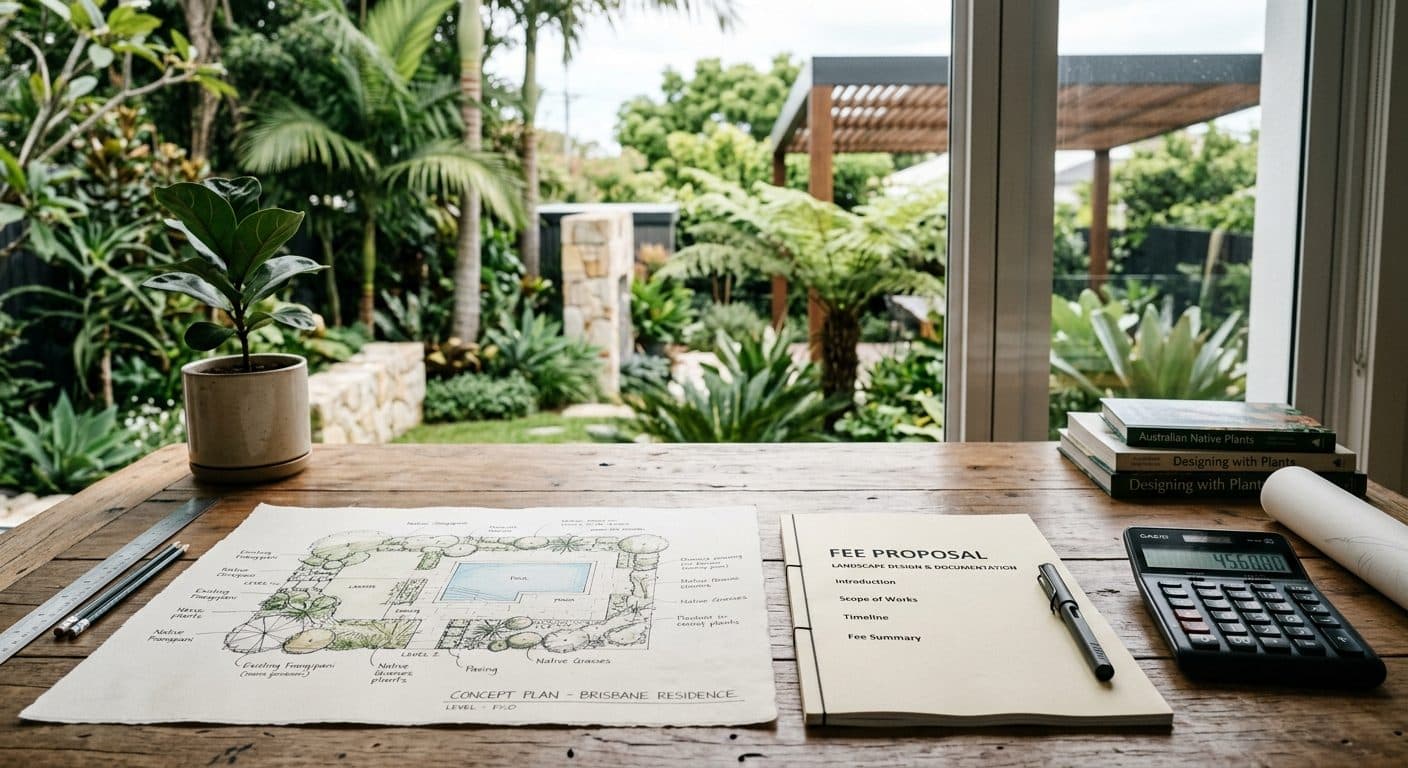
The design is a fixed, one-off fee (from around $2,500 for a concept), while the construction is priced and quoted by the independent contractors who build the garden, not by me. So when you see a large figure for a finished garden, most of that is materials and labour spread across the build, not the design. The design is the small, early cost that makes the large one go further, and because it's quoted as a fixed price per stage, you always know it before you commit.
You don't build it all at once: think in areas and phases
Here's the reframe I most want you to take away. A garden isn't one project you either can or can't afford. It's a collection of areas, the entertaining zone, the front garden, the pool surround, the screening down the side, and they don't all have to happen in the same year.
A good design lets you break the work into stages and spread the outlay over time, while the garden stays coherent because every stage is a piece of one plan rather than a fresh guess bolted onto the last. You might do the structural bones and the back garden this year, then the front, the lighting and the finishing planting in the years that follow. I've written a full guide to phasing a garden renovation that sets out the right order to build in, but the headline is simple: a plan up front is what makes staging work, and it turns one daunting number into a series of manageable ones.
The same logic sits behind our regional landscape design cost guides: what a garden costs to build shifts with the ground and the weather, and knowing your area's real cost drivers is what lets you plan the stages sensibly rather than guess.
How designers charge: fixed fee, hourly, or percentage
It helps to know how the market talks about fees, because you'll hear three different languages when you gather quotes. Some designers charge hourly, commonly somewhere in the $120–$200+ range in Australia, which suits small, open-ended tasks but makes budgeting a full design hard. Some charge a percentage of the expected construction cost, typically landing between 5% and 15%. I prefer fixed fees quoted per stage: you know exactly what each stage costs before you commit to it, and the fee reflects your site's actual complexity rather than the clock.
You'll also see landscaping quoted per square metre, but be careful applying that thinking to design. Per-square-metre rates describe construction (turf, decking, paving), not the design work that decides where those things should go. A small, complicated site can take more design time than a large, simple one.
One more distinction worth knowing when you gather quotes: some studios are design-only, like mine, where you get drawings built to hand to any contractor you choose, and some are design-and-build, where the one business both designs and constructs. Design-and-build can be convenient, but the documentation is sometimes lighter, because their own crew fills in the detail on site, which can make it harder to take the plan elsewhere and get competitive prices. Neither is wrong; just know which one you're buying, and ask to see a sample of the drawings you'll actually receive.
What moves the number up, and what brings it down
Site complexity is the main variable: steep slopes, awkward shapes and difficult access all add time and therefore cost. Scale matters too, since larger gardens require more drawings and more planting detail. And revision rounds have a cost, so clarity up front is the cheapest saving available to you.
One cost people rarely expect is the drafting that happens before the design even starts. An accurate base plan of your block is the foundation everything else sits on, and depending on your council you can often request PDF copies of your property and house plans for free or a small fee, so a little homework here (chasing down existing plans, survey pegs and levels) can save drafting time, and therefore fee, later. It's worth doing your due diligence early.
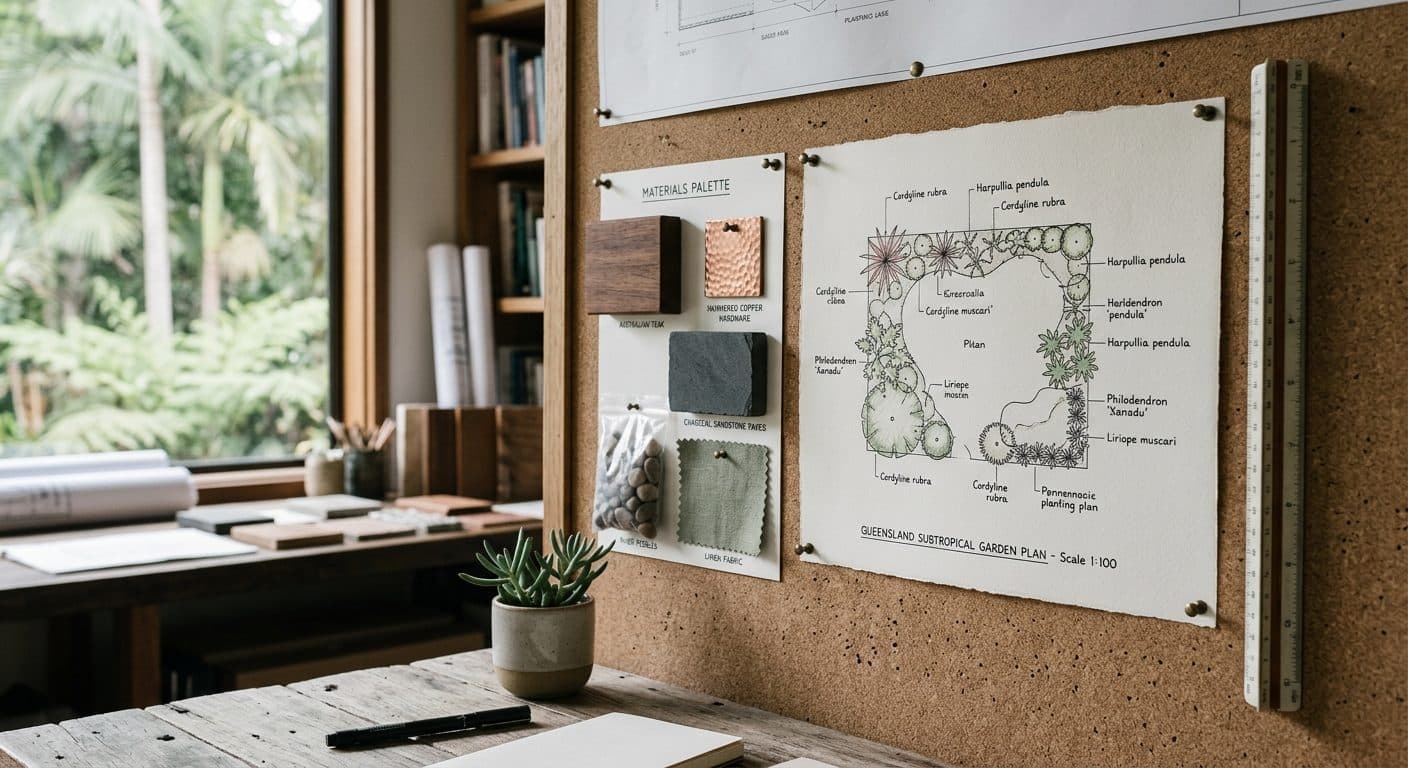
The good news is that most of what drives the number is within your control. Bring a written list of what you actually want the garden to do before we meet, be upfront about your budget so I design to it rather than past it, and decide early whether you're building in one go or over several years. Most of the cost creep I see comes from decisions changing halfway through, not from the drawing itself.
A rough budget picture (and why it's less scary than it looks)
For most homeowners the construction itself, built by contractors, commonly runs $40,000–$150,000 or more depending on scale and materials. A rule of thumb I find more useful than a flat dollar figure is to look at your own property: for a full garden renovation, you could budget from around 15% of your property's value, moving with the landscape features, site access and retaining involved. I know that's still a big span, and seen as one lump it's genuinely daunting. But almost nobody spends it in one hit. Broken into areas and staged over a few years, with the design done once up front, it becomes a series of decisions you make at your own pace, each one building on a plan you already trust.
Seen that way, the design fee, a small fixed cost done once up front, is the cheapest insurance you can buy against ending up with a garden that doesn't work: the wrong levels, drainage in the wrong place, a layout you have to rip up and pay for twice.
Is it worth it?
A well-designed garden adds genuine value to your daily life and to your property. The conversation about cost is really a conversation about value, and on that measure professional design is almost always worth it, precisely because it stops you spending the big construction money in the wrong places.
If you'd like a specific figure for your project, get in touch and I'll follow up within one business day. If you're weighing up a garden you can't do all at once, the Design Discovery Consultation is where we map the whole thing and decide together where stage one begins. And if you're still in the dreaming stage, my guide to designing a subtropical garden in Brisbane is a good place to gather ideas.
Ready to start designing?
We're currently taking on new landscape design clients across Brisbane. Reach out for a personalised quote, whether you're a homeowner or a design professional.
Book a Free Discovery Call