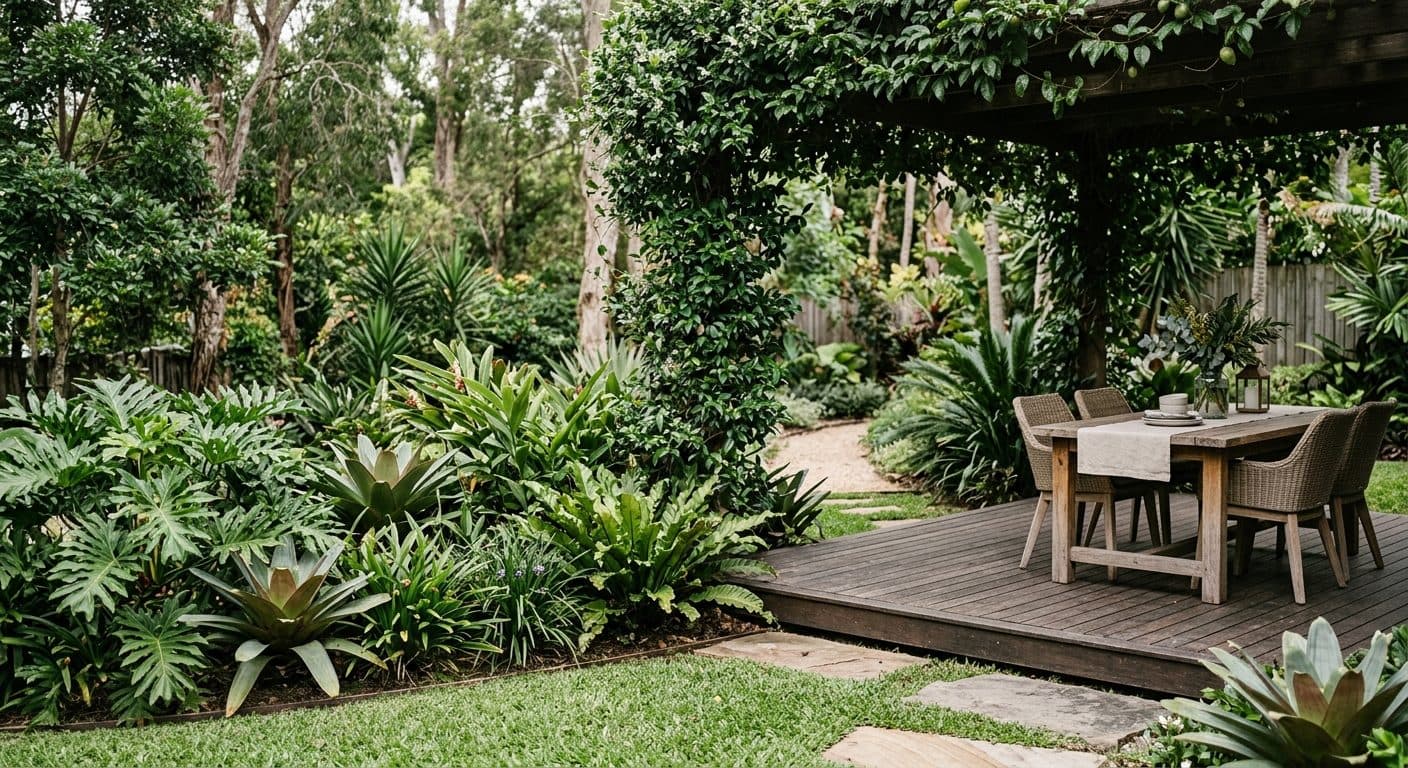
Design fees are real money, and the sceptics have a point worth answering properly: what you're paying for, when it pays for itself, and when you don't need one.

By Shannon Trevisiol, Landscape Designer, Brisbane · 5 min read
- What you are really paying for is the reasoning behind every line, done once on paper, before any of it costs real money to change.
- The value is clearest in the mistakes design prevents: on paper they are a revision note, in the ground they are an excavator and a skip bill.
- Tighter builder quotes plus one avoided mistake often cover the fee, and the mistakes you avoid are, by definition, the ones you never see.
- Design earns its keep where decisions are expensive and irreversible: if your site has none of those, I will happily tell you a designer is not worth it.
If you've typed this question into a search engine, you've probably already read the forum threads. Reddit is reliably full of people asking whether a landscape designer is worth the money, and reliably full of people answering that it isn't: that you can pull ideas from Pinterest, that the nursery will tell you what grows, that designers charge thousands of dollars for pretty pictures. I make my living from design fees, so you should read my answer with the same scepticism. But I'd rather engage with the doubt honestly than pretend it doesn't exist, because the sceptics are right more often than my industry likes to admit.
You're paying for decisions, not drawings
The drawings are not the product. They're the receipt. A resolved garden design is a few hundred interlocking decisions: where the entertaining area sits relative to the western sun, how water moves across and off the site, which tree gives you shade at maturity without lifting the paving or finding the pool, how lawn, garden and hard surfaces meet so the maintenance isn't miserable, which materials survive Brisbane humidity and which fail within a few years. Anyone can draw a plan. What you're paying for is the reasoning behind every line, done once, on paper, before any of it costs real money to change.
The expensive mistakes design exists to prevent
The clearest way to see the value is to look at what happens without it. The wrong tree in the wrong place is the classic: something planted for fifty dollars that a decade later is cracking a slab or shading the only winter sun, and now costs thousands to remove, along with ten years of growth you can't buy back. Drainage treated as an afterthought is the sneakiest: water always finds the weak point, and fixing failed drainage under finished surfaces means pulling those surfaces up. Unusable zones are the most common: the west-facing deck that's uninhabitable from November to March, built exactly where somebody guessed the entertaining should go. And the most painful is demolition-and-redo: paying twice for the same square metres because the first attempt was improvised rather than designed.
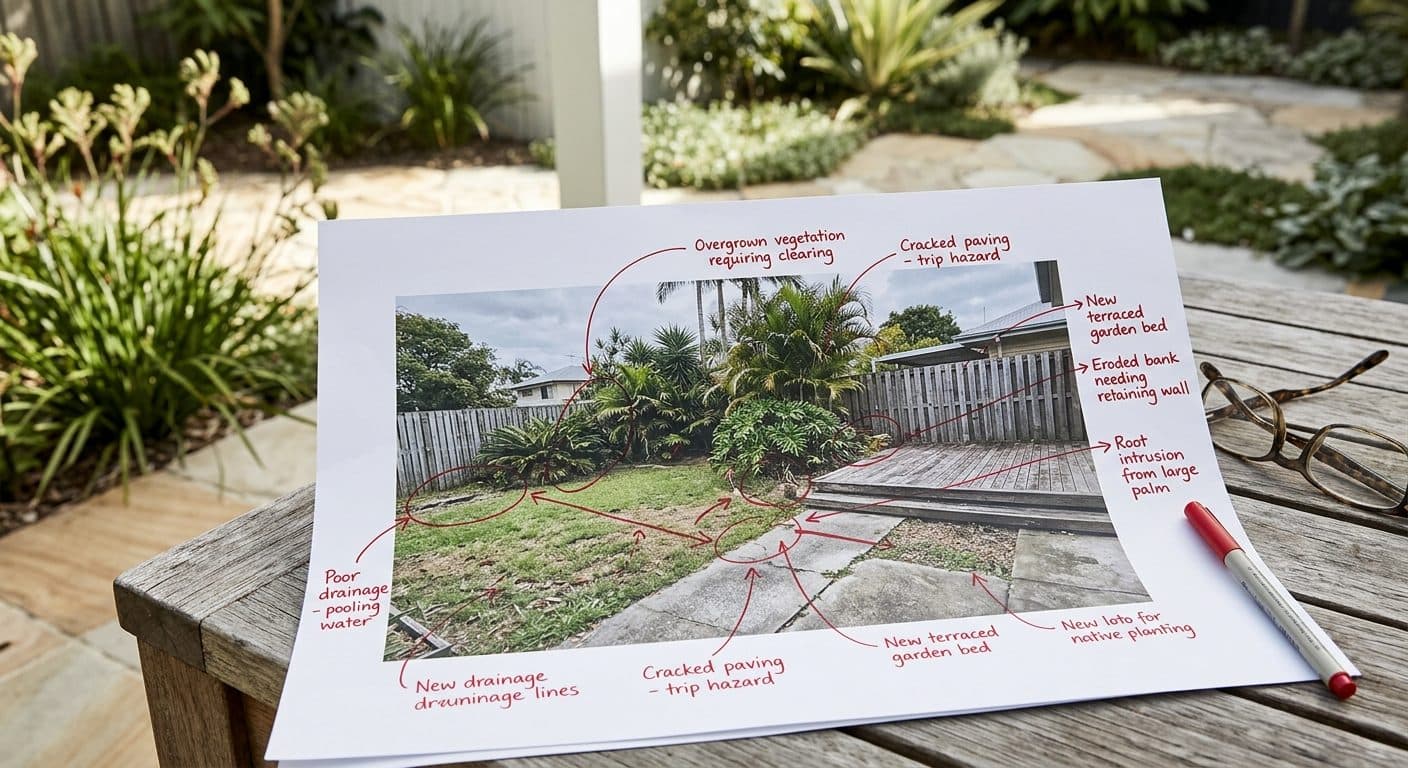
On paper, every one of those mistakes is a note in a revision round. In the ground, each one is an excavator and a skip bill. That asymmetry is the whole argument.
The arithmetic of the fee
Design typically costs somewhere around five to fifteen per cent of construction cost, and I've broken down the actual dollar figures in my guide to landscape design costs in Brisbane. Set against that, consider what proper documentation does at quoting time. A builder pricing from a detailed drawing set can price accurately; a builder pricing from a conversation and a mood board has to guess, and builders sensibly guess in their own favour, padding quotes with contingency for the unknowns. Documented projects also let you tender to more than one contractor and compare genuinely comparable numbers. I won't pretend every project recovers its design fee this way, but it's common for tighter quotes plus one avoided mistake to cover it. The avoided mistakes are, by definition, the ones you never see.
The property-value question
You'll find plenty of claims that good landscaping adds value to a property, from real estate agents and industry surveys alike, and estimates commonly land anywhere from five to twenty per cent, so treat all of them as directional. None of them control for suburb, market or the quality of the work, and nobody can honestly promise you a percentage. The sturdier version of the claim is smaller: presentation affects buyer interest, and a coherent, resolved garden presents better than a patchwork of accumulated decisions. If resale is your only motivation, be conservative in what you assume. The better reason to invest is the years you'll spend living with the result.
When it's genuinely not worth it
Here's the section my industry usually skips. If your entire project budget is a few thousand dollars, a professional design fee is disproportionate: spend the money at the nursery, do the work in stages, and enjoy the process. If you're a confident DIYer with a simple, flat site, time to iterate and genuine enjoyment of the research, you may not need me: gardens are forgiving in a way buildings aren't, and a misplaced plant can be moved. Design earns its keep where decisions are expensive and irreversible (levels, retaining, drainage, pools, paving, mature trees), and if your project contains none of those, the case honestly weakens. And at the other end of the scale, if your project is structurally complex or commercial, the right professional may not be a designer at all, and sometimes a landscape architect is the better call.
Answering the sceptic properly
The forum commenter who designed their own garden and loves it isn't lying, and I'd never claim otherwise. Some people have a good eye, patience and a forgiving site, and it works out beautifully. What the threads can't show you is survivorship bias: the people who paved the wrong area, planted the wrong tree or built the deck into the afternoon sun mostly don't post follow-ups, because they are living with it or quietly paying to fix it. The honest position isn't that everyone needs a designer. It's that the fee is small relative to the cost of the decisions it protects, and the further your project tilts towards expensive and irreversible, the better the value gets.
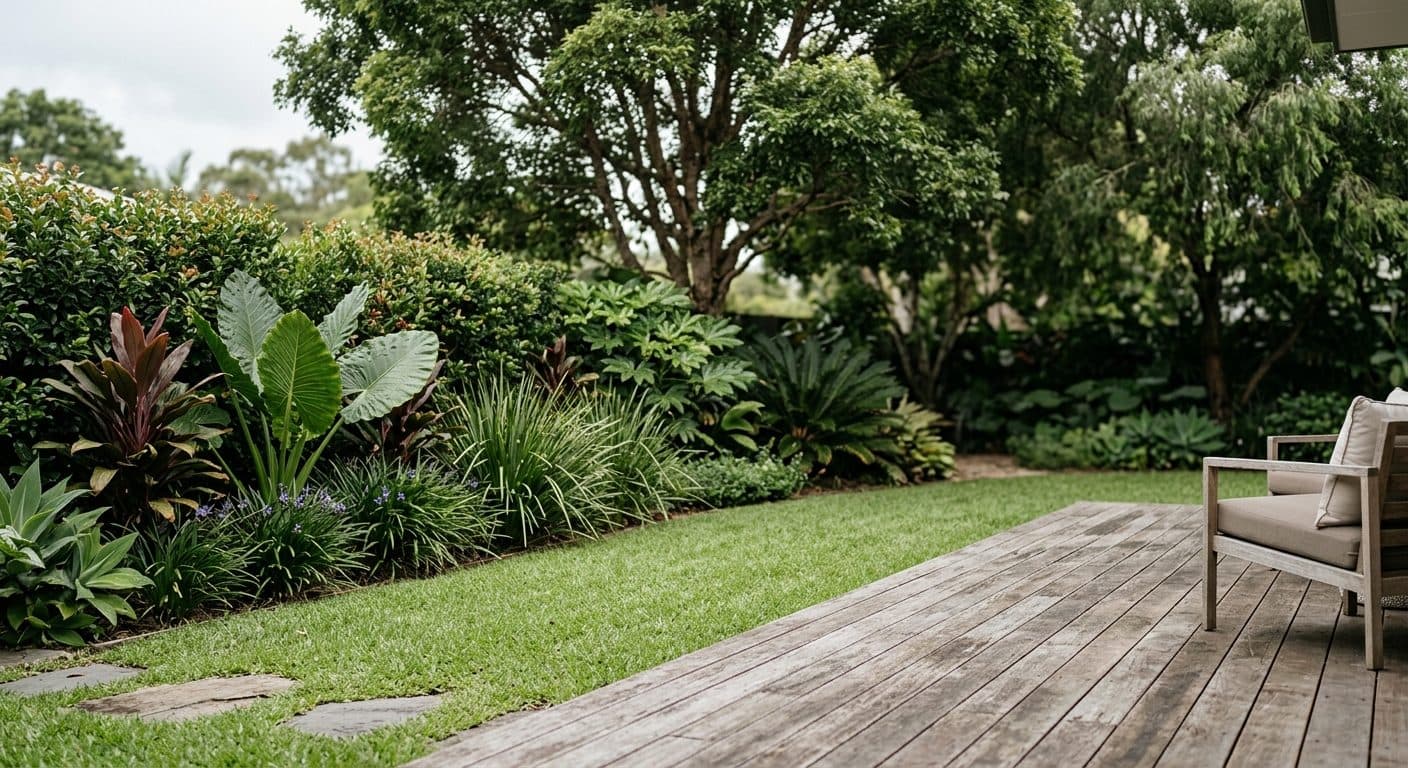
If you want to test that value cheaply, this is what my Design Discovery Consultation is for: a $350 on-site session where you get real answers about your specific site, and a clear picture of what a full design package includes before you commit to anything further.
Ready to start designing?
We're currently taking on new landscape design clients across Brisbane. Reach out for a personalised quote, whether you're a homeowner or a design professional.
Book a Free Discovery Call