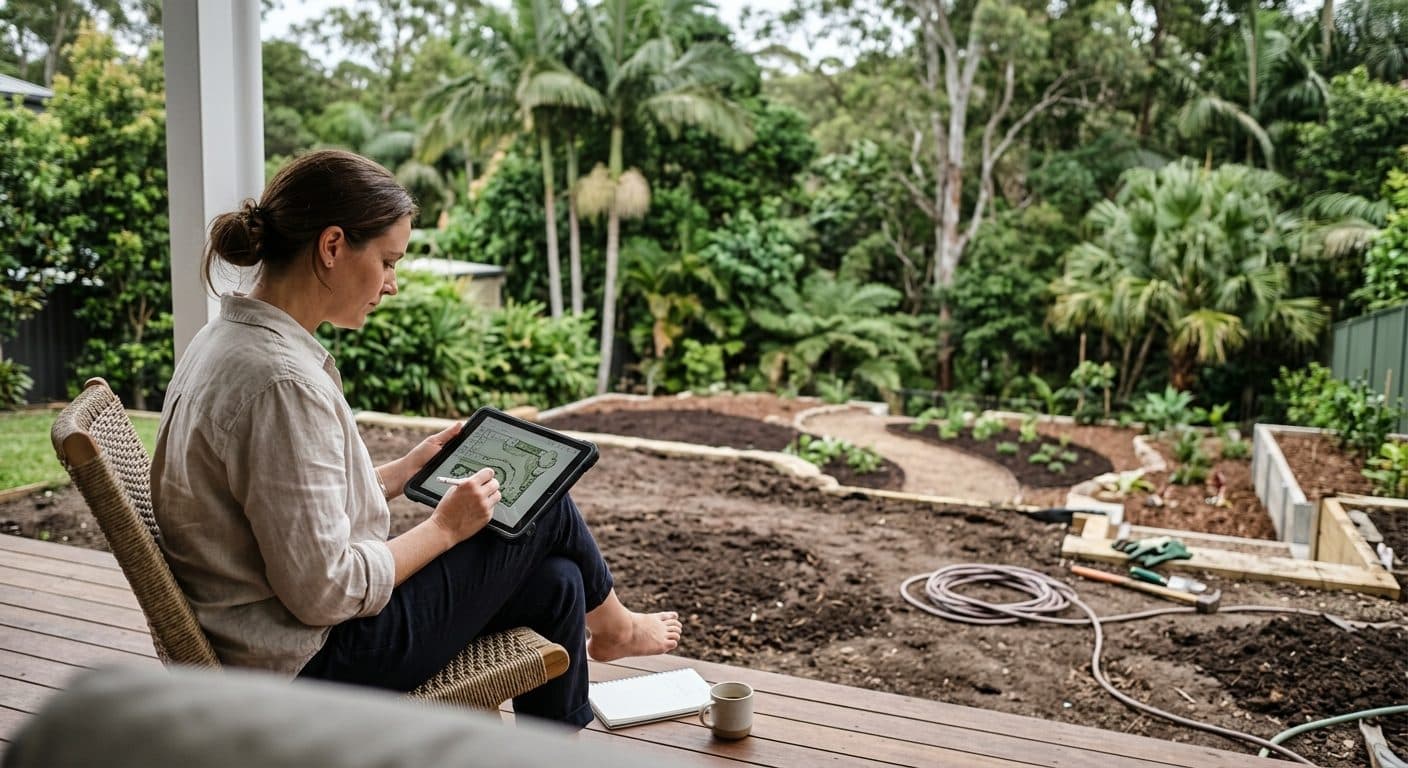
Not every garden needs a designer. An honest triage of when DIY works, what design apps can and can't do, and the middle path most people don't know exists.

By Shannon Trevisiol, Landscape Designer, Brisbane · 5 min read
- Not every garden needs a designer: DIY is genuinely the right call for flat, well-drained sites where the work is mostly planting.
- Design apps are brilliant for seeing an idea, but they cannot read levels, drainage or cost, so use them for imagining rather than deciding.
- The middle path most people miss is a single on-site consultation that sets the direction, after which you build it yourself at your own pace.
- A full design earns its fee on level changes, retaining, drainage problems, council approvals and any build heading towards serious money.
Let me start with something you might not expect from a landscape designer: not every garden needs one. Some of the best gardens in Brisbane were made by their owners over years of weekends, and I would never argue they would have been better off paying me. But some projects genuinely do need professional design, and getting that call wrong in either direction wastes money. So here is my honest triage of the three ways to start (doing it yourself, leaning on apps, or engaging a professional) and the middle path most people do not realise exists.
When DIY genuinely works
DIY is the right call more often than my invoice book would prefer.
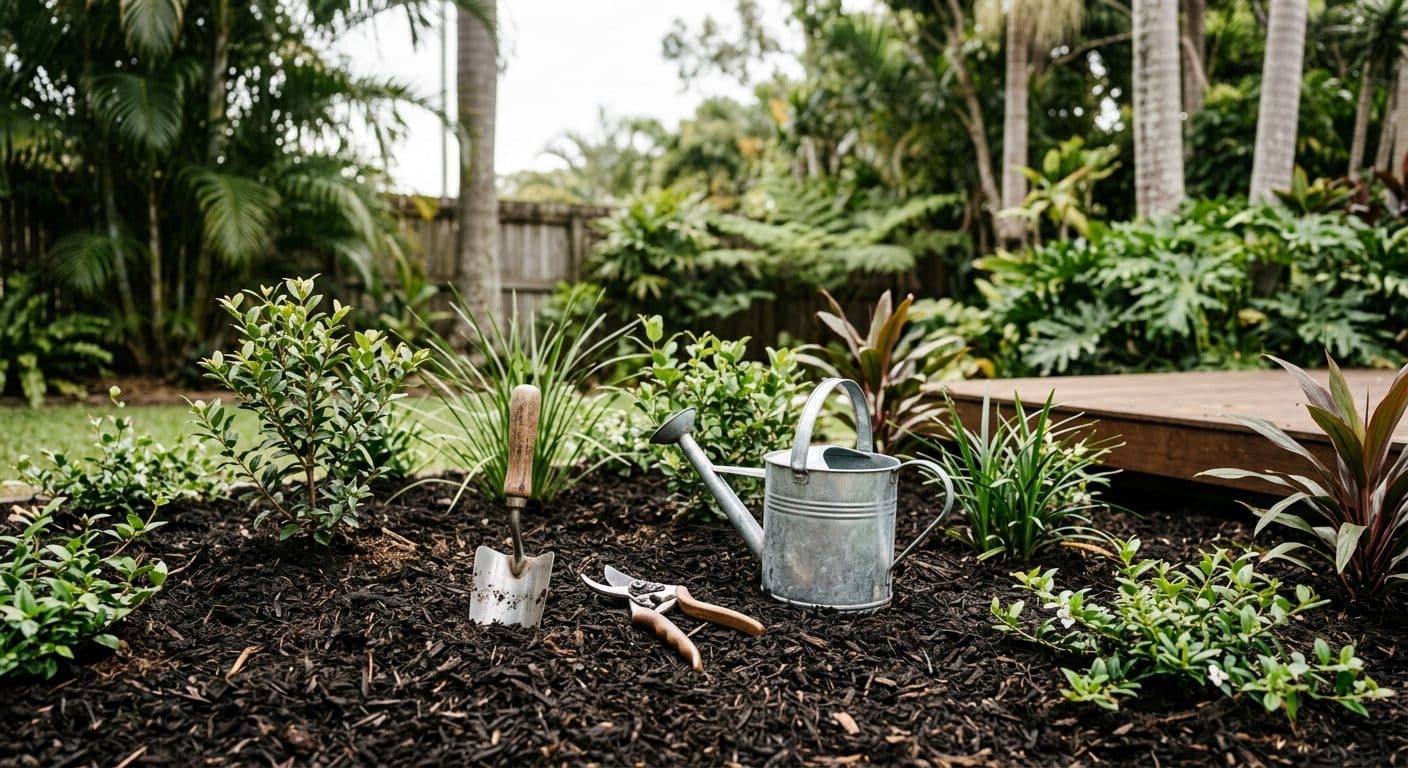
It works when the site is flat or close to it, when the drainage already behaves, and when the project is essentially planting: refreshing tired beds, replacing a struggling lawn, adding screening along a fence. It works when you have patience, because a garden built gradually by someone who is paying attention will usually beat a garden installed in a fortnight by someone who is not. And it works when you enjoy the process itself; for plenty of people the making is the point, and a designer would only take that away.
The honest prerequisites are a tolerance for killing some plants (everyone does, including me) and a willingness to learn Brisbane's particular rhythms: the summer downpours, the dry winters, the brutal western sun. If you want a head start on the planting side, my guide to designing a subtropical garden in Brisbane covers the principles I use on every project.
What design apps do well, and where they fall over
Garden design apps and AI visualisation tools have become genuinely impressive, and I don't say that grudgingly.
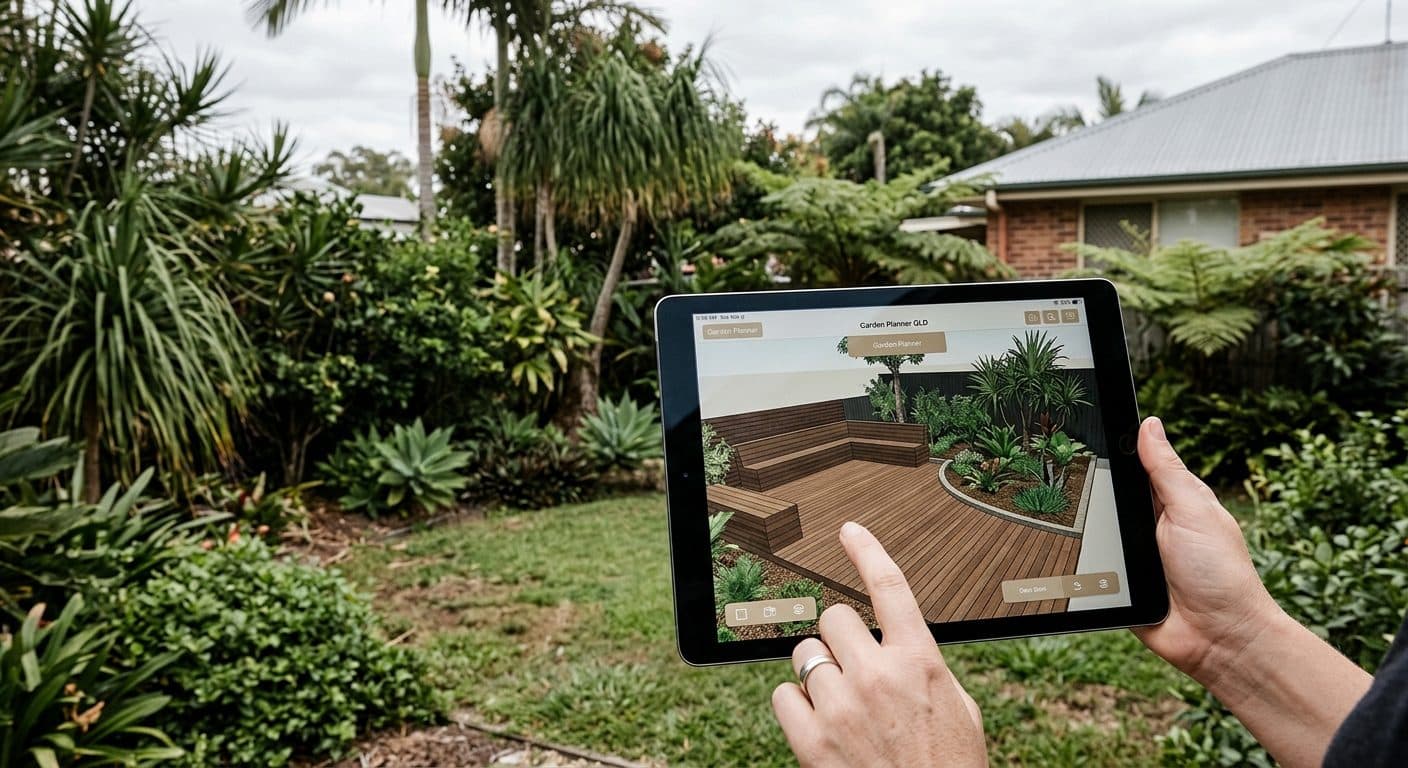
They are good at the thing beginners struggle with most: seeing an idea. Drop a photo of your yard into an app, sketch a deck and a curved bed, and you have a picture you can react to. As a communication tool (showing your partner, your landscaper or your designer what you are imagining), they are excellent.
What they cannot do is the invisible work. Apps do not understand levels, and levels are half of landscape design in a hilly city like this one. They do not understand drainage, which is the difference between a garden and a bog. And their plant databases skew generic or northern-hemisphere: an app will happily place box hedging and silver birches in a Brisbane backyard where neither will thank you by February. An app can show you what a garden might look like; it cannot tell you whether it will work, what it will cost or what it will demand of you in five years. Use them for imagining. Be careful about trusting them for deciding.
The middle path: one consultation, then do it yourself
Here is the option surprisingly few people know exists. You don't have to choose between fully DIY and a full design commission. A single professional session (for us that is the Design Discovery Consultation, $350 on site) can set the direction, and you execute it yourself over months or years.
An hour on site with a designer answers the questions apps and guesswork cannot: what to keep and what to remove, where the structure should go, what order to do the works in so you never undo your own progress, and which plants suit your soil, aspect and appetite for maintenance. You leave with clear direction and a follow-up summary, then build at your own pace and budget. For patient DIYers this is honestly the best value in our entire service list, and for some gardens it is all the professional input ever needed.
When a full design earns its fee
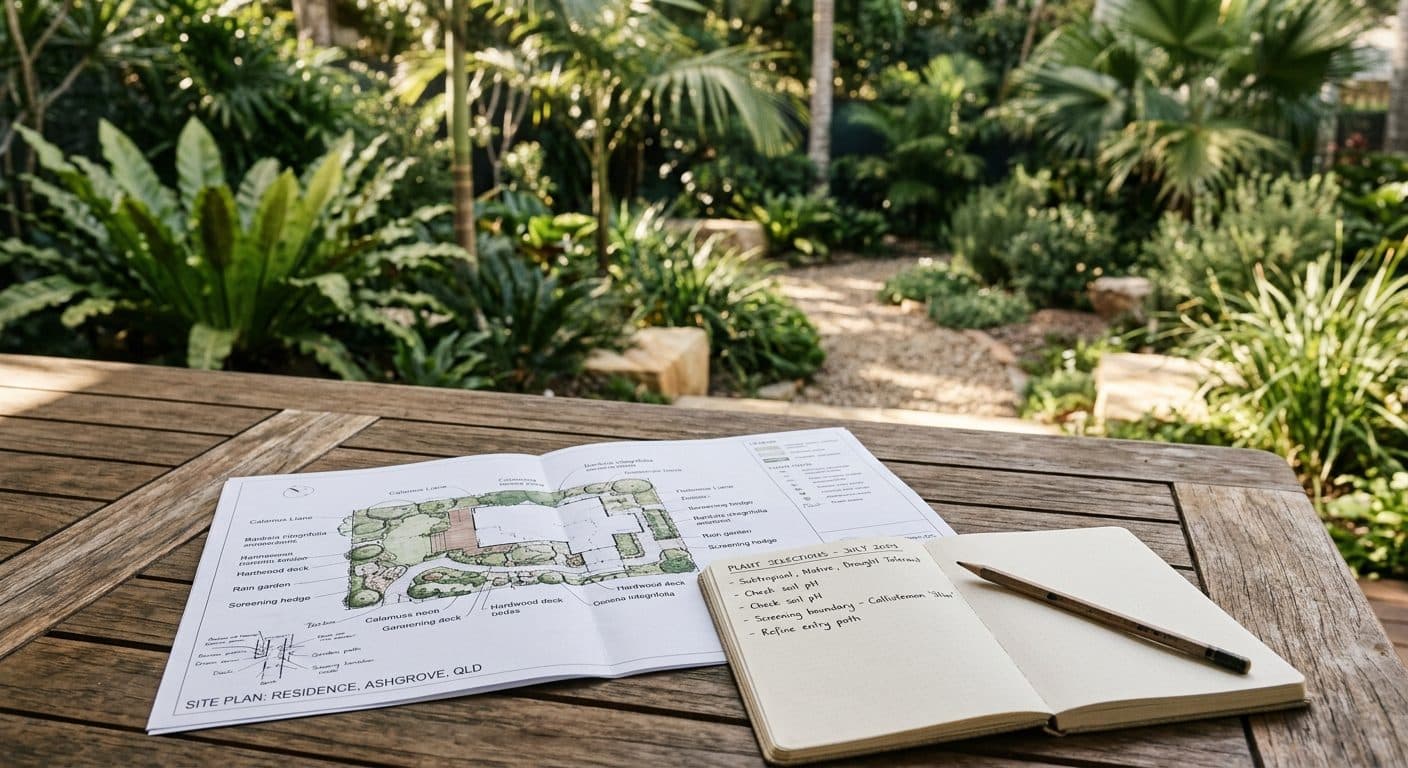
There are projects where I will say plainly: do not DIY this. Anything involving significant level changes or retaining, anything where drainage is already misbehaving, and any pools, structures or works that might need council approval all belong in that basket. So do projects where you will be spending serious construction money, because once a build is heading towards six figures, a design fee is cheap insurance against expensive improvisation. And any project where you need several contractors to quote against the same scope, because without documentation, quotes are not comparable and the budget is a hope rather than a plan.
If you are weighing that decision seriously, I have written an honest assessment of whether a landscape designer is worth it, including the situations where the answer is no. And if you want to see what the full process looks like from first meeting to finished garden, our garden design services page walks through it end to end.
A simple way to decide
Three questions sort most projects: is the ground flat and the drainage behaving, is the work mostly planting rather than structure, and would a mistake be annoying rather than expensive? Three yeses and DIY is a perfectly good path, so go well, and enjoy it. A no anywhere in that list, and it is worth at least an hour of professional eyes before you commit money to the ground.
Wherever you land, start with the site rather than the shopping list: during heavy rain, watch from inside the house to see where the water goes, note where the sun lands in February, and see what thrives in your neighbours' gardens without apparent effort. And if you would like those observations sharpened into a plan of attack, a consultation is the lowest-stakes way to begin.
Ready to start designing?
We're currently taking on new landscape design clients across Brisbane. Reach out for a personalised quote, whether you're a homeowner or a design professional.
Book a Free Discovery Call