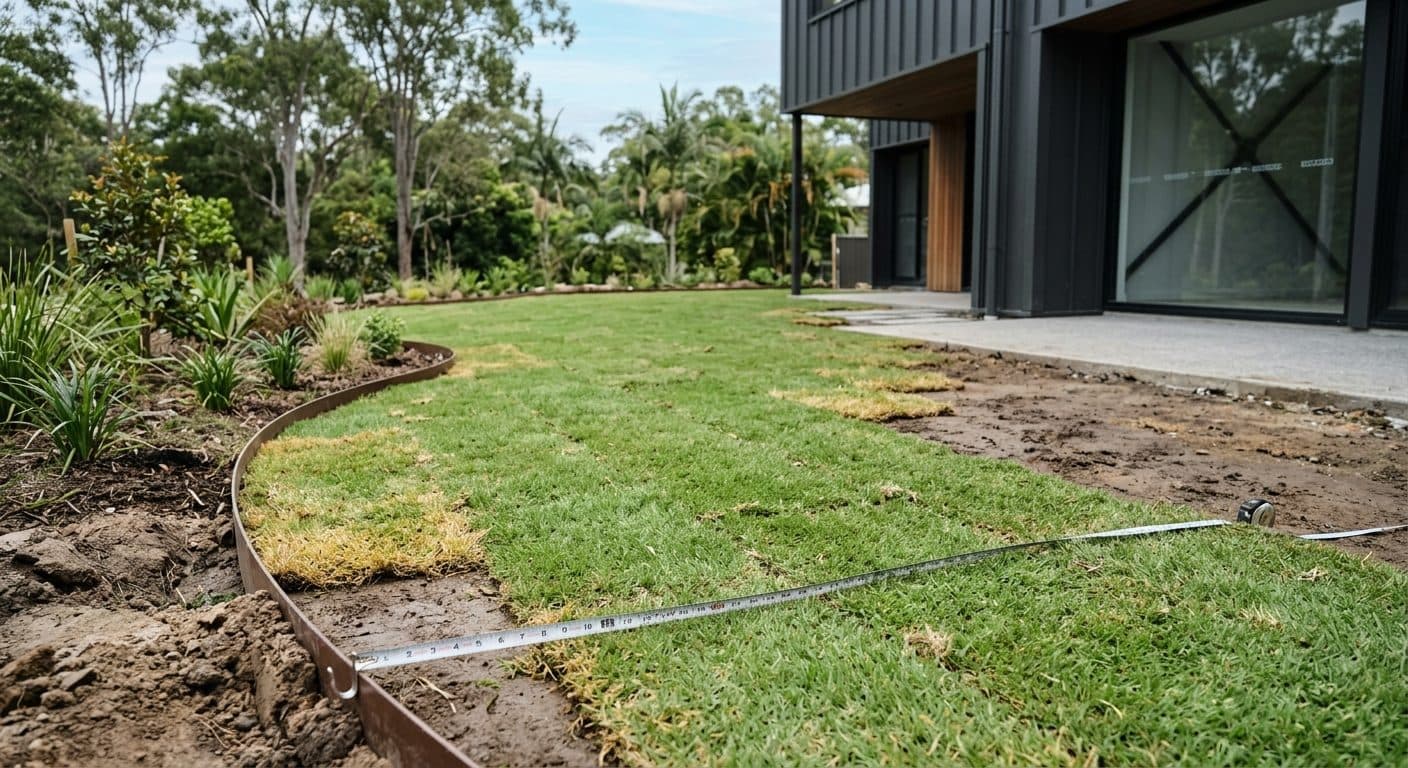
Builder's turf over stripped, compacted subsoil is a recipe for a patchy lawn by the end of the first summer. Here is what is going on underneath and how I'd fix it properly.

By Shannon Trevisiol, Landscape Designer, Brisbane · 6 min read
- A new-build lawn usually fails from the ground up: the topsoil has often been stripped or buried, and what is left is compacted subsoil that roots cannot get into.
- Builder's turf is typically laid thin over that subsoil, so it looks fine for a few weeks and then struggles through the first hot, dry spell.
- Fixing the soil (loosening it, then adding a proper depth of topsoil or turf underlay) is usually more effective than re-laying turf on the same ground.
- A cheap soil test and a few simple checks before you spend anything will tell you which of these problems you actually have.
If you have just moved into a new build and the lawn is already going patchy, yellow or spongy, the grass is rarely the problem. A new-build lawn tends to fail from the ground up, because the soil under it has been through a building site, and building sites are hard on soil. The good news is that the cause is usually fixable, and understanding it saves you from the most common mistake: ripping up the dead turf and laying exactly the same thing on exactly the same ground.
What happens to the soil on a building site
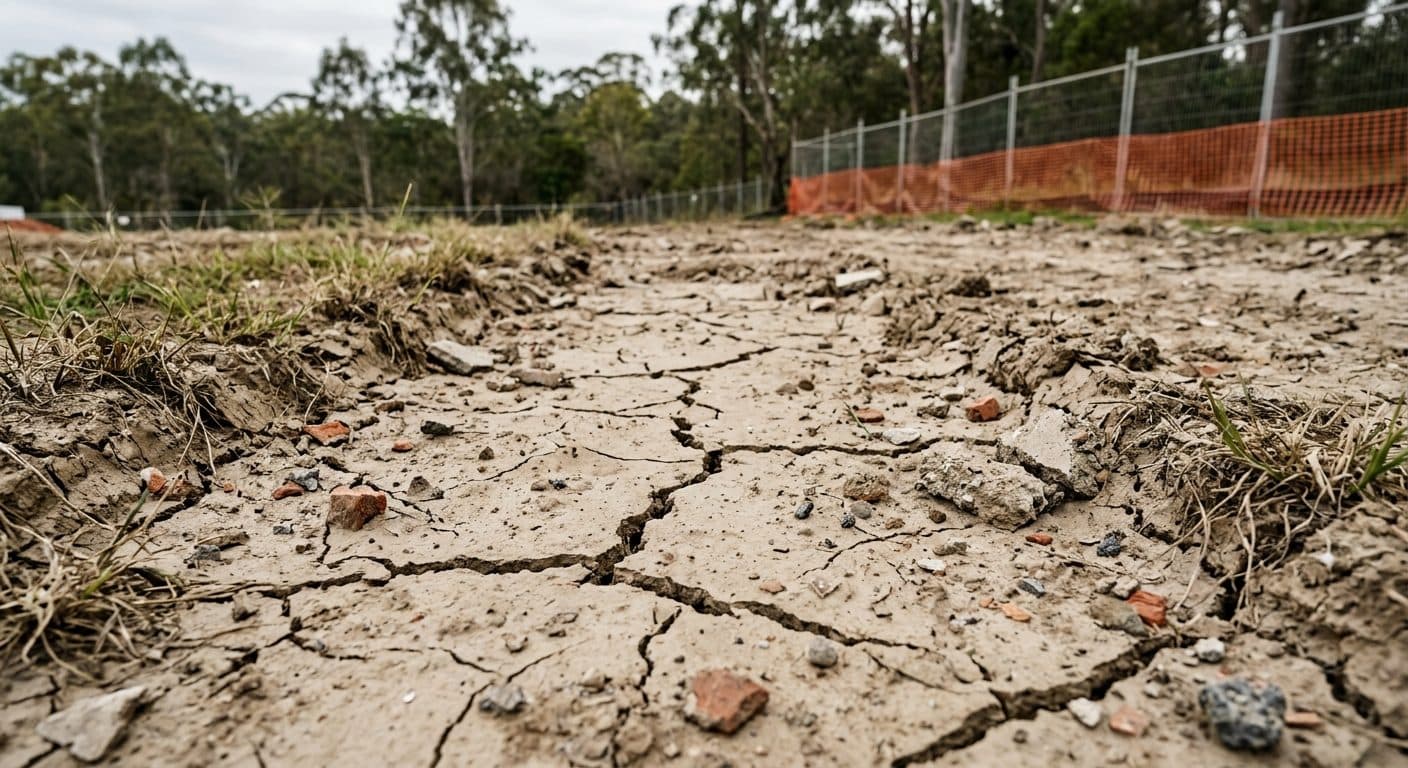
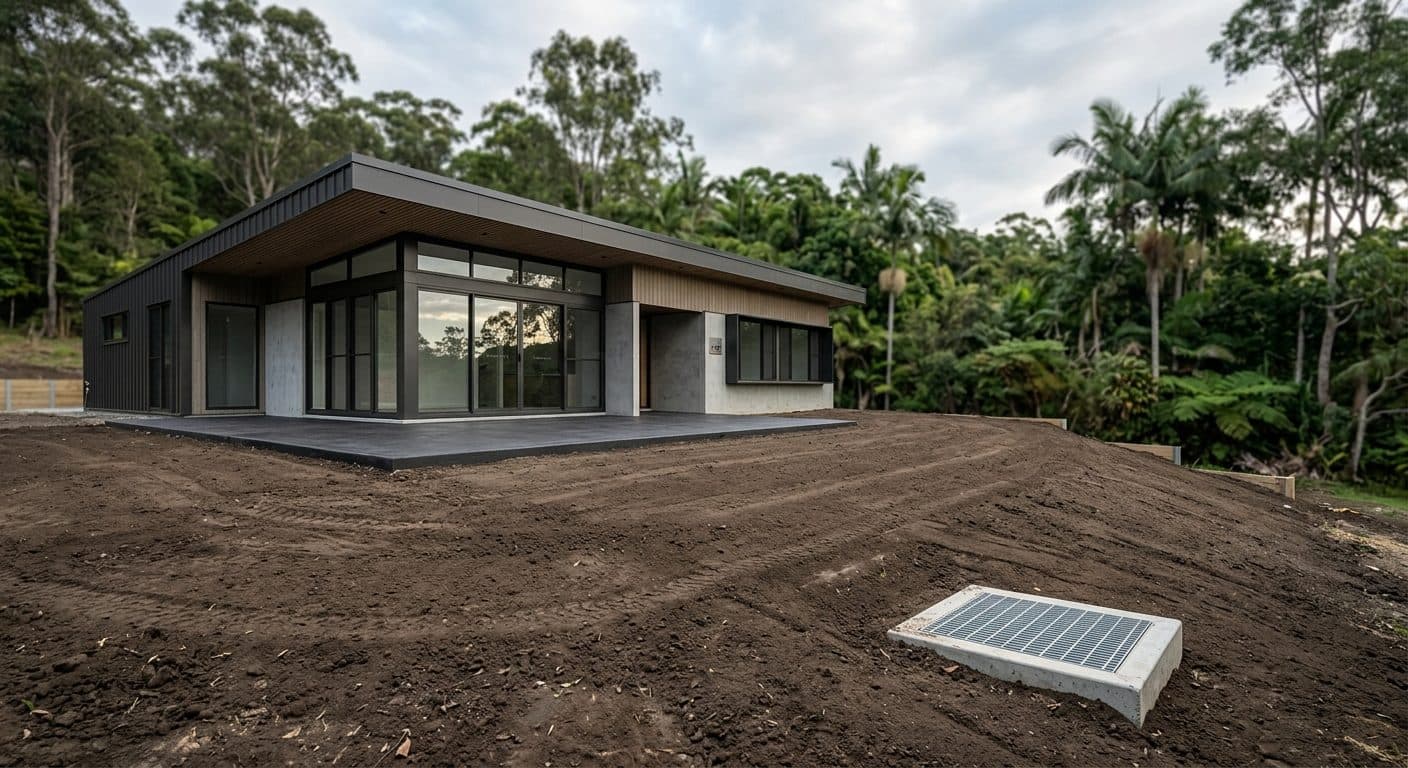
Before a slab goes down, the site is typically cut and filled to get the levels right, and the good dark topsoil that took decades to form is often stripped, stockpiled, sold or buried. What remains for your garden is subsoil, which is paler, heavier, lower in organic matter and much less alive. Over the following months it is driven over by trucks, excavators and a long parade of trades, which squashes the air out of it. Compacted clay can feel like concrete in a dry spell and like a bathtub in a wet one.
On top of that, building sites leave things behind. Offcuts, concrete wash, mortar, brickies sand and the odd buried pile of rubble all end up in the top layer, and some of it can change how the soil behaves (mortar and cement, for instance, can push the pH up). None of this is visible when the turf arrives as a lush green carpet, which is why it comes as such a surprise by the first summer.
Why builder's turf struggles on it
Turf laid at handover is often put down quickly and thinly, over whatever surface the site has. The roots have two jobs: find water and hold on. In loosened, topsoil-rich ground they commonly run down a good depth within a season. In compacted subsoil they hit a hard layer within a few centimetres and stop, so the grass lives in a thin skin that dries out in days and drowns in a downpour.
That is why the symptoms are so familiar in Brisbane: green for the first few weeks, then yellow patches and bare corners through the first hot, dry spell, and puddles that sit after a February storm because water cannot drain through the compacted layer. Mowing a lawn with shallow roots makes it worse, and so does watering it little and often, which keeps the roots at the surface.
How to find out what you are dealing with
You do not need a laboratory to start. Push a screwdriver or a length of rebar into the lawn after a good soak: if it stops dead within a few centimetres, compaction is your issue. Dig a small hole about the depth of a spade and look at it. A thin skin of dark soil over pale, tight clay tells you the topsoil is missing, and bits of brick, mortar or concrete tell you the builder's backfill is in play.
A basic soil test (pH and nutrients, available from most garden centres or a lab) is cheap and worth doing before you add anything. Brisbane soils vary a lot from block to block, and from the front yard to the back on the same block, so it is a mistake to assume the answer from your suburb. If you want the plants side of the story on heavy ground, my guide to plants for Brisbane's clay soil covers what copes and why.
Fixing it properly: loosen, then rebuild
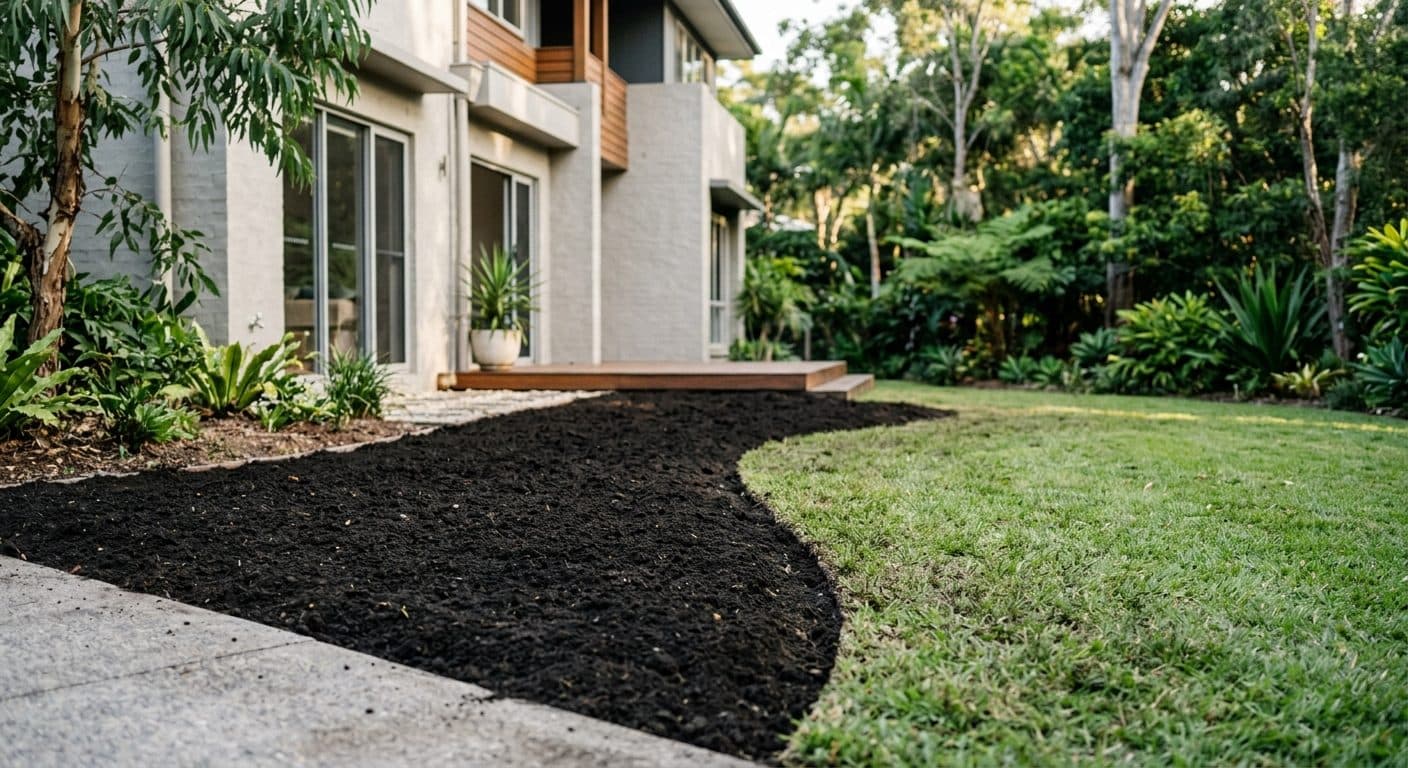
The fix has two steps, and skipping the first wastes the second. First, the compacted layer has to be broken up, often with a machine rather than a garden fork (a local soil or turf supplier can advise on your block), because a thin layer of new soil sitting on a solid pan just recreates the same problem one level higher. Second, a proper depth of good topsoil or turf underlay mix goes on top, worked into the loosened layer so there is no sharp boundary between the two. Sharp boundaries stop water and roots just as effectively as compaction does.
Depths and mixes depend on your block, so treat any number you read online (including mine) as a starting point to check with a local soil or turf supplier. Falls matter too. If the ground is too flat or slopes toward the house, no amount of topsoil will stop the soggy patches, which is why it pays to sort out levels and drainage at the same time. If you are earlier in the build than this, my post on when to engage a landscape designer explains why topsoil stockpiling and levels are worth settling before the machines leave.
Rethinking how much lawn you want
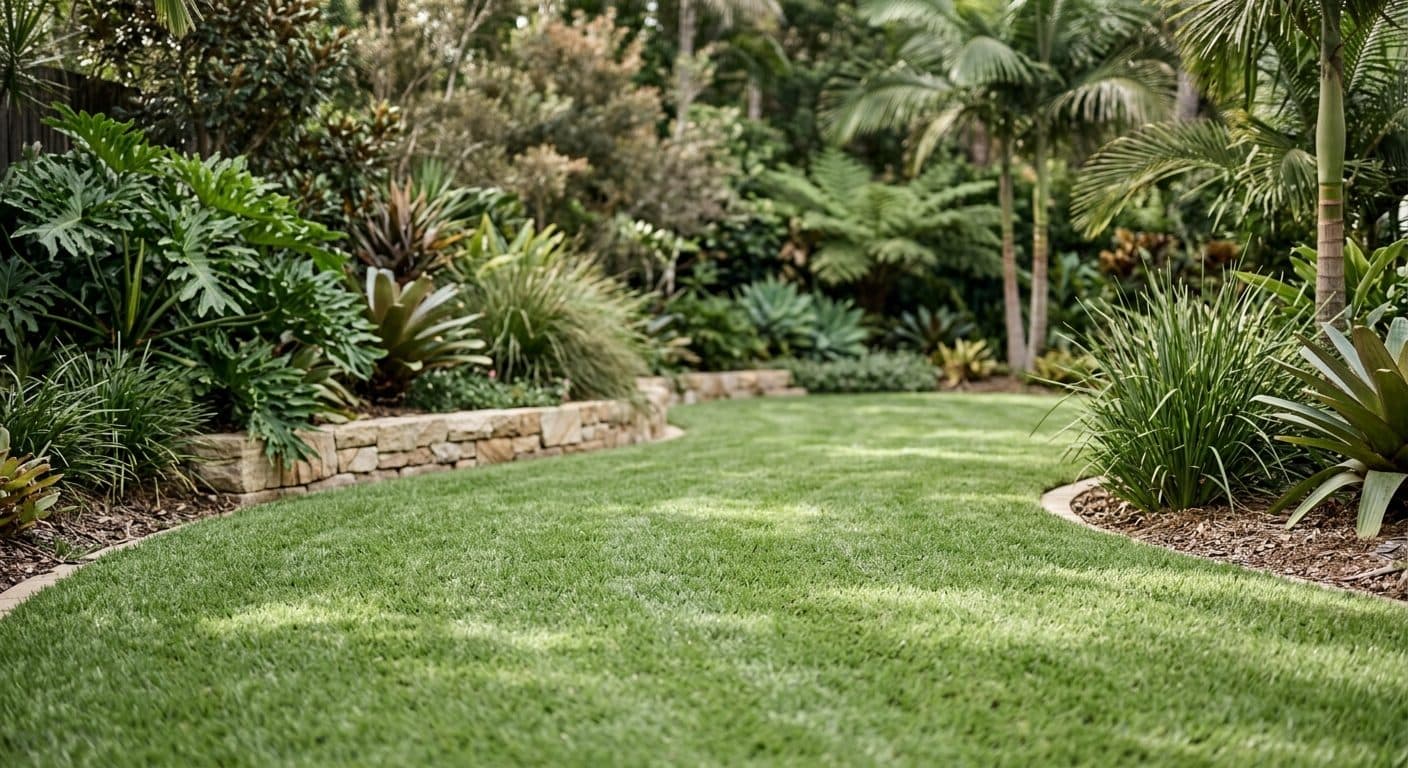
A new build is also the cheapest moment to ask whether you want that much lawn at all. Turf is the most demanding thing in most Brisbane gardens: it wants mowing, watering and feeding, and it sulks in shade, which new houses on small blocks have plenty of. A smaller lawn with better soil under it will almost always look better than a big one on poor ground.
Where you do want grass, pick the type for the spot rather than the price per square metre: sun, shade, foot traffic, dogs and how much mowing you are prepared to do all matter. Zoysia is a slow-growing choice for people who dislike mowing, and my guide to lawn alternatives in Brisbane covers groundcovers and mixed surfaces for the areas where grass is never going to be happy. Planted beds can also be a better fit than turf where the ground stays difficult, and the front yard is usually where this pays off most (see front yard landscaping in Brisbane).
Where a designer fits in
Soil is the unglamorous foundation of a garden design, and a good plan starts with what is under the surface: where the compaction is worst, where water will run, which areas suit lawn and which suit planting. I design gardens, I do not build them, so the drawings are made to hand to the independent contractor of your choice, and a soil-first approach tends to avoid paying twice for the same ground. If you are staring at a patchy new lawn and are not sure where to start, a Design Discovery Consultation starts at $350 on-site (any travel component is quoted up front when you book), and I walk the block with you to work out what needs fixing first and what can wait.
Ready to start designing?
We're currently taking on new landscape design clients across Brisbane. Reach out for a personalised quote, whether you're a homeowner or a design professional.
Book a Free Discovery Call