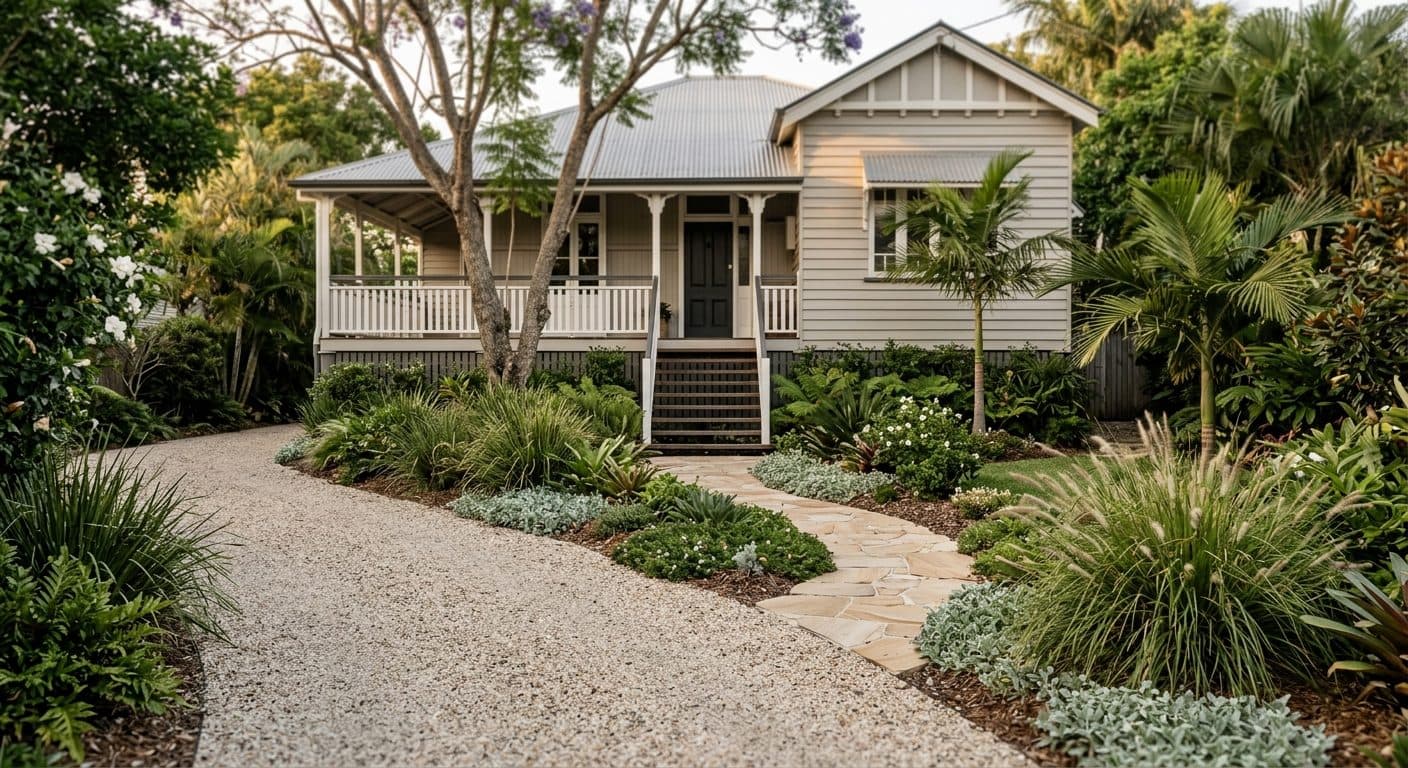
The front of your house is the one part of the garden everyone sees, and on many Brisbane blocks it's the only usable space left. Here's how I turn the driveway, path and entry into a designed arrival, with room for fences, arbors, seating and even a front courtyard.

By Shannon Trevisiol, Landscape Designer, Brisbane · 6 min read
- On many Brisbane blocks the front is the only real usable outdoor space, so design it as an arrival, and sometimes a whole front courtyard, not leftover lawn.
- Give the pedestrian path its own route, separate from the driveway, so the front becomes a garden to walk through rather than an edge to decorate.
- Fences, gates, an entry arbor and even the letterbox set the tone, so pick materials and proportions that complement the home's architecture.
- Make the front a place to pause, not just pass through, with seating, feature pots or the quiet sound of water.
- Permeable, lighter surfaces handle Brisbane's storms and heat better than a big slab of dark sealed concrete.
The front garden is the part of your place that does the most work and gets the least thought. It's the first thing you see coming home, the first thing a visitor reads about the house, and the one piece of the garden that's on display to the whole street whether you like it or not. On a lot of Brisbane blocks it's more than a first impression too, because once the house, the pool or the slope has eaten the backyard, the front can be the only genuinely usable outdoor space you've got. Treated as leftover ground around a driveway, that's a wasted opportunity. Designed properly, it's an arrival, and sometimes a whole extra room.
The best part is that the front is where you get to have some fun, because the possibilities really are endless: how you're guided to the door, the fence and gate and letterbox, a shady arbor to walk under, a quiet place to sit, a feature pot or the sound of water near the entry. Here's how I pull it together.
Give the path its own route, separate from the driveway
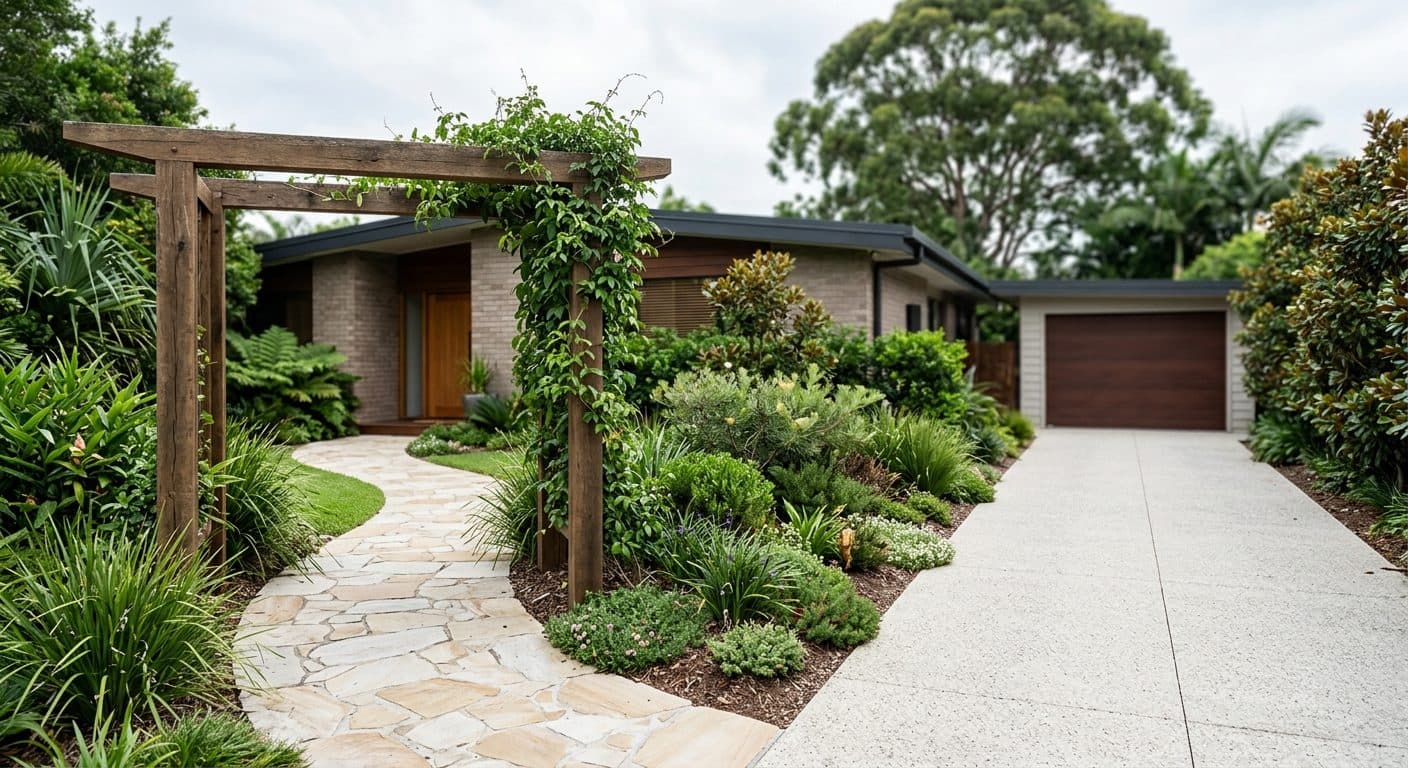
Separating the front path from the driveway is the single most impactful change you can make to your front yard. When cars and pedestrians share the same concrete slab, the driveway dominates the landscape, leaving only the margins for plants. Peeling the walkway away opens up the entire space, allowing the path to curve past lush planting beds, rise through level changes, or pass beneath an arbor. Walking to your entrance becomes an inviting stroll through a garden rather than a trek up a parking space. While the driveway, path, and entry should still share complementary materials and design lines, keeping their physical footprints separate frees up room for real landscaping, and good front yard design always prioritises the person on foot over the parked car.
Fences, arbors, gates and letterboxes
The structural pieces at the boundary and the entry set the whole tone, and they're where you can really enjoy yourself. A boundary fence or an entry arbor that picks up the home's architecture, its materials, its proportions and its era, does more to lift a frontage than almost anything you can plant, because it ties the garden to the house before anyone has reached the door. The gate and even the letterbox are small things worth designing rather than grabbing off a shelf, since they're seen and touched up close every single day, and a considered one quietly signals care about everything behind it. Whether the house is a classic Queenslander or a crisp contemporary build, these are the details that make a front garden read as designed rather than defaulted.
Make the front a place, not just a passage
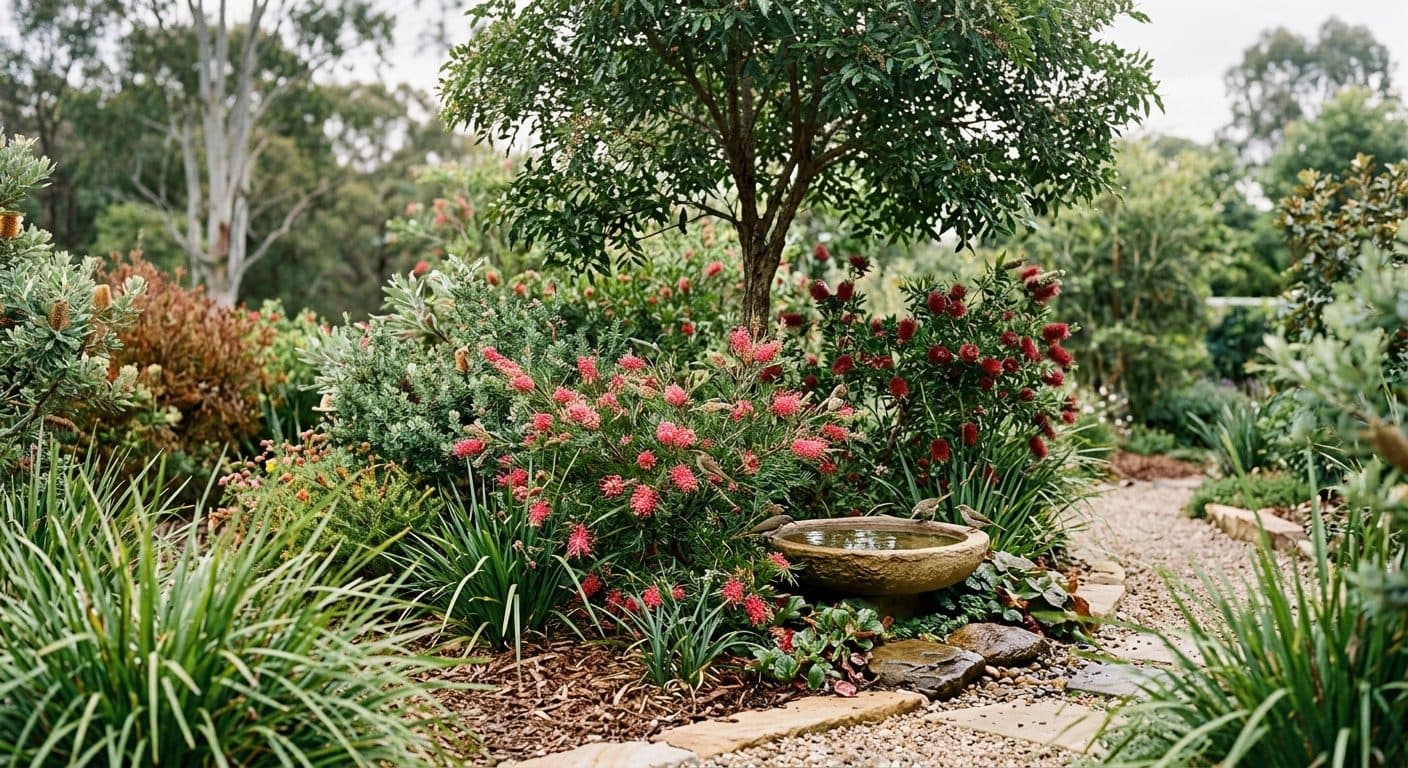
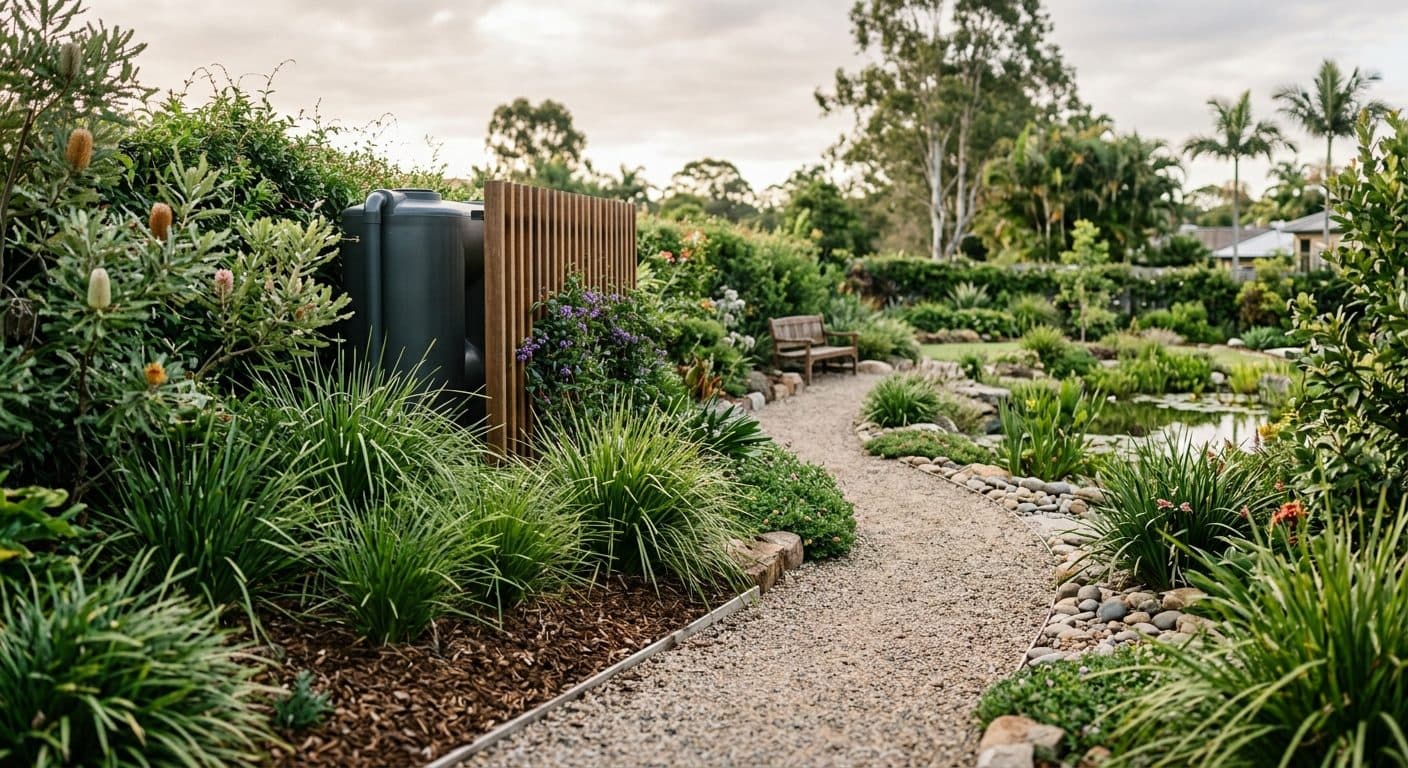
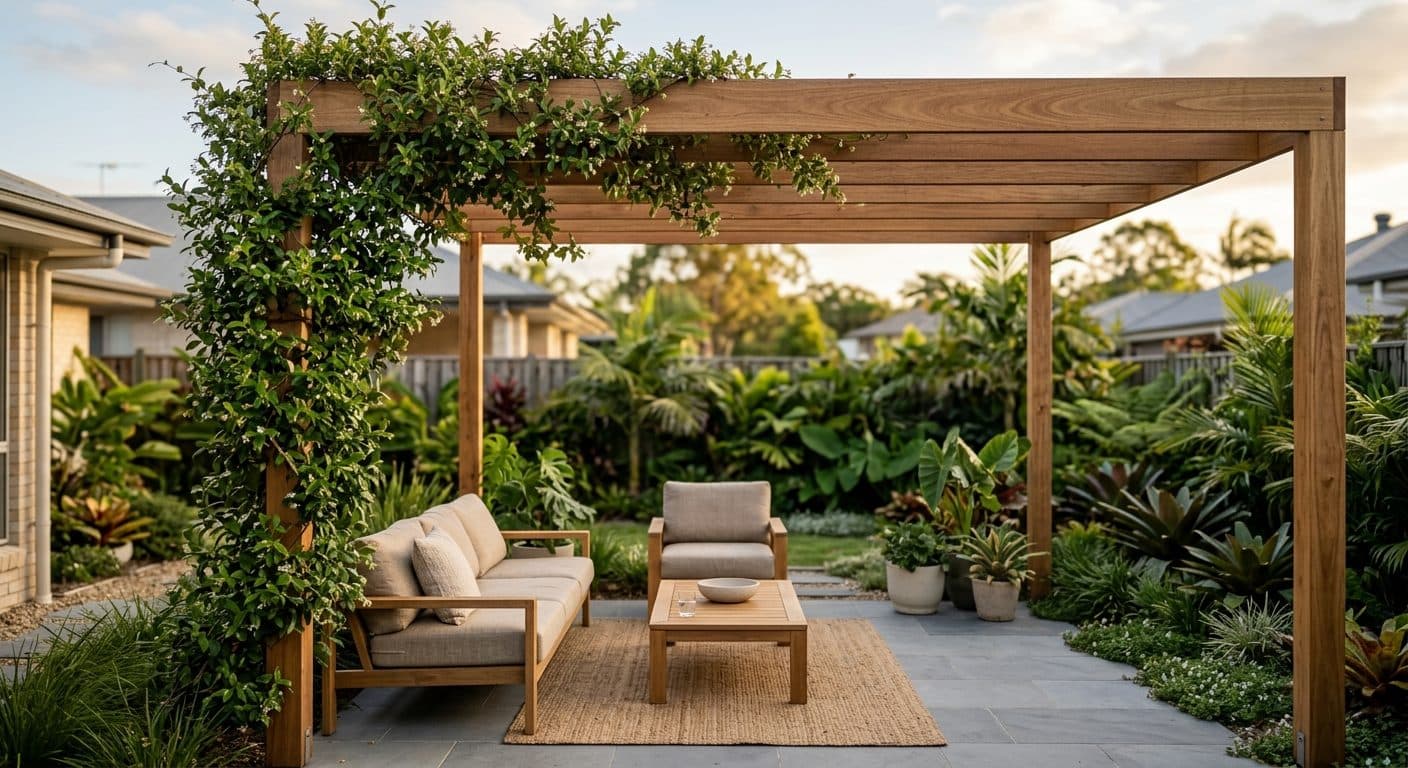
A front garden doesn't have to be somewhere you only pass through. Restful, human touches, a bench tucked into a planted corner, a pair of feature pots flanking the steps, the soft sound of a small water feature near the entry, turn the approach into somewhere you might actually pause. And where the front is your only real outdoor space, it's worth going further and turning it into a proper front courtyard: screened for privacy from the footpath, paved so it's usable, and planted for shade, a genuine outdoor room at the front rather than a strip of lawn you mow and ignore. It's the same make-every-metre-count thinking behind a good courtyard garden, applied to the one space some homes have left.
Surfaces that suit Brisbane's storms and heat
The surface choice is where climate and looks meet. A big slab of dark sealed concrete is the default, and it's also a heat store that radiates warmth back at the house all evening and sheds every drop of a summer storm straight down the drive, so I lean towards lighter-coloured surfaces that hold less heat and, wherever it suits, permeable finishes that let the rain soak into the ground rather than sluice off it. There's a real trade-off to be honest about between materials: a gravel or permeable surface is charming and softer on the eye but needs occasional regrading and topping up, while a large paved or sealed driveway is lower fuss and higher cost, so the right answer depends on how much upkeep you're willing to trade away. It's the same logic behind a storm-resilient garden: plan for where the water goes before you pave over the question.
The Queenslander climb: getting up to the door
Brisbane's classic homes bring their own front-garden puzzle, because a Queenslander sits up off the ground and the whole challenge is moving a person from the street, up the slope and the stairs, to a door that's a storey up, with some grace. The stair-and-frontage transition is where these front gardens are won or lost: generous, well-lit steps, a landing that feels like an arrival rather than a scramble, and planting that softens the understorey and the piers rather than leaving them raw. Done well, the climb becomes part of the welcome, and the height that felt like a problem becomes the thing that gives the house its presence from the street.
Planting and light: the finishing layers
The last two layers make a front garden feel finished and cared for. Structured, low-maintenance planting, a simple, repeated palette of hardy shrubs and strappy foliage rather than a fussy collection, gives the front a calm, deliberate look that holds up all year without much attention, which matters doubly out the front where you don't want to be fussing over needy plants on show to the street. And lighting the approach, a soft wash on the path and steps and a little warmth at the entry, carries the kerb appeal past sunset and makes coming home in the dark feel safe and welcoming, which is exactly the job good garden lighting is there to do. Together they cost less than the paving and do more for how the house feels than almost anything else.
If the front of your place is letting the rest of it down, or sitting there unused when it could be your best outdoor room, it's one of the most rewarding parts of a garden to get right, because you and everyone else see it every single day. Our Design Discovery Consultation is where we start, on site, reading the approach the way a visitor does.
Ready to start designing?
We're currently taking on new landscape design clients across Brisbane. Reach out for a personalised quote, whether you're a homeowner or a design professional.
Book a Free Discovery Call