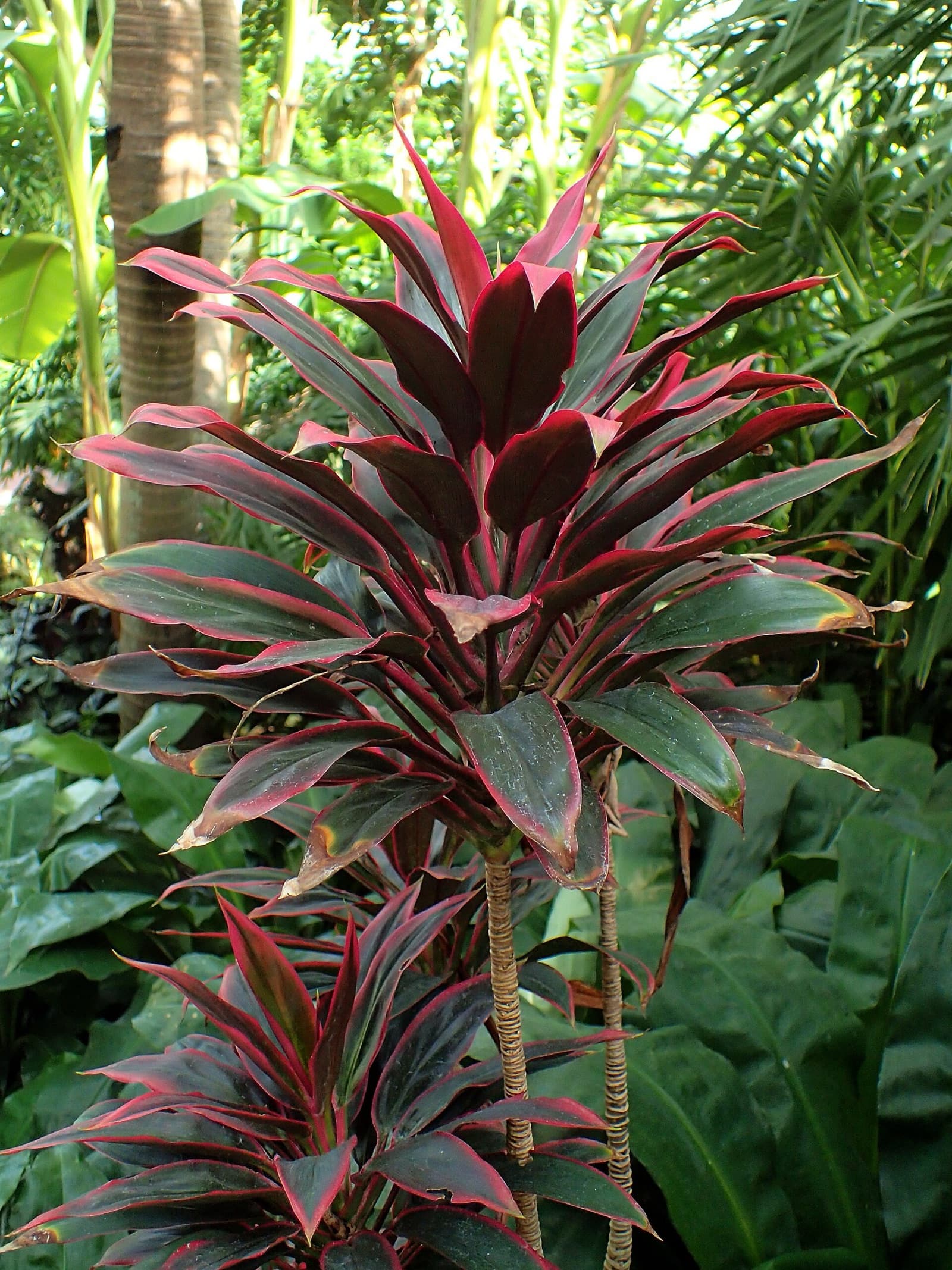
Cordyline fruticosa, the upright ti plant whose burgundy, pink and cream foliage brings colour to a green garden without a single flower.
Cordyline fruticosa · Also known as Ti Plant, Hawaiian Ti
The cordyline is how we add colour to a subtropical planting without waiting on a flower, because its whole appeal is the leaf: strappy, upright foliage splashed in burgundy, hot pink, cream and green that holds its intensity right through the year. It is widely known as cordyline and, in its Pacific-island home, as the ti plant or Hawaiian ti, and the many named varieties run from deep near-black through to bright candy-striped.
We use it as a vertical accent, a punctuation mark of colour dropped into a sea of green foliage where a splash of tone lifts the whole scene. It is an easy, rewarding plant in Brisbane so long as you give it the light its particular variety wants, and matching leaf colour to the right amount of sun is the single decision that makes or breaks it.
In a Brisbane garden
Cordylines suit our warm climate well and hold their colour through the year here, but the light equation is the thing to get right, because a variety that glows deep burgundy in bright filtered light will fade to a muddy bronze in deep shade, while a harsh western afternoon sun will scorch and bleach the softer pinks and creams. The reliable spot in a Brisbane garden is bright light with shelter from the worst of the afternoon, and we match each variety to its position rather than assuming one rule covers the lot.
On water they are honestly middling rather than tough: they want regular watering to look their best and will drop and brown their lower leaves if left bone dry through a rain-free winter stretch, so they sit better in a bed you tend than in a genuinely neglect-proof planting. Cold, dry winter wind is the other thing that marks them, dulling the foliage and burning the tips, which is why we tuck them into sheltered pockets rather than the exposed front line of a windy block.
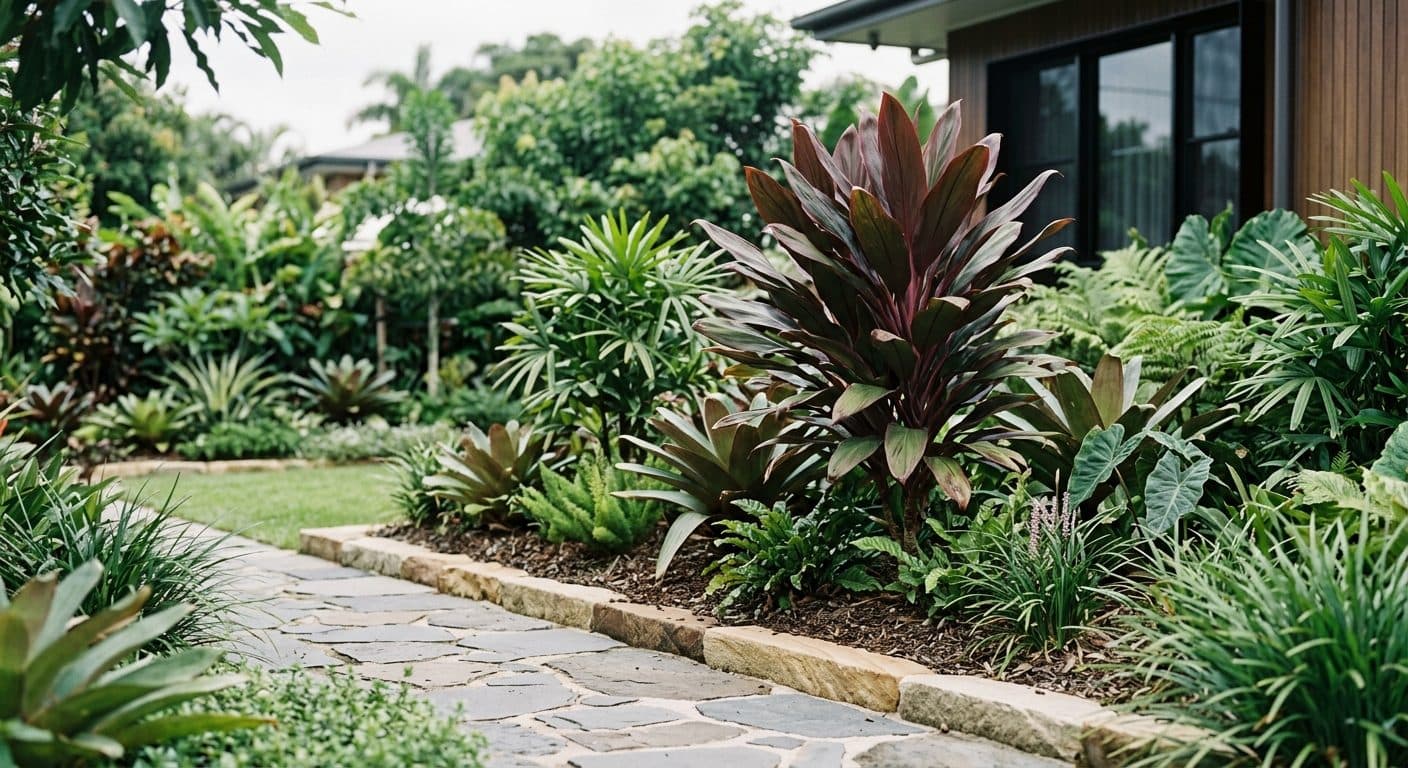
Photo: Krzysztof Ziarnek, Kenraiz, CC BY-SA 4.0, via Wikimedia Commons
How we design with it
We plant cordylines as deliberate hits of colour rather than as a mass, dropping one or a small cluster into a green tropical garden design exactly where the eye needs somewhere to land. Their strong upright form and saturated foliage make them a natural fit for a modern garden design, where a single well-placed cordyline in a clean bed or a large pot does the work of a whole flowering border.
We repeat one variety through a planting to tie a scheme together, pair the dark burgundies against fine bright-green foliage for contrast, and use the taller forms to add vertical rhythm along a path or a wall. Because colour depends on light, we place the deep-toned varieties where they'll catch enough brightness to glow and keep the softer pastels out of the scorching western sun, so the plant delivers the colour it promised.
Where we write about cordyline
Common questions
Want year-round colour without relying on flowers?
We're currently taking on new landscape design clients across Brisbane. Reach out for a personalised quote, whether you're a homeowner or a design professional.
Book a Free Discovery Call